On This Page
Description
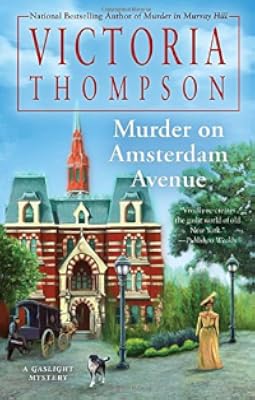
"In the midst of Sarah and Frank's wedding preparations, Sarah accompanies her mother on a condolence call to the Upper West Side, where Charles Fairfax, the son of family friends, has died unexpectedly after suffering from a mysterious disease. It is a tragic and all-too-common story or so it seems. Charles's father asks to speak with Sarah privately. He believes his son was poisoned and would like Sarah and Frank to look into the matter with the utmost discretion. Putting their own show more personal affairs on hold, Sarah and Frank soon learn that not everyone wants to know more about Charles's death, particularly if he was murdered. As they unravel secrets that reach back to the War Between the States, they also discover that they are in the company of a very present danger"-- show lessTags
Recommendations


Member Reviews
This is the seventeenth book in the Gaslight Mystery series by Victoria Thompson set in New York City in the late 1890s. Former City detective, Frank Malloy, and widowed midwife, Sarah Brandt, are engaged now and waiting for their new house to be renovated before they marry. Sarah and her mother have just come back from a condolence call to an old friend where she is asked by the dead man's family if Frank would be willing to investigate the circumstances. Frank is at loose ends now and eagerly takes on the job. As always, there are plenty of suspects.
One of the best things about this series are the interesting secondary characters, especially Maeve and Gino Donatelli. This entry dealt with some of the rules of society and obstacles show more members may face. The mystery moved along quickly and was well crafted. It could easily be read as a standalone even though I always recommend reading them in order.
Unlike many series where the characters never change, Victoria Thompson has done a great job of continuing to make them fresh. I look forward to continuing the series in the future. show less
One of the best things about this series are the interesting secondary characters, especially Maeve and Gino Donatelli. This entry dealt with some of the rules of society and obstacles show more members may face. The mystery moved along quickly and was well crafted. It could easily be read as a standalone even though I always recommend reading them in order.
Unlike many series where the characters never change, Victoria Thompson has done a great job of continuing to make them fresh. I look forward to continuing the series in the future. show less
This was my favorite book in this series in a long time. I love how they get Sarah and Frank finally together. It was interesting to see how investigations into murders were conducted in the early 1900's. To be able to leave it up to the rich person whether someone is prosecuted or not was weird. I look forward to many more gaslight mysteries.
Murder on Amsterdam Avenue
4 Stars
With construction ongoing at his new house, Frank Malloy is eager to escape and readily agrees to investigate the mysterious death of Charles Oakes, a childhood acquaintance of Sarah's. It is soon revealed that young Charles was poisoned in his own home, but which of his family members or servants hated him enough to kill him?
An interesting mystery with compelling insights into the long-lasting effects of the American Civil War. One profound aspect of this series in general, and this book in particular, is the emphasis on the fact that very little has changed in the last century when it comes to twisted prejudices and hatred.
The investigation is pretty straightforward with several red-herrings to keep show more the reader guessing. There are some minor plot holes that could have been avoided with more character development, but the resolution is satisfying overall.
Frank and Sarah's growing menagerie of friends and family from different walks of life is a highlight of this series, and it was fun to see them all gathering to celebrate Frank and Sarah's marriage. show less
4 Stars
With construction ongoing at his new house, Frank Malloy is eager to escape and readily agrees to investigate the mysterious death of Charles Oakes, a childhood acquaintance of Sarah's. It is soon revealed that young Charles was poisoned in his own home, but which of his family members or servants hated him enough to kill him?
An interesting mystery with compelling insights into the long-lasting effects of the American Civil War. One profound aspect of this series in general, and this book in particular, is the emphasis on the fact that very little has changed in the last century when it comes to twisted prejudices and hatred.
The investigation is pretty straightforward with several red-herrings to keep show more the reader guessing. There are some minor plot holes that could have been avoided with more character development, but the resolution is satisfying overall.
Frank and Sarah's growing menagerie of friends and family from different walks of life is a highlight of this series, and it was fun to see them all gathering to celebrate Frank and Sarah's marriage. show less
This is the seventeenth book in the Gaslight Mystery series by Victoria Thompson set in New York City in the late 1890s. Former City detective, Frank Malloy, and widowed midwife, Sarah Brandt, are engaged now and waiting for their new house to be renovated before they marry. Sarah and her mother have just come back from a condolence call to an old friend where she is asked by the dead man's family if Frank would be willing to investigate the circumstances. Frank is at loose ends now and eagerly takes on the job. As always, there are plenty of suspects.
One of the best things about this series are the interesting secondary characters, especially Maeve and Gino Donatelli. This entry dealt with some of the rules of society and obstacles show more members may face. The mystery moved along quickly and was well crafted. It could easily be read as a standalone even though I always recommend reading them in order.
Unlike many series where the characters never change, Victoria Thompson has done a great job of continuing to make them fresh. I look forward to continuing the series in the future. show less
One of the best things about this series are the interesting secondary characters, especially Maeve and Gino Donatelli. This entry dealt with some of the rules of society and obstacles show more members may face. The mystery moved along quickly and was well crafted. It could easily be read as a standalone even though I always recommend reading them in order.
Unlike many series where the characters never change, Victoria Thompson has done a great job of continuing to make them fresh. I look forward to continuing the series in the future. show less
Murder on Amsterdam Avenue is the 17th book in Victoria Thompson's Gaslight Mysteries series. Widowed nurse/midwife Sarah Decker Brandt and Widower millionaire/former Detective Sergeant Frank Malloy are engaged to be married. The Malloys (Frank, his widowed mother Alma, and his son, Brian), are living in the Bank Street house where Sarah, her foster daughter, Catherine, and Catherine's nursemaid Maeve Smith; will join them after the wedding. The wedding is being delayed until the remodeling is finished.
There have already been changes in the Malloys' lives since Frank inherited so much money. He was driven out of his job by the envy of the rest of the police force. Mrs. Malloy was driven out of the apartment she'd lived in since she'd show more emigrated from Ireland because of the envy of their neighbors.
Sarah's mother, Elizabeth Decker, is anxious to have her daughter rejoin the polite society she rejected when she eloped with Tom Brandt. Elizabeth is pointing out that the only people with whom Sarah and Frank are likely to feel comfortable are rich people. Sarah's toehold to that return is going to be a condolence call on the Oakes family. She'd known the son, Charles, who has recently died of a mysterious illness. Elizabeth reminds Sarah that Charles' widow, Hannah, will need friends.
Hannah Oakes is pretty and pretty spoiled. She seems more upset that she'll be in mourning for a whole year and won't be able to go to Newport than she is to be a widow. Her mother-in-law, Jenny Oakes, is made of sterner stuff. She's maintaining that upper crust reserve even though it's her only child who died.
Jenny has a romantic backstory. She met her husband, Gerald, when he was part of General Sherman's march to the sea during the Civil War. When they reached Jenny's family's plantation, she was the only member of her family still alive. Gerald fell for the raven-haired, chocolate-eyed beauty, married her, and had his father come south to bring her safely up north (where Jenny got snubbed by the Oakes' fellow Knickerbockers, New York's elite families). Gerald has been a friend of Sarah's father, Felix, since they were children. Gerald is heartbroken. He wants Frank to investigate his son's murder. It seems that Charles' glass of warm milk fell to the floor when he was dying. Hannah's cat lapped up the spill and also died. (Sorry, fellow cat lovers.)
Meanwhile, Frank is being driven crazy by the sounds of the workmen. Also, they still haven't repaired the front knocker. I suspect he's secretly glad for an excuse to get out of the house when Sarah and Elizabeth come to talk with him. I enjoyed the sentence about Frank's suit letting the Oakes' maid know he should be taken seriously (Felix sent Frank to his own tailor, so you know that suit is classy enough for a Knickerbocker house).
Frank no longer has a right to ask Doc Haynes to look at a body, so he takes the poor cat to a civilian coroner Haynes recommended: Titus Wesley. Yes, Titus finds something suspicious. So who wanted Charles dead? Certainly not his parents. Could it have anything to do with Charles' appointment as superintendent of the Manhattan State Hospital? What about Virgil Adderly helping Charles get his job? Did Adderly expect something in return?
NOTES:
Chapter 2:
a. Frank learns that the Oakes, like Theodore Roosevelt's branch of the Roosevelt, lost a lot of money and Charles needed to earn his living.
b. Gino Donatelli was introduced in book eight, Murder in Little Italy. He talks about what it was like being part of Roosevelt's Rough Riders. (I hadn't known they'd charged up Kettle Hill instead of San Juan Hill or why the name change, not to mention what Clara Barton had to do to keep the wounded soldiers from lying on the bare ground.)
c. See book sixteen, Murder in Murray Hill, for the case of the missing women.
Chapter 4: Sarah, Frank, et al. discuss what kind of job prospects African Americans have in New York City (this book uses 'colored' and 'Negroes' which were reasonably polite terms in the past).
Chapter 6: Here a 'bouncer' is a term for the newly rich, as we learn during Frank's interesting interview with Charles' grandmother, Prudence Oakes.
Chapter 7:
a. The first book, where Sarah and Frank met, is Murder on Astor Place.
b. We get some history of the Manhattan State Hospital, treatment of the insane, and unscrupulous doctors earlier than 1898.
Chapter 9: Mrs. Ellsworth recites rhymes about being married in September, October, or November.
Chapter 14 has a conversation about collecting European artwork and furniture between Sarah and Frank. (Frank's thought amused me.)
Chapter 15 has the wedding.
No, I didn't guess the killer or motive, but it made me both angry and sad. The facts we got about some aspects of New York City life back then were very interesting, as usual. I hope Coroner Titus Wesley will become a recurring character. I like him. The solution to the house remodeling problem made me smile. The wedding was nice, and it was good to see who'd been invited. Hope Mrs. Decker's dressmaker, Susan, can make some more outfits for Alma Malloy now that she's finally been persuaded to stop wearing black. Even if Frank and Sarah have been married off, there's still the attraction between Maeve and Gino to watch.
If you've enjoyed the earlier books, you should enjoy this one. show less
There have already been changes in the Malloys' lives since Frank inherited so much money. He was driven out of his job by the envy of the rest of the police force. Mrs. Malloy was driven out of the apartment she'd lived in since she'd show more emigrated from Ireland because of the envy of their neighbors.
Sarah's mother, Elizabeth Decker, is anxious to have her daughter rejoin the polite society she rejected when she eloped with Tom Brandt. Elizabeth is pointing out that the only people with whom Sarah and Frank are likely to feel comfortable are rich people. Sarah's toehold to that return is going to be a condolence call on the Oakes family. She'd known the son, Charles, who has recently died of a mysterious illness. Elizabeth reminds Sarah that Charles' widow, Hannah, will need friends.
Hannah Oakes is pretty and pretty spoiled. She seems more upset that she'll be in mourning for a whole year and won't be able to go to Newport than she is to be a widow. Her mother-in-law, Jenny Oakes, is made of sterner stuff. She's maintaining that upper crust reserve even though it's her only child who died.
Jenny has a romantic backstory. She met her husband, Gerald, when he was part of General Sherman's march to the sea during the Civil War. When they reached Jenny's family's plantation, she was the only member of her family still alive. Gerald fell for the raven-haired, chocolate-eyed beauty, married her, and had his father come south to bring her safely up north (where Jenny got snubbed by the Oakes' fellow Knickerbockers, New York's elite families). Gerald has been a friend of Sarah's father, Felix, since they were children. Gerald is heartbroken. He wants Frank to investigate his son's murder. It seems that Charles' glass of warm milk fell to the floor when he was dying. Hannah's cat lapped up the spill and also died. (Sorry, fellow cat lovers.)
Meanwhile, Frank is being driven crazy by the sounds of the workmen. Also, they still haven't repaired the front knocker. I suspect he's secretly glad for an excuse to get out of the house when Sarah and Elizabeth come to talk with him. I enjoyed the sentence about Frank's suit letting the Oakes' maid know he should be taken seriously (Felix sent Frank to his own tailor, so you know that suit is classy enough for a Knickerbocker house).
Frank no longer has a right to ask Doc Haynes to look at a body, so he takes the poor cat to a civilian coroner Haynes recommended: Titus Wesley. Yes, Titus finds something suspicious. So who wanted Charles dead? Certainly not his parents. Could it have anything to do with Charles' appointment as superintendent of the Manhattan State Hospital? What about Virgil Adderly helping Charles get his job? Did Adderly expect something in return?
NOTES:
Chapter 2:
a. Frank learns that the Oakes, like Theodore Roosevelt's branch of the Roosevelt, lost a lot of money and Charles needed to earn his living.
b. Gino Donatelli was introduced in book eight, Murder in Little Italy. He talks about what it was like being part of Roosevelt's Rough Riders. (I hadn't known they'd charged up Kettle Hill instead of San Juan Hill or why the name change, not to mention what Clara Barton had to do to keep the wounded soldiers from lying on the bare ground.)
c. See book sixteen, Murder in Murray Hill, for the case of the missing women.
Chapter 4: Sarah, Frank, et al. discuss what kind of job prospects African Americans have in New York City (this book uses 'colored' and 'Negroes' which were reasonably polite terms in the past).
Chapter 6: Here a 'bouncer' is a term for the newly rich, as we learn during Frank's interesting interview with Charles' grandmother, Prudence Oakes.
Chapter 7:
a. The first book, where Sarah and Frank met, is Murder on Astor Place.
b. We get some history of the Manhattan State Hospital, treatment of the insane, and unscrupulous doctors earlier than 1898.
Chapter 9: Mrs. Ellsworth recites rhymes about being married in September, October, or November.
Chapter 14 has a conversation about collecting European artwork and furniture between Sarah and Frank. (Frank's thought amused me.)
Chapter 15 has the wedding.
No, I didn't guess the killer or motive, but it made me both angry and sad. The facts we got about some aspects of New York City life back then were very interesting, as usual. I hope Coroner Titus Wesley will become a recurring character. I like him. The solution to the house remodeling problem made me smile. The wedding was nice, and it was good to see who'd been invited. Hope Mrs. Decker's dressmaker, Susan, can make some more outfits for Alma Malloy now that she's finally been persuaded to stop wearing black. Even if Frank and Sarah have been married off, there's still the attraction between Maeve and Gino to watch.
If you've enjoyed the earlier books, you should enjoy this one. show less
What I love about these Gaslight Mysteries is that the stories are really about solving the murders. There is romance but it is secondary and doesn't overshadow Sarah and Frank's work on the case. Ms. Thompson also does a good job connecting us to the characters, helping us to understand the motives behind the actions and while I may not always agree with the motives of the murders.
Frank is supervising the work done on the house he and Sarah will be living in after the are married. Sarah and her mother have paid a condolence call on a family who just lost their son. While there they had a request for Frank - would he be willing to investigate the death of his son. Two more people are murdered in the same way and Frank and Sarah wonder show more if these cases are related or are they two separate cases?
This accurately portrayed book talks about how people felt after the Civil War, how immigrants were treated and reminds us that the distinction between rich and poor/black and white is not new and has not gotten better. Each side has valid arguments for feeling the way they do, but until more people begin to act like Frank and Sarah by doing what is right rather than follow the paths laid out nothing will get better. show less
Frank is supervising the work done on the house he and Sarah will be living in after the are married. Sarah and her mother have paid a condolence call on a family who just lost their son. While there they had a request for Frank - would he be willing to investigate the death of his son. Two more people are murdered in the same way and Frank and Sarah wonder show more if these cases are related or are they two separate cases?
This accurately portrayed book talks about how people felt after the Civil War, how immigrants were treated and reminds us that the distinction between rich and poor/black and white is not new and has not gotten better. Each side has valid arguments for feeling the way they do, but until more people begin to act like Frank and Sarah by doing what is right rather than follow the paths laid out nothing will get better. show less
3 1/2! This Gaslight mystery series set in late 19 century New York City, is one of my favourite historical mystery series. I like the recurring characters and Ms. Thompson’s plotting is usually tightly paced and the mystery is usually tricky. In this book, Sarah and Frank are in the midst of getting their new home ready and planning their upcoming wedding when Frank is asked by one of Sarah’s father’s friends to find out how his son died. He had taken sick suddenly and had been sick for a few days and then died. His son was newly married with a new job. As Sarah and Frank try to determine what happened to Charles Oakes, they uncover some old and long buried family secrets in the Oakes family. These secrets date back to the show more American Civil War and it soon becomes apparent that these secrets, though buried, still have the power to inflame someone to murder, someone who doesn’t care how many others are killed in the process. Unfortunately, I didn’t find this book as compelling as others in the series have been. I had determined almost immediately who the killer was, and I had also figured out what the big secret was that caused the string of murders. I still enjoyed the characters, and it was nice to see Sarah and Frank finally get married. Their marriage will change the structure of future books and investigations, but I am looking forward to reading more in the series. show less
Members
- Recently Added By
Lists

Books Read in 2019
4,052 works; 108 members
Author Information

54+ Works 10,809 Members
Some Editions
Awards and Honors
Awards
Series

Common Knowledge
- Canonical title
- Murder on Amsterdam Avenue
- Original title
- Murder on Amsterdam Avenue
- Original publication date
- 2015-05-05
- People/Characters
- Sarah Brandt; Frank Malloy
- Important places
- New York, New York, USA; Sarah Brandt's house, Bank Street, Greenwich Village, New York, New York, USA; the Malloy house, Bank Street, New York, New York, USA; the Oakes' house, Amsterdam Avenue, New York, New York, USA; Titus Wesley's storefront coroner office, New York, New York. USA; Manhattan State Hospital, Wards Island, Harlem River, New York, USA (formerly Wards Island Asylum/New York City Asylum for the Insane) (show all 11); Mrs. Peabody's house in Murray Hill, New York, New York, USA; the Adderly house, Lenox Hill, New York, New York, USA; Holy Redeemer Church, Manhattan, New York, USA; the Littlefield house, New York, New York, USA; Sister Mary's tiny apartment in a Black neighborhood, Manhattan, New York, USA
- Dedication
- To my new editor, Michelle Vega.
Thanks for loving Frank and Sarah! - First words
- "Charles Oakes is dead."
- Last words
- (Click to show. Warning: May contain spoilers.)"I would be glad to marry you twice a day, every single day for the rest of my life."
Classifications
Statistics
- Members
- 252
- Popularity
- 128,437
- Reviews
- 16
- Rating
- (3.94)
- Languages
- English
- Media
- Paper, Audiobook, Ebook
- ISBNs
- 17
- ASINs
- 5