On This Page
Description
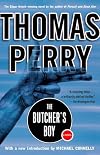
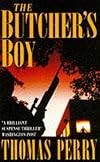
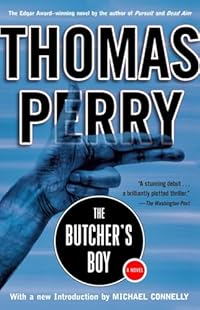
The Edgar Award–winning novel by the “master of nail-biting suspense”(Los Angeles Times)Thomas Perry exploded onto the literary scene with The Butcher’s Boy. Back in print by popular demand, this spectacular debut, from a writer of “infernal ingenuity” (The New York Times Book Review), includes a new Introduction by bestselling author Michael Connelly.
Murder has always been easy for the Butcher’s Boy—it’s what he was raised to do. But when he kills the senior senator show more from Colorado and arrives in Las Vegas to pick up his fee, he learns that he has become a liability to his shadowy employers. His actions attract the attention of police specialists who watch the world of organized crime, but though everyone knows that something big is going on, only Elizabeth Waring, a bright young analyst in the Justice Department, works her way closer to the truth, and to the frightening man behind it.
Praise for The Butcher’s Boy
“A stunning debut . . . a brilliantly plotted thriller.”—The Washington Post
“A shrewdly planned and executed thriller.”—The New York Times Book Review
“Thomas Perry has hit the mark.”—Houston Chronicle
“Totally enthralling.”—The New Yorker. show less
Tags
Recommendations

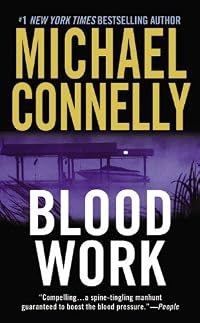
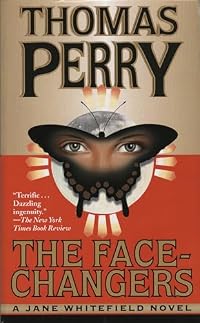
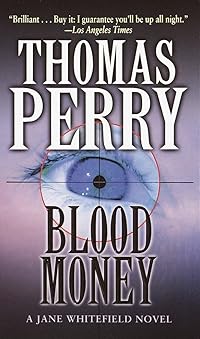
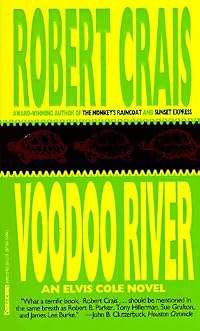

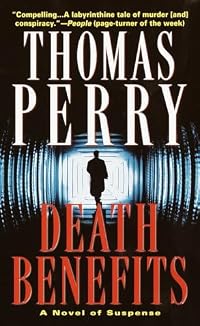


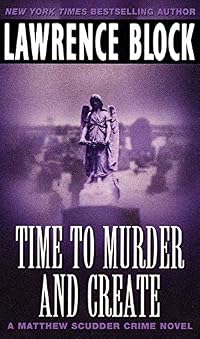
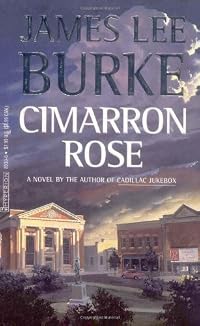


Member Recommendations
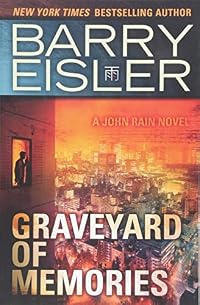
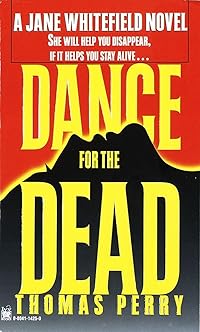
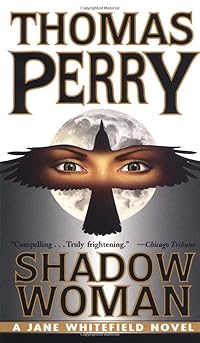
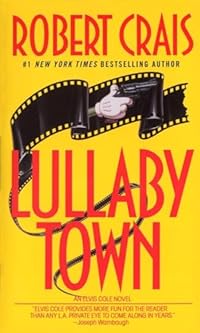
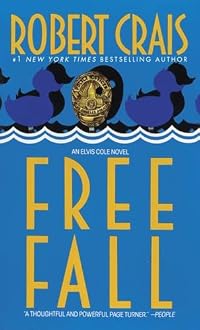
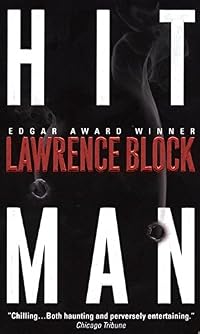
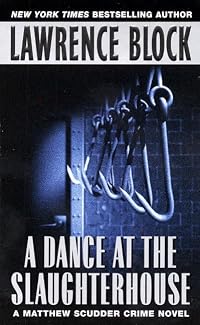
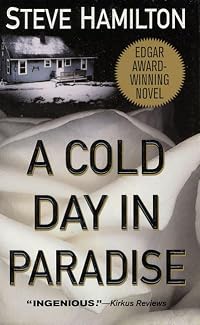
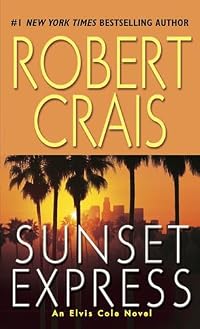
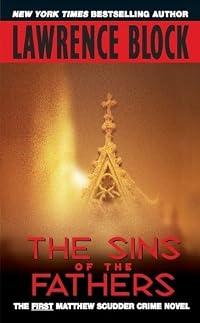
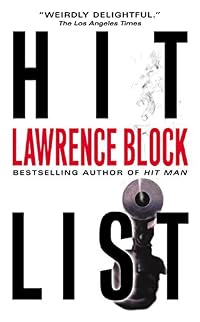
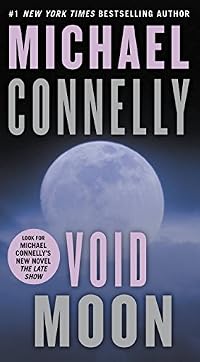
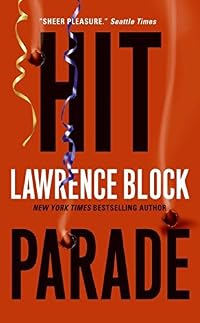
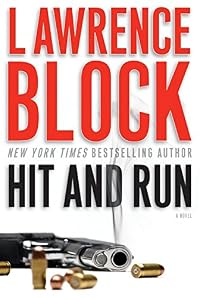
crazybatcow Very similar main characters: just regular guys with irregular jobs trying to make a living. Keller's stories don't have the legal system component however.
Member Reviews
For some reason, I'd never read this first Thomas Perry book. What a delight it was to read it now. Perry has such a fine hand with plot detail. Just the littlest pieces come together so beautifully. In Butcher Boy, you know the paid assassin and you know him well. You have no idea who paid him and neither does he. You also know Elizabeth Waring, a rookie FBI agent almost accidentally on her first case which she builds from the minutest details. The stories - Elizabeth's and the assassin's - run along parallel lines building to a remarkable ending. Perry is a master story teller.
Clever clever clever is what comes to mind whenever I read Thomas Perry. He is a smart writer and can create both sense of place and character so skillfully. I read this book years ago but forgot how interesting his characters, especially the main characters: the butcher's boy, killer-for-hire who is rounded out like no other assassin main character I've read about in a while and Elizabeth Waring, the mathematical analyst who is thrown into a mafia-related investigation as her first foray as a field agent. The butcher's boy takes his name from the fact that his mentor/father figure was actually a butcher at a meat shop in his day job. The contract killer actually feels fear, he gets nervous, he feels pain, and is a consummate show more professional in his work. Elizabeth really questions her job, her abilities, her boss while she still attempts to gather the threads of a bunch of seemingly unrelated murders. There are numerous US cities featured in this novel, but it is primarily set in Las Vegas, which Perry vividly captures in his spare, gorgeous sentences. Definitely look forward to re-reading the follow-up book to this one, Sleeping Dogs, which takes place 10 years after this one ends. show less
The Butcher's Boy is Perry's first novel, re-released in 2003. In large format, of course, so the publisher can charge more. Even so, it is worth it. The eponymous Butcher's Boy is the unnamed assassin that has been hired to kill a local union member and a US Senator from Colorado. Eventually he ends up in the middle of a mafia cover-up in Vegas while he's trying to get paid for the jobs.
He is pursued by Elizabeth Waring of the Justice Department. She is part of a department dedicated to organized crime, and specifically to trying to identify assassins. She ends up sent out from D.C. to California, then Colorado and finally Vegas in pursuit of the Butcher's Boy though she doesn't initially know all the bits are connected, let alone by a show more professional assassin.
What is amazing is that Perry can make a cold-blooded killer with no name, no background, and no particular future, such an intensely involving character. It really amounts to a week or so in the life of an assassin. There is no heavy-handed exposition. Perry allows you to find out about how tricky the job is and a bit about how the business works as it comes out very naturally in the Butcher's Boy's actions and inner dialog. With good writing and pacing an unusual and appalling job becomes the story of someone highly skilled doing a very difficult job well for employers who don't really appreciate his talents. Something we can all relate to, even if at the end of the novel we wonder at ourselves for empathizing with a truly evil man. show less
He is pursued by Elizabeth Waring of the Justice Department. She is part of a department dedicated to organized crime, and specifically to trying to identify assassins. She ends up sent out from D.C. to California, then Colorado and finally Vegas in pursuit of the Butcher's Boy though she doesn't initially know all the bits are connected, let alone by a show more professional assassin.
What is amazing is that Perry can make a cold-blooded killer with no name, no background, and no particular future, such an intensely involving character. It really amounts to a week or so in the life of an assassin. There is no heavy-handed exposition. Perry allows you to find out about how tricky the job is and a bit about how the business works as it comes out very naturally in the Butcher's Boy's actions and inner dialog. With good writing and pacing an unusual and appalling job becomes the story of someone highly skilled doing a very difficult job well for employers who don't really appreciate his talents. Something we can all relate to, even if at the end of the novel we wonder at ourselves for empathizing with a truly evil man. show less
There are both advantages and disadvantages to the preference of reading books in a series in order. An obvious plus is that surprises are not ruined when referenced or built upon in later works. The most common drawback is encountering an author before he has learned the ins and outs of his craft. Unfortunately, The Butcher’s Boy is an example of the later. Throughout most of the book I kept wondering, Did he have an editor?
The novel follows two characters on their separate journeys: a professional killer known only by the title of the book (though I understand he gets a proper name later in the series) and Elizabeth Waring, a Justice Department analyst forced into the field on an evidence-gathering assignment, which eventually turns show more into the tracking of the assassin. It is interesting in premise. It’s in the execution that it begins to fray.
Even allowing for thirty-four years--it was copyrighted in 1982--it was absurdly easy to kill both a U.S. Senator and a mafia chieftain, each with no preplanning. And twice the assassin openly and dramatically slips by pursuers and ducks out of sight, only to complete the rest of his escape “off-screen.” Meanwhile Elizabeth makes multiple mistakes, the first of which is incredibly stupid. In all fairness, though, her second error could be safely put down to inexperience. Still, as the story winds down her end begins to sag.
Perhaps the most interesting thing--in my copy, anyway (Random House, 2003)--is the introduction by Michael Connelly, where he does virtual gymnastics to avoid calling The Butcher’s Boy a great novel. He calls it a favorite, and praises character and pace, and remarks on Perry’s grasp of “the cornerstones of craft.” Connelly also reminds us that the author continues to get better and that this particular work won an Edgar Award. The last is certainly true. But the Edgar was for Best First Novel. In any given year the competition could be fierce or extremely light. I suspect light.
But there is something here. I find myself wanting to read more. Neither can I deny I was disappointed. show less
The novel follows two characters on their separate journeys: a professional killer known only by the title of the book (though I understand he gets a proper name later in the series) and Elizabeth Waring, a Justice Department analyst forced into the field on an evidence-gathering assignment, which eventually turns show more into the tracking of the assassin. It is interesting in premise. It’s in the execution that it begins to fray.
Even allowing for thirty-four years--it was copyrighted in 1982--it was absurdly easy to kill both a U.S. Senator and a mafia chieftain, each with no preplanning. And twice the assassin openly and dramatically slips by pursuers and ducks out of sight, only to complete the rest of his escape “off-screen.” Meanwhile Elizabeth makes multiple mistakes, the first of which is incredibly stupid. In all fairness, though, her second error could be safely put down to inexperience. Still, as the story winds down her end begins to sag.
Perhaps the most interesting thing--in my copy, anyway (Random House, 2003)--is the introduction by Michael Connelly, where he does virtual gymnastics to avoid calling The Butcher’s Boy a great novel. He calls it a favorite, and praises character and pace, and remarks on Perry’s grasp of “the cornerstones of craft.” Connelly also reminds us that the author continues to get better and that this particular work won an Edgar Award. The last is certainly true. But the Edgar was for Best First Novel. In any given year the competition could be fierce or extremely light. I suspect light.
But there is something here. I find myself wanting to read more. Neither can I deny I was disappointed. show less
The Butcher's Boy may have won awards when it was published but it hasn't aged well. Technology's advances in the last 30 years make such scenes as Justice Department agents being called to 'answer the white courtesy phone' at the airport positively grating.
The book's one saving grace is the title character; the 'unnamed' assassin. He may not have the mad skills of the Jackal but he is an engaging character and I was more interested in what happened to him than in any other character.
The book's one saving grace is the title character; the 'unnamed' assassin. He may not have the mad skills of the Jackal but he is an engaging character and I was more interested in what happened to him than in any other character.
It's clear that I'm a bit jaded: the title led me to expect a gory smash-em-up story, but this is, instead, a calm-cool-and-collected story about a hit man just trying to make his living.
I quite liked it, even though it was nothing like what I expected. It is very similar to Lawrence Block's Keller series (which are more recent and, as such, the main character has to worry about DNA and not about physically attending a bank to get at his cash).
I didn't really like the whole FBI/Justice Department component - it was rather boring and choppy. I didn't care about any of these investigators and it seems as though people in these parts of the story were just randomly killed - an agent here, an agent there, a bad guy turned informant here... show more but I don't know what the point of all that was since it didn't really advance the story, and most of these killings were done "off-stage" anyway.
Anyway, I see there is a followup book about the Butcher's boy so I'll go take a look at that one. show less
I quite liked it, even though it was nothing like what I expected. It is very similar to Lawrence Block's Keller series (which are more recent and, as such, the main character has to worry about DNA and not about physically attending a bank to get at his cash).
I didn't really like the whole FBI/Justice Department component - it was rather boring and choppy. I didn't care about any of these investigators and it seems as though people in these parts of the story were just randomly killed - an agent here, an agent there, a bad guy turned informant here... show more but I don't know what the point of all that was since it didn't really advance the story, and most of these killings were done "off-stage" anyway.
Anyway, I see there is a followup book about the Butcher's boy so I'll go take a look at that one. show less
Unusual perspective: the main character is a hit man working mostly for organized crime figures. Thus a bit uncertain who to root for when detectives and FBI fumble about. What the heck, I'm from Chicago so I got behind the hit man. Well written and exciting.
Members
- Recently Added By
Lists

Edgar Award
418 works; 15 members
Author Information

41+ Works 12,967 Members
Thomas Perry was born in Tonawanda, New York, in 1947. He graduated from Cornell University in 1969 and earned a Ph. D. in English Literature from the University of Rochester in 1974. Perry's novels, successful both critically and with the public, are suspenseful as well as comic. Butcher's Boy received an Edgar Award from the Mystery Writers of show more America for Best First Novel in 1983, and another one of his novels has been adapted in the movie, The Guide (1999). His other novels include: Death Benefits, Nightlife, Fidelity, and Strip. (Bowker Author Biography) Won an Edgar for The Butcher's Boy, and Metzger's Dog was a New Yor Times Notable book of the Year. Vanishing Act was chosen as one of the 100 Favorite Mysteries of the century by the Independent Mystery Booksellers Association. Perry's other works include: Death Benefits, The Face Changers, Shadow Woman, Dance for the Dead, and Blood Money. He lives in Southern California with his wife and two daughters. (Publisher Provided) show less
Awards and Honors
Series

Work Relationships
Is contained in
Common Knowledge
- Canonical title
- The Butcher's Boy
- Original publication date
- 1982
- People/Characters
- Butcher's Boy; Elizabeth Waring; John Brayer
- Important places
- Washington, D.C., USA; Las Vegas, Nevada, USA
- First words
- The union meeting, thought Al Veasy, had gone as well as could be expected, all things considered.
- Last words
- (Click to show. Warning: May contain spoilers.)It was ridiculous, he knew, but once the problem had occurred to him it had bothered him for days. What was the name of Eddie Masterwski's cat?
Classifications
Statistics
- Members
- 705
- Popularity
- 40,130
- Reviews
- 21
- Rating
- (3.81)
- Languages
- Czech, English, German, Hungarian
- Media
- Paper, Audiobook, Ebook
- ISBNs
- 30
- ASINs
- 5