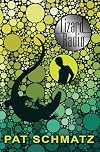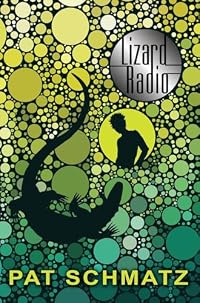
Lizard Radio
by Pat Schmatz
On This Page
Description
"Fifteen-year-old bender Kivali has had a rough time in a gender-rigid culture. Abandoned as a baby and raised by Sheila, an ardent nonconformist, Kivali has always been surrounded by uncertainty. Where did she come from? Is it true what Sheila says, that she was deposited on Earth by the mysterious saurians? What are you? people ask, and Kivali isn't sure. Boy/girl? Human/lizard? Both/neither? Now she's in CropCamp, with all of its schedules and regs, and the first real friends she's ever show more had. Strange occurrences and complicated relationships raise questions Kivali has never before had to consider. But she has a gift--the power to enter a trancelike state to harness the "knowings" inside her. She has Lizard Radio. Will it be enough to save her?" -- show lessTags
Recommendations




Member Reviews
This is a really great story of how a young person learns to take control of her own life in the face of personal bigotry, an authoritarian "troubled teens" program, and a literal dystopian government. It's also interesting to see a setting (other than Iran) where binary trans youth are treated relatively well, but LGB and non-binary folks are on the wrong side of the law. There's a lot of setting-specific jargon in this book, but most of it is pretty easy to figure out. My only complaint is that I wish the ending had been a little less ambiguous. I want to see Lizard win, at least a little! But this may be intentional.
https://fromtheheartofeurope.eu/the-new-mother-by-eugene-fischer-and-lizard-radi...
There are a lot of dystopian YA novels around, and frankly I’m beginning to find them a bit formulaic, but this is a different matter with a sparkling and nervous energy about it. Kivali, the genderqueer protagonist, is sent to a re-education camp in a dystopian near future, and must negotiate quasi-parental relationships, friends and potential lovers, and the ever-present threat of “vaping”, which in this case means physically spontaneously evaporating, rather than any recreational vapour consumption. The protagonist’s vocabulary is just abit off-kilter and that keeps you as a reader on your toes. I’m surprised that I hadn’t heard of this show more before, and well done to the Tiptree / Otherwise judges for picking it out of the field. show less
There are a lot of dystopian YA novels around, and frankly I’m beginning to find them a bit formulaic, but this is a different matter with a sparkling and nervous energy about it. Kivali, the genderqueer protagonist, is sent to a re-education camp in a dystopian near future, and must negotiate quasi-parental relationships, friends and potential lovers, and the ever-present threat of “vaping”, which in this case means physically spontaneously evaporating, rather than any recreational vapour consumption. The protagonist’s vocabulary is just abit off-kilter and that keeps you as a reader on your toes. I’m surprised that I hadn’t heard of this show more before, and well done to the Tiptree / Otherwise judges for picking it out of the field. show less
This was pretty good. It's nice to see a young-adult book that tackles issues of gender identity, especially one that handles them in an interesting way. There's a unique opportunity in science fiction and fantasy books to create and investigate cultures that don't have the same cultural norms and prejudices that our world does. Unfortunately, the two most common approaches seem to be:
a) Everything is almost exactly the same as it is now (or at least where some unobservant liberals seem to think things are now). Women and minorities are occasionally allowed to be in positions of authority. Mixed race romance is tolerated but still gossip-worthy. Homosexuality isn't outlawed outright, but parents still have a hard time coping with a show more child who comes out of the closet. This is totally fine for near-future sci-fi, but for stuff set decades in the future, it's at best depressingly cynical and at worst unimaginative.
b) The libertarian paradise. Everything is wonderful and nobody is inappropriately prejudiced towards anyone for any reason whatsoever. People can be whoever they want to be, love whoever they want, and do whatever they want as long as they don't hurt others. An admirable goal for a society, but it seldom makes an interesting story.
I much prefer works like this that fall somewhere in between. Lizard Radio is very clearly set in a dystopian society with an oppressive government and society. This society is well aware that not everyone identifies with the gender traditionally associated to their genes. There are even mechanisms in place to identify transgendered children and help them transition early. But being transgendered or gay still comes with a stigma, and the society still has trouble with those who don't want to choose a gender or who don't conform strongly enough to the norms of either gender. I don't think I've seen an approach like that anywhere else.
The society in Lizard Radio has other major problems too (ones not directly related to gender identity or sexuality), but those are the more standard repressive government dystopian stuff.
But even without the interesting take on gender norms, there are things to like about Lizard Radio. I'm a sucker for playing with language, and the world Pat Schmatz has created has all sorts of lovely slang in it. The camp cafeteria is called the "mealio", LED-flashlights are "leddies", sexual activity or attraction is "jazz", camp demerits are "culpas", etc. It's a little weird that everyone uses the exact same words, with not a whole lot of difference in vocabulary between the adults and the children, but they really are lovely words, so I'm willing to forgive that.
I don't usually talk much about the low-level craft of writing prose, but I noticed that Schmatz has a delightful way with oddball hyphenated compounds. While trying to unzip their tent without being heard, the protagonist "slow-ticks" the zipper open. One character has a "fuzz-poof" of hair. A three-year-old throwing a tantrum starts up a "holler-waller". And then there's this line of dialogue, which I love: "That was the icy-coldest dose of shut-up I ever got."
The story is engaging and the characters are interesting, except for the male characters, who kind of get a short shrift in the personality department. (There are plenty of other interesting characters, so no big deal there. I'd be more upset if it were the other way around.)
The only major negative thing was that the ending left me a little cold, although I'm not entirely certain why. A lot of mysteries do get answered, but they weren't really the ones I cared about. Many mysterious things go completely unexplained, which isn't necessarily a bad thing. The characters and the narrative isn't really obsessed with solving those mysteries, so I never really expected them to be cleared up. There was also a bit of a pile-up of sudden action and coincidence near the end, and that didn't help too much. The protagonist does end up taking some matters into their own hands, but many of the immediate consequences have been de-fanged by that point, so the impact is less than it might be otherwise. Yes, there are plausible in-universe reasons for this, but it still affected the way the story landed on me. Anyway, for whatever reason, I was a bit disappointed in the ending.
Regardless, it's still a good book. show less
a) Everything is almost exactly the same as it is now (or at least where some unobservant liberals seem to think things are now). Women and minorities are occasionally allowed to be in positions of authority. Mixed race romance is tolerated but still gossip-worthy. Homosexuality isn't outlawed outright, but parents still have a hard time coping with a show more child who comes out of the closet. This is totally fine for near-future sci-fi, but for stuff set decades in the future, it's at best depressingly cynical and at worst unimaginative.
b) The libertarian paradise. Everything is wonderful and nobody is inappropriately prejudiced towards anyone for any reason whatsoever. People can be whoever they want to be, love whoever they want, and do whatever they want as long as they don't hurt others. An admirable goal for a society, but it seldom makes an interesting story.
I much prefer works like this that fall somewhere in between. Lizard Radio is very clearly set in a dystopian society with an oppressive government and society. This society is well aware that not everyone identifies with the gender traditionally associated to their genes. There are even mechanisms in place to identify transgendered children and help them transition early. But being transgendered or gay still comes with a stigma, and the society still has trouble with those who don't want to choose a gender or who don't conform strongly enough to the norms of either gender. I don't think I've seen an approach like that anywhere else.
The society in Lizard Radio has other major problems too (ones not directly related to gender identity or sexuality), but those are the more standard repressive government dystopian stuff.
But even without the interesting take on gender norms, there are things to like about Lizard Radio. I'm a sucker for playing with language, and the world Pat Schmatz has created has all sorts of lovely slang in it. The camp cafeteria is called the "mealio", LED-flashlights are "leddies", sexual activity or attraction is "jazz", camp demerits are "culpas", etc. It's a little weird that everyone uses the exact same words, with not a whole lot of difference in vocabulary between the adults and the children, but they really are lovely words, so I'm willing to forgive that.
I don't usually talk much about the low-level craft of writing prose, but I noticed that Schmatz has a delightful way with oddball hyphenated compounds. While trying to unzip their tent without being heard, the protagonist "slow-ticks" the zipper open. One character has a "fuzz-poof" of hair. A three-year-old throwing a tantrum starts up a "holler-waller". And then there's this line of dialogue, which I love: "That was the icy-coldest dose of shut-up I ever got."
The story is engaging and the characters are interesting, except for the male characters, who kind of get a short shrift in the personality department. (There are plenty of other interesting characters, so no big deal there. I'd be more upset if it were the other way around.)
The only major negative thing was that the ending left me a little cold, although I'm not entirely certain why. A lot of mysteries do get answered, but they weren't really the ones I cared about. Many mysterious things go completely unexplained, which isn't necessarily a bad thing. The characters and the narrative isn't really obsessed with solving those mysteries, so I never really expected them to be cleared up. There was also a bit of a pile-up of sudden action and coincidence near the end, and that didn't help too much. The protagonist does end up taking some matters into their own hands, but many of the immediate consequences have been de-fanged by that point, so the impact is less than it might be otherwise. Yes, there are plausible in-universe reasons for this, but it still affected the way the story landed on me. Anyway, for whatever reason, I was a bit disappointed in the ending.
Regardless, it's still a good book. show less
I have a question. Does any teen ever think that they fit in?
I'm pretty sure the answer is No.
In fact, I don't think many people at all, at least in the US, feel comfortable on their path and in their skin. Otherwise why so many self-help books and New Year's resolutions and Finding Happiness books?
So I get pretty tired of books that pick a Differentness and then develop a character who suffers from it (but then of course eventually learns to embrace it or possibly even recover from it, often [esp. in YA] with the help of a preternaturally & precociously wise sweetheart).
This is not one of those books.
Yes, there is a differentness. But it's not some common minor "oh I like math instead of football" or "the mean girls snark at my show more clothes because they're not the right labels." This girl will go to the Blight* if she doesn't shape up to fit in. And yes there is a sweetheart. But she's not a source of wisdom or comfort. Yes there's teen melodrama. Etc.
But it's so much more than just another YA book about a misfit. It's so much more than "all the feels."
It's actually, in many ways, a brilliant book.
And even though it's got some flaws, and even though I, personally, found it less than fully satisfying, I am giving it four stars and recommending it to any of you who are looking for something original, smart, challenging, and bursting brimful of resonant, memorable heart.
*The Blight, benders, samers, fiking, etc. No glossary. This is not fully SF. Not, tbh, a dystopia. This is an exploration of a teen, and a family, and a community, in a society that resembles ours more than one realizes. The dystopian setting is superficial. Don't look for answers as to what exactly is going on. Don't look for an easily film-able movie version of this.
"The problem with living in two realities is that neither one gets to be entirely real." show less
I'm pretty sure the answer is No.
In fact, I don't think many people at all, at least in the US, feel comfortable on their path and in their skin. Otherwise why so many self-help books and New Year's resolutions and Finding Happiness books?
So I get pretty tired of books that pick a Differentness and then develop a character who suffers from it (but then of course eventually learns to embrace it or possibly even recover from it, often [esp. in YA] with the help of a preternaturally & precociously wise sweetheart).
This is not one of those books.
Yes, there is a differentness. But it's not some common minor "oh I like math instead of football" or "the mean girls snark at my show more clothes because they're not the right labels." This girl will go to the Blight* if she doesn't shape up to fit in. And yes there is a sweetheart. But she's not a source of wisdom or comfort. Yes there's teen melodrama. Etc.
But it's so much more than just another YA book about a misfit. It's so much more than "all the feels."
It's actually, in many ways, a brilliant book.
And even though it's got some flaws, and even though I, personally, found it less than fully satisfying, I am giving it four stars and recommending it to any of you who are looking for something original, smart, challenging, and bursting brimful of resonant, memorable heart.
*The Blight, benders, samers, fiking, etc. No glossary. This is not fully SF. Not, tbh, a dystopia. This is an exploration of a teen, and a family, and a community, in a society that resembles ours more than one realizes. The dystopian setting is superficial. Don't look for answers as to what exactly is going on. Don't look for an easily film-able movie version of this.
"The problem with living in two realities is that neither one gets to be entirely real." show less
I was completely and utterly floored by this book. It's complex, mysterious, inspiring, heartbreaking - a story about a young person who walks on the boundaries of life, trying to find a way out of the rules. The world they live in is dystopian, but not so much more so than our own world.
LIZARD RADIO by Pat Schmatz is a thought-provoking dystopian novel exploring issues of identity, diversity, socialization, and the power of free will.
Set in an alternative universe, foster-child Kavali is sent to an agricultural camp for teens. Encouraged to conform and become part of the cooperative society, Kavali struggles to find her place. Is Kavali a human or lizard, a samer or bender, a he or a she? Her journey of self-discovery will have readers asking questions about the nature of reality and one’s place in the universe.
The fast-paced story and fascinating use of vocabulary will quickly immerse young adult readers in Kavali’s world. By weaving in elements of mysticism and the paranormal, Schmatz keeps readers wondering show more about the nature of reality in this parallel world.
Librarians tired of the same-old dystopian adventures will find Schmatz’s character-driven story refreshing. The gender-questioning protagonist will appeal to many coming-of-age youth who struggle with issues of identity.
To learn more about the author, go to http://www.patschmatz.com/.
Published by Candlewick on September 8, 2015. show less
Set in an alternative universe, foster-child Kavali is sent to an agricultural camp for teens. Encouraged to conform and become part of the cooperative society, Kavali struggles to find her place. Is Kavali a human or lizard, a samer or bender, a he or a she? Her journey of self-discovery will have readers asking questions about the nature of reality and one’s place in the universe.
The fast-paced story and fascinating use of vocabulary will quickly immerse young adult readers in Kavali’s world. By weaving in elements of mysticism and the paranormal, Schmatz keeps readers wondering show more about the nature of reality in this parallel world.
Librarians tired of the same-old dystopian adventures will find Schmatz’s character-driven story refreshing. The gender-questioning protagonist will appeal to many coming-of-age youth who struggle with issues of identity.
To learn more about the author, go to http://www.patschmatz.com/.
Published by Candlewick on September 8, 2015. show less
If you are coming to this book because you loved the author's previous work, Bluefish, you will need to adjust your expectations going in. I don't know that I've read two books by the same author that were so radically different. That said, Lizard Radio is a fascinating look at belonging and identification, a little thinker of a book.
Kivali is a "bender," a person who has not conformed to either gender and is therefore sent to a sort of "last-chance" camp to decide her future.(She mostly identifies as female and uses female pronouns so I will as well.) When things are still, she can tune in to her own "Lizard Radio," an internal knowing similar to meditation or prayer. But the gender binary is but one of the absolutes presented to her. show more At camp, does she follow the rules or try to change them? Is she from this earth or was she dropped by the lizard people? And do our choices matter at all?
This could be a sleeper for a Printz nod and I would be delighted. show less
Kivali is a "bender," a person who has not conformed to either gender and is therefore sent to a sort of "last-chance" camp to decide her future.(She mostly identifies as female and uses female pronouns so I will as well.) When things are still, she can tune in to her own "Lizard Radio," an internal knowing similar to meditation or prayer. But the gender binary is but one of the absolutes presented to her. show more At camp, does she follow the rules or try to change them? Is she from this earth or was she dropped by the lizard people? And do our choices matter at all?
This could be a sleeper for a Printz nod and I would be delighted. show less
Members
- Recently Added By
Lists

LGBTQ+ Speculative Fiction
818 works; 51 members

School library books removed after TX state legislator inquiry
429 works; 6 members

Books Read in 2016
110 works; 1 member

Books recommended by Calgary Public Library staff
1,588 works; 4 members
Author Information

10+ Works 776 Members
Awards and Honors
Awards
Common Knowledge
- Quotations
- Nothing is safe. Some things are free.
- Publisher's editor
- Powers, Joan
Classifications
- Genres
- Fiction and Literature, LGBTQ+, Teen, Young Adult
- DDC/MDS
- 813.6 — Literature & rhetoric American literature in English American fiction in English 2000-
- LCC
- PZ7 .S34734 .L — Language and Literature Fiction and juvenile belles lettres Fiction and juvenile belles lettres Juvenile belles lettres
- BISAC
Statistics
- Members
- 210
- Popularity
- 154,802
- Reviews
- 10
- Rating
- (3.93)
- Languages
- English
- Media
- Paper, Audiobook, Ebook
- ISBNs
- 9
- ASINs
- 1