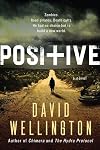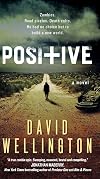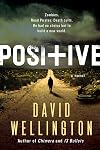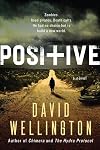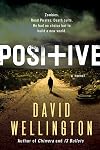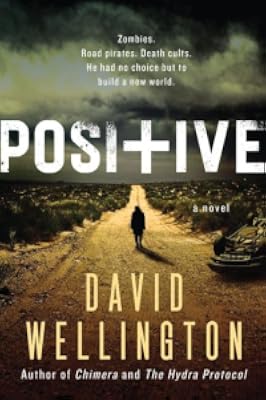
Positive: A Novel
by David Wellington
On This Page
Description
In the bestselling vein of Guillermo Del Toro and Justin Cronin, the acclaimed author of Chimera and The Hydra Protocol delivers his spectacular breakout novel-an entertaining page-turning zombie epic that is sure to become a classic. Anyone can be positive . . . The tattooed plus sign on Finnegan's hand marks him as a Positive. At any time, the zombie virus could explode in his body, turning him from a rational human into a ravenous monster. His only chance of a normal life is to survive show more the last two years of the potential incubation period. If he reaches his twenty-first birthday without an incident, he'll be cleared. Until then, Finn must go to a special facility for positives, segregated from society to keep the healthy population safe. But when the military caravan transporting him is attacked, Finn becomes separated. To make it to safety, he must embark on a perilous cross-country journey across an America transformed-a dark and dangerous land populated with heroes, villains, madmen, and hordes of zombies. And though the zombies are everywhere, Finn discovers that the real danger may be his fellow humans. Mad Max Beyond Thunderdome meets World War Z and I Am Legend in this thrilling tale that has it all: a compelling story, great characters, and explosive action, making Positive the ultimate zombie novel of our time. show lessTags
Recommendations
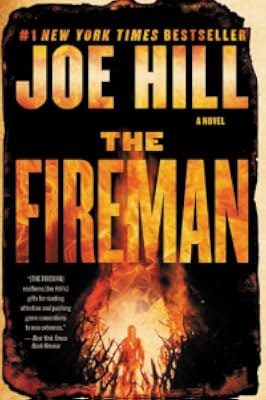
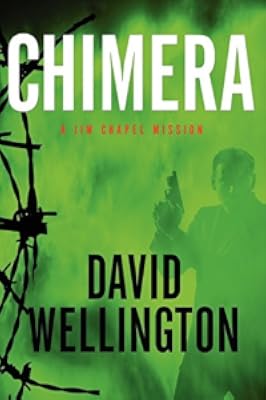
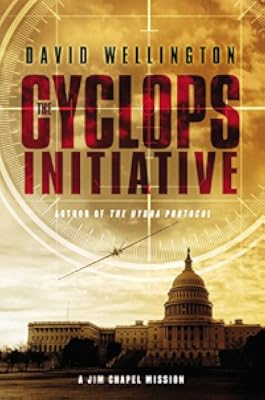
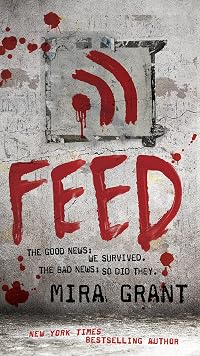
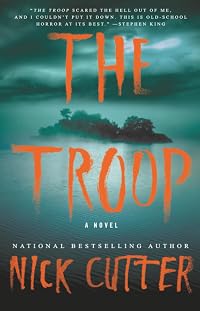
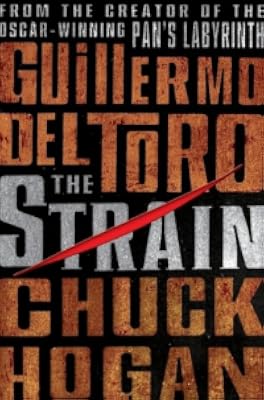
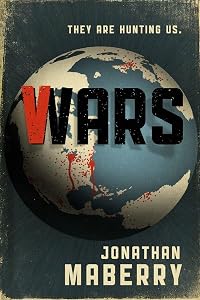
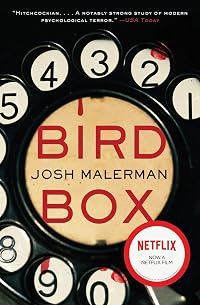
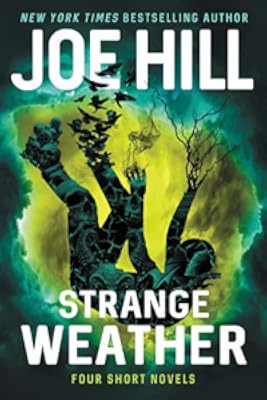
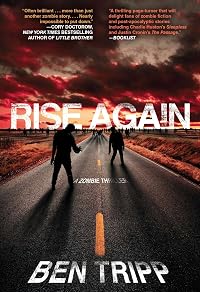
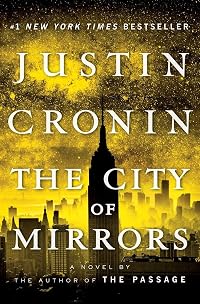
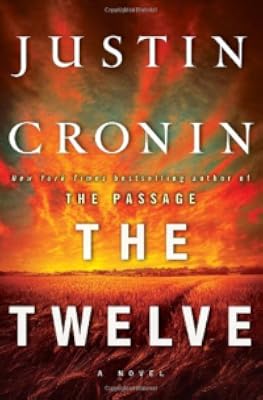
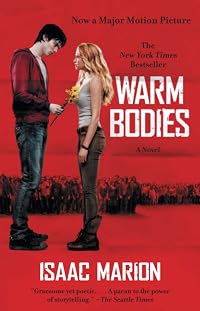
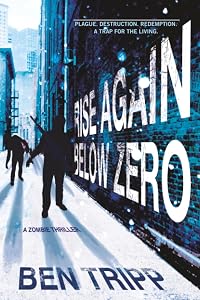
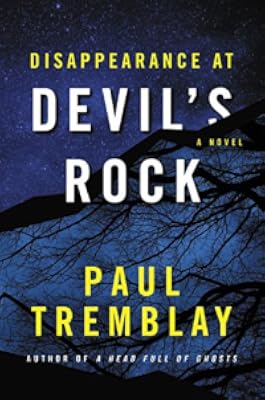
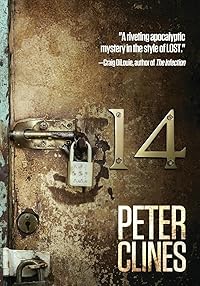
Member Recommendations
Member Reviews
In this zombie apocalypse, an infection is what makes zombies, and you could be carrying the virus for 20 years before it might suddenly activate. Those who might be carrying the virus but haven't turned are tattood with a big plus sign on their left hands for "positive" and sent to medical camps. This happens to the narrator, Finn, after his mother turns into a zombie. This is basically a page-turning road-trip adventure, with lots of bad guys like road pirates and death cultists, and a few zombies to add a constant element of danger and provide an explanation for why all these people are so awful to each other. It was quite epic, in that Finn has a hard time getting to the medical camp in the first place after falling in with some show more looters, then discovers the medical camp is a hellhole and has to lead an escape and find a new place where the positives can live. I disagree with one reviewer who found no "strong" female characters in this book; I think Kylie was a realistic, well-developed character who reacted understandably to a lifetime of abuse but nevertheless still took care of herself. And I don't think all villains should necessarily be men; it's nice to have a female bad guy every once in a while. For a zombie novel, this one held my attention and kept me engaged all the way through. show less
As far as post-apocalyptic books go this is a good book. I found the world really believable. It takes place twenty years after most of the population has been decimated. So I could understand the rest of the human race's need to loot and fight each other. If you are living day by day just trying to survive and it is a dog eat world than you may have to kill just to survive as only the strongest and smartest survive.
In this book it really is the humans that are the strongest presence and not the zombies. So if you are a zombie fan than you may be disappointed with the lack of zombies. Also, I found that this book could have been shortened at about 150 pages to even 200 pages and it would have been fine. It takes a while to build up the show more pacing of the story. However the ending does make up for some of the lack of action. show less
In this book it really is the humans that are the strongest presence and not the zombies. So if you are a zombie fan than you may be disappointed with the lack of zombies. Also, I found that this book could have been shortened at about 150 pages to even 200 pages and it would have been fine. It takes a while to build up the show more pacing of the story. However the ending does make up for some of the lack of action. show less
This is a thoughtful and intelligent zombie apocalypse tale, with an occasional zombie thrown in for fright. Twenty years after zombies have decimated humanity, America remains on the brink of total collapse, as technology has not been able to save it from the gangs, slavers and religious nuts, who use the apocalypse as an excuse to act on their most base and depraved desires.
While the government focuses their resources and energies on corralling anyone deemed "potentially, infected," the dregs of society plot to turn the entire country into a thiefdom and enslave the remaining human population. One young man has decided not to go along, just to get along.
I really enjoyed the narrator's enthusiasm as he brought out all the tense moments show more and bitter losses, with his voice and inflections, But I am wondering how the bugs did not eat the mints in the librarian's purse for two decades?...SMILE!!! show less
While the government focuses their resources and energies on corralling anyone deemed "potentially, infected," the dregs of society plot to turn the entire country into a thiefdom and enslave the remaining human population. One young man has decided not to go along, just to get along.
I really enjoyed the narrator's enthusiasm as he brought out all the tense moments show more and bitter losses, with his voice and inflections, But I am wondering how the bugs did not eat the mints in the librarian's purse for two decades?...SMILE!!! show less
See Finn and his parents. See Finn leave New York. See Finn fight off a scary woman. See Finn meet a man traveling with young girls. See Finn fight off scary man. See Finn fail to develop worldliness. See Finn act like dumb Knight in Shiny Armor. See Finn get beat forty different times. See carol wish she could slap some sense into Finn.
Serves me right, you say. What am I doing reading zombie books and expecting great literature? Because zombies are Other, but they were people, and it is fascinating to see how authors and their characters cope with survival, identity, and fear. If you don’t think there haven’t been some great zombie literature books, then you need to read farther into the genre.
I thought Wellington would be a good show more novelist, as I had recently encountered his short stories in the triptych The End is Nigh/Come. I thought his stories interesting; fun, fast, and with a concept that strikes right to the heart of the Other/Us concept–people who have been exposed to zombies are put into internment camps until time runs out on the virus-exposure limits (and if that doesn’t just put you in mind of USA’s Japanese internment camps and Guantanamo Bay, then you should go look up allegory).
The plot is broken up into three major sections. There’s a brief introduction to Finn and his life in New York City, twenty years after the zombie apocalypse. He characterizes people into “first generation” that lived through the massive upheaval and everyone born after. After leaving NYC, he is rescued by a scavenger and his carload of young girls. This is the most zombie-centered section of the book, and feels a great deal like a Mad Max survivalist scenario. After escaping his rescuer, the group drives to Ohio, to the government camp. Then it is internment camp time, followed by an escape and a shot at a new life. Really, it isn’t about the zombies as much a young person’s coming-of-age in three parts. And I really think this young person needs a solid slap upside the head because he seems immune to the effects of experience.
Although I didn’t much care for Finn–he never really matured or recognized any kind of subtlety of thought–I did enjoy the personalities of the side characters. Grizzled mad Kate, faithful Ike, and Kylie, the troubled young woman, all hailed from central casting, but at least I found their realism a refreshing contrast to Finn’s persistent ignorance. Surprisingly, I rather appreciated the sociopathic side characters as well, although the fact that they were there and Finn continued to be surprised by them was irritating.
The combination of Finn’s character and the dull, point-by-point writing is what ended my interest in the story. It wasn’t bad so much as utterly boring. I literally was forcing myself to pick up the book and read. It was a challenge to figure out why I didn’t like it, because on the whole, Wellington is far more competent than many zombie-story writers (Rhiannon Frater, I’m looking at you). I believe it partly narrows down to the plodding description, Finn’s lack of introspection and a storytelling style that tends towards describing as if one is telling someone else about a movie they watched last week. It tends to follow a formula: Finn sees something. Someone explains to Finn what he is seeing. Finn then re-observes the scene with this knowledge. We move on to something else Finn doesn’t understand.
Behind the spoiler, I’m going to put some examples of the writing. They really aren’t spoilerific, but I’m avoiding the wall ‘o text, because the proof is in the puddin.'
Overall, I found it a disappointing entry into the zombie oeuvre (oh yes; I said that). Good thing The Walking Dead returns soon, so I can get my fix through television and go back to reading serious books.
“She didn’t tell me to leave. She didn’t order me off the tank and back to the tiny little room in the concrete building. As quickly as it had come, the emotion in her fled again and she shut down once more. So I sat down next to her, because I didn’t have anywhere else to go, either. Ohio seemed very far away.
Together we sat and watched the looters as their party raged into the night. From up there they didn’t seem so bad. By that time some of them had gotten drunk enough to pass out in their cars or just flat out on the asphalt. Others were singing a song together, wrapping their arms around each other. One guy was bent over the hood of his car, painting intricate flames with a tiny brush. I doubted he could even see what he was doing–the only light came from the oil drum fires, and that was nearly as bad as the moonlight–but he’d been at it for hours.
“They love those cars,” I said, just to hear myself talk.
“The have to. A looter on foot, out in the wilderness, is just zombie food. And the cars are all twenty years old, so they need constant repairs and attention.”
I hadn’t considered the fact that nobody in the world had built a new car in twenty years. The looters’ cars gleamed in the firelight as if they’d just been washed and detailed. The chrome on their bumpers was immaculate, unblemished by dings or scratches.
By way of contrast, the motorcycles parked to one side of the lot were covered in dust and grease, and they lacked the flowing lines and careful craftsmanship of the cars.”
Serves me right, you say. What am I doing reading zombie books and expecting great literature? Because zombies are Other, but they were people, and it is fascinating to see how authors and their characters cope with survival, identity, and fear. If you don’t think there haven’t been some great zombie literature books, then you need to read farther into the genre.
I thought Wellington would be a good show more novelist, as I had recently encountered his short stories in the triptych The End is Nigh/Come. I thought his stories interesting; fun, fast, and with a concept that strikes right to the heart of the Other/Us concept–people who have been exposed to zombies are put into internment camps until time runs out on the virus-exposure limits (and if that doesn’t just put you in mind of USA’s Japanese internment camps and Guantanamo Bay, then you should go look up allegory).
The plot is broken up into three major sections. There’s a brief introduction to Finn and his life in New York City, twenty years after the zombie apocalypse. He characterizes people into “first generation” that lived through the massive upheaval and everyone born after. After leaving NYC, he is rescued by a scavenger and his carload of young girls. This is the most zombie-centered section of the book, and feels a great deal like a Mad Max survivalist scenario. After escaping his rescuer, the group drives to Ohio, to the government camp. Then it is internment camp time, followed by an escape and a shot at a new life. Really, it isn’t about the zombies as much a young person’s coming-of-age in three parts. And I really think this young person needs a solid slap upside the head because he seems immune to the effects of experience.
Although I didn’t much care for Finn–he never really matured or recognized any kind of subtlety of thought–I did enjoy the personalities of the side characters. Grizzled mad Kate, faithful Ike, and Kylie, the troubled young woman, all hailed from central casting, but at least I found their realism a refreshing contrast to Finn’s persistent ignorance. Surprisingly, I rather appreciated the sociopathic side characters as well, although the fact that they were there and Finn continued to be surprised by them was irritating.
The combination of Finn’s character and the dull, point-by-point writing is what ended my interest in the story. It wasn’t bad so much as utterly boring. I literally was forcing myself to pick up the book and read. It was a challenge to figure out why I didn’t like it, because on the whole, Wellington is far more competent than many zombie-story writers (Rhiannon Frater, I’m looking at you). I believe it partly narrows down to the plodding description, Finn’s lack of introspection and a storytelling style that tends towards describing as if one is telling someone else about a movie they watched last week. It tends to follow a formula: Finn sees something. Someone explains to Finn what he is seeing. Finn then re-observes the scene with this knowledge. We move on to something else Finn doesn’t understand.
Behind the spoiler, I’m going to put some examples of the writing. They really aren’t spoilerific, but I’m avoiding the wall ‘o text, because the proof is in the puddin.'
Overall, I found it a disappointing entry into the zombie oeuvre (oh yes; I said that). Good thing The Walking Dead returns soon, so I can get my fix through television and go back to reading serious books.
“She didn’t tell me to leave. She didn’t order me off the tank and back to the tiny little room in the concrete building. As quickly as it had come, the emotion in her fled again and she shut down once more. So I sat down next to her, because I didn’t have anywhere else to go, either. Ohio seemed very far away.
Together we sat and watched the looters as their party raged into the night. From up there they didn’t seem so bad. By that time some of them had gotten drunk enough to pass out in their cars or just flat out on the asphalt. Others were singing a song together, wrapping their arms around each other. One guy was bent over the hood of his car, painting intricate flames with a tiny brush. I doubted he could even see what he was doing–the only light came from the oil drum fires, and that was nearly as bad as the moonlight–but he’d been at it for hours.
“They love those cars,” I said, just to hear myself talk.
“The have to. A looter on foot, out in the wilderness, is just zombie food. And the cars are all twenty years old, so they need constant repairs and attention.”
I hadn’t considered the fact that nobody in the world had built a new car in twenty years. The looters’ cars gleamed in the firelight as if they’d just been washed and detailed. The chrome on their bumpers was immaculate, unblemished by dings or scratches.
By way of contrast, the motorcycles parked to one side of the lot were covered in dust and grease, and they lacked the flowing lines and careful craftsmanship of the cars.”
Interesting and original zombie work. Worth reading.
This is a post-apocalyptic zombie story. However, zombies are more a background there, the real story is about people, their fears and hopes. So, if you wait for another zombie thrasher, pass on.
To some extent the novel follows some post-apocalyptic genre conventions, therefore some links can be made to such classics as [b:The Postman|889284|The Postman|David Brin|https://images.gr-assets.com/books/1348914032s/889284.jpg|924908] and [b:The Road|6288|The Road|Cormac McCarthy|https://images.gr-assets.com/books/1439197219s/6288.jpg|3355573]. For me, it can be ‘in spirit’ linked to early Fallout games: the protagonist has to leave the safe place, where s/he was born and face dangerous and exciting outside world, which will change show more his/her life forever.
The book is a page turner. I enjoyed reading it even despite in retrospect I can see some ‘stitches’ that are made to keep the story together. A nice read.
“We’re brought up thinking the world is this horrible place, that everything is bad and getting worse. That just barely surviving is so much work it might not even be worth it. But you—you don’t live in this world.”
“No?” I asked, surprised. “Where do I live?”
“A better one,”
show less
To some extent the novel follows some post-apocalyptic genre conventions, therefore some links can be made to such classics as [b:The Postman|889284|The Postman|David Brin|https://images.gr-assets.com/books/1348914032s/889284.jpg|924908] and [b:The Road|6288|The Road|Cormac McCarthy|https://images.gr-assets.com/books/1439197219s/6288.jpg|3355573]. For me, it can be ‘in spirit’ linked to early Fallout games: the protagonist has to leave the safe place, where s/he was born and face dangerous and exciting outside world, which will change show more his/her life forever.
The book is a page turner. I enjoyed reading it even despite in retrospect I can see some ‘stitches’ that are made to keep the story together. A nice read.
“We’re brought up thinking the world is this horrible place, that everything is bad and getting worse. That just barely surviving is so much work it might not even be worth it. But you—you don’t live in this world.”
“No?” I asked, surprised. “Where do I live?”
“A better one,”
show less
It was a bit of a struggle in the middle, to get through it. Main character is naive, but, I guess, he is meant to be young-ish (21, but acts 16) due to the nature of the world he lives in. I can't decide if it was worth finishing, or not. So, I guess that makes it mediocre, at best. The plus sides include an approach where rape was seen as a bad thing (unlike a lot of books in this genre where rape is normalized/celebrated), and the characters didn't act in ways that regular people wouldn't have acted. The down sides were the main character's naivety and special ability to know exactly how to do the correct thing at the correct time even though there was no background that would have given him this ability.
Members
- Recently Added By
Lists

Dystopian and Apocalyptic Literature
350 works; 74 members

ScaredyKIT 2019
9 works; 1 member

Books Read in 2019
4,052 works; 110 members
Author Information

35+ Works 5,165 Members
Common Knowledge
- Original title
- Positive
- Original publication date
- 2015
- Dedication
- For Adrian, Rakie, Nemesiso, and everyone who was there at the beginning
- First words
- New York City is still in pretty good shape.
- Last words
- (Click to show. Warning: May contain spoilers.)We didn't tattoo her little hand, and we're not going to.
Classifications
Statistics
- Members
- 208
- Popularity
- 157,519
- Reviews
- 10
- Rating
- (3.66)
- Languages
- English, French
- Media
- Paper, Audiobook, Ebook
- ISBNs
- 12
- ASINs
- 3