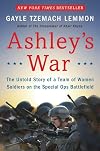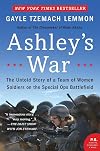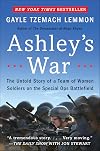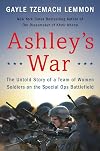
Ashley's War: The Untold Story of a Team of Women Soldiers on the Special Ops Battlefield
by Gayle Tzemach Lemmon
On This Page
Description
Presents the story of First Lieutenant Ashley White and a groundbreaking team of female American warriors who served alongside Special Operations soldiers on the battle field in Afghanistan.Tags
Recommendations


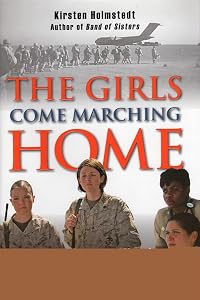
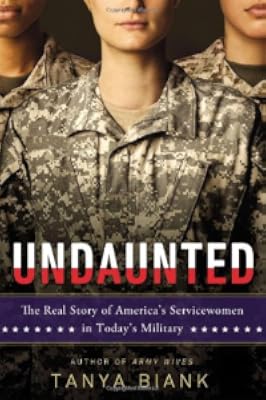

Member Reviews
As a female Army Veteran I was skeptical about this book. I received a free book to review from Library Thing, so I wasn't out money if I didn't like it or could not finish it. Not that far into it, it mentioned when the Army participated in the lioness details, where females would go out into the city with the male soldiers. I was a part of that movement for a while, years ago, so i was overwhelmed with joy that it had been recognized in passing :) I found the writing to be very accurate and detailed as to what female soldiers go through in a so-called man's world :) Ashley was such a strong soldier, it was inspiring to read about her. Even though I am now out of the Army and raising a family, reading her story reminded me of what i show more have been through and accomplished, and how i used to think i was good enough to do anything anyone told me i couldn't. It has inspired me to try and become that woman again. show less
This book chronicles the development of the U.S. Army’s Cultural Support Teams, which were teams of women soldiers who assisted Ranger and Green Beret units with special operations in Afghanistan. While we get to know several members of the very first CST class, much of the book focuses on Ashley White, who would ultimately give her life in service to her country, as the first CST member killed in action.
It describes the CST’s brutal selection and training process and does an admirable job in explaining the human side of this effort—how stressful this was on both the soldiers and their families back home. With the idea of women serving in combat operations being such a controversial one, the author does an excellent job of getting show more the reader into the minds of these women who feel called to serve on the front lines to understand their point of view and motives for taking such a difficult challenge.
White and her fellow CST members made such an impact on the war effort in Afghanistan that they have paved the way for women soldiers to take on more jobs previously denied to them simply because of their gender. The Army brass have noticed and are taking steps that should eventually open up all positions to women, including combat roles. All these women soldiers wanted was a greater challenge in their military careers; they not only got that, but they also made history too! show less
It describes the CST’s brutal selection and training process and does an admirable job in explaining the human side of this effort—how stressful this was on both the soldiers and their families back home. With the idea of women serving in combat operations being such a controversial one, the author does an excellent job of getting show more the reader into the minds of these women who feel called to serve on the front lines to understand their point of view and motives for taking such a difficult challenge.
White and her fellow CST members made such an impact on the war effort in Afghanistan that they have paved the way for women soldiers to take on more jobs previously denied to them simply because of their gender. The Army brass have noticed and are taking steps that should eventually open up all positions to women, including combat roles. All these women soldiers wanted was a greater challenge in their military careers; they not only got that, but they also made history too! show less
I've had this in my library for a long, long time but never really had the inclination to read it until I was going to write a short story about an army woman in Afghanistan and needed research. I've already read "Love My Rifle More than You: Young and Female in the U.S. Army" by Kayla Williams, but I barely remember anything from that. That was a personal memoir and very anti-military. This is more of an ensemble cast or narrative non-fiction. A report on the first women integrated into Special Ops units.
Said Special Ops units were responsible for accompanying Black Ops squads to villages in Afghanistan and searching/interrogating for Taliban and weapons. Problem: the Middle East is a conservative, traditionalist region where culture show more has ingrained that women of the household must be deferential and subservient. That makes communication with men difficult, whether they're their abusive husbands or hulking Americans with scary equipment all over them and loud voices. Enter the third gender--military women. Since they're neither men nor native, they're seen as something in-between. Someone that the Arabic women can trust and bond with, give access to places, and build relationships. And so begins the "Cultural Support Team" project.
It's basically a story of the genesis of the program, starting with the higher-ups issuing executive orders, and profiling the various women who volunteered for the job. What struck me was how enthusiastic these women were. They loved serving in the military the same way a dog loves fetching a ball--unabashedly, warmly, and wholeheartedly. They love Black Hawk Down and strength training and patriotism (even when their country doesn't love them back).
I was surprised that it actually evoked some emotion in me. I don't know why. Maybe because the writing doesn't tell you how to feel--it's academic, not prose. So, unlike fiction, which uses adjectives and adverbs the way movies use music to establish mood--to indicate what you should be feeling in that moment--allows you to feel however you will. You can read it as research or you can read it as a tale. It just describes what happened and how the characters reacted.
You learn a lot about women in the military but more as a sociological group than individuals. I would love to see a case study on one of these soldiers and their start-to-finish journey, working not as a gun-bunny but an ambassador. show less
Said Special Ops units were responsible for accompanying Black Ops squads to villages in Afghanistan and searching/interrogating for Taliban and weapons. Problem: the Middle East is a conservative, traditionalist region where culture show more has ingrained that women of the household must be deferential and subservient. That makes communication with men difficult, whether they're their abusive husbands or hulking Americans with scary equipment all over them and loud voices. Enter the third gender--military women. Since they're neither men nor native, they're seen as something in-between. Someone that the Arabic women can trust and bond with, give access to places, and build relationships. And so begins the "Cultural Support Team" project.
It's basically a story of the genesis of the program, starting with the higher-ups issuing executive orders, and profiling the various women who volunteered for the job. What struck me was how enthusiastic these women were. They loved serving in the military the same way a dog loves fetching a ball--unabashedly, warmly, and wholeheartedly. They love Black Hawk Down and strength training and patriotism (even when their country doesn't love them back).
I was surprised that it actually evoked some emotion in me. I don't know why. Maybe because the writing doesn't tell you how to feel--it's academic, not prose. So, unlike fiction, which uses adjectives and adverbs the way movies use music to establish mood--to indicate what you should be feeling in that moment--allows you to feel however you will. You can read it as research or you can read it as a tale. It just describes what happened and how the characters reacted.
You learn a lot about women in the military but more as a sociological group than individuals. I would love to see a case study on one of these soldiers and their start-to-finish journey, working not as a gun-bunny but an ambassador. show less
I heard about this book from Reese Witherspoon, via the Wall Street Journal, of all places. Apparently she is quite the reader. This one sounded good and turned out to be great. The first few chapters about the background of the Cultural Support Team concept and the first class of women to embrace it were a little slow but important to understand the strange-to-me idea of women on the front lines of war.
The latter part of the book set in Afghanistan was unputdownable. If you enjoy books about strong women, I highly recommend this one. All of our soldiers give so much. I am grateful for their service and for books that honor them.
The latter part of the book set in Afghanistan was unputdownable. If you enjoy books about strong women, I highly recommend this one. All of our soldiers give so much. I am grateful for their service and for books that honor them.
At some point while reading [b:Ashley's War|23019289|Ashley's War|Gayle Tzemach Lemmon|https://d.gr-assets.com/books/1421010938s/23019289.jpg|42563924], I started to read faster, flipping pages, and almost skimming. It must have been shortly after I realized that Ashley--the title character, but by no means the only female soldier documented in [a:Gayle Tzemach Lemmon|4119868|Gayle Tzemach Lemmon|https://d.gr-assets.com/authors/1302667086p2/4119868.jpg]'s book--was going to go to Afghanistan to serve on the front lines with special forces and wasn't going to tell her parents any more than that she would be an "enabler." They thought she was doing humanitarian work; Ashley was actually participating in raids with U.S. Army Rangers to show more capture insurgents in the dark of night.
As the father of three daughters, it scared the living daylights out of me. If I wasn't gripped by the book before, I was after this. I couldn’t put the book down, and it was closer to sunrise than it was to sunset when I finally closed Ashley's War on the last page.
Indeed, the entire book is gripping, fascinating reading, and Ashley’s War is a story that should be read by anyone seeking to understand American military policy, as well as the war in Afghanistan. The women Lemmon depicts in the story are admirable, incredible, and inspiring, and they deserve credit for their sacrifices.
Ashley's War documents the creation of Cultural Support Teams by the U.S. Army Special Operations Command, a pilot program to put women on the battlefield to "enable" Green Berets and Army Rangers on sensitive missions in Afghanistan.
Simply put, aspects of Afghan culture prevented U.S. Special Forces—comprised entirely of men—from interacting with Afghan women without offending and alienating the population they were sent to protect. Because women in Afghanistan play an important role in the community and were aware of the movement of insurgents, American soldiers missed out on vital intelligence gathering that could have helped their efforts. In contrast, American women are seen as something of a third gender by Afghans, being neither men (and so prohibited from seeing, communicating, or being seen by Afghan women) nor Afghan female. Cultural Support Team members--women--could build relationships with women in ways that men could not. They could go where American men could not.
In great detail, Lemmon tells the stories of the women who heard about and applied to join the teams, the rigorous physical testing required of the applicants, and the bonding and friendships that grew during the experience. Lemmon is thorough and detailed in her reporting, relying on first-hand interviews with both the women and their families. The women are tremendous, every bit as brave, courageous and strong as the men they were joining on the front line. Lemmon’s writing is easy to read and understand, and she provides a level of background that allows anyone with any level of understanding about military affairs (or none at all) to read and enjoy.
In 2016, the United States moves to full integration of women in the Armed Services. When the history of women in the military is written, the Cultural Support Teams and Ashley's War may be seen as a critical moment and test in the policy shift.
That said, it was hard for me to read Ashley's War and not experience some reticence about America's foreign wars in recent years. Do America’s best and brightest need to be spending their best and formative years fighting, bleeding and dying in a faraway land? Has their sacrifice made America more secure? I believe in the men and women that have gone so far and given so much, and I was moved by the realization that far too few of us recognize or acknowledge the enormous burden that those few individuals have carried as a result of the war.
I received a copy of the book for review from the publisher. show less
As the father of three daughters, it scared the living daylights out of me. If I wasn't gripped by the book before, I was after this. I couldn’t put the book down, and it was closer to sunrise than it was to sunset when I finally closed Ashley's War on the last page.
Indeed, the entire book is gripping, fascinating reading, and Ashley’s War is a story that should be read by anyone seeking to understand American military policy, as well as the war in Afghanistan. The women Lemmon depicts in the story are admirable, incredible, and inspiring, and they deserve credit for their sacrifices.
Ashley's War documents the creation of Cultural Support Teams by the U.S. Army Special Operations Command, a pilot program to put women on the battlefield to "enable" Green Berets and Army Rangers on sensitive missions in Afghanistan.
Simply put, aspects of Afghan culture prevented U.S. Special Forces—comprised entirely of men—from interacting with Afghan women without offending and alienating the population they were sent to protect. Because women in Afghanistan play an important role in the community and were aware of the movement of insurgents, American soldiers missed out on vital intelligence gathering that could have helped their efforts. In contrast, American women are seen as something of a third gender by Afghans, being neither men (and so prohibited from seeing, communicating, or being seen by Afghan women) nor Afghan female. Cultural Support Team members--women--could build relationships with women in ways that men could not. They could go where American men could not.
In great detail, Lemmon tells the stories of the women who heard about and applied to join the teams, the rigorous physical testing required of the applicants, and the bonding and friendships that grew during the experience. Lemmon is thorough and detailed in her reporting, relying on first-hand interviews with both the women and their families. The women are tremendous, every bit as brave, courageous and strong as the men they were joining on the front line. Lemmon’s writing is easy to read and understand, and she provides a level of background that allows anyone with any level of understanding about military affairs (or none at all) to read and enjoy.
In 2016, the United States moves to full integration of women in the Armed Services. When the history of women in the military is written, the Cultural Support Teams and Ashley's War may be seen as a critical moment and test in the policy shift.
That said, it was hard for me to read Ashley's War and not experience some reticence about America's foreign wars in recent years. Do America’s best and brightest need to be spending their best and formative years fighting, bleeding and dying in a faraway land? Has their sacrifice made America more secure? I believe in the men and women that have gone so far and given so much, and I was moved by the realization that far too few of us recognize or acknowledge the enormous burden that those few individuals have carried as a result of the war.
I received a copy of the book for review from the publisher. show less
At some point while reading [b:Ashley's War|23019289|Ashley's War|Gayle Tzemach Lemmon|https://d.gr-assets.com/books/1421010938s/23019289.jpg|42563924], I started to read faster, flipping pages, and almost skimming. It must have been shortly after I realized that Ashley--the title character, but by no means the only female soldier documented in [a:Gayle Tzemach Lemmon|4119868|Gayle Tzemach Lemmon|https://d.gr-assets.com/authors/1302667086p2/4119868.jpg]'s book--was going to go to Afghanistan to serve on the front lines with special forces and wasn't going to tell her parents any more than that she would be an "enabler." They thought she was doing humanitarian work; Ashley was actually participating in raids with U.S. Army Rangers to show more capture insurgents in the dark of night.
As the father of three daughters, it scared the living daylights out of me. If I wasn't gripped by the book before, I was after this. I couldn’t put the book down, and it was closer to sunrise than it was to sunset when I finally closed Ashley's War on the last page.
Indeed, the entire book is gripping, fascinating reading, and Ashley’s War is a story that should be read by anyone seeking to understand American military policy, as well as the war in Afghanistan. The women Lemmon depicts in the story are admirable, incredible, and inspiring, and they deserve credit for their sacrifices.
Ashley's War documents the creation of Cultural Support Teams by the U.S. Army Special Operations Command, a pilot program to put women on the battlefield to "enable" Green Berets and Army Rangers on sensitive missions in Afghanistan.
Simply put, aspects of Afghan culture prevented U.S. Special Forces—comprised entirely of men—from interacting with Afghan women without offending and alienating the population they were sent to protect. Because women in Afghanistan play an important role in the community and were aware of the movement of insurgents, American soldiers missed out on vital intelligence gathering that could have helped their efforts. In contrast, American women are seen as something of a third gender by Afghans, being neither men (and so prohibited from seeing, communicating, or being seen by Afghan women) nor Afghan female. Cultural Support Team members--women--could build relationships with women in ways that men could not. They could go where American men could not.
In great detail, Lemmon tells the stories of the women who heard about and applied to join the teams, the rigorous physical testing required of the applicants, and the bonding and friendships that grew during the experience. Lemmon is thorough and detailed in her reporting, relying on first-hand interviews with both the women and their families. The women are tremendous, every bit as brave, courageous and strong as the men they were joining on the front line. Lemmon’s writing is easy to read and understand, and she provides a level of background that allows anyone with any level of understanding about military affairs (or none at all) to read and enjoy.
In 2016, the United States moves to full integration of women in the Armed Services. When the history of women in the military is written, the Cultural Support Teams and Ashley's War may be seen as a critical moment and test in the policy shift.
That said, it was hard for me to read Ashley's War and not experience some reticence about America's foreign wars in recent years. Do America’s best and brightest need to be spending their best and formative years fighting, bleeding and dying in a faraway land? Has their sacrifice made America more secure? I believe in the men and women that have gone so far and given so much, and I was moved by the realization that far too few of us recognize or acknowledge the enormous burden that those few individuals have carried as a result of the war.
I received a copy of the book for review from the publisher. show less
As the father of three daughters, it scared the living daylights out of me. If I wasn't gripped by the book before, I was after this. I couldn’t put the book down, and it was closer to sunrise than it was to sunset when I finally closed Ashley's War on the last page.
Indeed, the entire book is gripping, fascinating reading, and Ashley’s War is a story that should be read by anyone seeking to understand American military policy, as well as the war in Afghanistan. The women Lemmon depicts in the story are admirable, incredible, and inspiring, and they deserve credit for their sacrifices.
Ashley's War documents the creation of Cultural Support Teams by the U.S. Army Special Operations Command, a pilot program to put women on the battlefield to "enable" Green Berets and Army Rangers on sensitive missions in Afghanistan.
Simply put, aspects of Afghan culture prevented U.S. Special Forces—comprised entirely of men—from interacting with Afghan women without offending and alienating the population they were sent to protect. Because women in Afghanistan play an important role in the community and were aware of the movement of insurgents, American soldiers missed out on vital intelligence gathering that could have helped their efforts. In contrast, American women are seen as something of a third gender by Afghans, being neither men (and so prohibited from seeing, communicating, or being seen by Afghan women) nor Afghan female. Cultural Support Team members--women--could build relationships with women in ways that men could not. They could go where American men could not.
In great detail, Lemmon tells the stories of the women who heard about and applied to join the teams, the rigorous physical testing required of the applicants, and the bonding and friendships that grew during the experience. Lemmon is thorough and detailed in her reporting, relying on first-hand interviews with both the women and their families. The women are tremendous, every bit as brave, courageous and strong as the men they were joining on the front line. Lemmon’s writing is easy to read and understand, and she provides a level of background that allows anyone with any level of understanding about military affairs (or none at all) to read and enjoy.
In 2016, the United States moves to full integration of women in the Armed Services. When the history of women in the military is written, the Cultural Support Teams and Ashley's War may be seen as a critical moment and test in the policy shift.
That said, it was hard for me to read Ashley's War and not experience some reticence about America's foreign wars in recent years. Do America’s best and brightest need to be spending their best and formative years fighting, bleeding and dying in a faraway land? Has their sacrifice made America more secure? I believe in the men and women that have gone so far and given so much, and I was moved by the realization that far too few of us recognize or acknowledge the enormous burden that those few individuals have carried as a result of the war.
I received a copy of the book for review from the publisher. show less
At some point while reading [b:Ashley's War|23019289|Ashley's War|Gayle Tzemach Lemmon|https://d.gr-assets.com/books/1421010938s/23019289.jpg|42563924], I started to read faster, flipping pages, and almost skimming. It must have been shortly after I realized that Ashley--the title character, but by no means the only female soldier documented in [a:Gayle Tzemach Lemmon|4119868|Gayle Tzemach Lemmon|https://d.gr-assets.com/authors/1302667086p2/4119868.jpg]'s book--was going to go to Afghanistan to serve on the front lines with special forces and wasn't going to tell her parents any more than that she would be an "enabler." They thought she was doing humanitarian work; Ashley was actually participating in raids with U.S. Army Rangers to show more capture insurgents in the dark of night.
As the father of three daughters, it scared the living daylights out of me. If I wasn't gripped by the book before, I was after this. I couldn’t put the book down, and it was closer to sunrise than it was to sunset when I finally closed Ashley's War on the last page.
Indeed, the entire book is gripping, fascinating reading, and Ashley’s War is a story that should be read by anyone seeking to understand American military policy, as well as the war in Afghanistan. The women Lemmon depicts in the story are admirable, incredible, and inspiring, and they deserve credit for their sacrifices.
Ashley's War documents the creation of Cultural Support Teams by the U.S. Army Special Operations Command, a pilot program to put women on the battlefield to "enable" Green Berets and Army Rangers on sensitive missions in Afghanistan.
Simply put, aspects of Afghan culture prevented U.S. Special Forces—comprised entirely of men—from interacting with Afghan women without offending and alienating the population they were sent to protect. Because women in Afghanistan play an important role in the community and were aware of the movement of insurgents, American soldiers missed out on vital intelligence gathering that could have helped their efforts. In contrast, American women are seen as something of a third gender by Afghans, being neither men (and so prohibited from seeing, communicating, or being seen by Afghan women) nor Afghan female. Cultural Support Team members--women--could build relationships with women in ways that men could not. They could go where American men could not.
In great detail, Lemmon tells the stories of the women who heard about and applied to join the teams, the rigorous physical testing required of the applicants, and the bonding and friendships that grew during the experience. Lemmon is thorough and detailed in her reporting, relying on first-hand interviews with both the women and their families. The women are tremendous, every bit as brave, courageous and strong as the men they were joining on the front line. Lemmon’s writing is easy to read and understand, and she provides a level of background that allows anyone with any level of understanding about military affairs (or none at all) to read and enjoy.
In 2016, the United States moves to full integration of women in the Armed Services. When the history of women in the military is written, the Cultural Support Teams and Ashley's War may be seen as a critical moment and test in the policy shift.
That said, it was hard for me to read Ashley's War and not experience some reticence about America's foreign wars in recent years. Do America’s best and brightest need to be spending their best and formative years fighting, bleeding and dying in a faraway land? Has their sacrifice made America more secure? I believe in the men and women that have gone so far and given so much, and I was moved by the realization that far too few of us recognize or acknowledge the enormous burden that those few individuals have carried as a result of the war.
I received a copy of the book for review from the publisher. show less
As the father of three daughters, it scared the living daylights out of me. If I wasn't gripped by the book before, I was after this. I couldn’t put the book down, and it was closer to sunrise than it was to sunset when I finally closed Ashley's War on the last page.
Indeed, the entire book is gripping, fascinating reading, and Ashley’s War is a story that should be read by anyone seeking to understand American military policy, as well as the war in Afghanistan. The women Lemmon depicts in the story are admirable, incredible, and inspiring, and they deserve credit for their sacrifices.
Ashley's War documents the creation of Cultural Support Teams by the U.S. Army Special Operations Command, a pilot program to put women on the battlefield to "enable" Green Berets and Army Rangers on sensitive missions in Afghanistan.
Simply put, aspects of Afghan culture prevented U.S. Special Forces—comprised entirely of men—from interacting with Afghan women without offending and alienating the population they were sent to protect. Because women in Afghanistan play an important role in the community and were aware of the movement of insurgents, American soldiers missed out on vital intelligence gathering that could have helped their efforts. In contrast, American women are seen as something of a third gender by Afghans, being neither men (and so prohibited from seeing, communicating, or being seen by Afghan women) nor Afghan female. Cultural Support Team members--women--could build relationships with women in ways that men could not. They could go where American men could not.
In great detail, Lemmon tells the stories of the women who heard about and applied to join the teams, the rigorous physical testing required of the applicants, and the bonding and friendships that grew during the experience. Lemmon is thorough and detailed in her reporting, relying on first-hand interviews with both the women and their families. The women are tremendous, every bit as brave, courageous and strong as the men they were joining on the front line. Lemmon’s writing is easy to read and understand, and she provides a level of background that allows anyone with any level of understanding about military affairs (or none at all) to read and enjoy.
In 2016, the United States moves to full integration of women in the Armed Services. When the history of women in the military is written, the Cultural Support Teams and Ashley's War may be seen as a critical moment and test in the policy shift.
That said, it was hard for me to read Ashley's War and not experience some reticence about America's foreign wars in recent years. Do America’s best and brightest need to be spending their best and formative years fighting, bleeding and dying in a faraway land? Has their sacrifice made America more secure? I believe in the men and women that have gone so far and given so much, and I was moved by the realization that far too few of us recognize or acknowledge the enormous burden that those few individuals have carried as a result of the war.
I received a copy of the book for review from the publisher. show less
Members
- Recently Added By
Author Information

8+ Works 1,641 Members
Gayle Tzemach Lemmon is a journalist and the author of The Dressmaker of Khair Khana, a New York Times bestseller published in March 2011. She is also a Senior Fellow at the Council on Foreign Relations and a contributor to the Atlantic's Defense One site covering foreign policy and national security matters. Lemmon graduated with a BA in show more Journalism summa cum laude from the University of Missouri. From 1997 to 2004, she worked in the ABC News Political Unit, where she served as producer in the first year of "This Week with George Stephanopoulos." She graduated with an MBA from Harvard Business School (HBS), where she received the 2006 Dean¿s Award for her work on women¿s entrepreneurship. (Bowker Author Biography) show less
Some Editions
Common Knowledge
- Canonical title
- Ashley's War: The Untold Story of a Team of Women Soldiers on the Special Ops Battlefield
Classifications
- Genres
- Nonfiction, History, General Nonfiction, Biography & Memoir, Politics and Government, Sexuality and Gender Studies
- DDC/MDS
- 958.104 — History & geography History of Asia Central Asia: Afghanistan, Pakistan, Uzebekistan Afghanistan 1919-
- LCC
- UB418 .W65 .T94 — Military Science Military administration Military administration Minorities, women, etc. in armed forces
- BISAC
Statistics
- Members
- 305
- Popularity
- 104,193
- Reviews
- 17
- Rating
- (4.09)
- Languages
- English
- Media
- Paper, Audiobook, Ebook
- ISBNs
- 9
- ASINs
- 2