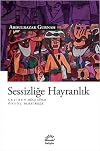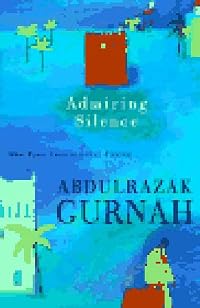
Admiring Silence
by Abdulrazak Gurnah
On This Page
Description
By the winner of the 2021 Nobel Prize in Literature'There is a wonderful sardonic eloquence to this unnamed narrator's voice' Financial Times
'I don't think I've ever read a novel that is so convincingly and hauntingly sad about the loss of home' Independent on Sunday
_____________________
He thinks, as he escapes from Zanzibar, that he will probably never return, and yet the dream of studying in England matters above that.
Things do not happen quite as he imagined – the school where he show more teaches is cramped and violent, he forgets how it feels to belong. But there is Emma, beautiful, rebellious Emma, who turns away from her white, middle-class roots to offer him love and bear him a child. And in return he spins stories of his home and keeps her a secret from his family.
Twenty years later, when the barriers at last come down in Zanzibar, he is able and compelled to go back. What he discovers there, in a story potent with truth, will change the entire vision of his life. Literature. Fiction. show less
Tags
Recommendations



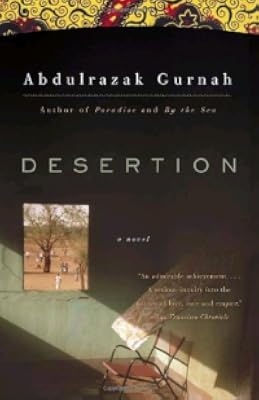










Member Reviews
There is very little that happens in this Nobel Prize-winning novel, and yet, it's one of the most impactful books I've read this year. I'm married to an immigrant who came to the West, seeking opportunity and security. I've witnessed firsthand the emotional and psychological challenges that befall anyone who undertakes a cultural transition, the myriad, minor conflicts that play out in every aspect of daily life and relationships. It is a hard life, and Abdulrazak Gurnah captures it beautifully in this understated novel.
The main character, a fatherless man in his forties who immigrated from Zanzibar to England for an education, remains nameless. After moving to Great Britain in the 1960s, he meets a beautiful (and rebellious) white show more girl named Emma from a conservative family, and settles into a common law marriage with her. He lives almost wholly cut off from his family in Zanzibar, brushing off Emma's questions and concerns about why they have no contact, especially after the birth of their daughter. Still, it's not enough to rock the boat, and they live seemingly happily with our main character enjoying his typical western lifestyle - cocktails in the evening, a rebellious teenage daughter, and social obligations with Emma's family.
Things go smoothly until our protagonist returns to Zanzibar after twenty years (and much political upheaval), taking the reader with him. Gurnah does a masterful job of immersing us in another culture, using numerous small interactions with his people to illustrate just how differently the world appears from Zanzibar. From the colonizer to the colonized, from white to Black, from a secular environment to one that is decidedly Islamic, infused into every moment of his day.
His family wants him to come home to Zanzibar. He's got his education, and the country, having been ravaged by war and colonialism, needs him. They entice him with a fabulous government job and attempt to arrange an engagement to a beautiful young woman. Throughout, we hear his internal monologue pining for Emma, missing England, and criticizing the corruption and poor management of his home country. And yet. When he returns to England, he is confronted with the stark truth that he is not wholly of that place, and never will be.
The characters in this book feel real and vital. The main character is complicated, confused, but also cynical. He's got a great sense of humor, and many of his observations are pretty funny in a snarky, sarcastic way.
Throughout the entire time I was reading, I kept waiting for some huge, tragic event to unfold. In the end, however, the mundane reality of this man's life and experiences, representative of millions of other people who have found their way across the globe, is a powerful story without fireworks and contrivances. We are left only with his truth, which can fit nowhere but within himself, and for which there is no alternative. show less
The main character, a fatherless man in his forties who immigrated from Zanzibar to England for an education, remains nameless. After moving to Great Britain in the 1960s, he meets a beautiful (and rebellious) white show more girl named Emma from a conservative family, and settles into a common law marriage with her. He lives almost wholly cut off from his family in Zanzibar, brushing off Emma's questions and concerns about why they have no contact, especially after the birth of their daughter. Still, it's not enough to rock the boat, and they live seemingly happily with our main character enjoying his typical western lifestyle - cocktails in the evening, a rebellious teenage daughter, and social obligations with Emma's family.
Things go smoothly until our protagonist returns to Zanzibar after twenty years (and much political upheaval), taking the reader with him. Gurnah does a masterful job of immersing us in another culture, using numerous small interactions with his people to illustrate just how differently the world appears from Zanzibar. From the colonizer to the colonized, from white to Black, from a secular environment to one that is decidedly Islamic, infused into every moment of his day.
His family wants him to come home to Zanzibar. He's got his education, and the country, having been ravaged by war and colonialism, needs him. They entice him with a fabulous government job and attempt to arrange an engagement to a beautiful young woman. Throughout, we hear his internal monologue pining for Emma, missing England, and criticizing the corruption and poor management of his home country. And yet. When he returns to England, he is confronted with the stark truth that he is not wholly of that place, and never will be.
The characters in this book feel real and vital. The main character is complicated, confused, but also cynical. He's got a great sense of humor, and many of his observations are pretty funny in a snarky, sarcastic way.
Throughout the entire time I was reading, I kept waiting for some huge, tragic event to unfold. In the end, however, the mundane reality of this man's life and experiences, representative of millions of other people who have found their way across the globe, is a powerful story without fireworks and contrivances. We are left only with his truth, which can fit nowhere but within himself, and for which there is no alternative. show less
I thought reading this novel would allow me to say that I'm all caught up with Gurney’s novels (the ones I have been able to obtain), one of my favorite authors of the African diaspora, but alas! he published new book last year (which, of course, I had to chase down so it now is in "the TBR pile”).
Gurnah is a fabulous writer and storyteller. He is originally from the island of Zanzibar (now part of Tanzania) but has lived in the UK for many decades. One can be absorbed into his books, transported out of ourselves for as long as we are turning pages. In this book he gives us a coming-of-age story, and another viewpoint of the European colonization of Africa....
Our unnamed narrator tells his own story beginning in the present where he show more is at the doctor's office in the UK being told he has a "dickey heart". The narrator left his native Zanzibar as a young man and due to conditions there has never returned to see his family, nor has he spoken to any of them over the years. He becomes a teacher and has a family in England, and he is prone to weaving colorful and fanciful stories about his native land. But now, conditions in Zanzibar have opened up and he can finally travel to see family members.
This is a story about “belonging” and the idea of “home”, but also very much a story of deep self-reflection and acknowledgment of how we are changed by our choices. show less
Gurnah is a fabulous writer and storyteller. He is originally from the island of Zanzibar (now part of Tanzania) but has lived in the UK for many decades. One can be absorbed into his books, transported out of ourselves for as long as we are turning pages. In this book he gives us a coming-of-age story, and another viewpoint of the European colonization of Africa....
Our unnamed narrator tells his own story beginning in the present where he show more is at the doctor's office in the UK being told he has a "dickey heart". The narrator left his native Zanzibar as a young man and due to conditions there has never returned to see his family, nor has he spoken to any of them over the years. He becomes a teacher and has a family in England, and he is prone to weaving colorful and fanciful stories about his native land. But now, conditions in Zanzibar have opened up and he can finally travel to see family members.
This is a story about “belonging” and the idea of “home”, but also very much a story of deep self-reflection and acknowledgment of how we are changed by our choices. show less
It’s not possible for any author’s works to appeal equally or even to be of precisely the same quality. And so I must confess my disappointment that this ranks as my least favorite of Gurnah’s novels (it’s my fifth book by him). The more so since I am astonished to discover that it is one of his most well-regarded books on both goodreads and Amazon (though, in fairness, all of his books fall within a particularly narrow range on both sites as well). The unnamed narrator, born and raised in Zanzibar, moves to England for university, marries, and stays on in England despite a marriage that shows every sign of failing and a career and life that seem equally unrewarding. About halfway through the book, he returns “home” to the show more family he has completely ignored for decades. I found the narrator not only unsympathetic but distinctly disagreeable, if not worse. He has not done well in life and he appears to be entirely responsible for his failure(s). Gurnah is very good at depicting the immigrant experience and at addressing post-colonial issues. Unfortunately, the narrator’s often understandable hatred of everything—including himself—is unrelenting and several hundred pages of little but loathing and disgust inevitably takes a toll. The narrator’s return to Zanzibar unsurprisingly changes nothing (though Gurnah devotes a substantial portion of the book to it) and, at the end of the book, when he finally goes back to his wife and daughter in England, what happens next can hardly be a surprise. I don’t question the accuracy of Gurnah’s portrayals or interpretations but accuracy—indeed, truth—doesn’t always make good reading. A great disappointment. show less
The tone of this book has a cynical edge appropos of the main narrator. Characteristic of Gurnah, colonialism and the perspective of the colonized inform and propel the story. I enjoyed the story itself and how Gurnah portrays an immigrant man in his mid-life crises, seeing his present world in the UK stagnate and his personal history (from Zanzibar) further slip from him. He reckons with this personal souring by visiting, after several decades away, his family in Zanzibar. The psychological insights, as often with Gurnah, are precise, bittersweet and all-too authentic. I've read 3 of the Gurnah oeuvre and I intend to continue. His storytelling and his active, fearless use of history and socio-political contexts make his books relevant show more and enliven the characters. show less
This novel is published by Nobel prize-winning author Abdulrazak Gurnah. It is the story of a man who emigrated from Zanzibar to England a few years after the post-independence revolution, then his life as an immigrant in England and his return visit to Zanzibar.
I read this book as part of my Read Around the World challenge. As such I like to find out a little about each place. Zanzibar is a semi-autonomous state off the east coast of Africa, part of Tanzania since 1964, and famously, part of the Spice Islands. It was originally settled by Bantu speakers then became a Swahili trading post. It was a hub for Persian, Indian and Arab traders, then became a Portuguese colony soon after Vasco da Gama's visit in 1498. This then gave way to show more rulership by the Sultanate of Oman in 1698 and Zanzibar became a major slave post, moving Africans as slaves to the Middle East. The sultans were eventually forced to cease the slave trade by the British and Zanzibar became a British protectorate from 1890 until 1963. In 1964 the Zanzibar Revolution overthrew the Sultan and killed over 20,000 people, mainly Arabs and Indians. There was then a merger with Tanganyika creating Tanzania, within which Zanzibar remains an autonomous region. Today Zanzibari is inhabited by mainly ethnicity Swahili and is predominantly Muslim. There are smaller populations of Arabs, Persians, Somalis and Indians.
In the novel the man meets and falls in love with an Englishwoman, Emma, and they have a daughter together. Over the years he deals with her middle-class conservative and racist British father by telling him elaborate and nostalgic stories about his life under the British empire. The stories about his life he tells Emma also emphasise the exotic and stretch the truth. He also lies by omission to his own family in Zanzibar, never mentioning his English family. Twenty years later when a new government makes his return home possible, he goes back to Zanzibar and finds his family wanting to marry him off. He finds himself confronted by the poverty and corruption around him.
“These things matter, although there is no gainsaying postcolonial reality. It was not just littered beaches that made me lament, not just mis-remembering what seemed a more orderly way of conducting our affairs than the reckless self-indulgence of our wordy times, when we can chat away every oppression and every dereliction, not just a nostalgia for the authoritarian order of Empire which can make light of contradictions by issuing dictats and sanitation decrees, but because as I wandered over the rubble of the damaged town I felt like a refugee from my life. The transformations of things I had known and places which I had lived with differently in my mind for years seemed like an expulsion from my past.”
He views things around him with a cynicism, but also wry humour. “In the meantime, the moneybags who rule our world can continue with the anguished business of watching our antics on TV, and reading about our ineptitudes and murders in their newspapers, secure in the knowledge that a small donation here to fund a translation project and a modest shipment of arms there will keep the plague in the thirsty borderlands of their globe and away from their doors.” Blocked toilets seem to become a metaphor to him for all that is wrong in post colonial Zanzibar. Overall, this is a well written and thought provoking book, however not overly enjoyable as a reader. You feel both empathy and frustration at the man. The difficulty with an unreliable narrator is you are not entirely certain when to believe him. Ultimately he finds himself unable to feel any sense of belonging to either country, his former home or his new home. Like many prize-winning books the writing is better than the story. show less
I read this book as part of my Read Around the World challenge. As such I like to find out a little about each place. Zanzibar is a semi-autonomous state off the east coast of Africa, part of Tanzania since 1964, and famously, part of the Spice Islands. It was originally settled by Bantu speakers then became a Swahili trading post. It was a hub for Persian, Indian and Arab traders, then became a Portuguese colony soon after Vasco da Gama's visit in 1498. This then gave way to show more rulership by the Sultanate of Oman in 1698 and Zanzibar became a major slave post, moving Africans as slaves to the Middle East. The sultans were eventually forced to cease the slave trade by the British and Zanzibar became a British protectorate from 1890 until 1963. In 1964 the Zanzibar Revolution overthrew the Sultan and killed over 20,000 people, mainly Arabs and Indians. There was then a merger with Tanganyika creating Tanzania, within which Zanzibar remains an autonomous region. Today Zanzibari is inhabited by mainly ethnicity Swahili and is predominantly Muslim. There are smaller populations of Arabs, Persians, Somalis and Indians.
In the novel the man meets and falls in love with an Englishwoman, Emma, and they have a daughter together. Over the years he deals with her middle-class conservative and racist British father by telling him elaborate and nostalgic stories about his life under the British empire. The stories about his life he tells Emma also emphasise the exotic and stretch the truth. He also lies by omission to his own family in Zanzibar, never mentioning his English family. Twenty years later when a new government makes his return home possible, he goes back to Zanzibar and finds his family wanting to marry him off. He finds himself confronted by the poverty and corruption around him.
“These things matter, although there is no gainsaying postcolonial reality. It was not just littered beaches that made me lament, not just mis-remembering what seemed a more orderly way of conducting our affairs than the reckless self-indulgence of our wordy times, when we can chat away every oppression and every dereliction, not just a nostalgia for the authoritarian order of Empire which can make light of contradictions by issuing dictats and sanitation decrees, but because as I wandered over the rubble of the damaged town I felt like a refugee from my life. The transformations of things I had known and places which I had lived with differently in my mind for years seemed like an expulsion from my past.”
He views things around him with a cynicism, but also wry humour. “In the meantime, the moneybags who rule our world can continue with the anguished business of watching our antics on TV, and reading about our ineptitudes and murders in their newspapers, secure in the knowledge that a small donation here to fund a translation project and a modest shipment of arms there will keep the plague in the thirsty borderlands of their globe and away from their doors.” Blocked toilets seem to become a metaphor to him for all that is wrong in post colonial Zanzibar. Overall, this is a well written and thought provoking book, however not overly enjoyable as a reader. You feel both empathy and frustration at the man. The difficulty with an unreliable narrator is you are not entirely certain when to believe him. Ultimately he finds himself unable to feel any sense of belonging to either country, his former home or his new home. Like many prize-winning books the writing is better than the story. show less
The unnamed narrator of this novel flees his native Zanzibar as a young man, traveling to UK as a student. For twenty years, he lives as a sort of permanent alien in UK, finding it easier, when telling people about his origins, to invent stories about Zanzibar and his family, rather than try to explain the real complexities of his family life and origins. Living in the assumption that he will never return home, he also does not tell his family in Zanzibar about his British partner, Emma, or Amelia, their daughter. Then, the opportunity to visit "home" brings his created stories into collision. An engaging and intriguing look at the plight of the "postcolonial's" relationship to "home" and the world.
The nameless narrator is a Zanzibarian man in his 40s who emigrates to the UK as a teenager, makes a life for himself in London, and decides to travel back home to visit his mother and family, who he hasn't seen in nearly 20 years.
He is a dishonest and deceitful, yet well meaning man, and is incapable of decisive action -- his life is chosen for him. His uncle in Zanzibar chooses to send him to the UK. His uncle with whom he stays in London makes arrangements for him to enter the University of London and become a teacher. While attending university he meets Emma, a white Londoner, and she chooses him to be her mate. Emma decides to stop taking The Pill, and as a result she becomes pregnant. Emma's love for him gives him the strength and show more courage to become a reasonably good student, but his career as a grade school teacher in the public school system is chosen for him. He can barely tolerate the school and his students, but he does not seek a more fulfilling position. His daughter Amelia learns to despise him, as does Emma.
His only actions involve the deception of those he loves: Emma, Amelia, and his mother and family in Zanzibar. Although he does not love them, he deceives Emma's parents as well, and no one truly knows him. For that matter, he deceives himself: he does not know what he wants from life, and believes that he is a failure, but does not hate himself for this, and does not do anything about it.
He is welcomed home as a success story, and quickly re-establishes close ties to his mother and siblings. However, he does not tell his family of his secret life in London with Emma and Amelia, and circumstances cause him to disgrace his family, and for his mother to disown him.
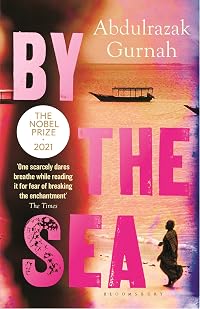
I enjoyed Admiring Silence, but not nearly as much as his novels "By the Sea" and "Desertion", as the main supporting characters were not as well described as they could have been, in particular Emma and the narrator's mother. show less
He is a dishonest and deceitful, yet well meaning man, and is incapable of decisive action -- his life is chosen for him. His uncle in Zanzibar chooses to send him to the UK. His uncle with whom he stays in London makes arrangements for him to enter the University of London and become a teacher. While attending university he meets Emma, a white Londoner, and she chooses him to be her mate. Emma decides to stop taking The Pill, and as a result she becomes pregnant. Emma's love for him gives him the strength and show more courage to become a reasonably good student, but his career as a grade school teacher in the public school system is chosen for him. He can barely tolerate the school and his students, but he does not seek a more fulfilling position. His daughter Amelia learns to despise him, as does Emma.
His only actions involve the deception of those he loves: Emma, Amelia, and his mother and family in Zanzibar. Although he does not love them, he deceives Emma's parents as well, and no one truly knows him. For that matter, he deceives himself: he does not know what he wants from life, and believes that he is a failure, but does not hate himself for this, and does not do anything about it.
He is welcomed home as a success story, and quickly re-establishes close ties to his mother and siblings. However, he does not tell his family of his secret life in London with Emma and Amelia, and circumstances cause him to disgrace his family, and for his mother to disown him.
I enjoyed Admiring Silence, but not nearly as much as his novels "By the Sea" and "Desertion", as the main supporting characters were not as well described as they could have been, in particular Emma and the narrator's mother. show less
Members
- Recently Added By
Lists

Best African Books
126 works; 46 members

A Good Read (Radio 4)
287 works; 1 member

Books Read in 2021
5,361 works; 114 members

Tanzania
46 works; 1 member
Author Information

18+ Works 3,370 Members
Abdulrazak Gurnah teaches at the University of Kent in England.
Common Knowledge
- Original title
- Admiring solence
- Original publication date
- 1996
- Important places
- Zanzibar; London, England, UK
- Original language
- Engelsk
Classifications
Statistics
- Members
- 135
- Popularity
- 242,372
- Reviews
- 8
- Rating
- (3.76)
- Languages
- Danish, English, Norwegian, Turkish
- Media
- Paper, Audiobook, Ebook
- ISBNs
- 12
- ASINs
- 2