On This Page
Description
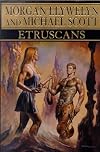
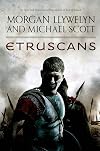
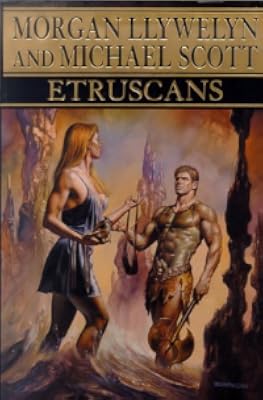
In the early days of the Roman Empire, the noble Etruscan civilization in Italy is waning, Vesi, a young Etruscan noblewoman, is violated by a renegade supernatural being. Outcast then from Etruria, Vesi bears Horatrim, a child who carries inexplicable knowledge and grows to manhood in only six years. But a savage Roman attack leaves Vesi unresponsive and Horatrim homeless and vulnerable, and he travels to Rome where his talents confound powerful businessman Propertius, who arranges to adopt show more Horatrim as a son, changing his name to Horatius. And all the while his demon father is seeking him to kill him, for Horatius is a conduit through which the demon might be found and destroyed. show lessTags
Recommendations









Member Reviews
A competent, if relatively uninspired, mash-up of Etruscan, Egyptian and Babylonian mythology set during the twilight of the period of Rome's monarchy (which was most likely Etruscan rather than Roman), Etruscans; Beloved of the Gods is a collaboration between American-born, naturalized Irish historical and fantasy novelist Morgan Llywelyn and Irish fantasist, folklorist, historical and science fiction novelist Michael Scott.
Etruscans centers around an Etruscan boy in a man's body, Horatrim (his name means "spirit of heroes;" p. 97), who later becomes Horatius Cocles upon being adopted by a prosperous Roman merchant; this is the same man who would become known as "Horatius at the bridge," one of the seminal legends of Rome's early show more days, one which even the usually credulous historian Livy would describe as recounting "a bit of daring that posterity was to find more praiseworthy than credible" (in the Oxford World's Classics edition of Livy, Books 1 - 5 [The Rise of Rome], translated by T.J. Luce, 1998; Book 2.10; p. 81), although this novel ends well before this incident.
In Llewelyn & Scott's telling, Horatrim is the son of a fourteen-year-old Etruscan girl of a noble family named Vesi who is raped by a demon called a siu, formerly an architect for Hammurabi the Lawgiver named Bur-Sin, for whom he designed what would become known as the Hanging Gardens of Babylon (pps. 192-94; this flies in the face of conventional knowledge, which says that they were built during the reign of Nebuchadnezzar II, around 600 B.C., versus Hammurabi's era of c. 1750 B.C.) -- shades of Merlin! It is left for his grandmother, Repana, to take care of her daughter and grandson, but they meet disaster at the hands of a troop of Roman soldiers: Repana and their protector, a half-wild hermit named Wulv, are slain, Vesi is rendered nearly catatonic, and Horatrim is forced to grow up quickly -- literally, thanks to the spirits of his ancestors and the Ais, or Etruscan gods -- to avenge his dead and protect his living family. Horatrim's destiny, nudged by various supernatural actors, leads him to Rome, and the rest is -- if not exactly history, then at least a series of mythical encounters at least as interesting and "factual" as the incidents related by Livy of the period.
There are plenty of fascinating tidbits for those interested in mythology and/or the Etruscans (who called themselves the Rasne, or Silver People); if the ancient Egyptians (or, as rendered here closer to Roman Latin, "Aegyptians") centered their lives around the afterlife, the Etruscans centered theirs around dying, which doubtless goes a long way to explaining why they came up with gladiatorial combats to the death in the first place. If the supernatural goings-on, especially as manifested in Horatrim, remind one of a superhero comic book (Horatrim is essentially Billy Batson as Captain Marvel [SHAZAM: Solomon Hercules Atlas Zeus Achilles Mercury] with more reasonable power levels in a sword & sandal setting), well, that's more or less how a lot of the cross-platform supernatural stories are manifesting these days: comic book-ish or video game-ish. If there's not as much material on the Etruscans as one might wish, a goodly deal of what we know about them is fragmentary and speculative; and if Tarquinius Superbus and Lars Porsenna don't appear here as they do in Roman history, much of what Livy relates from the first major sacking of Rome by the Gauls in 390 B.C. on back is fragmentary, speculative and, dare one say it, mythic.
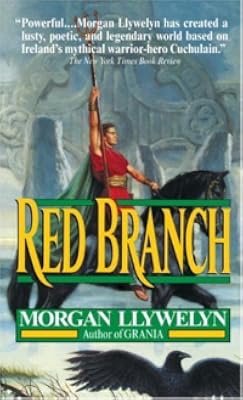
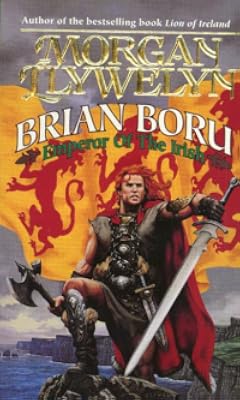
That said, I never really wholly abandoned myself to Etruscans: it was a diversion, mind-candy: easy to pick up, but just as easy to put down for a couple of months; and while there's nothing wrong with that, my previous encounters with Llywelyn's work (The Lion of Ireland, about Brian Boru, and Red Branch, about Cúchulainn), led me to expect a more visceral identification with the protagonist, for all of her faults as a writer. (This was my first encounter with Scott's work.)
Apparently the authors intended Etruscans to be the first of a series; AFAIK, no sequel has yet materialized. I'd probably read at least the first sequel, but I'd probably wait for the paperback edition before buying it. show less
Etruscans centers around an Etruscan boy in a man's body, Horatrim (his name means "spirit of heroes;" p. 97), who later becomes Horatius Cocles upon being adopted by a prosperous Roman merchant; this is the same man who would become known as "Horatius at the bridge," one of the seminal legends of Rome's early show more days, one which even the usually credulous historian Livy would describe as recounting "a bit of daring that posterity was to find more praiseworthy than credible" (in the Oxford World's Classics edition of Livy, Books 1 - 5 [The Rise of Rome], translated by T.J. Luce, 1998; Book 2.10; p. 81), although this novel ends well before this incident.
In Llewelyn & Scott's telling, Horatrim is the son of a fourteen-year-old Etruscan girl of a noble family named Vesi who is raped by a demon called a siu, formerly an architect for Hammurabi the Lawgiver named Bur-Sin, for whom he designed what would become known as the Hanging Gardens of Babylon (pps. 192-94; this flies in the face of conventional knowledge, which says that they were built during the reign of Nebuchadnezzar II, around 600 B.C., versus Hammurabi's era of c. 1750 B.C.) -- shades of Merlin! It is left for his grandmother, Repana, to take care of her daughter and grandson, but they meet disaster at the hands of a troop of Roman soldiers: Repana and their protector, a half-wild hermit named Wulv, are slain, Vesi is rendered nearly catatonic, and Horatrim is forced to grow up quickly -- literally, thanks to the spirits of his ancestors and the Ais, or Etruscan gods -- to avenge his dead and protect his living family. Horatrim's destiny, nudged by various supernatural actors, leads him to Rome, and the rest is -- if not exactly history, then at least a series of mythical encounters at least as interesting and "factual" as the incidents related by Livy of the period.
There are plenty of fascinating tidbits for those interested in mythology and/or the Etruscans (who called themselves the Rasne, or Silver People); if the ancient Egyptians (or, as rendered here closer to Roman Latin, "Aegyptians") centered their lives around the afterlife, the Etruscans centered theirs around dying, which doubtless goes a long way to explaining why they came up with gladiatorial combats to the death in the first place. If the supernatural goings-on, especially as manifested in Horatrim, remind one of a superhero comic book (Horatrim is essentially Billy Batson as Captain Marvel [SHAZAM: Solomon Hercules Atlas Zeus Achilles Mercury] with more reasonable power levels in a sword & sandal setting), well, that's more or less how a lot of the cross-platform supernatural stories are manifesting these days: comic book-ish or video game-ish. If there's not as much material on the Etruscans as one might wish, a goodly deal of what we know about them is fragmentary and speculative; and if Tarquinius Superbus and Lars Porsenna don't appear here as they do in Roman history, much of what Livy relates from the first major sacking of Rome by the Gauls in 390 B.C. on back is fragmentary, speculative and, dare one say it, mythic.
That said, I never really wholly abandoned myself to Etruscans: it was a diversion, mind-candy: easy to pick up, but just as easy to put down for a couple of months; and while there's nothing wrong with that, my previous encounters with Llywelyn's work (The Lion of Ireland, about Brian Boru, and Red Branch, about Cúchulainn), led me to expect a more visceral identification with the protagonist, for all of her faults as a writer. (This was my first encounter with Scott's work.)
Apparently the authors intended Etruscans to be the first of a series; AFAIK, no sequel has yet materialized. I'd probably read at least the first sequel, but I'd probably wait for the paperback edition before buying it. show less
A book following a half-demon Etruscan, exiled with his mother. He is Horatrim, and he grows faster, jumps higher, and has more ancestors than you! (But ah, that heart of gold...) Trust me, it deserves the sarcasm. I swear, one of Horatrim's quotes is "Friends and family are the true treasures." Ahh, warms my silly little heart. The sheer banality of parts of this was daunting. And I didn't like the diction, and the characters all spoke in the exact same patterns, which was also the pattern of the narrating voice. (The frequency of the word "however" (always at the end of the sentence, always missing its comma) would have been amusing, if it wasn't so screamingly irritating.) But, it did give some fairly interesting information on the show more Etruscan civilization. Not enough to satisfy me, and definitely not enough to fully make up for the lack of actual writing skill. And I usually like Llywellyn, too. 3/10 show less
Ratings
Members
- Recently Added By
Lists

mom
729 works; 1 member
Author Information

58+ Works 10,347 Members
Author and historian Morgan Llywelyn was born in New York City to Irish parents. As a teenager, she moved to Texas and by the age of sixteen was showing horses at championship levels throughout the United States. She made the shortlist for the United States Olympic Team in Dressage in 1976, but did not make the team. She also modeled for show more Neiman-Marcus and was a dance instructor for Arthur Murray. She writes historical novels that deal with her Celtic roots and is recognized as an expert in early Irish history and folklore. Her first novel was The Wind from Hastings, but she is better known for her second novel Lion of Ireland: The Legend of Brian Boru, which was published in 1980 and has never been out of print. In 1990, she started writing for children and young adults. She won the 1991 Irish Children's Book Trust Bisto Award for Brian Boru and the 1993 Bisto Award in the Historical Fiction category and the 1993 Reading Association of Ireland Award for Strongbow: The Story of Richard and Aoife. She also writes short stories and has co-authored two fantasy novels with Michael Scott. She currently lives in Ireland. (Bowker Author Biography) Morgan Llywelyn is the bestselling author of Lion of Ireland, Brian Boru: Emperor of the Irish, 1916, and Druids. She lives in Dublin, Ireland. (Publisher Provided) show less
Series

Common Knowledge
- Canonical title
- Etruscans: Beloved of the Gods
- Alternate titles
- Etruscans
- Original publication date
- 2000
- People/Characters
- Horatrim (Horatius); Vesi; Pepan; Wulv; Repana; Propertius (show all 7); Lucius Tarquinius Superbus
- Important places
- Ancient Rome; Ertruria; Latium; Rome, Italy
- Epigraph
- Earthworld
Otherworld
Netherworld
These are the realms of our existence
These are the worlds that bind us
Flesh is tied to Earthworld
Spirit to Otherworld
Death to Netherworld<... (show all)br>
Between the three, only the Ais travel
without restriction.
-- Etruscan proverb, Second Century, B.C. - First words
- We have always been.
- Last words
- (Click to show. Warning: May contain spoilers.)We would all do well to remember this.
- Publisher's editor
- Hartwell, David G.
Classifications
- Genres
- Fiction and Literature, General Fiction, Fantasy, Historical Fiction
- DDC/MDS
- 813.54 — Literature & rhetoric American literature in English American fiction in English 1900-1999 1945-1999
- LCC
- PS3562 .L94 .E87 — Language and Literature American literature American literature Individual authors 1961-
- BISAC
Statistics
- Members
- 148
- Popularity
- 222,532
- Reviews
- 2
- Rating
- (3.06)
- Languages
- English
- Media
- Paper, Ebook
- ISBNs
- 5
- ASINs
- 4