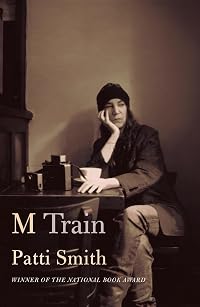
M Train
by Patti Smith
On This Page
Description
NATIONAL BESTSELLER • From the National Book Award–winning author of Just Kids: a “sublime collection of true stories … and wild imaginings that take us to the very heart of who Patti Smith is” (Vanity Fair), told through the cafés and haunts she has worked in around the world. Patti Smith calls this bestselling work “a roadmap to my life.”M Train begins in the tiny Greenwich Village café where Smith goes every morning for black coffee, ruminates on the world as it is and show more the world as it was, and writes in her notebook. Through prose that shifts fluidly between dreams and reality, past and present, we travel to Frida Kahlo’s Casa Azul in Mexico; to the fertile moon terrain of Iceland; to a ramshackle seaside bungalow in New York’s Far Rockaway that Smith acquires just before Hurricane Sandy hits; to the West 4th Street subway station, filled with the sounds of the Velvet Underground after the death of Lou Reed; and to the graves of Genet, Plath, Rimbaud, and Mishima.
Woven throughout are reflections on the writer’s craft and on artistic creation. Here, too, are singular memories of Smith’s life in Michigan and the irremediable loss of her husband, Fred Sonic Smith.
Braiding despair with hope and consolation, illustrated with her signature Polaroids, M Train is a meditation on travel, detective shows, literature, and coffee. It is a powerful, deeply moving book by one of the most remarkable multiplatform artists at work today.
Featuring a postscript with five new photos from Patti Smith. show less
Tags
Recommendations



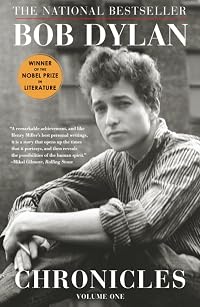
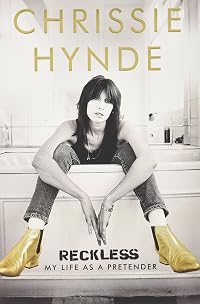
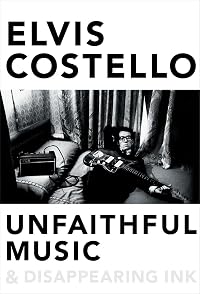
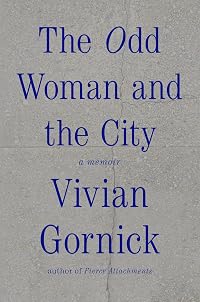


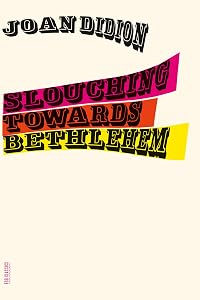
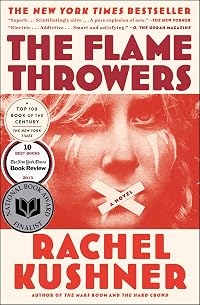
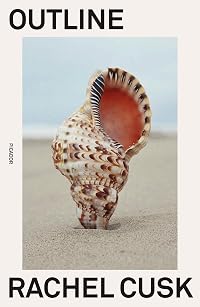
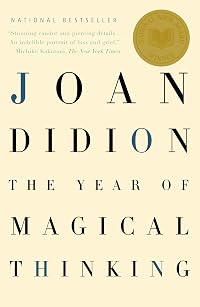

Member Recommendations
Member Reviews
I saw Patti Smith play live for the umpteenth time this summer. I don't think she could give a bad concert if she tried, but this was one I was a bit wary about: Like all aging rock stars, she was going to play her most popular album (Horses) live in its entirety. It's a setup that, for most artists, becomes a dull exercise in nostalgia and note-perfect reproduction. As Jim Reid of the Jesus And Mary Chain pointed out in an interview when they set out to play Psychocandy live a few years ago, their concerts back then were never faithful reproductions of the studio material, yet if they were to sound NOW like they did back then, fans who only knew the album would complain about it not being authentic.
I shouldn't have worried, though, show more because if there's anyone who can pull this sort of thing off, it's Patti Smith. Not only because she's kept working with (as far as life and death allows) the same musicians ever since, but also because her entire career and Horses in particular have always been about subsuming yourself in what Lethem called the ecstasy of influence. Horses was always basically a sermon using rock'n'roll and poetry as holy writ; 40 years on, she just has to acknowledge that Horses itself has become part of that gospel. The 2015 version doesn't sound dated or nostalgic, nor is it a radical rearrangement as Dylan or Reed might have done, it's just ... lived in, a bit grey and wrinkled, not as limber as it once was but still refusing to back down.
Come on, man! I am PURE! I am ready to change the fucking world! Come on, motherfuckers! Come on! Come and get me!
Which leads us to M Train, her second memoir after the brilliant Just Kids, but this time starting in the Now: Patti Smith, grey, creaky-jointed, widowed and literal Grandmother of Punk, sits in her favourite cafe in the Village, sipping coffee and reading and taking notes. Not for anything in particular, but she just woke up from a dream where she was told that "It's not so easy to write about nothing." "I could do it, if only I had nothing to say," she responds. And sets about doing that, which of course in a way means trying to say everything.
Where Just Kids had a central story set squarely in the past - her dream of becoming an Artist (irrelevant which kind), her relationship/friendship with Robert Mapplethorpe, their respective rise to fame and self-awareness, with a coda set after his death - M Train is far less focused. That's not necessarily a bad thing; I'd gladly listen to Patti Smith ramble on about the phone book. Much like Dylan's Chronicles, it's not a tell-all memoir for those who want to know juicy personal details; you get to know a lot about Patti Smith, but little that concerns her actual career (the few times she even acknowledges that she's a musician can be counted on the fingers of one hand), and much more about how she sees the world and how it shapes her. She talks about books she's read and loved from Rimbaud to Murakami, people she's admired, TV shows she's following, the house she bought just a week before hurricane Sandy hit it, her various private travels all over the world (or just across the street) to visit other drifters alive and dead and collect memories with her notepad and her camera... And the still lingering grief from her husband's death 20 years earlier, that's mellowed but never goes away. She sleeps in Frieda Kahlo's bed, she visits Ozu's grave, she gets mugged, she drinks copious amounts of coffee, and she never stops thinking about it, filtering it through all that holy writ of how others have experienced the same things.
I saw a quote the other day to the effect that books are how humans update their software. M Train, using that metaphor, is one long personal debug, going over alternately hilarious and deeply moving, and sure, once or twice it goes overboard and becomes exactly as hippyish as you'd expect of an aging cat lady poet. But that's part of what Patti Smith is, and it wouldn't be her without it. At least twice, she seems to read my mind and responds (very specifically) from the written page to something I'd been thinking aboout IRL just hours earlier. In most books, I'd write that off as coincidence; but this is that rare memoir that feels not like a monologue but a dialogue, and I feel honoured to have gotten a chance to talk to her. show less
I shouldn't have worried, though, show more because if there's anyone who can pull this sort of thing off, it's Patti Smith. Not only because she's kept working with (as far as life and death allows) the same musicians ever since, but also because her entire career and Horses in particular have always been about subsuming yourself in what Lethem called the ecstasy of influence. Horses was always basically a sermon using rock'n'roll and poetry as holy writ; 40 years on, she just has to acknowledge that Horses itself has become part of that gospel. The 2015 version doesn't sound dated or nostalgic, nor is it a radical rearrangement as Dylan or Reed might have done, it's just ... lived in, a bit grey and wrinkled, not as limber as it once was but still refusing to back down.
Come on, man! I am PURE! I am ready to change the fucking world! Come on, motherfuckers! Come on! Come and get me!
Which leads us to M Train, her second memoir after the brilliant Just Kids, but this time starting in the Now: Patti Smith, grey, creaky-jointed, widowed and literal Grandmother of Punk, sits in her favourite cafe in the Village, sipping coffee and reading and taking notes. Not for anything in particular, but she just woke up from a dream where she was told that "It's not so easy to write about nothing." "I could do it, if only I had nothing to say," she responds. And sets about doing that, which of course in a way means trying to say everything.
Where Just Kids had a central story set squarely in the past - her dream of becoming an Artist (irrelevant which kind), her relationship/friendship with Robert Mapplethorpe, their respective rise to fame and self-awareness, with a coda set after his death - M Train is far less focused. That's not necessarily a bad thing; I'd gladly listen to Patti Smith ramble on about the phone book. Much like Dylan's Chronicles, it's not a tell-all memoir for those who want to know juicy personal details; you get to know a lot about Patti Smith, but little that concerns her actual career (the few times she even acknowledges that she's a musician can be counted on the fingers of one hand), and much more about how she sees the world and how it shapes her. She talks about books she's read and loved from Rimbaud to Murakami, people she's admired, TV shows she's following, the house she bought just a week before hurricane Sandy hit it, her various private travels all over the world (or just across the street) to visit other drifters alive and dead and collect memories with her notepad and her camera... And the still lingering grief from her husband's death 20 years earlier, that's mellowed but never goes away. She sleeps in Frieda Kahlo's bed, she visits Ozu's grave, she gets mugged, she drinks copious amounts of coffee, and she never stops thinking about it, filtering it through all that holy writ of how others have experienced the same things.
I saw a quote the other day to the effect that books are how humans update their software. M Train, using that metaphor, is one long personal debug, going over alternately hilarious and deeply moving, and sure, once or twice it goes overboard and becomes exactly as hippyish as you'd expect of an aging cat lady poet. But that's part of what Patti Smith is, and it wouldn't be her without it. At least twice, she seems to read my mind and responds (very specifically) from the written page to something I'd been thinking aboout IRL just hours earlier. In most books, I'd write that off as coincidence; but this is that rare memoir that feels not like a monologue but a dialogue, and I feel honoured to have gotten a chance to talk to her. show less
This is not your regular memoir. It is comprised of a meandering collection of dreams, stories, memories both mundane and divine. But somehow after reading it I feel that I have been invited into the private and unique world of Patti Smith. It's quite a privilege! Nothing is resolved but much is revealed. The writing ranges from the straight forward to the poetically intense and a gentle sadness permeates every mention of Fred's name. A must read for admirers of this wonderful writer.
I know nothing of Patti Smith, but this is a relaxing, rambling selection of memories and dreams, lovingly and elegantly recounted.
Smith recounts a meeting of the Continental Drift Club (now disbanded), dedicated to the memory of Alfred Wegener, who hypothesised about continental drift in the 1930’s, long before it was accepted (I had previously read about Wegener in Notes from Deep Time earlier this year).
She also recounts how she stops off in a London hotel after her connecting flight is delayed and watches repeats of British detective dramas on ITV3, sees trailers for Cracker which is being repeated the following week, and then briefly meets Robbie Coltrane (the eponymous Cracker) whilst waiting for the elevator in the hotel show more reception.
She tells of reading Haruki Murakami’s The Wind-up Bird Chronicle, with the text of her book then taking on a more dreamlike quality, before finding a bungalow for sale out at Rockaway Beach, which is easily reached by train.
There are memories of the Beat generation, reading Jean Genet and Sylvia Plath.
Unexpected and delightful.
Without noticing, I slip into a light yet lingering malaise. Not a depression, more like a fascination for melancholia, which I turn in my hand as if it were a small planet, streaked in shadow, impossibly blue. show less
Smith recounts a meeting of the Continental Drift Club (now disbanded), dedicated to the memory of Alfred Wegener, who hypothesised about continental drift in the 1930’s, long before it was accepted (I had previously read about Wegener in Notes from Deep Time earlier this year).
She also recounts how she stops off in a London hotel after her connecting flight is delayed and watches repeats of British detective dramas on ITV3, sees trailers for Cracker which is being repeated the following week, and then briefly meets Robbie Coltrane (the eponymous Cracker) whilst waiting for the elevator in the hotel show more reception.
She tells of reading Haruki Murakami’s The Wind-up Bird Chronicle, with the text of her book then taking on a more dreamlike quality, before finding a bungalow for sale out at Rockaway Beach, which is easily reached by train.
There are memories of the Beat generation, reading Jean Genet and Sylvia Plath.
Unexpected and delightful.
Without noticing, I slip into a light yet lingering malaise. Not a depression, more like a fascination for melancholia, which I turn in my hand as if it were a small planet, streaked in shadow, impossibly blue. show less
I loved this audiobook even more than her National Book Award winning Just Kids, from 2010. This one is from 2015 and the Mapplethorpe life is gone - in fact, there is not one mention of him, which I thought was strange. Patti married musician Fred "Sonic" Smith and gave up her New York City life and music career to move to Detroit with him. He made a deal with her to take her to the prison wherein Jean Genet had not been held, in French Guyana, in exchange for having a child with him. This is one of the journeys Patti undertakes, all over the world, in search of paying tribute to writers and poets she loved, including Paul Bowles, Sylvia Plath, Rambeau, Frida Kahlo and Diego Rivera, and several Japanese writers. She also becomes show more entangled with an exclusive club of geologists, the CDC (Continental Drift Club) and their idol, Alfred Wegener, who was buried in an ice mausoleum while on an expedition.
Smith's curiosity leads her in so many directions and each rivulet, described in her radiantly laconic monotone, takes the reader to another obscure location and adds to the books (72 in all!) that she recommends. So many sentences starting with "It occurred to me...", so many beloved cafes, so many cups of black coffee, slices of brown bread with olive oil, so much poetry throughout, the recounting of many wacky dreams, including appearances by "The Cowpoke" (former lover Sam Shepard), and the tragedies of losing her husband and brother within a month of each other. The two memoirs are unforgettable and I will painfully miss her voice in my ear, in my car. show less
Smith's curiosity leads her in so many directions and each rivulet, described in her radiantly laconic monotone, takes the reader to another obscure location and adds to the books (72 in all!) that she recommends. So many sentences starting with "It occurred to me...", so many beloved cafes, so many cups of black coffee, slices of brown bread with olive oil, so much poetry throughout, the recounting of many wacky dreams, including appearances by "The Cowpoke" (former lover Sam Shepard), and the tragedies of losing her husband and brother within a month of each other. The two memoirs are unforgettable and I will painfully miss her voice in my ear, in my car. show less
Absorbing, quirky, poetic thought train of dreams and reality, travels and performance, love and homage to literature and authors. Captivating , odd photos punctuate her reveries as she visits graves Genet's, Plath's, filmmakers Kurosawa and Ozu's, as well as resting places of Dazai and Akutagawa in Japan, Frida's Casa Azul, she reads and watches detective shows on tv in great cities, all the while drinking coffee in cafes while she writes. The memory of her late husband, Fred Sonic Smith, weaves through her writing with a poignancy almost too deep. Books, writing, coffee, NYC and her beach house barely touched by Hurricane Sandy come to her rescue.
Wonderful, rambling, nonlinear, stream of consciousness, smattering of the life of a woman I would love to have coffee with.
I listened to it. Patti reading her own words in her own accent is perfect. Then, I bought a hard copy because it just isn't a book to listen to. It must be wandered through, again. Picked up and flipped open to this spot and that one. It's one of the few books that I need to own this way.
I listened to it. Patti reading her own words in her own accent is perfect. Then, I bought a hard copy because it just isn't a book to listen to. It must be wandered through, again. Picked up and flipped open to this spot and that one. It's one of the few books that I need to own this way.
Well, I squeezed a last book in for the year. It was one of those that I couldn't stop reading, so in less than two days, it was done. Coincidentally, I finished it on Patti Smith's birthday, which is today. HAPPY BIRTHDAY PATTI SMITH! (my gift to you is to rave about your book)
All my books this month have been introspective (The Outsider by Colin Wilson, A Field Guide to Melancholy by Jacky Bowring and The Snow Geese by William Fiennes) and this one tied all that existentialism and self exploration together with art (ie music, poetry, literature, photography). Patti Smith appears to have an exceedingly rich inner life, and it made me think about all the thoughts that I have that I just let go. What might happen if I held on to them and show more captured them? Could I make more of them by just doing that? And what about if I wrote them down, and agonised over getting the perfect wording for them like she is able to? (Scary thought.) But the reminder to pay more attention to my thoughts about details will stick with me. I got a lot of comfort knowing that other people think so deeply about things, and that not only is this ok, but that it is what makes people who they are. Also, being pensive isn't always a bad thing. I think of it as a by-product of being a thinker.
This book may turn people off because of its wanderings from the past to the present to the dreamscapes of the author's mind, but I got on the treadmill and let it take me wherever it went. And it went to very cool places, so please read it. show less
All my books this month have been introspective (The Outsider by Colin Wilson, A Field Guide to Melancholy by Jacky Bowring and The Snow Geese by William Fiennes) and this one tied all that existentialism and self exploration together with art (ie music, poetry, literature, photography). Patti Smith appears to have an exceedingly rich inner life, and it made me think about all the thoughts that I have that I just let go. What might happen if I held on to them and show more captured them? Could I make more of them by just doing that? And what about if I wrote them down, and agonised over getting the perfect wording for them like she is able to? (Scary thought.) But the reminder to pay more attention to my thoughts about details will stick with me. I got a lot of comfort knowing that other people think so deeply about things, and that not only is this ok, but that it is what makes people who they are. Also, being pensive isn't always a bad thing. I think of it as a by-product of being a thinker.
This book may turn people off because of its wanderings from the past to the present to the dreamscapes of the author's mind, but I got on the treadmill and let it take me wherever it went. And it went to very cool places, so please read it. show less
Members
- Recently Added By
Published Reviews
ThingScore 75
M Train might be taken as a most roundabout and leisurely way of answering the question “How have you been?” The answer comes in the form of fragments of waking fantasy, literary commentaries, extended reminiscences, evocations of lost objects, travel notations, tallies of places and names and flavors (“Lists. Small anchors in the swirl of transmitted waves, reverie, and saxophone show more solos”). By turns it is daybook, dreambook, commonplace book. Under all lies a grief that is never allowed to overwhelm the writing but is, it would seem, its groundwater. She allows herself to begin anywhere and break off anywhere, thus realizing the secret yearning of almost anyone who sits down to write a book: that it might be possible for the thing simply to create itself out of necessity, to emerge as if by a natural process of unfolding. show less
added by rybie2
Lists

2016 Notable Books for Adults
26 works; 7 members

thinking of reading in 2016
99 works; 1 member

Books Read in 2017
4,249 works; 130 members

Llibres que he llegit el 2017
49 works; 1 member

Women's History Month: Suggested Reads
63 works; 6 members

Top Five Books of 2021
604 works; 181 members

Books Read in 2021
5,361 works; 114 members

Books recommended by Calgary Public Library staff
1,588 works; 4 members

el
1,139 works; 1 member
Author Information

Patti Smith was born in Chicago, Illinois on December 30, 1946. She is a singer-songwriter, writer and visual artist. She gained recognition in the 1970s for her revolutionary mergence of poetry and rock. Her album Horses has been hailed as one of the top 100 albums of all time. She has recorded twelve albums. In 2007, she was inducted into the show more Rock and Roll Hall of Fame. She has written several books including Witt, Babel, Woolgathering, The Coral Sea, Auguries of Innocence, M Train, and Just Kids, which won the Nonfiction category of the National Book Award in 2010. Her drawings, photographs, and installations have been shown at numerous venues including the Andy Warhol Museum and the Fondation Cartier Pour l'Art Contemporain in Paris. In 2005, she was awarded the title of Commandeur des Arts et des Lettres by the French Ministry of Culture, which is the highest honor awarded to an artist by the French Republic. (Bowker Author Biography) show less
Some Editions
Awards and Honors
Awards
Distinctions
Notable Lists
Series
Belongs to Publisher Series
Common Knowledge
- Canonical title
- M Train
- Original title
- M Train
- Original publication date
- 2015-10-06 (1e édition originale américaine, Alfred A. Knopf) (1e édition originale américaine, Alfred A. Knopf); 2016-04-01 (1e traduction et édition française, Blanche, Gallimard) (1e traduction et édition française, Blanche, Gallimard); 2018-02-08 (Réédition française, Folio, 6438, Gallimard) (Réédition française, Folio, 6438, Gallimard)
- People/Characters
- Patti Smith; Fred Sonic Smith; Alfred Wegener; Bobby Fischer; Rasmus Villumsen; William Burroughs (show all 16); Nikola Tesla; Haruki Murakami; Fritz Loewe; Frida Kahlo; Diego Rivera; Roberto Bolaño; Ryūnosuke Akutagawa; Osamu Dazai; David Tennant; Mohammet Mrabet
- Important places
- New York, New York, USA
- Important events
- Hurricane Sandy
- Dedication
- for Sam
- First words
- It's not so easy writing about nothing.
- Quotations*
- Wij willen dingen die we niet kunnen hebben. We willen een bepaald moment, geluid, gevoel terughalen. Ik wil de stem van mijn moeder horen. Ik wil mijn kinderen zien als kinderen. Kleine handjes, snelle voetjes. Alles verande... (show all)rt. Jongen volwassen, vader dood, dochter langer dan ik, huilend in een nare droom. Blijf alsjeblieft altijd hier, zeg ik tegen de dingen die ik ken. Ga niet weg. Groei niet op.
- Last words
- (Click to show. Warning: May contain spoilers.)That's what I was thinking, in my dream, looking down at my hands.
- Original language*
- Engels
*Some information comes from Common Knowledge in other languages. Click "Edit" for more information.
Classifications
- Genres
- Biography & Memoir, Music, Nonfiction
- DDC/MDS
- 782.42166092 — Arts & recreation Music Vocal music Secular forms of vocal music Songs General principles and musical forms Traditions of secular songs {genres} Rock songs modified standard subdivisions History, geographic treatment, biography Biography
- LCC
- ML420 .S672 .A3 — Music Literature on music Literature on music History and criticism Biography
- BISAC
Statistics
- Members
- 1,861
- Popularity
- 11,626
- Reviews
- 70
- Rating
- (4.07)
- Languages
- 18 — Czech, Danish, Dutch, English, Estonian, Finnish, French, German, Greek, Italian, Korean, Polish, Romanian, Russian, Spanish, Swedish, Turkish, Portuguese (Portugal)
- Media
- Paper, Audiobook, Ebook
- ISBNs
- 49
- UPCs
- 1
- ASINs
- 11