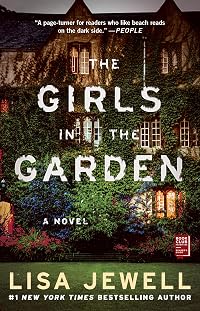
The Girls
by Lisa Jewell
On This Page
Description
Imagine that you live on a picturesque communal garden square, an oasis in urban London where your children run free, in and out of other people's houses. You've known your neighbors for years and you trust them. Implicitly. You think your children are safe. But are they really? On a midsummer night, as a festive neighborhood party is taking place, preteen Pip discovers her thirteen-year-old sister Grace lying unconscious and bloody in a hidden corner of a lush rose garden. What really show more happened to her? And who is responsible? show lessTags
Recommendations


Member Reviews
An unusual contemporary mystery with friendship drama.
All the families live close to each other in a community that surrounds a huge park with hidden gardens and paths. The children run free in the green space and in and out of each others' homes with ease. It happens on a warm summer night during the annual Virginia Park Tombola. One of the children, 13-year-old Grace, is found by the rose garden gate in a coma with her clothes in disarray.
This was a slow burner that built up in perfectly paced storytelling that creates tension and suspense as everyone tries to figure out what happened to Grace and who was responsible. The novel is told in alternating points of view between the various characters -- women and children -- who live in show more apartments and homes around the park. Hints, secrets, lies, lots of domestic situations and concerns kept me guessing. I was hoping to believe the best of all of the friends - both the adults and the teenagers -- and many red herrings dangled to keep me on edge. The characters were multi-faceted and intriguing. I found the climax and conclusion quite satisfying and a bit surprising.
I listened to the audiobook while following along in the e-book ARC provided by the publisher. I really liked the narrator - she did an excellent job voicing all the characters and her tone and dramatic flair enhanced the experience. I'd recommend this one. show less
All the families live close to each other in a community that surrounds a huge park with hidden gardens and paths. The children run free in the green space and in and out of each others' homes with ease. It happens on a warm summer night during the annual Virginia Park Tombola. One of the children, 13-year-old Grace, is found by the rose garden gate in a coma with her clothes in disarray.
This was a slow burner that built up in perfectly paced storytelling that creates tension and suspense as everyone tries to figure out what happened to Grace and who was responsible. The novel is told in alternating points of view between the various characters -- women and children -- who live in show more apartments and homes around the park. Hints, secrets, lies, lots of domestic situations and concerns kept me guessing. I was hoping to believe the best of all of the friends - both the adults and the teenagers -- and many red herrings dangled to keep me on edge. The characters were multi-faceted and intriguing. I found the climax and conclusion quite satisfying and a bit surprising.
I listened to the audiobook while following along in the e-book ARC provided by the publisher. I really liked the narrator - she did an excellent job voicing all the characters and her tone and dramatic flair enhanced the experience. I'd recommend this one. show less
Following a tragic incident, Clare and her daughters, Grace and Pip, move into a new flat in London where a private, three-acre communal garden shared by several families provides the children with a place of safety outside of their home. But during the annual summer party, Pip finds Grace unconscious and bloody, lying in a hidden corner of the rose garden. Who is responsible for what happened to Grace? And who can be trusted?
Told alternately by Pip, her mother, Claire, and their neighbor, Adele, the narrative sets up the attack on Grace and then moves to “before” to provide the backstory for the assault. The “after” chapters tie up the story. Although the characters are nuanced and well-developed, most of the young people are show more opprobrious and the appalling adult behavior is contemptible. The plot, twisty and full of unexpected revelations, plays out to an anti-climactic denouement that is merely “meh” and raises far more questions than it answers.
As with many teen dramas, angst, mean girls, cliques, and jealousy all play into the telling of this distasteful tale. Choosing inaction in order to guard their long-held secrets, the adults constantly imitate ostriches and deliberately ignore what is happening with their children. How is it even plausible that ALL of the adults can have opted out of their parenting responsibilities?
Many readers will have an issue with the truly reprehensible treatment of mental illness in the telling of this tale. Additionally, there’s a problem with the lack of repercussions for the children’s inappropriate language and behavior, both resulting from the absence of parental guidance. What parent allows her pre-teen daughter to sit in a boy’s lap and make out or to curse at her? Truth be told, the completely dysfunctional, smarmy adults populating this ever-more-annoying tale are likely to trigger the readers’ feelings of repugnancy.
The ending is, for many, a huge letdown. So much remains unaddressed and it’s far too unrealistic to think that the police would simply drop their investigation. And how is it possible that, after the attack, everyone simply goes back to their same-old, same-old behaviors with no justice for the victim and absolutely no accountability for the perpetrator?
As for the conspicuously inappropriate actions of the just-turned-thirteen girl in the elevator with the boy she covets as a boyfriend, cue the eye-rolling, head-shaking, and sighs of disbelief. Really?
Despite all that, it’s the over-use of an unnecessary and offensive expletive that lowers the rating for this book. show less
Told alternately by Pip, her mother, Claire, and their neighbor, Adele, the narrative sets up the attack on Grace and then moves to “before” to provide the backstory for the assault. The “after” chapters tie up the story. Although the characters are nuanced and well-developed, most of the young people are show more opprobrious and the appalling adult behavior is contemptible. The plot, twisty and full of unexpected revelations, plays out to an anti-climactic denouement that is merely “meh” and raises far more questions than it answers.
As with many teen dramas, angst, mean girls, cliques, and jealousy all play into the telling of this distasteful tale. Choosing inaction in order to guard their long-held secrets, the adults constantly imitate ostriches and deliberately ignore what is happening with their children. How is it even plausible that ALL of the adults can have opted out of their parenting responsibilities?
Many readers will have an issue with the truly reprehensible treatment of mental illness in the telling of this tale. Additionally, there’s a problem with the lack of repercussions for the children’s inappropriate language and behavior, both resulting from the absence of parental guidance. What parent allows her pre-teen daughter to sit in a boy’s lap and make out or to curse at her? Truth be told, the completely dysfunctional, smarmy adults populating this ever-more-annoying tale are likely to trigger the readers’ feelings of repugnancy.
The ending is, for many, a huge letdown. So much remains unaddressed and it’s far too unrealistic to think that the police would simply drop their investigation. And how is it possible that, after the attack, everyone simply goes back to their same-old, same-old behaviors with no justice for the victim and absolutely no accountability for the perpetrator?
As for the conspicuously inappropriate actions of the just-turned-thirteen girl in the elevator with the boy she covets as a boyfriend, cue the eye-rolling, head-shaking, and sighs of disbelief. Really?
Despite all that, it’s the over-use of an unnecessary and offensive expletive that lowers the rating for this book. show less
In need of refuge after a family tragedy, Clare and her two pre-teen daughters, Pip and Grace, move into a central London flat that backs onto a walled communal park. It’s not long before the girls make friends with some of the other children in the community, notably homeschooled sisters Catkin, Willow and Fern, neglected wild child Taylor, and the handsome Dylan, but the girls presence unwittingly upsets the delicate balance of the insular group.
The narrative of The Girls in The Garden is divided into four sections. It begins with a shocking incident on midsummers eve, then leaps back several months to relate earlier events in ‘Before’, leading to the immediate aftermath in ‘After’, with an additional epilogue set ten months show more later. It’s an effective format that piques the reader’s interest from the outset, however though we learn how, and why, Grace was attacked, to me the story ultimately felt unresolved. I think this is due to what I felt was a lack of consequences for all those involved.
Themes Jewell explores in the story includes mental illness, contrasting parenting styles, the illusion of safety, and the dynamics of group behaviour. The setting of the private community was an inspired choice, providing the ideal backdrop for the author to delve into these issues.
It’s commonly accepted to be difficult to authentically portray children in novels. To be fair they are often contradictory creatures, and ‘tweenagers’ are particularly mercurial. I thought Jewell captured the personalities of the quite adolescents well in The Girls in the Garden, however the contradictions in Pip’s character didn’t quite work for me. I just didn’t believe she had the sophistication necessary to interpret the undercurrents of motive and emotion in the story in the manner in which she did.
Though it has its flaws, I did quite enjoy The Girls in the Garden. It was a quick read, that I found thought provoking and suspenseful. show less
The narrative of The Girls in The Garden is divided into four sections. It begins with a shocking incident on midsummers eve, then leaps back several months to relate earlier events in ‘Before’, leading to the immediate aftermath in ‘After’, with an additional epilogue set ten months show more later. It’s an effective format that piques the reader’s interest from the outset, however though we learn how, and why, Grace was attacked, to me the story ultimately felt unresolved. I think this is due to what I felt was a lack of consequences for all those involved.
Themes Jewell explores in the story includes mental illness, contrasting parenting styles, the illusion of safety, and the dynamics of group behaviour. The setting of the private community was an inspired choice, providing the ideal backdrop for the author to delve into these issues.
It’s commonly accepted to be difficult to authentically portray children in novels. To be fair they are often contradictory creatures, and ‘tweenagers’ are particularly mercurial. I thought Jewell captured the personalities of the quite adolescents well in The Girls in the Garden, however the contradictions in Pip’s character didn’t quite work for me. I just didn’t believe she had the sophistication necessary to interpret the undercurrents of motive and emotion in the story in the manner in which she did.
Though it has its flaws, I did quite enjoy The Girls in the Garden. It was a quick read, that I found thought provoking and suspenseful. show less
With an eclectic cast of characters, a unique setting and an unusual storyline, The Girls in the Garden by Lisa Jewell is a spellbinding mystery.
On her own for the first time since she married, Clare Wild, along with her daughters, thirteen year old Grace and twelve year old Pip, move into an apartment that shares a sprawling communal outdoor space with their neighbors. While Grace makes fast friends with the rest of the teenagers in the park, Pip remains a little leery of her sister's friends. In the meantime, Clare is dealing with a plethora of concerns about their new circumstances but she forms a tentative friendship with Adele and Leo Howes. The couple are the parents of her daughters' new friends, Catkin, Fern and Willow, and show more while Clare does not spend a great of time with the family, she does agree to join them for the annual midsummer party. She quickly comes to regret this decision after Pip discovers Grace's unconscious body later that evening. Clare cannot fathom who would want to hurt her daughter or why, but as young Pip has already discovered, there are plenty of dark secrets lurking within the close-knit community.
As Clare tries to come to terms with her new life, Pip and Grace are often left to their own devices. Although she is more safety conscious than her neighbors, the girls are often unsupervised for hours as they roam around the massive park that abuts their apartment. Even though she does not know Adele very well, she has no concern over the amount of time her daughters are spending with her family. Preoccupied with her own troubles, Clare is not aware of what Grace is up to when she is out from underneath her watchful eye and she allows her misbehavior to slide without comment.
Adele is an earth mother who homeschools her daughters and does not expect them conform to society's expectations. She does not believe in traditional medicine and relies on homeopathic remedies to treat their illnesses. Adele is friendly with her neighbors and most of the community children freely walk in and out of her home at will. She is comfortable in the neighborhood and never feels a minute of worry about her daughters' safety while they are out and about in the sprawling acreage. Adele's marriage is quite happy although she is not exactly a fan of Leo's father who is staying with them while recovering from surgery.
Pip is an pretty amazing young girl who is quite mature and wise beyond her years. She desperately misses her father but she understands why they cannot be together. Her sadness over their separation is slightly alleviated by her fascination with her new neighbors and her delight with the new apartment. Initially excited to be accepted into the tight circle of neighborhood friends, Pip quickly becomes uncomfortable in their company and she begins avoiding them. Once extremely close to Grace, the sisters soon drift apart after Grace forms a tight friendship with one of the neighborhood boys, Dylan. Pip becomes increasingly concerned about Grace when she starts staying out late and keeping secrets from both her and their mother.
The idyllic community is shattered by Grace's attack and since they trust their neighbors implicitly, no one can figure out who would want to harm the young girl. While this is not the first time their peaceful life has been touched by tragedy, the earlier death is viewed as a tragic accident. However, Pip is quite intuitive and she has picked up on some troubling discord amongst Grace's friends. Fern, Willow and Catkin are rather offbeat and extremely loyal to their lifelong friends but what reason would they have to hurt Grace? Grace's boyfriend Dylan is well-liked by his peers and their parents but the same cannot be said for his childhood friend Tyler, a somewhat troubled young girl whose absentee mother also grew up in neighborhood. Evidence collected after Grace's attack raises some very disturbing concerns and although everyone cooperates with the investigation, the police do not uncover any viable leads. Pip has a theory about what happened to Grace but will she find any information to support her suspicions?
Part mystery and part character study, The Girls in the Garden is a riveting novel that exposes the darker side of interconnected, longstanding friendships. Lisa Jewell's descriptive prose brings the bucolic surroundings vibrantly to life and it is very easy to visualize the serene setting. The characters are multi-faceted and eerily life-like with relatable flaws and imperfections. The mystery surrounding Grace's assault is quite suspenseful and it is virtually impossible to guess the perpetrator's identity or motive for the attack until the novel's dramatic conclusion. A incredibly fascinating mystery that I highly recommend to fans of the genre. show less
On her own for the first time since she married, Clare Wild, along with her daughters, thirteen year old Grace and twelve year old Pip, move into an apartment that shares a sprawling communal outdoor space with their neighbors. While Grace makes fast friends with the rest of the teenagers in the park, Pip remains a little leery of her sister's friends. In the meantime, Clare is dealing with a plethora of concerns about their new circumstances but she forms a tentative friendship with Adele and Leo Howes. The couple are the parents of her daughters' new friends, Catkin, Fern and Willow, and show more while Clare does not spend a great of time with the family, she does agree to join them for the annual midsummer party. She quickly comes to regret this decision after Pip discovers Grace's unconscious body later that evening. Clare cannot fathom who would want to hurt her daughter or why, but as young Pip has already discovered, there are plenty of dark secrets lurking within the close-knit community.
As Clare tries to come to terms with her new life, Pip and Grace are often left to their own devices. Although she is more safety conscious than her neighbors, the girls are often unsupervised for hours as they roam around the massive park that abuts their apartment. Even though she does not know Adele very well, she has no concern over the amount of time her daughters are spending with her family. Preoccupied with her own troubles, Clare is not aware of what Grace is up to when she is out from underneath her watchful eye and she allows her misbehavior to slide without comment.
Adele is an earth mother who homeschools her daughters and does not expect them conform to society's expectations. She does not believe in traditional medicine and relies on homeopathic remedies to treat their illnesses. Adele is friendly with her neighbors and most of the community children freely walk in and out of her home at will. She is comfortable in the neighborhood and never feels a minute of worry about her daughters' safety while they are out and about in the sprawling acreage. Adele's marriage is quite happy although she is not exactly a fan of Leo's father who is staying with them while recovering from surgery.
Pip is an pretty amazing young girl who is quite mature and wise beyond her years. She desperately misses her father but she understands why they cannot be together. Her sadness over their separation is slightly alleviated by her fascination with her new neighbors and her delight with the new apartment. Initially excited to be accepted into the tight circle of neighborhood friends, Pip quickly becomes uncomfortable in their company and she begins avoiding them. Once extremely close to Grace, the sisters soon drift apart after Grace forms a tight friendship with one of the neighborhood boys, Dylan. Pip becomes increasingly concerned about Grace when she starts staying out late and keeping secrets from both her and their mother.
The idyllic community is shattered by Grace's attack and since they trust their neighbors implicitly, no one can figure out who would want to harm the young girl. While this is not the first time their peaceful life has been touched by tragedy, the earlier death is viewed as a tragic accident. However, Pip is quite intuitive and she has picked up on some troubling discord amongst Grace's friends. Fern, Willow and Catkin are rather offbeat and extremely loyal to their lifelong friends but what reason would they have to hurt Grace? Grace's boyfriend Dylan is well-liked by his peers and their parents but the same cannot be said for his childhood friend Tyler, a somewhat troubled young girl whose absentee mother also grew up in neighborhood. Evidence collected after Grace's attack raises some very disturbing concerns and although everyone cooperates with the investigation, the police do not uncover any viable leads. Pip has a theory about what happened to Grace but will she find any information to support her suspicions?
Part mystery and part character study, The Girls in the Garden is a riveting novel that exposes the darker side of interconnected, longstanding friendships. Lisa Jewell's descriptive prose brings the bucolic surroundings vibrantly to life and it is very easy to visualize the serene setting. The characters are multi-faceted and eerily life-like with relatable flaws and imperfections. The mystery surrounding Grace's assault is quite suspenseful and it is virtually impossible to guess the perpetrator's identity or motive for the attack until the novel's dramatic conclusion. A incredibly fascinating mystery that I highly recommend to fans of the genre. show less
The Short of It:
The “girls” in this garden have plenty of secrets and that made this a really hard book to put down.
The Rest of It:
*No Spoilers*
After their house is burned down by their mentally ill father, Grace and Pip find themselves in a new flat in London. Their mother, Clare, hasn’t given them all of the details of their father’s care but the reality is that she’s afraid of what their future holds and not sure if the marriage can be saved.
In the meantime, she’s moved them to this lovely neighborhood which includes a private park (garden) for the inhabitants who live there. This common area is where all of the families hang out, mainly the children, so Grace and Pip find themselves the focus of much scrutiny if not show more friendship. As they begin to make a place for themselves, Clare finds herself fascinated with her neighbors, mainly the seemingly perfect Adele and her attractive husband Leo.
Then, in the midst of all this perfection, one of the girls is found unconscious after a neighborhood celebration and everyone has their own suspicions as to what happened.
This was a really good read. There is so much to consider. The characters are well-developed and Jewell does an excellent job of tossing doubt around without being too obvious. The setting was a huge draw for me. You know that scene in the movie Notting Hill where Anna Scott and William Thacker jump the fence into that private park? Well, the setting in this book is just like that one. Green, lush, private and filled with secrets. It’s wonderful to be surrounded by so much beauty but also alarming to always be on display, There is no privacy since all of their homes open onto this common area. Imagine kids coming and going and adults partying at all hours, etc.
I can’t recommend this book highly enough. Each and every time I picked it up I just wanted to keep reading. Jewell’s handling of what happened that night, along with the very real concerns that Clare has regarding her family, are balanced beautifully.
Jewell has written lots of other books so now I feel the need to read them all. Have you read any of her books?
For more reviews, visit my blog: Book Chatter. show less
The “girls” in this garden have plenty of secrets and that made this a really hard book to put down.
The Rest of It:
*No Spoilers*
After their house is burned down by their mentally ill father, Grace and Pip find themselves in a new flat in London. Their mother, Clare, hasn’t given them all of the details of their father’s care but the reality is that she’s afraid of what their future holds and not sure if the marriage can be saved.
In the meantime, she’s moved them to this lovely neighborhood which includes a private park (garden) for the inhabitants who live there. This common area is where all of the families hang out, mainly the children, so Grace and Pip find themselves the focus of much scrutiny if not show more friendship. As they begin to make a place for themselves, Clare finds herself fascinated with her neighbors, mainly the seemingly perfect Adele and her attractive husband Leo.
Then, in the midst of all this perfection, one of the girls is found unconscious after a neighborhood celebration and everyone has their own suspicions as to what happened.
This was a really good read. There is so much to consider. The characters are well-developed and Jewell does an excellent job of tossing doubt around without being too obvious. The setting was a huge draw for me. You know that scene in the movie Notting Hill where Anna Scott and William Thacker jump the fence into that private park? Well, the setting in this book is just like that one. Green, lush, private and filled with secrets. It’s wonderful to be surrounded by so much beauty but also alarming to always be on display, There is no privacy since all of their homes open onto this common area. Imagine kids coming and going and adults partying at all hours, etc.
I can’t recommend this book highly enough. Each and every time I picked it up I just wanted to keep reading. Jewell’s handling of what happened that night, along with the very real concerns that Clare has regarding her family, are balanced beautifully.
Jewell has written lots of other books so now I feel the need to read them all. Have you read any of her books?
For more reviews, visit my blog: Book Chatter. show less
This is not my usual cup of tea. I just don't tend to lean toward contemporary women's fiction, if that's the proper pigeonhole for this; in fact, I requested it because it sounded more like a mystery. And it was, to a degree – something terrible happens in the first chapter, and through the rest of the book several possible suspects surface.
But that's not what the book's about. The book is about the Wilds, Grace and Pip (almost thirteen and almost twelve), their mother Clare, and their father Chris who … is not with them right now. Six months prior to the book's events he had a severe mental breakdown, and while he's hospitalized the rest of them are trying to deal with the fallout from that. Part of which is moving to a show more remarkable neighborhood in London in which several homes share a four-acre garden. It's idyllic… on the surface.
Maybe it's shallow, but I just don't enjoy stories like this. Don't get me wrong – the writing is excellent; the characters are well built; the story is compelling (it compelled me to finish it in a day). It's a solid book. But it also feels like those books about kids which I loved as a kid, the Arthur Ransomes and E. Nesbits and Edward Eagers – those books where children spend long improbably wondrous holidays wandering almost entirely unsupervised and having fabulous adventures. But it's those books with, as one character avers, a layer of Lord of the Flies over all. The absence of supervision in the older books which was a simple matter of allowing children to be off and about in the faith that no one would hurt them is, here, neglect and wrong-headedly determined free-spiritedness.
And it's not safe anymore. That's the part that leaves me heavy-hearted however good the book was. Is that one man really the wonderful guy he seems to be, or is he a predator? Is that old fellow all metaphorical bark but relatively harmless, or is there more to his disgusting outbursts? Is there more to Chris Wild's mental illness than his wife ever discerned? There is no innocence in this world, except among the youngest of the children, and even in them there are only glimpses. There is no murder in the plot, but the incidents that do occur have much the same lasting effects of some murder investigations: things come out which should have stayed hidden, and trust is marred, if not shattered… The Girls in the Garden is the story of what parents do to their kids, and what kids do to each other, and now if you'll excuse me I think I'll go read Five Children and It again.
The usual disclaimer: I received this book via Netgalley for review.
Oh! One thing that must be said about this book is that it gave me a very happy Harry Potter moment: St. Mungo's, where Neville Longbottom's parents are being treated? Is real. (Hey, I'm American – I had no idea.) show less
But that's not what the book's about. The book is about the Wilds, Grace and Pip (almost thirteen and almost twelve), their mother Clare, and their father Chris who … is not with them right now. Six months prior to the book's events he had a severe mental breakdown, and while he's hospitalized the rest of them are trying to deal with the fallout from that. Part of which is moving to a show more remarkable neighborhood in London in which several homes share a four-acre garden. It's idyllic… on the surface.
Maybe it's shallow, but I just don't enjoy stories like this. Don't get me wrong – the writing is excellent; the characters are well built; the story is compelling (it compelled me to finish it in a day). It's a solid book. But it also feels like those books about kids which I loved as a kid, the Arthur Ransomes and E. Nesbits and Edward Eagers – those books where children spend long improbably wondrous holidays wandering almost entirely unsupervised and having fabulous adventures. But it's those books with, as one character avers, a layer of Lord of the Flies over all. The absence of supervision in the older books which was a simple matter of allowing children to be off and about in the faith that no one would hurt them is, here, neglect and wrong-headedly determined free-spiritedness.
And it's not safe anymore. That's the part that leaves me heavy-hearted however good the book was. Is that one man really the wonderful guy he seems to be, or is he a predator? Is that old fellow all metaphorical bark but relatively harmless, or is there more to his disgusting outbursts? Is there more to Chris Wild's mental illness than his wife ever discerned? There is no innocence in this world, except among the youngest of the children, and even in them there are only glimpses. There is no murder in the plot, but the incidents that do occur have much the same lasting effects of some murder investigations: things come out which should have stayed hidden, and trust is marred, if not shattered… The Girls in the Garden is the story of what parents do to their kids, and what kids do to each other, and now if you'll excuse me I think I'll go read Five Children and It again.
The usual disclaimer: I received this book via Netgalley for review.
Oh! One thing that must be said about this book is that it gave me a very happy Harry Potter moment: St. Mungo's, where Neville Longbottom's parents are being treated? Is real. (Hey, I'm American – I had no idea.) show less
Clare Wild and her two girls, Pip and Grace, move into a small rental flat in London after a devastating fire and an estrangement from her husband left them homeless. The apartment buildings form a ring to enclose a beautiful private communal garden place for the residents. Full of roaming teens, talkative neighbors, hidden nooks and crannies, and more than it's fair share of secrets, the garden is the backdrop to a mysterious crime which leaves Grace unconscious, in a coma.
I guess I have another thriller writer to add to my ever growing list of authors who have wowed/stumped/blown me away. Jewell has so many complex and interesting characters, each with their own secrets and agendas, that it's hard not to suspect everyone of some show more nefarious wrong doings in the book. Starting off the book with a bang, the opening chapter is Grace being found unconscious in the park by her sister Pip. The rest of the book (except the very end) take us back, months prior, to when the Wild's first move into the flat. Working through the devastating house fire and estrangement from their father, the young girls navigate life in the new terrain of the communal garden forming new ties, and making new enemies. I found myself suspicious of everyone in this book, certain with each new piece of information, that I had sleuthed out the person behind Grace's attack. If there was one thing I learned from this book, it's that you can never really know someone, not if they don't want you to and especially if you don't care to look. The lengths to which some people go to cover up or ignore those in our lives who we suspect of wrong doings was disturbing and certainly can make one uneasy. Overall, it was an insanely addictive page turner with an quietly explosive ending that left me more than a little terrified of what people are capable of, both in committing, participating in, and turning a blind eye to chilling crimes. show less
I guess I have another thriller writer to add to my ever growing list of authors who have wowed/stumped/blown me away. Jewell has so many complex and interesting characters, each with their own secrets and agendas, that it's hard not to suspect everyone of some show more nefarious wrong doings in the book. Starting off the book with a bang, the opening chapter is Grace being found unconscious in the park by her sister Pip. The rest of the book (except the very end) take us back, months prior, to when the Wild's first move into the flat. Working through the devastating house fire and estrangement from their father, the young girls navigate life in the new terrain of the communal garden forming new ties, and making new enemies. I found myself suspicious of everyone in this book, certain with each new piece of information, that I had sleuthed out the person behind Grace's attack. If there was one thing I learned from this book, it's that you can never really know someone, not if they don't want you to and especially if you don't care to look. The lengths to which some people go to cover up or ignore those in our lives who we suspect of wrong doings was disturbing and certainly can make one uneasy. Overall, it was an insanely addictive page turner with an quietly explosive ending that left me more than a little terrified of what people are capable of, both in committing, participating in, and turning a blind eye to chilling crimes. show less
Members
- Recently Added By
Lists

Lit Lattes Ep 004
13 works; 1 member

READ IN 2020
172 works; 1 member

Books Read in 2015
3,299 works; 129 members
Author Information

29+ Works 34,703 Members
Lisa Jewell lives in London with her husband and their cat. Lisa Jewell (born July 19, 1968) is a popular British author of women's fiction. Her books include Ralph's Party, Thirtynothing, After The Party, a sequel to Ralph's Party, and most recently The House We Grew Up In. Jewell is one of the most popular authors writing in the UK today. In show more 2008, she was awarded the Melissa Nathan Award For Comedy Romance for her novel 31 Dream Street. Her titles often reach the bestseller list like, I Found You, in 2017 and Then She Was Gone, in 2018. (Bowker Author Biography) show less
Common Knowledge
- Canonical title
- The Girls
- Alternate titles
- The Girls in the Garden
- People/Characters
- Clare Wild; Grace Wild; Pip Wild
- Dedication
- Dedicated to all my friends in the G&G garden.
- First words
- Pip stands behind her mother in the tiny bathroom. She's not sure what to do. She's never seen her mother being sick before.
- Last words
- (Click to show. Warning: May contain spoilers.)They said goodbye, and then they walked away from each other, a small blonde woman in cream, a tall, dark-haired woman in black; they walked between the sugar-spun cherry blossoms and the sluggish river, in opposite directions, toward different lives, all their secrets buried safe and sound.
Classifications
Statistics
- Members
- 1,589
- Popularity
- 14,341
- Reviews
- 57
- Rating
- (3.50)
- Languages
- English, French, Swedish
- Media
- Paper, Audiobook, Ebook
- ISBNs
- 34
- ASINs
- 7