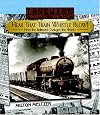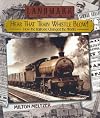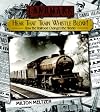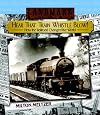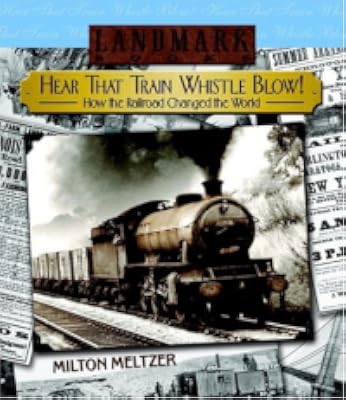
Hear that Train Whistle Blow! How the Railroad Changed the World (Landmark Books)
by Milton Meltzer
On This Page
Description
Takes a look at the history of rail transportation, focussing on how it transformed societies from isolated communities which rarely communicated or traded into unified nations.Tags
Recommendations









Member Reviews
All questions about trains and railroads can be answered in this thorough nonfiction book for older children. Author Milton Meltzer skillfully describes the powerful influence the invention of the railroad had on our country while he takes the reader from its birthplace in the Industrial Revolution to its less glorious modern times. There are two chapters which deal with California and the Transcontinental Railroad ("Building the Transcontinental" and "A Chinese Miracle") and clearly explain where the endeavor fit in with history. Throughout the book, Meltzer will sometimes leave his third person descriptive writing and ask the reader a question or make an offhand comment. For example, when describing what happened at the end of the show more Civil War, he wrote "This is not the place to go into what happened afterward". Meltzer included a lot of railroad poems and songs throughout the book that offered a window to what people have thought about trains throughout history. show less
Ratings
Members
- Recently Added By
Author Information

127+ Works 5,290 Members
Historian Milton Meltzer was born in Worcester, Massachusetts in 1915. He attended Columbia University, but had to leave during his senior year because of the Great Depression. He got a job writing for the WPA Federal Theater Project. During World War II, he served as an air traffic controller in the Army Air Corps. After the war, he worked as a show more writer for CBS radio and in public relations for Pfizer. In 1956, he published his first book A Pictorial History of the Negro American, which was co-written by Langston Hughes. They also collaborated on Langston Hughes: A Biography, which was published in 1968 and received the Carter G. Woodson award. During his lifetime, he wrote more than 110 books for young people including Brother, Can You Spare a Dime? about the stock market crash that led to the Great Depression; Never to Forget about the Holocaust; and There Comes a Time about the Civil Rights movement. He also addressed such topics as crime, ancient Egypt, the immigrant experience, labor movements, photography, piracy, poverty, racism, and slavery. He wrote numerous biographies including ones on Mary McLeod Bethune, Lydia Maria Child, Dorothea Lange, Margaret Sanger, and Henry David Thoreau. He received the 2000 Regina Medal and the 2001 Laura Ingalls Wilder Award for his body of work and his lasting contribution to children's literature. He died of esophageal cancer on September 19, 2009 at the age of 94. (Bowker Author Biography) show less
Awards and Honors
Notable Lists
Classifications
- Genres
- Nonfiction, Kids, Tween
- DDC/MDS
- 385.0973 — Society, government, & culture Commerce, communications & transportation regulations Railroad transportation Subdivisions History, geographic treatment, biography North America United States
- LCC
- HE2751 .M395 — Social sciences Transportation and communications Transportation and communications Railroads. Rapid transit systems
- BISAC
Statistics
- Members
- 73
- Popularity
- 432,802
- Reviews
- 1
- Rating
- (3.75)
- Languages
- English
- Media
- Paper
- ISBNs
- 6
- ASINs
- 1