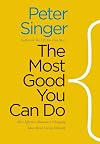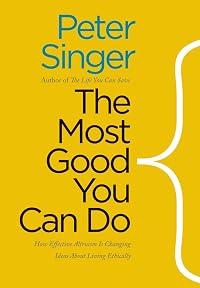
The Most Good You Can Do: How Effective Altruism Is Changing Ideas About Living Ethically
by Peter Singer
On This Page
Description
Peter Singer's books and ideas have been disturbing our complacency ever since the appearance of Animal Liberation. Now he directs our attention to a challenging new movement in which his own ideas have played a crucial role: effective altruism. Effective altruism is built upon the simple but profoundly unsettling idea that living a fully ethical life involves doing the "most good you can do." Such a life requires a rigorously unsentimental view of charitable giving: to be a worthy recipient show more of our support, an organization must be able to demonstrate that it will do more good with our money or our time than other options open to us. Singer introduces us to an array of remarkable people who are restructuring their lives in accordance with these ideas, and shows how, paradoxically, living altruistically often leads to greater personal fulfillment than living for oneself.Doing the Most Good develops the challenges Singer has made, in the New York Times and Washington Post, to those who donate to the arts, and to charities focused on helping our fellow citizens, rather than those for whom we can do the most good. Effective altruists are extending our knowledge of the possibilities of living less selfishly, and of allowing reason, rather than emotion, to determine how we live. Doing the Most Good offers new hope for our ability to tackle the world's most pressing problems. show lessTags
Recommendations












Member Reviews
As an admirer of much of Singer's work, the most charitable view I can offer is that effective altruism has not aged well since 2015.
Singer mentions "class" several times in his examples, but in all but one case he means it in the sense of an academic lecture, rather than socio-economic strata. It's quite a telling gap he avoids but there's a constant theme in Singer's examples of virtuous altruists:
•they're are all from relatively privileged backgrounds. Access to generational wealth and connections makes the decision to live on only median national salary less harrowing.
• the concept of establishing a career in the financial sector to then pursue altruism is blind to how the industry itself immiserates the poor and needy the show more altruist will eventually help.
• the complete bypass of public methods of redistribution and collective action--TAXES! Singer constructs an ethical obligation without a requisite policy obligation throughout. The idea of charities redistributing altruism rather than accountable public institutions (i.e. government) is just such a bizarre neoliberalism oversight to cap it off.
In a sense, Singer is proposing effective altruism as a way to put the current structure of society towards a more ethical distribution. He invests a lot of time praising people who believe they don't need to exploit the structure anymore but issue comparatively little pressure towards an ethical obligation for a change to the exploitation underlying it. Effectively, the altruism Singer is heralding is at best a secular prosperity gospel. show less
Singer mentions "class" several times in his examples, but in all but one case he means it in the sense of an academic lecture, rather than socio-economic strata. It's quite a telling gap he avoids but there's a constant theme in Singer's examples of virtuous altruists:
•they're are all from relatively privileged backgrounds. Access to generational wealth and connections makes the decision to live on only median national salary less harrowing.
• the concept of establishing a career in the financial sector to then pursue altruism is blind to how the industry itself immiserates the poor and needy the show more altruist will eventually help.
• the complete bypass of public methods of redistribution and collective action--TAXES! Singer constructs an ethical obligation without a requisite policy obligation throughout. The idea of charities redistributing altruism rather than accountable public institutions (i.e. government) is just such a bizarre neoliberalism oversight to cap it off.
In a sense, Singer is proposing effective altruism as a way to put the current structure of society towards a more ethical distribution. He invests a lot of time praising people who believe they don't need to exploit the structure anymore but issue comparatively little pressure towards an ethical obligation for a change to the exploitation underlying it. Effectively, the altruism Singer is heralding is at best a secular prosperity gospel. show less
Summary: Singer’s argument for living a life of effective altruism, using evidence and reason to make the most effective decisions to improve the world.
The holidays are often spoken of as the giving season. Indeed, charities make a flurry of appeals during this season, capitalizing both on the holiday spirit, and for most people, the end of the tax year. Peter Singer would contend for a much more thoughtful approach to a lifestyle of giving, deliberate rather than episodic. He speaks of this approach as effective altruism, which he defines as “a philosophy or social movement which applies evidence and reason to work out the most effective ways to improve the world.” For many, far from sacrifice, this life of giving brings deep show more fulfillment and satisfaction.
It involves some or all of the following:
1. Adopting a modest lifestyle enabling one to donate a large part of one’s income, even more than a tenth.
2. Researching the most effective charities working in the most critical fields toward which one directs one’s giving.
3. Making career choices that allow one to earn as much as they can so they can give as much as they can, rather than living affluently.
4. Spreading the gospel of effective altruism to others so the movement will spread.
5. Consider donations of part of one’s own body to help others–blood, bone marrow, and a kidney.
This life is hedged about by commitments to justice, freedom, equality, and knowledge. Furthermore, it avoids the violation of human rights as a means to some proposed good end.
Singer elaborates these choices of doing the most good one can and defends the one of the most attacked proposals of taking high paying jobs to give more by, among others, citing John Wesley who said, “earn all you can, save all you can, give all you can.” He then turns to our motivations and justifications for giving. He argues that love is not all of what we need. Using reason rather than just responding for emotional appeals allows us to have the greatest impact in our giving and other life decisions.
The last part of his book talks about choosing causes. He introduces organizations that study charitable effectiveness. He argues that many of the things to which we donate, such as cultural and arts organizations do not make “the cut” when we consider the dire needs of people in many parts of the world, people who are often “them” rather than “us.” Here, as elsewhere, Singer includes animal suffering in his argument and contends that supporting efforts to reduce animal suffering at factory farms, including making changes in our diets are part of the movement of effective altruism.
One of the most fascinating implications of this way of thinking is that he believes that, on a rationale basis, there are good reasons to spend money to prevent the possibility of mass extinction events, like an asteroid collision.
It is fascinating, as a Christian, to read Singer’s argument. If the examples he cites are true, there are many individuals who do not share Christian beliefs (and one he mentions who does) who are both more intentional and generous in their giving than most Christians, many of whom do not even give a tithe, or tenth of their income, considered traditionally to be a baseline of giving (one study, commissioned by Christianity Today, indicates that the average is more like 2.5 percent). Furthermore, the intentionality toward making one’s gifts count stands as a challenge to our appeals grounded in evoking sympathetic emotions. Likewise, the rigor of evaluating the effectiveness of what people are being asked to give to is worth attention.
My most significant reservation would have to do with the tight focus on only supporting efforts that alleviate poverty or human or animal suffering. I would affirm his arguments that on the basis of reason and impact alone, these deserve far more attention than they receive. But I am reminded of Mary’s extravagant anointing of Jesus with expensive perfume before his death. I’ve always argued that Mary would likely be the last person to be indifferent to the poor. Might extravagant givers be able to both walk and chew gum, to generously support both the arts, for example, and efforts to alleviate poverty and suffering? Might a community of such givers, bringing tp bear the careful assessments Singer encourages, have far more impact than similar donors in the past, both in the arts and with human poverty and suffering. Theoretically, this would still seem to provide less to efforts to alleviate suffering and poverty. But actually? I wonder if this would be the story. Is this a zero sum game?
Still, the lifestyle Singer describes stands as a challenge to many of us, Christian or not, in the affluent West. For Christians, the challenge is if anything greater. Singer asks us where our treasure is, and how that shapes what we do with our lives. He challenges our consumerism, proposing the greater fulfillment of living modestly and giving extravagantly, though intelligently. For those of us who proclaim pro-life commitments, he challenges how far we will go to pursue a consistently pro-life ethic. Will we give blood, or even a kidney to save the life of someone we don’t know? Will we change our diet if it means fewer creatures suffering in factory farms?
Singer is known for asking uncomfortable questions and for provocative stances. He does not accept the sanctity of all life and has come under criticism for arguing for the choice of euthanizing disabled infants and has argued for newborns not having the same qualities of personhood as adults, differentiating the significance of killing a newborn or fetus from killing an adult. Similarly, there are aspects of his argument foe effective altruism one might disagree with. Whether we concur with his arguments, we must admire him and those like him who live consistently with those arguments and ask whether we are doing as well living by the principles and beliefs we embrace. show less
The holidays are often spoken of as the giving season. Indeed, charities make a flurry of appeals during this season, capitalizing both on the holiday spirit, and for most people, the end of the tax year. Peter Singer would contend for a much more thoughtful approach to a lifestyle of giving, deliberate rather than episodic. He speaks of this approach as effective altruism, which he defines as “a philosophy or social movement which applies evidence and reason to work out the most effective ways to improve the world.” For many, far from sacrifice, this life of giving brings deep show more fulfillment and satisfaction.
It involves some or all of the following:
1. Adopting a modest lifestyle enabling one to donate a large part of one’s income, even more than a tenth.
2. Researching the most effective charities working in the most critical fields toward which one directs one’s giving.
3. Making career choices that allow one to earn as much as they can so they can give as much as they can, rather than living affluently.
4. Spreading the gospel of effective altruism to others so the movement will spread.
5. Consider donations of part of one’s own body to help others–blood, bone marrow, and a kidney.
This life is hedged about by commitments to justice, freedom, equality, and knowledge. Furthermore, it avoids the violation of human rights as a means to some proposed good end.
Singer elaborates these choices of doing the most good one can and defends the one of the most attacked proposals of taking high paying jobs to give more by, among others, citing John Wesley who said, “earn all you can, save all you can, give all you can.” He then turns to our motivations and justifications for giving. He argues that love is not all of what we need. Using reason rather than just responding for emotional appeals allows us to have the greatest impact in our giving and other life decisions.
The last part of his book talks about choosing causes. He introduces organizations that study charitable effectiveness. He argues that many of the things to which we donate, such as cultural and arts organizations do not make “the cut” when we consider the dire needs of people in many parts of the world, people who are often “them” rather than “us.” Here, as elsewhere, Singer includes animal suffering in his argument and contends that supporting efforts to reduce animal suffering at factory farms, including making changes in our diets are part of the movement of effective altruism.
One of the most fascinating implications of this way of thinking is that he believes that, on a rationale basis, there are good reasons to spend money to prevent the possibility of mass extinction events, like an asteroid collision.
It is fascinating, as a Christian, to read Singer’s argument. If the examples he cites are true, there are many individuals who do not share Christian beliefs (and one he mentions who does) who are both more intentional and generous in their giving than most Christians, many of whom do not even give a tithe, or tenth of their income, considered traditionally to be a baseline of giving (one study, commissioned by Christianity Today, indicates that the average is more like 2.5 percent). Furthermore, the intentionality toward making one’s gifts count stands as a challenge to our appeals grounded in evoking sympathetic emotions. Likewise, the rigor of evaluating the effectiveness of what people are being asked to give to is worth attention.
My most significant reservation would have to do with the tight focus on only supporting efforts that alleviate poverty or human or animal suffering. I would affirm his arguments that on the basis of reason and impact alone, these deserve far more attention than they receive. But I am reminded of Mary’s extravagant anointing of Jesus with expensive perfume before his death. I’ve always argued that Mary would likely be the last person to be indifferent to the poor. Might extravagant givers be able to both walk and chew gum, to generously support both the arts, for example, and efforts to alleviate poverty and suffering? Might a community of such givers, bringing tp bear the careful assessments Singer encourages, have far more impact than similar donors in the past, both in the arts and with human poverty and suffering. Theoretically, this would still seem to provide less to efforts to alleviate suffering and poverty. But actually? I wonder if this would be the story. Is this a zero sum game?
Still, the lifestyle Singer describes stands as a challenge to many of us, Christian or not, in the affluent West. For Christians, the challenge is if anything greater. Singer asks us where our treasure is, and how that shapes what we do with our lives. He challenges our consumerism, proposing the greater fulfillment of living modestly and giving extravagantly, though intelligently. For those of us who proclaim pro-life commitments, he challenges how far we will go to pursue a consistently pro-life ethic. Will we give blood, or even a kidney to save the life of someone we don’t know? Will we change our diet if it means fewer creatures suffering in factory farms?
Singer is known for asking uncomfortable questions and for provocative stances. He does not accept the sanctity of all life and has come under criticism for arguing for the choice of euthanizing disabled infants and has argued for newborns not having the same qualities of personhood as adults, differentiating the significance of killing a newborn or fetus from killing an adult. Similarly, there are aspects of his argument foe effective altruism one might disagree with. Whether we concur with his arguments, we must admire him and those like him who live consistently with those arguments and ask whether we are doing as well living by the principles and beliefs we embrace. show less
Singer's book addresses ways in which effective altruists are trying to make the world better. It begins by describing and analysing the actions of some effective altruists in terms of what saving more people: to work in a low-paying job that helps people directly, or to work in a high-paying job that is less ethical but allows for large donations to effective charities; people who make altruistic kidney donations; choosing the charities that can do the most good. As in The Life You Can Save, Singer makes the case for donating to charities that help people living in extreme poverty. It costs $50,000 to train a guide dog for one blind person in the US, but $25 can save a person in a much poorer country from blindness. Effective altruists show more are guided by logic rather than sentiment.
For completeness, Singer even examines possible risks of human extinction and the likelihood of reducing them: asteroid strike; nuclear war; pandemic of natural origin; pandemic caused by bioterrorism; global warming; nanotech accident, tiny self-replicating robots multiplying until the entire planet is covered in them' physics research producing hyperdense matter; super-intelligent unfriendly artific1al intelligence. For some of these, it is difficult to estimate the risk, and even when the risk is able to be determined, the way to reduce it is not. As an illustration, Singer weighs up the possible cost of preventing an asteroid strike against estimates or the financial value of a human life. Personally I'm not planning to worry about human extinction, but logically, according to Singer's utilitarian goal of saving the greatest number of lives, it has to be considered.
Singer's prose is as utilitarian as his philosophy: clear, simple and direct. A useful and thought-provoking book. show less
For completeness, Singer even examines possible risks of human extinction and the likelihood of reducing them: asteroid strike; nuclear war; pandemic of natural origin; pandemic caused by bioterrorism; global warming; nanotech accident, tiny self-replicating robots multiplying until the entire planet is covered in them' physics research producing hyperdense matter; super-intelligent unfriendly artific1al intelligence. For some of these, it is difficult to estimate the risk, and even when the risk is able to be determined, the way to reduce it is not. As an illustration, Singer weighs up the possible cost of preventing an asteroid strike against estimates or the financial value of a human life. Personally I'm not planning to worry about human extinction, but logically, according to Singer's utilitarian goal of saving the greatest number of lives, it has to be considered.
Singer's prose is as utilitarian as his philosophy: clear, simple and direct. A useful and thought-provoking book. show less
Readable and compelling introduction to effective altruism and some of the philosophical basis of this approach to giving.
Book title and author: The Most Good You Can Do: How Effective Altruism Is Changing Ideas About Living Ethically by Peter Singer. reviewed 6-3-24
Why I picked this book up: I have been working with a disabled man that ended up having a disorder along the autism spectrum disorder scale and he often went back to the concept of aulterism and just having or enjoying things even if he did not win as as is cross country in school so this book interested me.
Thoughts: Professor Singer went to a high school and they began as an working on animal liberation to be more sensitive to animal cruelty. This book made me think. This had other topics that were provoking. He talked about a couple that lives fully and happily on a small fraction of their show more income, and donates over 50% to charity, a lot of other people have done incredible amounts of good with their careers, others give away so much and do not seem to feel that it's a burden, but rather, it makes them happier and more fulfilled and others find charities and causes that will do the most good with donations.
Why I finished this read: Overall, the book was very readable, consuming, readable and challenging. It was also short, 175 pages.
Stars rating: because this book was so thought-provoking and eye opening for me living in this rich country, for me, it was a fun read and fun to finish I rated this book 4 if 5 stars. show less
Why I picked this book up: I have been working with a disabled man that ended up having a disorder along the autism spectrum disorder scale and he often went back to the concept of aulterism and just having or enjoying things even if he did not win as as is cross country in school so this book interested me.
Thoughts: Professor Singer went to a high school and they began as an working on animal liberation to be more sensitive to animal cruelty. This book made me think. This had other topics that were provoking. He talked about a couple that lives fully and happily on a small fraction of their show more income, and donates over 50% to charity, a lot of other people have done incredible amounts of good with their careers, others give away so much and do not seem to feel that it's a burden, but rather, it makes them happier and more fulfilled and others find charities and causes that will do the most good with donations.
Why I finished this read: Overall, the book was very readable, consuming, readable and challenging. It was also short, 175 pages.
Stars rating: because this book was so thought-provoking and eye opening for me living in this rich country, for me, it was a fun read and fun to finish I rated this book 4 if 5 stars. show less
there's some decent ideas in there, but don't get your hopes up. The rest of it is a real slog, with preachy overtones and an overly simplistic view of altruism. Pass.
Ratings
Members
- Recently Added By
Lists

Wisdom
31 works; 5 members

Real Good Religion
32 works; 1 member
Author Information

45+ Works 10,667 Members
Some Editions
Series
Belongs to Publisher Series
Common Knowledge
- Canonical title*
- Paras tapa auttaa
- Original title
- The Most Good You Can Do: How Effective Altruism Is Changing Ideas About Living Ethically
- Original publication date
- 2015
*Some information comes from Common Knowledge in other languages. Click "Edit" for more information.
Classifications
Statistics
- Members
- 361
- Popularity
- 86,360
- Reviews
- 6
- Rating
- (3.56)
- Languages
- 8 — Dutch, English, Finnish, French, German, Italian, Portuguese, Spanish
- Media
- Paper, Audiobook, Ebook
- ISBNs
- 21
- ASINs
- 4