On This Page
Description
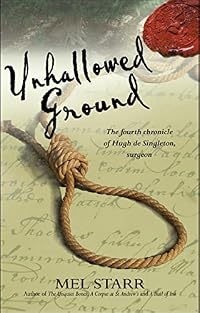
Thomas atte Bridge, a man no one likes, is found hanging from a tree near Cowleys Corner. All assume he has taken his own life, but Master Hugh and Kate find evidence that this may not be so. Many of the town had been harmed by Thomas, and Hugh is not eager to send one of them to the gallows. Then he discovers that the priest John Kellet, atte Bridge's partner in crime in A Corpse at St. Andrew's Chapel, was covertly in Bampton at the time atte Bridge died. Master Hugh is convinced that show more Kellet has murdered atte Bridge-one rogue slaughtering another. He sets out for Exeter, where Kellet now works. But there he discovers that the priest is an emaciated skeleton of a man, who mourns the folly of his past life. Hugh must return to Bampton and discover which of his friends has murdered his enemy. show lessTags
Recommendations




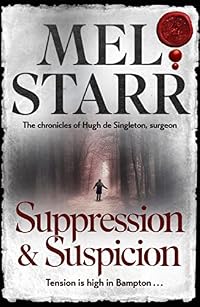




Member Reviews
"Unhallowed Ground" is the fourth book in the "Chronicles of Hugh de Singleton, Surgeon", however it is easily read as a stand-alone. This is the first of the series I have read, and I found no problems with starting at this point. There is enough information and character development that I could easily connect and not feel lost.
Taking place in 14th Century Bampton, England, "Unhallowed Ground" centers around Master Hugh de Singleton who is both a surgeon and bailiff to Sir Gilbert. Master Hugh is a walking contradiction because he's looked at with suspicion because of his job as bailiff and revered because of being a good surgeon. This makes for a very interesting protagonist.
Written in first person and being able to see through the show more eyes of Master Hugh was fascinating and made for a captivating and unforgettable story. When he sees Thomas atte Bridge hanging from the tree and studies him, he discovers that the apparent suicide is possibly not a suicide at all. As he continues his investigation, he discovers not only was Thomas atte Bridge a despicable man (worse than he originally knew), but he wrestles with the thought of possibly arresting a neighbor or "good" person who was involved in the murder.
Master Hugh is newly married and discusses this information with his wife, Kate. She is an intelligent woman who also noticed from the beginning that Thomas atte Bridge's death was not as it seemed. With each dead end Master Hugh would hit, Kate would be there as a sounding board and help him decide if it was worth continuing the investigation.
This book was an amazing read! I am so taken with the writing style of Mr. Starr, that I really want to read all the books in this series. He is truly a brilliant writer who seems to effortlessly bring to life 14th Century England. His prose and ability to describe in detail day-to-day life transports the reader back in time and allows one to actually feel like they are a part of that time period.
This book comes HIGHLY recommended!
I received a copy of this book from Kregel Publishers to read and honestly review. show less
Taking place in 14th Century Bampton, England, "Unhallowed Ground" centers around Master Hugh de Singleton who is both a surgeon and bailiff to Sir Gilbert. Master Hugh is a walking contradiction because he's looked at with suspicion because of his job as bailiff and revered because of being a good surgeon. This makes for a very interesting protagonist.
Written in first person and being able to see through the show more eyes of Master Hugh was fascinating and made for a captivating and unforgettable story. When he sees Thomas atte Bridge hanging from the tree and studies him, he discovers that the apparent suicide is possibly not a suicide at all. As he continues his investigation, he discovers not only was Thomas atte Bridge a despicable man (worse than he originally knew), but he wrestles with the thought of possibly arresting a neighbor or "good" person who was involved in the murder.
Master Hugh is newly married and discusses this information with his wife, Kate. She is an intelligent woman who also noticed from the beginning that Thomas atte Bridge's death was not as it seemed. With each dead end Master Hugh would hit, Kate would be there as a sounding board and help him decide if it was worth continuing the investigation.
This book was an amazing read! I am so taken with the writing style of Mr. Starr, that I really want to read all the books in this series. He is truly a brilliant writer who seems to effortlessly bring to life 14th Century England. His prose and ability to describe in detail day-to-day life transports the reader back in time and allows one to actually feel like they are a part of that time period.
This book comes HIGHLY recommended!
I received a copy of this book from Kregel Publishers to read and honestly review. show less
I had the privilege of having read Mel Starr’s A Trail of Ink and as much as I enjoyed that one I’d have to say I’ve enjoyed Unhallowed Ground just as much or maybe more. This is the fourth chronicle of a surgeon by the name of Hugh de Singleton who is living and working in the 1300′s and as one will start realizing as they read, you will be taken fully back into that time with the language as well as how operations are performed – I found the performance of the couching surgery for cataracts quite interesting. The author has provided a glossary at the beginning so that unfamiliar terms can be understood at a glance but it’s not really hard to figure out what certain terms mean, although figuring out the holidays celebrated show more then does take some calculation.
This is written by de Singleton, it’s his journal of his daily life as he goes about his life being a bailiff, surgeon, newly married and soon-to-be father. This book isn’t being written about him but rather by him so if you don’t want to read a book that is detailing events by the main character then you may want to pass this up. Yes we are told what he has for breakfast several times as well as other dining details, but I found it to be the mundane parts of the book that had me more relating to the characters.
Some parts really struck me, such as how Hugh de Singleton struggles with not believing everything the Church teaches or the current medical ideas of the day, such as back in the day Galen (I had to google this man) taught that a woman who was raped couldn’t become pregnant during said assault unless she was a willing participant – this mind set occurs in one of de Singleton’s cases that must be dealt with while he is investigating what most believe is a suicide when he believes otherwise.
The historical accounts are what draws me in, since I enjoy history this book really intrigued me as I read about certain beliefs, including those of the Church, that some physicians of the day were questioning but couldn’t say much out loud for fear of reprisals. Hugh de Singleton mentions a few times how he fears that something he writes could be found by a Priest or Bishop but questions whether they’d concern themselves with him. I almost forgot I was reading a book by a real, living author because I got so wrapped up in Hugh’s life in this book that he became almost real and it felt like I was truly reading his account. A book to be truly enjoyed and savored.
**I was provided a copy of this book from Kregel Publications in exchange for my honest opinion, no other compensation was given. show less
This is written by de Singleton, it’s his journal of his daily life as he goes about his life being a bailiff, surgeon, newly married and soon-to-be father. This book isn’t being written about him but rather by him so if you don’t want to read a book that is detailing events by the main character then you may want to pass this up. Yes we are told what he has for breakfast several times as well as other dining details, but I found it to be the mundane parts of the book that had me more relating to the characters.
Some parts really struck me, such as how Hugh de Singleton struggles with not believing everything the Church teaches or the current medical ideas of the day, such as back in the day Galen (I had to google this man) taught that a woman who was raped couldn’t become pregnant during said assault unless she was a willing participant – this mind set occurs in one of de Singleton’s cases that must be dealt with while he is investigating what most believe is a suicide when he believes otherwise.
The historical accounts are what draws me in, since I enjoy history this book really intrigued me as I read about certain beliefs, including those of the Church, that some physicians of the day were questioning but couldn’t say much out loud for fear of reprisals. Hugh de Singleton mentions a few times how he fears that something he writes could be found by a Priest or Bishop but questions whether they’d concern themselves with him. I almost forgot I was reading a book by a real, living author because I got so wrapped up in Hugh’s life in this book that he became almost real and it felt like I was truly reading his account. A book to be truly enjoyed and savored.
**I was provided a copy of this book from Kregel Publications in exchange for my honest opinion, no other compensation was given. show less
Hugh de Singleton, bailiff of Lord Gilbert Talbot, receives a summons when a suicide is discovered on land belonging to Lord Gilbert. The dead man was a troublemaker with criminal tendencies who at some point had harmed almost everyone in Bampton. His death would not be mourned. He would be buried where the body was found, for the tree from which he hung was at the crossroads where suicides were buried since they could not be laid to rest in hallowed ground. Master Hugh has no wish to question the suicide verdict, yet he is troubled by evidence that points to murder rather than suicide. Hugh has too much integrity to let the matter rest, even as he worries that the murderer may well be someone he looks upon as a friend.
No words or show more scenes are wasted in this well-written book. The author creates well-rounded suspects, reasonable motives and in a plausible 14th century setting in a book that can be easily read in a single evening. The only flaw, in my opinion, is the author's reliance on coincidence to create a couple of red herrings. The book could be read as a stand-alone, but readers who think they might want to read the whole series will want to start from the beginning. This book includes spoilers that reveal the culprits and outcomes of previous books in the series.
This series reminds me of Ellis Peters' Brother Cadfael series. Hugh de Singleton has had some medical training, and he occasionally provides treatment for sick or wounded people. Like Cadfael, Hugh also wrestles with religious and ethical questions as he considers which course of action he should pursue.
This review is based on a complimentary copy provided by the publisher through LibraryThing's Early Reviewers program. show less
No words or show more scenes are wasted in this well-written book. The author creates well-rounded suspects, reasonable motives and in a plausible 14th century setting in a book that can be easily read in a single evening. The only flaw, in my opinion, is the author's reliance on coincidence to create a couple of red herrings. The book could be read as a stand-alone, but readers who think they might want to read the whole series will want to start from the beginning. This book includes spoilers that reveal the culprits and outcomes of previous books in the series.
This series reminds me of Ellis Peters' Brother Cadfael series. Hugh de Singleton has had some medical training, and he occasionally provides treatment for sick or wounded people. Like Cadfael, Hugh also wrestles with religious and ethical questions as he considers which course of action he should pursue.
This review is based on a complimentary copy provided by the publisher through LibraryThing's Early Reviewers program. show less
 This review was written for LibraryThing Early Reviewers.
I love this series. Mel Starr has created a loveable character in Hugh de Singleton, surgeon and bailiff for Lord Gilbert Talbot, in 1366 England. As bailiff, Hugh is called upon to apprehend criminals on Lord Gilbert's lands, as well as many other duties besides. Unhallowed Ground is the fourth in this series, and there is an apparent suicide of a former foe of Hugh's. But the evidence isn't conclusive and Hugh feels duty bound to investigate what he believes to be a murder. The language used in these books is one of the main, distinguishing features, that for me, is delightful, and sets the story firmly in the middle ages. "Since my return from Exeter I had spoken but briefly to the vicar. I am like most men, I believe. I see little show more merit in reviewing my failures with another. This may be mistaken behavior, but conceit often interferes with wisdom." Throughout the story Hugh enjoys his wife, his food and ponders questions of justice, morality, duty and friendship. The mystery is not predictable and the story flows with interest. I'm looking forward to the fifth book "The Tainted Coin". show less
This review was written for LibraryThing Early Reviewers.In Mel Starr’s fourth tale of Hugh de Singleton, medieval surgeon, Unhallowed Ground, we find our protagonist investigating the murder of one Thomas atte Bridge after this unlikable fellow is found hanging from a tree. While Master Hugh would like to believe the popular opinion that the victim took his own life, his finding of evidence to the contrary requires him to investigate his friends and neighbors to determine who took the life of their common enemy.
I enjoyed this book immensely. The story, which is written in the first person, pulled me in and helped me to understand the culture through the eyes of one of its inhabitants. A thorough glossary is included in the front of the book for assistance in understanding some of the more show more archaic terms that are used throughout the book. That is to say, the book is not only enjoyable but also educational. The story is also aided by a map in the front of the book that shows where locations in the book are in relation to each other.
One of the things that I enjoyed about the book was seeing the author’s own modern-day thoughts expressed through the Master Hugh. Numerous times in the book the narrator explains a religious or other practice or belief and then offers his disagreement with the practice or belief. It is fascinating to see some aspects of the culture of 1366 and these comments helped to remind me that it is unrealistic to believe that the entire population agreed with all of what we would now consider primitive ideas.
Among other things, the book shows that Christ can change our hearts and that we must not assume that this fact applies only to ourselves. Master Hugh learns this lesson when he takes a long journey to find the man he is certain committed the murder only to find someone else entirely.
I was afraid that a book about a medieval surgeon would include descriptions of medical practices that I would rather not know about (or be reminded of), but this was not the case. While it did describe some medical procedures, I found the descriptions non-nightmare-inducing.
This is an excellent book and I encourage you to read it if you like mysteries and/or historical fiction.
Disclosure of Material Connection: I received this book free from Kregel Publications as part of a blog tour. I was not required to write a positive review. The opinions I have expressed are my own. I am disclosing this in accordance with the Federal Trade Commission’s 16 CFR, Part 255: “Guides Concerning the Use of Endorsements and Testimonials in Advertising.” show less
I enjoyed this book immensely. The story, which is written in the first person, pulled me in and helped me to understand the culture through the eyes of one of its inhabitants. A thorough glossary is included in the front of the book for assistance in understanding some of the more show more archaic terms that are used throughout the book. That is to say, the book is not only enjoyable but also educational. The story is also aided by a map in the front of the book that shows where locations in the book are in relation to each other.
One of the things that I enjoyed about the book was seeing the author’s own modern-day thoughts expressed through the Master Hugh. Numerous times in the book the narrator explains a religious or other practice or belief and then offers his disagreement with the practice or belief. It is fascinating to see some aspects of the culture of 1366 and these comments helped to remind me that it is unrealistic to believe that the entire population agreed with all of what we would now consider primitive ideas.
Among other things, the book shows that Christ can change our hearts and that we must not assume that this fact applies only to ourselves. Master Hugh learns this lesson when he takes a long journey to find the man he is certain committed the murder only to find someone else entirely.
I was afraid that a book about a medieval surgeon would include descriptions of medical practices that I would rather not know about (or be reminded of), but this was not the case. While it did describe some medical procedures, I found the descriptions non-nightmare-inducing.
This is an excellent book and I encourage you to read it if you like mysteries and/or historical fiction.
Disclosure of Material Connection: I received this book free from Kregel Publications as part of a blog tour. I was not required to write a positive review. The opinions I have expressed are my own. I am disclosing this in accordance with the Federal Trade Commission’s 16 CFR, Part 255: “Guides Concerning the Use of Endorsements and Testimonials in Advertising.” show less
I've been slowly reading through this series and In my opinion they just keep getting better. Here we have a man that no one likes, apparently committing suicide. But there are too many clues that Hugh sees that don't add up, as a matter of fact, he's pretty sure the man was murdered. But it's troubling finding a murderer, when most people are glad he's gone including the the investigator, Hugh himself.
Justice vs. Mercy?
Great story, and an old foe show up again, the timing of which throws Hugh off the scent for a little bit. Cool mystery, smart but believably fallible protagonist, great read. Will continue reading the series!
Justice vs. Mercy?
Great story, and an old foe show up again, the timing of which throws Hugh off the scent for a little bit. Cool mystery, smart but believably fallible protagonist, great read. Will continue reading the series!
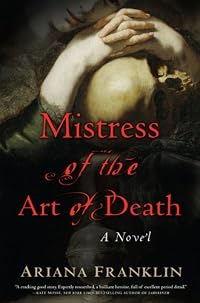
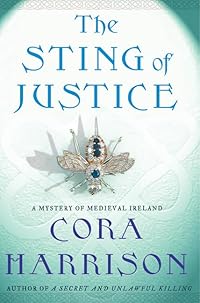
I don't know if it's just me but there seems to be lots of mysteries set in medieval times now. I guess Ellis Peters started the ball rolling with her Brother Cadfael books and for many years they stood alone. Recently, though, there have been a number of series set in this time period. I'm personally familiar (and love) the Mathew Shardlake series by C. J. Sansom, the Mistress of the Art of Death series by Ariana Franklin and the Burren mysteries by Cora Harrison. Now I can add to that list the Hugh de Singleton books by Mel Starr.
This is the fourth book in the series and it appears there is at least one more in the works. I'll be keeping my eyes open for the rest. In this book, set in 1366, Hugh is newly married. He is a surgeon by show more training and also acts as bailiff of Bampton Manor. His morning is disturbed by a knocking at the door. He is told that Thomas atte Bridge has been found hanging from a tree at Cow-Leys Corner. Thomas was a man that Hugh knew well in his capacity as bailiff as he was a notorious thief and bully. No-one, except possibly his wife, regrets that he is dead. As a suicide he can not be buried in the cemetary and so he is laid to rest very close to the tree he was found dangling from. Except Hugh doesn't think he committed suicide; he believes two people carried Thomas to the tree and strung him up. There are lots of people who have a grudge against Thomas but most of them are friends of Hugh's. He is reluctant to cast suspicion upon anyone and he has very little in the way of proof that Thomas was murdered. As bailiff, though, he is required to investigate wrongdoing. When he learns that a disgraced priest who had conspired with atte Bridge was in town the night of the murder he thinks perhaps he can solve the murder and absolve any of his friends. This necessitates a journey to Exeter. Along the way Singleton visits the abbey at Glastonbury where he removes the cataracts of an elderly monk. That's about the only thing he accomplishes on his trip because he is convinced the priest, who was punished by being sent on a pilgrimage, did not murder Thomas. Out of clues Hugh is almost convinced to let the matter lie but then someone attacks him and tries to set fire to his home. He realizes if he and his wife are to be safe he needs to catch the murderer. show less
This is the fourth book in the series and it appears there is at least one more in the works. I'll be keeping my eyes open for the rest. In this book, set in 1366, Hugh is newly married. He is a surgeon by show more training and also acts as bailiff of Bampton Manor. His morning is disturbed by a knocking at the door. He is told that Thomas atte Bridge has been found hanging from a tree at Cow-Leys Corner. Thomas was a man that Hugh knew well in his capacity as bailiff as he was a notorious thief and bully. No-one, except possibly his wife, regrets that he is dead. As a suicide he can not be buried in the cemetary and so he is laid to rest very close to the tree he was found dangling from. Except Hugh doesn't think he committed suicide; he believes two people carried Thomas to the tree and strung him up. There are lots of people who have a grudge against Thomas but most of them are friends of Hugh's. He is reluctant to cast suspicion upon anyone and he has very little in the way of proof that Thomas was murdered. As bailiff, though, he is required to investigate wrongdoing. When he learns that a disgraced priest who had conspired with atte Bridge was in town the night of the murder he thinks perhaps he can solve the murder and absolve any of his friends. This necessitates a journey to Exeter. Along the way Singleton visits the abbey at Glastonbury where he removes the cataracts of an elderly monk. That's about the only thing he accomplishes on his trip because he is convinced the priest, who was punished by being sent on a pilgrimage, did not murder Thomas. Out of clues Hugh is almost convinced to let the matter lie but then someone attacks him and tries to set fire to his home. He realizes if he and his wife are to be safe he needs to catch the murderer. show less
This review was written for LibraryThing Early Reviewers.Members
- Recently Added By
Author Information

17 Works 2,055 Members
Series

Common Knowledge
- Canonical title
- Unhallowed Ground
- Original publication date
- 2013-10-20
- People/Characters
- Hugh de Singleton
- Important events
- Reign of Edward III, King of England (1327-01-25 | 1377-06-21)
Classifications
Statistics
- Members
- 174
- Popularity
- 185,403
- Reviews
- 30
- Rating
- (3.82)
- Languages
- English, German
- Media
- Paper, Audiobook, Ebook
- ISBNs
- 12
- ASINs
- 9