On This Page
Description
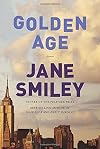
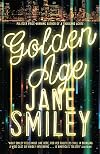
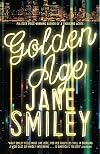
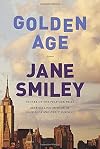
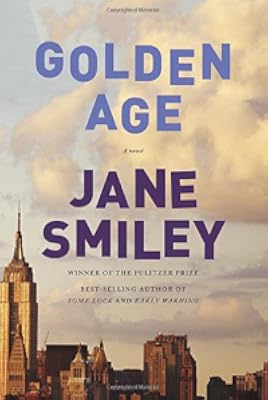
From the winner of the Pulitzer Prize: the much-anticipated final volume, following Some Luck and Early Warning, of her acclaimed American trilogy—a richly absorbing new novel that brings the remarkable Langdon family into our present times and beyondA lot can happen in one hundred years, as Jane Smiley shows to dazzling effect in her Last Hundred Years trilogy. But as Golden Age, its final installment, opens in 1987, the next generation of Langdons face economic, social, show more political—and personal—challenges unlike anything their ancestors have encountered before.
Michael and Richie, the rivalrous twin sons of World War II hero Frank, work in the high-stakes world of government and finance in Washington and New York, but they soon realize that one’s fiercest enemies can be closest to home; Charlie, the charming, recently found scion, struggles with whether he wishes to make a mark on the world; and Guthrie, once poised to take over the Langdons’ Iowa farm, is instead deployed to Iraq, leaving the land—ever the heart of this compelling saga—in the capable hands of his younger sister.
Determined to evade disaster, for the planet and her family, Felicity worries that the farm’s once-bountiful soil may be permanently imperiled, by more than the extremes of climate change. And as they enter deeper into the twenty-first century, all the Langdon women—wives, mothers, daughters—find themselves charged with carrying their storied past into an uncertain future.
Combining intimate drama, emotional suspense, and a full command of history, Golden Age brings to a magnificent conclusion the century-spanning portrait of this unforgettable family—and the dynamic times in which they’ve loved, lived, and died: a crowning literary achievement from a beloved master of American storytelling.
. show less
Tags
Recommendations
Member Reviews
There are some lucky future readers out there who will plunge in and cherish all three books in this remarkable trilogy, one after the other. I read them in order as they were released, with at least 8 month to a year between each. And so I photocopy the family tree in the front of each book and dive in, putting all else aside.
This last novel goes beyond current times, all the way to 2018. Unexpected environmental and financial disasters await the Langdons and their roots and branches. Beloved characters die and new scions appear. Who would expect that a Norwegian farm family from Iowa would produce both a Madoff and a conservative Democratic congressman from New York City?
Anyone who's read any one of Jane Smiley's other brilliant show more novels would have high expectations, but these three meaty books go above and beyond what any author might achieve. Truly outstanding. The only argument, as in all great trilogies, is: which is the best? show less
This last novel goes beyond current times, all the way to 2018. Unexpected environmental and financial disasters await the Langdons and their roots and branches. Beloved characters die and new scions appear. Who would expect that a Norwegian farm family from Iowa would produce both a Madoff and a conservative Democratic congressman from New York City?
Anyone who's read any one of Jane Smiley's other brilliant show more novels would have high expectations, but these three meaty books go above and beyond what any author might achieve. Truly outstanding. The only argument, as in all great trilogies, is: which is the best? show less
(7.5)Wow this was a long read but persevere I did. The writing is a huge accomplishment really, following an American family through one hundred years against an ever changing political and societal backdrop. At times the political information made my eyes glaze, not being overly familiar with American politics. I suspected the commentary is very much influenced by the writer's own political beliefs. Also because of the extensive cast of characters it was hard to feel emotionally engaged with them as there could be long periods of time before some would reappear in the story. Nonetheless it did retain my interest to the end.
Jane Smiley almost hits it out of the park with this one. As a whole, this trilogy has been an examplar of the power of realistic fiction--a saga of a family and its branches. It's well written and observed without suffering from the self-consciously clever MFA workshop overwriting that seems to be overwhelming younger literary fiction writers. (Irony, considering Smiley's own pedigree.)
There are two things that make this last novel just short of a five star book. As the expanding family trees on the endpapers show, the Langdons have become quite the clan by the end. This provides a kaleidoscopic cast of characters. Smiley wisely chooses to ignore some almost completely, but she still has some difficulty in maintaining focus and show more keeping threads tied. There were incidents alluded to and not explained (my personal curiosity was Jonah, though in the end, the ambiguity felt calculated rather than an accident of forgetting), and the balancing act doesn't quite work smoothly.
The larger flaw comes in the final years of the book. Smiley chooses to extend the saga till 2019, which gives the final segments a speculative fiction quality that doesn't meld smoothly with the sharp realism of earlier chapters. The politics are too obvious, and too well hinted at, from the anti-GMO and Monsanto segments a few years earlier. The speculative aspect is amped up by an accelerated timeline for climate change that has Iowa as a dust bowl only 4 years from now. Political background forms an important component of the trilogy, increasing over the course of the books, but the jump lacks ease, and takes focus away from the characters as they become pawns in a wider political scheme. The progress makes thematic sense, but isn't quite pulled off.
Over the course of 1000 pages, I've come to care about the Langdons; their farm; their tragedies large and small. Smiley has tried to write her own great saga, the tale of how one family's great success also becomes their downfall. She's almost succeeded. show less
There are two things that make this last novel just short of a five star book. As the expanding family trees on the endpapers show, the Langdons have become quite the clan by the end. This provides a kaleidoscopic cast of characters. Smiley wisely chooses to ignore some almost completely, but she still has some difficulty in maintaining focus and show more keeping threads tied. There were incidents alluded to and not explained (my personal curiosity was Jonah, though in the end, the ambiguity felt calculated rather than an accident of forgetting), and the balancing act doesn't quite work smoothly.
The larger flaw comes in the final years of the book. Smiley chooses to extend the saga till 2019, which gives the final segments a speculative fiction quality that doesn't meld smoothly with the sharp realism of earlier chapters. The politics are too obvious, and too well hinted at, from the anti-GMO and Monsanto segments a few years earlier. The speculative aspect is amped up by an accelerated timeline for climate change that has Iowa as a dust bowl only 4 years from now. Political background forms an important component of the trilogy, increasing over the course of the books, but the jump lacks ease, and takes focus away from the characters as they become pawns in a wider political scheme. The progress makes thematic sense, but isn't quite pulled off.
Over the course of 1000 pages, I've come to care about the Langdons; their farm; their tragedies large and small. Smiley has tried to write her own great saga, the tale of how one family's great success also becomes their downfall. She's almost succeeded. show less
I like Smiley’s writing style. I also like sweeping generational tales. This book covers 1987 to 2019 in the lives of the Langdon family. It was published in 2015 so she had to predict what the last several years have been like She was shockingly prescient, predicting increasing climate change devastations like more frequent and violent hurricanes and racial unrest. She also predicted a Republican sweep in 2016 but also something that didn’t happen then but might happen now- that the results of the election would not be known early in the next year. But I didn’t give this more stars because there were so many characters that some are hardly mentioned at all and others are not developed enough. It would have been better for her to show more concentrate on maybe one branch of the family show less
The final book in Smiley's trilogy takes the extended Langdon family from 1987 to 2019. As the children of Walter and Rosanna Langdon reach their golden years, the story focuses more on their grandchildren and great-grandchildren as they spread across the country. From Wall Street to Washington, D.C., from the family farm in Iowa to a horse ranch in California, the Langdon family is a microcosm of the American experience. This trilogy is nothing if not ambitious, covering the scope of the American experience over a century. But in this volume, I felt that Smiley was at her best when she captured small, intimate moments - moments that were about the particular thoughts and feelings of an individual who felt like family. The challenge of show more moving forward an ever-expanding cast of characters is at its most difficult in this last book of the trilogy, but I was willing to stay with Smiley on that journey simply for the enjoyment of the small intimate moments. show less
(14) This is the third novel in Smiley's trilogy of the Langdon family over the last century. Given the numerous offspring from the original Langdon Iowa farm family circa early 1918, by the time of this last book -- picks up in the late 80's -- there are a lot of offspring to keep track of. Unfortunately, on a Kindle, things like the family tree are virtually illegible. (I am still not entirely sold on e-readers for this and other picky little reasons.) I would say this mostly focuses on the favorite son, Frank Langdon's family. Especially his twin sons and their offspring and familial strife. We see the banking crisis and the Wall Street bailout through their eyes. September 11th effects the family in a personal way. And the show more Iraq/Afghanistan War spirits away Jesse's boys from carrying on with any sort of farming tradition. Or I don't know, maybe it was global warming that did that.
Very preachy about global warming - the whole last ~ 1/4 of the book seemed to focus on this. It almost bordered on histrionic. In general, this was the worst of the three books. Although I read them fairly close together, I struggled to place all the disparate characters. People's lives and deaths seemed to 'jump the shark' as they say. Frank's denouement was bad enough, but acceptable but then Michael's accident, Lois's, Guthries - really? I really had a hard time caring about all the members of the youngest generation and began to feel the novel was aimless and pointless. But I did appreciate her thoroughness in fleshing out all the characters' lives and her attention to detail.
Overall, the series was a decent read. It was better than Follet's historical fiction of the last 100 years trilogy which I have also read recently (but actually that is not saying much.) I think that this could have been done with more artistry by perhaps sticking with just one branch of the family for each novel and focusing the narrative on a few major US historical themes instead of trying to cram an entire huge family and every event of the 20th century into the trilogy. show less
Very preachy about global warming - the whole last ~ 1/4 of the book seemed to focus on this. It almost bordered on histrionic. In general, this was the worst of the three books. Although I read them fairly close together, I struggled to place all the disparate characters. People's lives and deaths seemed to 'jump the shark' as they say. Frank's denouement was bad enough, but acceptable but then Michael's accident, Lois's, Guthries - really? I really had a hard time caring about all the members of the youngest generation and began to feel the novel was aimless and pointless. But I did appreciate her thoroughness in fleshing out all the characters' lives and her attention to detail.
Overall, the series was a decent read. It was better than Follet's historical fiction of the last 100 years trilogy which I have also read recently (but actually that is not saying much.) I think that this could have been done with more artistry by perhaps sticking with just one branch of the family for each novel and focusing the narrative on a few major US historical themes instead of trying to cram an entire huge family and every event of the 20th century into the trilogy. show less
Read from July 29 to September 10, 2015
Are we living in a "golden age"?
This series does not have a traditional narrative and, at times, you may find yourself wanting to follow a particular character or know more about a specific event in time, but not everything lasts and it's not possible to know all. Not all events that occur can be remembered forever. Some events that seem like a big deal now will not be a big deal twenty years later -- this is ultimately what I had to learn from this book.
(My reviews of Some Luck and Early Warning. If you haven't read Some Luck or Early Warning, then you definitely need to do so before reading this one. I can't imagine just dropping into the middle of this series.)
In Golden Age, Smiley carefully show more selects events to highlight that have an effect on the Langdon family and she leaves out those that have nothing to do with them. Occasionally, she would touch so lightly on a topic that I would struggle to remember what she was referencing (and in some cases, I never could figure out what she was referring to). I loved the glimpses into the lives of the vast Langdon clan. While I would have liked to spend more time with Joe, Claire, and Henry, I grew to like some of the younger members of the family. Richie became less douchey (Michael more so -- talk about making a guy a villain!). I was both relieved and sad to not spend more time with Lillian and Arthur's kids, but Some Luck starts with Frank so it makes sense to end the trilogy with him, too. show less
Are we living in a "golden age"?
This series does not have a traditional narrative and, at times, you may find yourself wanting to follow a particular character or know more about a specific event in time, but not everything lasts and it's not possible to know all. Not all events that occur can be remembered forever. Some events that seem like a big deal now will not be a big deal twenty years later -- this is ultimately what I had to learn from this book.
(My reviews of Some Luck and Early Warning. If you haven't read Some Luck or Early Warning, then you definitely need to do so before reading this one. I can't imagine just dropping into the middle of this series.)
In Golden Age, Smiley carefully show more selects events to highlight that have an effect on the Langdon family and she leaves out those that have nothing to do with them. Occasionally, she would touch so lightly on a topic that I would struggle to remember what she was referencing (and in some cases, I never could figure out what she was referring to). I loved the glimpses into the lives of the vast Langdon clan. While I would have liked to spend more time with Joe, Claire, and Henry, I grew to like some of the younger members of the family. Richie became less douchey (Michael more so -- talk about making a guy a villain!). I was both relieved and sad to not spend more time with Lillian and Arthur's kids, but Some Luck starts with Frank so it makes sense to end the trilogy with him, too. show less
Members
- Recently Added By
Lists

Dublin Literary Award Longlist 2017
147 works; 2 members

International Dublin Literary Award Longlist 2017
147 works; 3 members

Books Read in 2019
4,052 works; 108 members

Books Read in 2021
5,361 works; 113 members
Author Information

50+ Works 25,633 Members
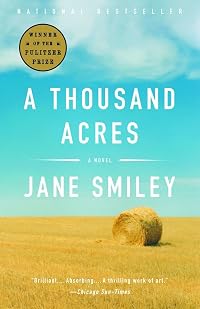
Jane Smiley was born in Los Angeles, California on September 26, 1949. She received a B. A. from Vassar College in 1971 and an M.F.A. and a Ph.D from the University of Iowa. From 1981 to 1996, she taught undergraduate and graduate creative writing workshops at Iowa State University. Her books include The Age of Grief, The Greenlanders, Moo, Horse show more Heaven, Ordinary Love and Good Will, Some Luck, and Early Warning. In 1985, she won an O. Henry Award for her short story Lily, which was published in The Atlantic Monthly. A Thousand Acres received both the National Book Critics Circle Award and the Pulitzer Prize. (Bowker Author Biography) show less
Awards and Honors
Awards
Distinctions
Series

Work Relationships
Common Knowledge
- Canonical title
- Golden Age
- Dedication
- This trilogy is dedicated to John Whiston, Bill Silag, Steve Mortensen, and Jack Canning, with many thanks for decades of patience, laughter, insight, information, and assistance.
- First words
- It was Friday.
- Last words
- (Click to show. Warning: May contain spoilers.)He took her into him, Frank.
Classifications
Statistics
- Members
- 494
- Popularity
- 61,441
- Reviews
- 23
- Rating
- (3.89)
- Languages
- English, French, Korean
- Media
- Paper, Audiobook, Ebook
- ISBNs
- 19
- ASINs
- 5