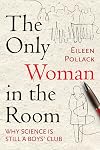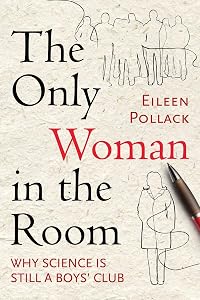
The Only Woman in the Room: Why Science Is Still a Boys' Club
by Eileen Pollack
On This Page
Description
"Eileen Pollack had grown up in the 1960s and 70s dreaming of a career as a theoretical astrophysicist. Denied the chance to take advanced courses in science and math, she nonetheless made her way to Yale, where, despite finding herself far behind the men in her classes, she went on to graduate, summa cum laude, with honors, as one of the university's first two women to earn a Bachelor of Science degree in physics. And yet, isolated, lacking in confidence, starved for encouragement, she show more abandoned her ambition to become a physicist. Years later, Pollack revisited her reasons for walking away from the career she once had coveted. She spent six years interviewing her former teachers and classmates and dozens of other women who had dropped out before completing their degrees in science. In addition, Pollack talked to experts in the field of gender studies and reviewed the most up-to-date research that seeks to document why women and minorities underperform in STEM fields. Girls who study science and math are still belittled and teased by their male peers and teachers, even by other girls. They are led to think that any interest or achievement in science or math will diminish their popularity. They are still being steered away from advanced courses in technical fields, while deeply entrenched stereotypes lead them to see themselves as less talented than their male classmates, a condition that causes them to fulfill such expectations and perform more poorly than the boys sitting beside them. "-- show lessTags
Recommendations




























Member Reviews
Some few years back, Lawrence Summers, then President of Harvard, made some off-the-cuff and disparaging remarks as to why women are not better represented in STEM (Science, Technology, Engineering and Mathematics) fields. While he attempted to walk back those statements later, many people still regard the moment as a clarion call for a better encouragement and representation of women and minorities in the hard sciences. Pollack takes up the gauntlet in her “The Only Woman in the Room: Why Science is Still a Boys’ Club.”
Pollack grew up in the ‘60’s and ‘70’s, in rather humble rural beginnings. Even though she had high test scores, she was regularly discouraged in her ardor for math and science. Her early education did not show more prepare her well for the rigors of the Yale physics department and she struggled to fit in as one of only two female physics students. Despite graduating with a BS summa cum laude, and lacking strong mentorship, Pollack ultimately succumbed to her inner doubts and sense of illegitimacy as a scientist and pursued writing instead. She went on to run the creative writing program at my alma mater, the University of Michigan. Her writing ability is quite evident throughout.
The first two thirds of Pollack’s book reflects on this personal history, recounting her subjective and anecdotal efforts in a male dominated field. Some of what she recounts rang true to someone who also pursued studies and a career in a male dominated field. Of course, in such a telling, everyone’s battle is their own, so what resonates of one might be less compelling for another. If other readers find her reflections off-putting, it is worth soldiering ahead.
The latter third of the book jumps ahead some 30-40 years and from the personal to the more objective to examine where American education and industry stands now in representation and support of women in STEM. This, to me, was the far more successful portion of the book, providing solid examples, data and studies. There is much that still discourages women in the hard sciences. I wish that Pollack had been more prescriptive in how to better address these issues. Ultimately, however, it’s encouraging that progress has been made. The current crop of young women ‘who don’t give a crap’ about how they are perceived (‘if they have a problem that we are women, that’s their problem’) gives one hope for the real changes happening even now. show less
Pollack grew up in the ‘60’s and ‘70’s, in rather humble rural beginnings. Even though she had high test scores, she was regularly discouraged in her ardor for math and science. Her early education did not show more prepare her well for the rigors of the Yale physics department and she struggled to fit in as one of only two female physics students. Despite graduating with a BS summa cum laude, and lacking strong mentorship, Pollack ultimately succumbed to her inner doubts and sense of illegitimacy as a scientist and pursued writing instead. She went on to run the creative writing program at my alma mater, the University of Michigan. Her writing ability is quite evident throughout.
The first two thirds of Pollack’s book reflects on this personal history, recounting her subjective and anecdotal efforts in a male dominated field. Some of what she recounts rang true to someone who also pursued studies and a career in a male dominated field. Of course, in such a telling, everyone’s battle is their own, so what resonates of one might be less compelling for another. If other readers find her reflections off-putting, it is worth soldiering ahead.
The latter third of the book jumps ahead some 30-40 years and from the personal to the more objective to examine where American education and industry stands now in representation and support of women in STEM. This, to me, was the far more successful portion of the book, providing solid examples, data and studies. There is much that still discourages women in the hard sciences. I wish that Pollack had been more prescriptive in how to better address these issues. Ultimately, however, it’s encouraging that progress has been made. The current crop of young women ‘who don’t give a crap’ about how they are perceived (‘if they have a problem that we are women, that’s their problem’) gives one hope for the real changes happening even now. show less
A most important book, completely engaging and yet uncovering the hidden barriers still facing women today who are subtly discouraged from STEM careers. I clearly remember the reaction in 1958 when I expressed an interest in taking physics my senior year. In the end, my girl friend and I were allowed to join about 20 boys in the class. The teacher was very avuncular and thought he was being nice when he said, "now you girls, even with levers to help, don't have the upper body strength to change a tire, just find a nice boy to do it for you." We laughed about him and didn't take it personally but perhaps it was one of the reasons we never seriously considered careers in science. It was very dismaying to read accounts from today's young show more women of similar encounters in school; subtle, and not so subtle. I'm planning to share this book with my daughter-in-law, who is a high school math teacher. show less
 This review was written for LibraryThing Early Reviewers.
I read THE ONLY WOMAN IN THE ROOM mostly because I so enjoyed Eilen Pollack's later memoir, MAYBE IT'S ME, and because she makes me laugh, something that's become increasingly important in today's polarized society. Well this one's A bit more serious, but there were still some chuckles. What's it about? Well, the subtitle is a pretty good clue: Why Science Is Still a Boys' Club. Because Pollack took on that closed club and cracked it, earning, despite numerous obstacles and frequent disparagement, a degree in Physics from Yale. Yes,YALE. There's a lot in here about her struggles with upper level, esoteric courses in science and math, which I found extremely interesting. Which surprised me, because math and science are NOT, and have show more NEVER been my thing. I took ONE Physics class in my senior year of high school. And no more. In college I took one semester of College Algebra, and that was the end of my math. No, wait, in grad school u was required to take a course in Statistics and Probability. Which I hated, never quite caught on, but scraped by. But Pollack makes her adventures in higher science and math INTERESTING. And she also makes very real how lonely it often was, being the only woman in the room, feeling left out and ostracized. But she persevered, got that degree. But then instead of grad school, she took a hard look at he life, then made a hard right turn to become a writer. And I believe it was indeed a RIGHT turn, because Pollack's is an immensely talented writer, or I wouldn't be reading her. There were a few things here I could definitely relate to, like washing dishes in a cafeteria to make a few needed bucks. Me too, Eileen. And scrubbing and waxing floors. But reading about the prejudice and slights she faced for being a woman made me a bit ashamed for my own sex, for being a man. I know that kind of sexist crap went on in college (and in the military too, where I spent eight years), and still does. Pollack spent nearly twenty years running a Creative Writing program at the University of Michigan and has published several books, so she's done okay for herself. And I've just begun reading her 2008 story collection, IN THE MOUTH, and was already laughing by page two. Did I say I just love how this woman writes, whatever the subject? Well I do. Loved this book. Very, very highly recommended. show less
The description for this book is a bit misleading. The first half is Pollack's memoir of her own experiences as a student from childhood in public school in a predominantly Jewish area through college at Yale as one of the few female physics majors. The second half of the book is more in line with what I had been expecting given the description, and includes anecdata from other women who Pollack had known or interviewed from her own generation and the later generation of female science majors and scientists, as well as recaps of interviews with her former professors and teachers who we had met in the first half of the book.
This is a deeply personal story for Pollack, but at the same time it is also deeply personal for every girl who show more thought she wasn't smart enough, or every woman who decided to drop out of a science major, or every student who didn't even try for a science degree in the first place. This book was deeply personal for me.
Pollack's experiences are not every woman's or minority's experiences, but they are similar enough that many can relate. One of my criticisms of this book is Pollack's weakness in connecting women's experiences with the similar experiences of minorities and economically disadvantaged students. She does mention that several times, but it is definitely a message that can be strengthened. Towards the end of the book, Pollack noted that some students, even if they enter into college at the top of their high school graduating class, find themselves floundering and behind other students because they were not privileged enough for their schools to offer certain courses. I wish Pollack had highlighted that more because it's a problem that systemically places students from under-served, poorer schools at a disadvantage in college.
I write this review the day after a 14-year-old Muslim boy with brown skin was detained by his school and arrested for bringing in a homemade clock to show off to his science teacher, which another teacher reported as a bomb. That is an extreme case of the educational culture discouraging a minority from entering a STEM field, but it highlights the challenges that some students face by virtue of their sex or ethnicity.
Pollack's story is an important one, and both its strength and weakness is its reliance on anecdotes (what I referred to as "anecdata" earlier) from her own experiences and gleaned from interviews or missives with other women or minorities. She does mention the results of a few studies of bias against women in STEM, but the bulk of the book are anecdata rather than empirical controlled studies. The anecdata bring the problems to life in a way that pure numbers don't, yet at the same time anecdotes are easy for those in the sciences to discount because they are not data (hence why I have been referring to them as "anecdata"; because, well, it can be argued that the plural for anecdote is data).
Given the larger conversation that has been on-going for the past few years of women in the sciences, and the blatant misogyny that I keep running up against from big names (Google "Richard Dawkins women"), The Only Woman in the Room is an important book, and very timely. Remember in June when Nobel Laureate in Physiology or Medicine Tim Hunt said at a science conference in South Korea, "Let me tell you about my trouble with girls. Three things happen when they are in the lab: You fall in love with them, they fall in love with you, and when you criticize them they cry"? Or last November when European Space Agency Rosetta Project scientist Matt Taylor gave public interviews after the Philae space probe landed on a comet while wearing a shirt covered in nearly naked women? It is heartening, I guess, that all of these incidents have lead to huge public outcries and public apologies (in the case of Taylor) or firings (in the case of Hunt). A decade or two earlier, they would have been the status quo.
I hope that Pollack's book inspires change in STEM education at all levels, and I hope that it also inspires women to pursue STEM educations and careers.
Review copy courtesy of the publisher via Netgalley show less
This is a deeply personal story for Pollack, but at the same time it is also deeply personal for every girl who show more thought she wasn't smart enough, or every woman who decided to drop out of a science major, or every student who didn't even try for a science degree in the first place. This book was deeply personal for me.
Pollack's experiences are not every woman's or minority's experiences, but they are similar enough that many can relate. One of my criticisms of this book is Pollack's weakness in connecting women's experiences with the similar experiences of minorities and economically disadvantaged students. She does mention that several times, but it is definitely a message that can be strengthened. Towards the end of the book, Pollack noted that some students, even if they enter into college at the top of their high school graduating class, find themselves floundering and behind other students because they were not privileged enough for their schools to offer certain courses. I wish Pollack had highlighted that more because it's a problem that systemically places students from under-served, poorer schools at a disadvantage in college.
I write this review the day after a 14-year-old Muslim boy with brown skin was detained by his school and arrested for bringing in a homemade clock to show off to his science teacher, which another teacher reported as a bomb. That is an extreme case of the educational culture discouraging a minority from entering a STEM field, but it highlights the challenges that some students face by virtue of their sex or ethnicity.
Pollack's story is an important one, and both its strength and weakness is its reliance on anecdotes (what I referred to as "anecdata" earlier) from her own experiences and gleaned from interviews or missives with other women or minorities. She does mention the results of a few studies of bias against women in STEM, but the bulk of the book are anecdata rather than empirical controlled studies. The anecdata bring the problems to life in a way that pure numbers don't, yet at the same time anecdotes are easy for those in the sciences to discount because they are not data (hence why I have been referring to them as "anecdata"; because, well, it can be argued that the plural for anecdote is data).
Given the larger conversation that has been on-going for the past few years of women in the sciences, and the blatant misogyny that I keep running up against from big names (Google "Richard Dawkins women"), The Only Woman in the Room is an important book, and very timely. Remember in June when Nobel Laureate in Physiology or Medicine Tim Hunt said at a science conference in South Korea, "Let me tell you about my trouble with girls. Three things happen when they are in the lab: You fall in love with them, they fall in love with you, and when you criticize them they cry"? Or last November when European Space Agency Rosetta Project scientist Matt Taylor gave public interviews after the Philae space probe landed on a comet while wearing a shirt covered in nearly naked women? It is heartening, I guess, that all of these incidents have lead to huge public outcries and public apologies (in the case of Taylor) or firings (in the case of Hunt). A decade or two earlier, they would have been the status quo.
I hope that Pollack's book inspires change in STEM education at all levels, and I hope that it also inspires women to pursue STEM educations and careers.
Review copy courtesy of the publisher via Netgalley show less
I should have read the reviews before selecting this as an Early Reviewers book. While the premise is interesting and I don’t want to take away from the author’s experiences, the book’s delivery is far too “woe is me” to continue past page 88. Why page 88? Because that’s when she is bewildered by her father’s comparison of her, wearing a man’s fedora, to Marlene Dietrich. Really? You’re so sheltered and backward that you have no idea who the famous, gorgeous, mysterious, German actress was? I’m younger and come from an equally rural background and I know who she was. I have even watched a movie or two that she starred in (eek! Black and white!). After reading that, I tossed the book aside (literally) and went back to show more a cheesy action thriller.
After reading some reviews, I concur with many that the real upshot of this book is that we need to be raising girls to care about themselves first and what people think about them second. That’s Ms. Pollack’s problem; she gives a shit about what other people think. If she’d just gotten over that and found some self-esteem, she might be a physicist today instead of a writer. Or maybe both. She also needed to stop blaming the system for her own shortcomings; like not knowing about music, movies, sports, comic book heroes and TV. She continually bemoans the fact that none of the pictures in her textbooks featured women in white coats. Well, what did she expect? Any encroachment of minorities into an area they have no dominance in has to start somewhere. Oy vey. Basically I just got exasperated with her hyperbolic self-put-downs, her whining and how she assigned blame to other people for her own faults and misjudgments.
Look, I’m a woman in my late 40s. That means my grade and high school years were in the 70s and 80s. Not one, but two male math teachers told me that I couldn’t learn math because I was a girl, or that I wouldn’t need it for the same reason (and they both had mustaches! Coincidence? lol). This is after me asking them for help. Asking to be taught. Instead of teaching me, they both took the easy way out and because I was 11 and 14 respectively, I was too doubtful of myself to push the issue. In retrospect I should have. It was systemic sexism that made the teachers react to me that way, and the same system that made me too fearful to stand up for myself. So I get where she’s coming from, but instead of rising above that shit, she let it bury her and abdicated her physics career for a safer, more accepting role as a writer.
To some degree she exemplifies the idea that if a woman (also a man although he will have it easier to reach his goal) doesn’t pursue what is supposed to be her passion, it really wasn’t. For a woman to succeed in a male-dominated career, she has to want it more, fight for it harder and refuse to be cowed. Sure it’s harder, but it can be done and has been done.
Oh and here is where I have to point out that she took certain classes at Yale simply because she liked the look of the professor and had fantasies about a romance sparking. Over and over she talks about this and it was a bit much. Really? That’s why you took a job prepping chemistry samples? Because your co-worker was cute? She left it because he did. OMG, woman! Get a grip. Hunky teachers aside, what’s left? Did the subjects really light up her brain? Sometimes I thought yes, but then she’d fall under the spell of yet another charming, and handsome teacher. She even goes so far to speculate that MIT could have the genius misfits while Yale would settle for the merely brilliant if they were presentable.
As I said, I don’t want to discount her experience because it’s valid, but like other women who write books like this, she’s expected to stand in for, and represent, all of us which is just too much. Eventually, but too late to learn math, I figured out that no one was going to stand up for me and that I had to do it myself. Somewhere around 18 or 20 I put away my self-doubt and asserted my ideas, opinions, wants and needs. I like to think I wasn’t too obnoxious, but what 20-year-old has that kind of self-reflection?
Some reviews say that the second part of the book, the one that isn’t a memoir, is better and more informative and I may return to read that, but for now I’m done. show less
After reading some reviews, I concur with many that the real upshot of this book is that we need to be raising girls to care about themselves first and what people think about them second. That’s Ms. Pollack’s problem; she gives a shit about what other people think. If she’d just gotten over that and found some self-esteem, she might be a physicist today instead of a writer. Or maybe both. She also needed to stop blaming the system for her own shortcomings; like not knowing about music, movies, sports, comic book heroes and TV. She continually bemoans the fact that none of the pictures in her textbooks featured women in white coats. Well, what did she expect? Any encroachment of minorities into an area they have no dominance in has to start somewhere. Oy vey. Basically I just got exasperated with her hyperbolic self-put-downs, her whining and how she assigned blame to other people for her own faults and misjudgments.
Look, I’m a woman in my late 40s. That means my grade and high school years were in the 70s and 80s. Not one, but two male math teachers told me that I couldn’t learn math because I was a girl, or that I wouldn’t need it for the same reason (and they both had mustaches! Coincidence? lol). This is after me asking them for help. Asking to be taught. Instead of teaching me, they both took the easy way out and because I was 11 and 14 respectively, I was too doubtful of myself to push the issue. In retrospect I should have. It was systemic sexism that made the teachers react to me that way, and the same system that made me too fearful to stand up for myself. So I get where she’s coming from, but instead of rising above that shit, she let it bury her and abdicated her physics career for a safer, more accepting role as a writer.
To some degree she exemplifies the idea that if a woman (also a man although he will have it easier to reach his goal) doesn’t pursue what is supposed to be her passion, it really wasn’t. For a woman to succeed in a male-dominated career, she has to want it more, fight for it harder and refuse to be cowed. Sure it’s harder, but it can be done and has been done.
Oh and here is where I have to point out that she took certain classes at Yale simply because she liked the look of the professor and had fantasies about a romance sparking. Over and over she talks about this and it was a bit much. Really? That’s why you took a job prepping chemistry samples? Because your co-worker was cute? She left it because he did. OMG, woman! Get a grip. Hunky teachers aside, what’s left? Did the subjects really light up her brain? Sometimes I thought yes, but then she’d fall under the spell of yet another charming, and handsome teacher. She even goes so far to speculate that MIT could have the genius misfits while Yale would settle for the merely brilliant if they were presentable.
As I said, I don’t want to discount her experience because it’s valid, but like other women who write books like this, she’s expected to stand in for, and represent, all of us which is just too much. Eventually, but too late to learn math, I figured out that no one was going to stand up for me and that I had to do it myself. Somewhere around 18 or 20 I put away my self-doubt and asserted my ideas, opinions, wants and needs. I like to think I wasn’t too obnoxious, but what 20-year-old has that kind of self-reflection?
Some reviews say that the second part of the book, the one that isn’t a memoir, is better and more informative and I may return to read that, but for now I’m done. show less
This review was written for LibraryThing Early Reviewers.Pollack is very frank relating her personal experiences growing up smart despite the limitations of living in a small town during the 60’s. Curious,she learned quickly; was often bored in class, causing her to misbehave. Unfortunately, her teachers, principal and parents didn’t understand that she loved thinking about intangibles and how things worked. Despite her excellent grades she wasn’t promoted as her male classmates were. Her mother, a product of her generation did go Eileen’s school but didn’t have the audacity, the chutzpah, or the self-assertiveness to insist the school remedy the situation. Though her parents did not encourage or praise Eileen’s grades during her school years, her mother’s decision to attend show more college where she thrived, does impress Eileen.
Eileen is excited to go to Yale to study physics but soon becomes alarmed that she isn’t prepared for the basic courses because they either weren’t taught at her high-school, or she wasn’t counseled to spend the summer before Yale taking preparatory classes. She realizes she has to spend additional time playing catch-up while taking a full load of courses, leaving her less time to sleep, exercise, and sleep. Eileen is enthusiastic but soon learns that Yale provides little in the way of support, and more of the same subtle and active discouragement she had already received. Eileen is stunned by the help and encouragement she receives in her writing courses from the professors and students!
Eileen’s experience, current studies and her interviews with women and men in the science fields as well as with female and male STEM students show the following: Boys and girls in grade school are equally matched with regard to interest and grades in science and math but in junior high and high-school, adolescence and social cues drastically change the dynamics. Boys are encouraged and praised in STEM subjects, girls are not; girls are advised that it is unfeminine to study these subjects; that women are simply NOT as smart or capable; that jobs in science are rigorous and demanding, and would not allow women time to find mates and have families. Girls/women are encouraged to go into more “nurturing” fields: social work, medicine, liberal arts, and teaching considered “easier” and permitting them to lead “normal” lives. She is surprised and saddened to learn that despite changes in many schools (including the ones she attended) and many programs to help address the issues, sexism in STEM is still alive and keeping women out!
Pollack describes the ongoing challenges of inspiring and encouraging girls and women to study STEM (Science, Technology, Engineering and Mathematics) subjects. I believe her assessment of the reasons behind the problem is fair because it considers and weighs many variables.
I enjoyed reading The Only Woman in the Room. It was clear, focused, well-written and formatted. I particularly loved that she shared her natural curiosity and passion for science and math and later for reading and writing. I was also a curious student but easily frustrated when I didn’t grasp concepts immediately. I recall asking my high-school math teacher a question about algebra probably in a belligerent tone of voice, and appalled when he “threw” me out of the classroom. How helpful was that?! show less
Eileen is excited to go to Yale to study physics but soon becomes alarmed that she isn’t prepared for the basic courses because they either weren’t taught at her high-school, or she wasn’t counseled to spend the summer before Yale taking preparatory classes. She realizes she has to spend additional time playing catch-up while taking a full load of courses, leaving her less time to sleep, exercise, and sleep. Eileen is enthusiastic but soon learns that Yale provides little in the way of support, and more of the same subtle and active discouragement she had already received. Eileen is stunned by the help and encouragement she receives in her writing courses from the professors and students!
Eileen’s experience, current studies and her interviews with women and men in the science fields as well as with female and male STEM students show the following: Boys and girls in grade school are equally matched with regard to interest and grades in science and math but in junior high and high-school, adolescence and social cues drastically change the dynamics. Boys are encouraged and praised in STEM subjects, girls are not; girls are advised that it is unfeminine to study these subjects; that women are simply NOT as smart or capable; that jobs in science are rigorous and demanding, and would not allow women time to find mates and have families. Girls/women are encouraged to go into more “nurturing” fields: social work, medicine, liberal arts, and teaching considered “easier” and permitting them to lead “normal” lives. She is surprised and saddened to learn that despite changes in many schools (including the ones she attended) and many programs to help address the issues, sexism in STEM is still alive and keeping women out!
Pollack describes the ongoing challenges of inspiring and encouraging girls and women to study STEM (Science, Technology, Engineering and Mathematics) subjects. I believe her assessment of the reasons behind the problem is fair because it considers and weighs many variables.
I enjoyed reading The Only Woman in the Room. It was clear, focused, well-written and formatted. I particularly loved that she shared her natural curiosity and passion for science and math and later for reading and writing. I was also a curious student but easily frustrated when I didn’t grasp concepts immediately. I recall asking my high-school math teacher a question about algebra probably in a belligerent tone of voice, and appalled when he “threw” me out of the classroom. How helpful was that?! show less
This review was written for LibraryThing Early Reviewers.The Only Woman in the Room by Eileen Pollack is a personally engaging look at the difficulties that have faced women in the sciences and that still persist today. Rather than simply repeat the research findings that are available in numerous places Pollack chooses to put a face and a personal memoir to the raw data and she succeeds in far more ways than she falls short.
Perhaps I read books more sympathetically than others. Where Pollack exposes her youthful feelings and how they played into the road she took in life, I don't see someone stating that all young girls will do these things (even though research shows that many of the things she mentions such as crushes on teachers and the general interest in appearances and popularity as a show more teenager are true regardless of gender) but rather that they were expected of girls when she was growing up and thus became a reason males were encouraged more than females. She is, as I read her story, presenting herself as a very intelligent young woman who fought against the stereotypes but still managed to internalize the traits she was expected to exhibit. In other words, she isn't saying that some of the stereotypes are true but rather that it is difficult for even the brightest to withstand the onslaught of lower expectations and blatant dismissal of abilities.
I found the memoir portion of the book to both give a face to what we have been told and illustrate how easily self-doubt can take over a person's life when society is structured to instill such self-doubt. The latter part of the book, where other women are interviewed and the discussion becomes broader works very well to show that Pollack's experiences were not unusual.
There are some passages that have been cited as bothersome or annoying to some readers, such as a passage where the reader feels Pollack raises physics above other sciences and in particular chemistry, yet if the chosen quote had been fully contextualized, the next line in the paragraph states that [i]n academic chemistry departments, where the research is nearly indistinguishable from what goes on in physics, women hold only 13 percent of the faculty positions." I understand that to say that chemistry is every bit as rigorous as physics. The previous part that offended someone's sensibilities addressed why someone might be attracted to chemistry, and from the chem people I know it was fairly accurate, it tends to be about making a new or better something rather than discovering a new law, much like many engineers.
My advice is to read Pollack's story as an example of how the subtle, and not so subtle, sexism can indeed become internalized even while the young woman is battling against it. Admitting one's mistakes or errors is not saying they are inherent and is not whining, it is exposing oneself in the hope that, especially for those who have not experienced it, a personal story can make the abstract ideas more real.
I would recommend this to anyone in education, especially STEM subjects, as well as parents. This isn't heavy theory like much of the WGS readings but the theories are indeed in there to be seen.
Reviewed from a copy made available through Goodreads First Reads. show less
Perhaps I read books more sympathetically than others. Where Pollack exposes her youthful feelings and how they played into the road she took in life, I don't see someone stating that all young girls will do these things (even though research shows that many of the things she mentions such as crushes on teachers and the general interest in appearances and popularity as a show more teenager are true regardless of gender) but rather that they were expected of girls when she was growing up and thus became a reason males were encouraged more than females. She is, as I read her story, presenting herself as a very intelligent young woman who fought against the stereotypes but still managed to internalize the traits she was expected to exhibit. In other words, she isn't saying that some of the stereotypes are true but rather that it is difficult for even the brightest to withstand the onslaught of lower expectations and blatant dismissal of abilities.
I found the memoir portion of the book to both give a face to what we have been told and illustrate how easily self-doubt can take over a person's life when society is structured to instill such self-doubt. The latter part of the book, where other women are interviewed and the discussion becomes broader works very well to show that Pollack's experiences were not unusual.
There are some passages that have been cited as bothersome or annoying to some readers, such as a passage where the reader feels Pollack raises physics above other sciences and in particular chemistry, yet if the chosen quote had been fully contextualized, the next line in the paragraph states that [i]n academic chemistry departments, where the research is nearly indistinguishable from what goes on in physics, women hold only 13 percent of the faculty positions." I understand that to say that chemistry is every bit as rigorous as physics. The previous part that offended someone's sensibilities addressed why someone might be attracted to chemistry, and from the chem people I know it was fairly accurate, it tends to be about making a new or better something rather than discovering a new law, much like many engineers.
My advice is to read Pollack's story as an example of how the subtle, and not so subtle, sexism can indeed become internalized even while the young woman is battling against it. Admitting one's mistakes or errors is not saying they are inherent and is not whining, it is exposing oneself in the hope that, especially for those who have not experienced it, a personal story can make the abstract ideas more real.
I would recommend this to anyone in education, especially STEM subjects, as well as parents. This isn't heavy theory like much of the WGS readings but the theories are indeed in there to be seen.
Reviewed from a copy made available through Goodreads First Reads. show less
Members
- Recently Added By
Lists

Beacon Press
39 works; 1 member
Author Information

13+ Works 458 Members
Eileen Pollack is the author of the novels A Perfect Life, Breaking and Entering (a New York Times Editor's Choice selection), and Paradise, New York, as well as two collections of short fiction and an award-winning book of nonfiction. Her work has appeared in Best American Essays and Ben American Short Stories. She is a professor on the faculty show more of the Helen Zell MFA Program in Creative Writing at the University of Michigan. show less
Common Knowledge
- Original publication date
- 2015-09-15
- Original language
- English
Classifications
- Genres
- Science & Nature, Nonfiction, General Nonfiction, Biography & Memoir, Sexuality and Gender Studies
- DDC/MDS
- 305.420973 — Society, government, & culture Social sciences, sociology & anthropology Social group - Age, Gender, Ethnicity Women Social role and status of women Standard subdivisions History, geographic treatment, biography North America
- LCC
- HQ1397 .P65 — Social sciences The family. Marriage, Women and Sexuality The Family. Marriage. Women Women. Feminism
- BISAC
Statistics
- Members
- 210
- Popularity
- 155,264
- Reviews
- 46
- Rating
- (3.20)
- Languages
- English
- Media
- Paper, Audiobook, Ebook
- ISBNs
- 5
- ASINs
- 2