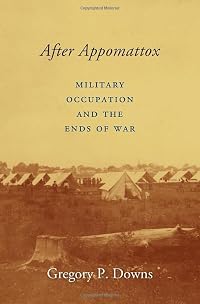
After Appomattox: Military Occupation and the Ends of War
by Gregory P. Downs
On This Page
Description
"The Civil War did not end at Appomattox Court House. Nor did it end at the surrenders that followed in North Carolina, Texas, and Indian Country. The Civil War dragged on for at least five years after Robert E. Lee surrendered to Ulysses S. Grant in April 1865. In the first large-scale examination of the post-Civil War occupation, this book offers a rethinking of Reconstruction, the end of the Civil War, and the United States' history of occupation. The Civil War could not end, because show more slavery had not yet ended. Freedpeople held in bondage throughout the South taught soldiers that it would take military force to crush the institution of slavery. To create reliable rights on the ground and to stave off planters' efforts to restore their power, the United States launched an expansive, aggressive, little-understood occupation of the rebel states, granting the Army power to overturn laws, appoint new officials, conduct military trials, and ignore writs of habeas corpus. Yet relying on occupation posed dilemmas for the United States. Isolated in small outposts, the Army could regulate only what it could see. In large no-man's lands, a series of insurgencies and partisan conflicts arose; much of the South fell into near-anarchy. Maintaining an occupation created political problems as well, as northern voters urged Congress to cut spending and send troops home. This book describes a Civil War that could not quite end, a peace that could not quite be achieved, and a resolution that continues to shape American life"--Provided by publisher. show lessTags
Recommendations





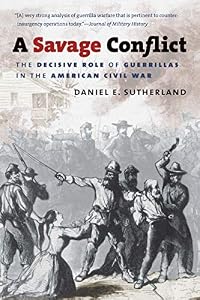

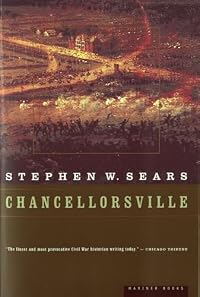
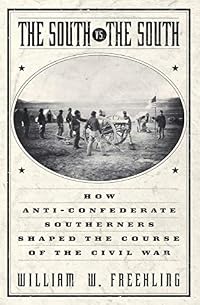
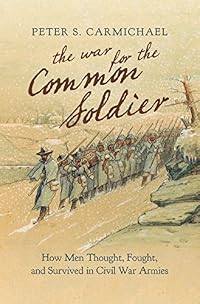
Member Reviews
Members
- Recently Added By
Published Reviews
ThingScore 100
This is a review by the author, part of the marketing campaign but a short precis of his work.
added by elenchus
For most history buffs, the Civil War’s sesquicentennial ends on Thursday. That day in 1865, Confederate Gen. Robert E. Lee surrendered to Ulysses S. Grant at the Battle of Appomattox. Most historians, though, acknowledge that the war’s most ambitious aim—full equality for black citizens—took many more years to accomplish, and even continues. But in his new book, After Appomattox, show more historian Gregory P. Downs makes a far bolder claim. Appomattox hardly ended the war: A full-scale military occupation continued for at least another five years, and without it, slavery may have persisted far longer than it did. (opening paragraph) show less
added by elenchus
Lists

Ulysses S. Grant & the American Civil War
24 works; 1 member
Author Information
5+ Works 153 Members
Gregory P. Downs is Professor of History at the University of California, Davis, and has received the university's Distinguished Scholarly Public Service Award. He co-wrote the National Park Service's theme study on Reconstruction and helped create an interactive digital history of the U.S. Army's occupation of the South. He is the author of show more Declarations of Dependence and The Second American Revolution. show less
Awards and Honors
Classifications
- Genres
- History, Nonfiction, Sociology, Politics and Government, General Nonfiction
- DDC/MDS
- 973.7 — History & geography History of North America United States Abraham Lincoln, (1861-1865) Civil War
- LCC
- E668 .D74 — History of the United States United States Late nineteenth century, 1865-1900 Johnson's administration, April 15, 1865-1869 Reconstruction, 1865-1877
- BISAC
Statistics
- Members
- 92
- Popularity
- 347,567
- Rating
- (4.40)
- Languages
- English
- Media
- Paper, Ebook
- ISBNs
- 3
- ASINs
- 1