On This Page
Description
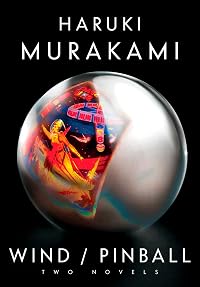
"The debut short novels--nearly thirty years out of print-- by the internationally acclaimed writer, newly retranslated and in one English-language volume for the first time, with a new introduction by the author. These first major works of fiction by Haruki Murakami center on two young men--an unnamed narrator and his friend and former roommate, the Rat. Powerful, at times surreal, stories of loneliness, obsession, and eroticism, these novellas bear all the hallmarks of Murakami's later show more books, giving us a fascinating insight into a great writer's beginnings, and are remarkable works of fiction in their own right. Here too is an exclusive essay by Murakami in which he explores and explains his decision to become a writer. Prequels to the much-beloved classics A Wild Sheep Chase and Dance Dance Dance, these early works are essential reading for Murakami completists and contemporary fiction lovers alike"-- show lessTags
Recommendations







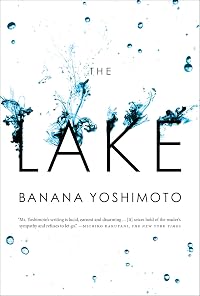
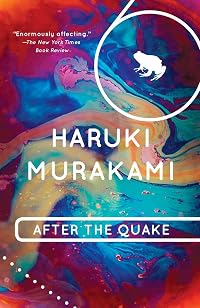
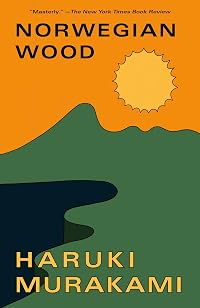

Member Recommendations
anonymous user I got a very similar vibe in how this particular book was written compared to a lot of Kurt Vonnegut's works. Slapstick, or Lonesome No More is probably the closest in to Wind/Pinball's content that I have read as its less Sci-Fi and more general fiction. Haruki Murakami states on his official website as well that is Kurt Vonnegut.
Member Reviews
This will be refreshing for anyone who’s been disillusioned by Murakami’s output of late (the bloated, pointless 1Q84, the boring-yet-rapey Colourless Tsukuru Tazaki). According to Murakami’s introduction, Hear the Wind Sing was the first novella he wrote after his famous baseball revelation in 1970*, and Pinball was its sequel. You can see why Wind won the literary award that launched his illustrious career: both stories are as fresh as a golf course at dawn, as deep as a dry well, as simple as a pot of spaghetti on the boil - and yes, all of Murakami’s favourite tropes make an appearance even here in his earliest work; as do his allusions to the hard-boiled world of Raymond Chandler. Surprisingly, Wind also smacks strongly of show more Vonnegut - there’s a Kilgore Trout figure, and a radio station logo rendered in Sharpie. Nonetheless, at their hearts, both novellas are pure Murakami: the dreamlike settings (an abandoned chicken warehouse full of vintage pinball machines!), the crisp, understated voice, the loose-limbed felicity of his non-sequitirs; all here, fully formed, in miniature.
*”In the bottom of the first inning, Hilton slammed Sotokoba’s first pitch into left field for a clean double. The satisfying crack when the bat met the ball resounded throughout Jingu Stadium. Scattered applause rose around me. In that instant, for no reason and based on no grounds whatsoever, it suddenly struck me: I think I can write a novel.” - from the introduction show less
*”In the bottom of the first inning, Hilton slammed Sotokoba’s first pitch into left field for a clean double. The satisfying crack when the bat met the ball resounded throughout Jingu Stadium. Scattered applause rose around me. In that instant, for no reason and based on no grounds whatsoever, it suddenly struck me: I think I can write a novel.” - from the introduction show less
The book feels like a key to understanding the author. The writing is reflective on Murakami’s approach, and in that reflection, the intent behind a lot of his work becomes clearer for me.
I think this book and many books of Murakami’s, maybe books in general, are records of experience. They a records of how characters and the author experience the world. Those experiences might be fantastical or just appear fantastical because the gulf between that record of the experience and the antecedent stimulus in the world is easier to bridge for some than others. Murakami seems to play in this liminal space, and it was the narrator’s unusual attraction to Kant that tipped me off.
These two novellas and others play in the gulf between a show more Kantian a priori world and the a posteriori record of experience. How fantastical can the record of experience be and still remain tethered to the world that produced it? And what would this tethered connection look like to others? The separation between what is and what it seems to be is tenuous, like the twins in the book who disrupt the narrator’s sense of who they are when they switch their clothes. Clothes, colors, labels, numbers, words, data are the names we put on our experiences, but their connection to reality is tenuous at best. I think this also explains recurring themes of strange, otherworldly communication and communication devices, as well as the author’s focus on passageways and their transformative effects on people.
In the case of Pinball (the piece of this book I liked better), there is a collision of experiences that all point to a common antecedent. There are the references to buildings and entrances and exits and the focus on the character “The Rat” which invokes a behavioralist view of the world as a maze and the goal is to find the exit. Or is it a pinball machine and we are the balls, traveling in a space with no entrances or exits and the goal is endless replay?
I kinda want to go back and read all those Murakami novels I’ve read over the years. Well, maybe not all of them, but some for sure. show less
I think this book and many books of Murakami’s, maybe books in general, are records of experience. They a records of how characters and the author experience the world. Those experiences might be fantastical or just appear fantastical because the gulf between that record of the experience and the antecedent stimulus in the world is easier to bridge for some than others. Murakami seems to play in this liminal space, and it was the narrator’s unusual attraction to Kant that tipped me off.
These two novellas and others play in the gulf between a show more Kantian a priori world and the a posteriori record of experience. How fantastical can the record of experience be and still remain tethered to the world that produced it? And what would this tethered connection look like to others? The separation between what is and what it seems to be is tenuous, like the twins in the book who disrupt the narrator’s sense of who they are when they switch their clothes. Clothes, colors, labels, numbers, words, data are the names we put on our experiences, but their connection to reality is tenuous at best. I think this also explains recurring themes of strange, otherworldly communication and communication devices, as well as the author’s focus on passageways and their transformative effects on people.
In the case of Pinball (the piece of this book I liked better), there is a collision of experiences that all point to a common antecedent. There are the references to buildings and entrances and exits and the focus on the character “The Rat” which invokes a behavioralist view of the world as a maze and the goal is to find the exit. Or is it a pinball machine and we are the balls, traveling in a space with no entrances or exits and the goal is endless replay?
I kinda want to go back and read all those Murakami novels I’ve read over the years. Well, maybe not all of them, but some for sure. show less
"What I was seeking by writing first in English and then 'translating' into Japanese was no less than the creation of an unadorned 'neutral' style that would allow me freer movement. . . . I wanted to deploy a type of Japanese as far removed as possible from so-called literary language in order to write in my own natural voice. That required desperate measures. . . . Some of my critics saw this as a threatening affront to our national language. Language is very tough, though . . . It is the inherent right of all writers to experiment with the possibilities of language in every way they can imagine - without that adventurous spirit, nothing new can ever be born."
This description of how he began writing his first novel may help explain show more why Murakami's books connect so well with Western readers. Murakami's introduction to this book is fascinating, giving much more detail than before about the improbable events that led him to be an internationally successful author. Out of college he "hated the idea of working for a company", and he and his wife instead started a jazz bar, where they worked long hours but got to play their favorite music. (Murakami readers know the importance of music in his novels). His calling as an author came out of the sky at a baseball game (beautifully described). Other events of "synchronicity or some sort of divine intervention" contributed.
It has taken a long, long time for these first two short novels of his to be translated into English (by Ted Goosen) and receive mainstream publication in English-speaking countries. (Apparently there was a small, difficult to obtain English version many years ago). Up until now, Murakami reportedly thought their quality didn't warrant Western publication. As he says in the introduction, while these two early books are "irreplaceable, like friends from long ago", he considered A Wild Sheep Chase to be "the true beginning of his career as a novelist." For the reader, it's somewhat hard to understand his previous resistance; Hear the Wind Sing and Pinball 1973, combined in Wind/Pinball, are definitely worthy and enjoyable novels, and even provide a good entry point to his body of work.
The protagonist of both is unnamed, and his friend is called the Rat. Readers of A Wild Sheep Chase will recall the Rat, and AWSC actually is the third (after these two) of what has been called "The Rat Trilogy."
In "Wind" the music-loving protagonist hangs out at J's Bar and talks with the Rat about past romances, while developing a relationship with a nine-fingered woman who at first mistakes him for a criminal. Not a lot happens, but Murakami's "free movement" in his writing, as described in the introduction, is combined with his characteristic digressions into strange trivia and a haunting tone of isolation. Pinball is more developed. The same protagonist has started a translation company with a friend, and is shacked up with a pair of amiable twins who have moved into his apartment. While at J's Bar, he is extremely successful playing a pinball game called Spaceship, with the relationship becoming almost romantic. When the bar is sold and the game (one of only 3 in Japan) disappears, he becomes obsessed with finding it. What's so important about pinball?
"{P}inball leads nowhere. . . . Replay, replay, replay - it makes you think the whole aim of the game is to achieve a form of eternity.
We know very little about eternity, although we can infer its existence.
The goal of pinball is self-transformation, not self-expression. It involves not the expansion of the ego, but its diminution. Not analysis but all-embracing acceptance.
If it's self-expression, ego expansion, or analysis you're after, the tilt light will exact its unsparing revenge.
Have a nice game!"
There are classic Murakami interweavings of the surreal, including at one point a realistic conversation with the Spaceship game, odd details like the nine fingers and the cheerful twins, and familiar weighted images that will bring a smile to readers of his other books, e.g. "Nothing is more soothing than hearing that small splash rising from the bottom of a deep well." Fans and newbies alike should enjoy these short works, and I'm glad they finally got published here. show less
This description of how he began writing his first novel may help explain show more why Murakami's books connect so well with Western readers. Murakami's introduction to this book is fascinating, giving much more detail than before about the improbable events that led him to be an internationally successful author. Out of college he "hated the idea of working for a company", and he and his wife instead started a jazz bar, where they worked long hours but got to play their favorite music. (Murakami readers know the importance of music in his novels). His calling as an author came out of the sky at a baseball game (beautifully described). Other events of "synchronicity or some sort of divine intervention" contributed.
It has taken a long, long time for these first two short novels of his to be translated into English (by Ted Goosen) and receive mainstream publication in English-speaking countries. (Apparently there was a small, difficult to obtain English version many years ago). Up until now, Murakami reportedly thought their quality didn't warrant Western publication. As he says in the introduction, while these two early books are "irreplaceable, like friends from long ago", he considered A Wild Sheep Chase to be "the true beginning of his career as a novelist." For the reader, it's somewhat hard to understand his previous resistance; Hear the Wind Sing and Pinball 1973, combined in Wind/Pinball, are definitely worthy and enjoyable novels, and even provide a good entry point to his body of work.
The protagonist of both is unnamed, and his friend is called the Rat. Readers of A Wild Sheep Chase will recall the Rat, and AWSC actually is the third (after these two) of what has been called "The Rat Trilogy."
In "Wind" the music-loving protagonist hangs out at J's Bar and talks with the Rat about past romances, while developing a relationship with a nine-fingered woman who at first mistakes him for a criminal. Not a lot happens, but Murakami's "free movement" in his writing, as described in the introduction, is combined with his characteristic digressions into strange trivia and a haunting tone of isolation. Pinball is more developed. The same protagonist has started a translation company with a friend, and is shacked up with a pair of amiable twins who have moved into his apartment. While at J's Bar, he is extremely successful playing a pinball game called Spaceship, with the relationship becoming almost romantic. When the bar is sold and the game (one of only 3 in Japan) disappears, he becomes obsessed with finding it. What's so important about pinball?
"{P}inball leads nowhere. . . . Replay, replay, replay - it makes you think the whole aim of the game is to achieve a form of eternity.
We know very little about eternity, although we can infer its existence.
The goal of pinball is self-transformation, not self-expression. It involves not the expansion of the ego, but its diminution. Not analysis but all-embracing acceptance.
If it's self-expression, ego expansion, or analysis you're after, the tilt light will exact its unsparing revenge.
Have a nice game!"
There are classic Murakami interweavings of the surreal, including at one point a realistic conversation with the Spaceship game, odd details like the nine fingers and the cheerful twins, and familiar weighted images that will bring a smile to readers of his other books, e.g. "Nothing is more soothing than hearing that small splash rising from the bottom of a deep well." Fans and newbies alike should enjoy these short works, and I'm glad they finally got published here. show less
First of all, y'all should know that I'm a sucker for first novels. Like, serious hard-on for them. And that's very relevant with Wind/Pinball: Two Novels by Haruki Murakami. These are indeed his first two novels and, as is true of most first novels of eventual masters, they are deeply flawed. They're also so delicious and lovely in large part because I know where he's going. I know that he's writing this fiction that's a little too sweet and trying just a little too hard and is a little too self-conscious, and I know that all of these things are working against the genius that flows in his veins but god damn if it doesn't charm me.
Would I recommend this as a starting point for people who've never read Murakami? Definitely not. But for show more those who've already fallen in love with him, it's like looking back at your beau's high school portrait and seeing him for the little naive, innocent, dork he was but through the blur of already loving the man he is today. It's sweet and lovely and endearing. At least it was for me. show less
Would I recommend this as a starting point for people who've never read Murakami? Definitely not. But for show more those who've already fallen in love with him, it's like looking back at your beau's high school portrait and seeing him for the little naive, innocent, dork he was but through the blur of already loving the man he is today. It's sweet and lovely and endearing. At least it was for me. show less
I sometimes find it hard to explain exactly why I enjoy Haruki Murakami’s writing so much. Part of the attraction is that the protagonists often seem slightly disconnected from the world, but are still real – they are people we have all met, and people we might not mind knowing. Part of the attraction is the surrealism (sometimes hints; sometimes smack on assaults) that are woven in the lives of these everyday people. And part of the attraction is the otherworldliness that permeates his writing. I am not sure if this is because of the way he writes, or if it comes from his works being grounded in the Japanese culture (one that is close to America’s, and yet so far away), or a combination of both.
But all of these pieces wouldn’t show more really add up to something worth anyone’s time if it were not for Murakami’s style – one that is not quite like anyone else’s. Here’s a paragraph that opens the 13th chapter of Pinball, 1973, the second novel in this collection.
“On any given day, something can come along and steal our hearts. It may be any old thing: a rosebud, a lost cap, a favorite sweater from childhood, an old Gene Pitney record. A miscellany of trivia with no home to call their own. Lingering for two or three days, that something soon disappears, returning to the darkness. There are wells, deep wells, dug in our hearts. Birds fly over them.
In the introduction to this book, Murakami describes how he wrote these two novels – his first. His initial attempt did not work, so he began writing in English. He knew the language, but did not have as robust a knowledge as one would expect necessary for writing a novel. This forced him in to a more simple style. He then translated this back to Japanese. And, with that, he found his style. He never again needed to write in English and then translate back, but he had his style– the one that captivates so many readers today.
So, one might expect that these first two novels (maybe closer to novellas, but let’s keep moving) would show the growing pains of a new author – one discovering his voice but still struggling with how to use it. (in fact, Murakami has not pushed for their release into English translations for just that reason.)
Not the case. It is all here – the voice, the characters, hints of surrealism, the style. In fact, I found these two pieces stronger than one or two of his later ones. Maybe the subsequent longer pieces allowed him to be more self-indulgent? Whatever the case, these are both very good.
Both novels cover periods in the lives of the narrator and his friend, the Rat. In the first novel, the narrator finds a girl passed out and takes her back to her room. The relationship starts poorly as she assumes he has taken advantage of her. But a few chance meetings result in a growing relationship. In Pinball, 1973, the narrator has started his own successful translation business and is now living with twins – two girls who just appeared in his life. He finds himself suddenly fascinated with one pinball machine (the basis for the quote above).
There are more plot points and “things going on” in both novels, but these are not really important. Yes, the narrative drives the stories and, without them, we might not be compelled read on. But what really makes these novels worth reading is the discussion about culture and life that surround those plots, and the revelations those discussions provide about the characters. These are people that are continually sorting out their place in life. And, while such discussions can be quickly self-indulgent and boring, that doesn’t happen. Murakami’s craftsmanship and skills bring these people to life in a way that makes the reader care for them.
There are stronger Murakami novels, but these are very good. And, if they happen to be the first you read, I don’t think you will be disappointed. They can serve as short introductions to the author or, if you are like me, they are nice pieces to add to the collection. show less
But all of these pieces wouldn’t show more really add up to something worth anyone’s time if it were not for Murakami’s style – one that is not quite like anyone else’s. Here’s a paragraph that opens the 13th chapter of Pinball, 1973, the second novel in this collection.
“On any given day, something can come along and steal our hearts. It may be any old thing: a rosebud, a lost cap, a favorite sweater from childhood, an old Gene Pitney record. A miscellany of trivia with no home to call their own. Lingering for two or three days, that something soon disappears, returning to the darkness. There are wells, deep wells, dug in our hearts. Birds fly over them.
In the introduction to this book, Murakami describes how he wrote these two novels – his first. His initial attempt did not work, so he began writing in English. He knew the language, but did not have as robust a knowledge as one would expect necessary for writing a novel. This forced him in to a more simple style. He then translated this back to Japanese. And, with that, he found his style. He never again needed to write in English and then translate back, but he had his style– the one that captivates so many readers today.
So, one might expect that these first two novels (maybe closer to novellas, but let’s keep moving) would show the growing pains of a new author – one discovering his voice but still struggling with how to use it. (in fact, Murakami has not pushed for their release into English translations for just that reason.)
Not the case. It is all here – the voice, the characters, hints of surrealism, the style. In fact, I found these two pieces stronger than one or two of his later ones. Maybe the subsequent longer pieces allowed him to be more self-indulgent? Whatever the case, these are both very good.
Both novels cover periods in the lives of the narrator and his friend, the Rat. In the first novel, the narrator finds a girl passed out and takes her back to her room. The relationship starts poorly as she assumes he has taken advantage of her. But a few chance meetings result in a growing relationship. In Pinball, 1973, the narrator has started his own successful translation business and is now living with twins – two girls who just appeared in his life. He finds himself suddenly fascinated with one pinball machine (the basis for the quote above).
There are more plot points and “things going on” in both novels, but these are not really important. Yes, the narrative drives the stories and, without them, we might not be compelled read on. But what really makes these novels worth reading is the discussion about culture and life that surround those plots, and the revelations those discussions provide about the characters. These are people that are continually sorting out their place in life. And, while such discussions can be quickly self-indulgent and boring, that doesn’t happen. Murakami’s craftsmanship and skills bring these people to life in a way that makes the reader care for them.
There are stronger Murakami novels, but these are very good. And, if they happen to be the first you read, I don’t think you will be disappointed. They can serve as short introductions to the author or, if you are like me, they are nice pieces to add to the collection. show less
I would not typically combine two works of fiction into a single review, but Hear the Wind Sing, and Pinball, 1973, by Haruki Murakami, are inextricably linked, not only because they date back some thirty-five years yet were only released in the United States for the first time in 2015 -- in a single volume entitled Wind/Pinball -- but because together these two short novels neatly form the essential foundation for the exceptional artist that Murakami would become. The author emphasizes this connection, fondly tagging these as his “kitchen table novels.”
Murakami’s genesis as a novelist is an extraordinary story that he recounts in an introduction to this edition that is definitely worth the read. Apparently, he and his wife show more married young, opened a jazz club in the Tokyo suburbs and labored throughout their twenties just to pay the bills. In 1978, the nearly thirty year old Murakami decided one day that he wanted to be a writer, sat down at his kitchen table and struggled to find a style. Remarkably, he put initial frustrations aside and began composing in English, which he later translated back into Japanese. His reliance on direct, simple sentences to construct paragraphs and chapters was born in this exercise. The result was Hear the Wind Sing. He submitted his only copy of the manuscript to a journal, and basically forgot about it. Sometime later, he learned that he had won a prestigious literary prize! All at once, he was convinced he would become a full-time author. The following year, he wrote Pinball, 1973, also at his kitchen table, as a sequel to Hear the Wind Sing, then sold his jazz club and set off for fame and fortune.
Hear the Wind Sing and Pinball, 1973 are considered the first and second volumes of the “Trilogy of the Rat” series, which precede A Wild Sheep Chase, the novel that really launched Murakami’s career. Together these works introduce the quintessential Murakami passive male protagonist who populates most of his novels, as well as “the Rat,” his existentially peculiar drinking buddy who reappears posthumously in A Wild Sheep Chase. There are also the familiar well-drawn quirky female characters who inhabit Murakami’s fiction as lovers and friends: a girl missing a finger in Wind; a pair of utterly indistinguishable twins in Pinball. Conspicuous in their absence for well-travelled Murakami fans, however, are erotic female earlobes, missing cats, or the author’s special brand of magical realism which first shows up in A Wild Sheep Chase. Both Wind and Pinball are composed more as a series of vignettes and character sketches than a narrative storyline; not an unusual Murakami construct but yet far more noticeable here than elsewhere by virtue of their brevity. Yet, the characters and events are both decidedly colorful and strikingly memorable.
To date, I have read all but one of the volumes of Murakami’s fiction. As a devotee, I felt an obligation to read these nascent works, but hardly expected to enjoy them as much as I did. Hear the Wind Sing indeed feels a bit like the writer working to find his voice, as described in the introduction, but it remains a pleasure to read. And Pinball, 1973, despite its brief length and its reliance on vignettes already has the feel of the product of a fully-formed craftsman. As such, I would recommend these first Murakami novels not only to longtime fans but to anyone who appreciates fine literature.
My review of: Hear the Wind Sing, and Pinball, 1973, by Haruki Murakami, on my book blog http://wp.me/p5Hb6f-4E show less
Murakami’s genesis as a novelist is an extraordinary story that he recounts in an introduction to this edition that is definitely worth the read. Apparently, he and his wife show more married young, opened a jazz club in the Tokyo suburbs and labored throughout their twenties just to pay the bills. In 1978, the nearly thirty year old Murakami decided one day that he wanted to be a writer, sat down at his kitchen table and struggled to find a style. Remarkably, he put initial frustrations aside and began composing in English, which he later translated back into Japanese. His reliance on direct, simple sentences to construct paragraphs and chapters was born in this exercise. The result was Hear the Wind Sing. He submitted his only copy of the manuscript to a journal, and basically forgot about it. Sometime later, he learned that he had won a prestigious literary prize! All at once, he was convinced he would become a full-time author. The following year, he wrote Pinball, 1973, also at his kitchen table, as a sequel to Hear the Wind Sing, then sold his jazz club and set off for fame and fortune.
Hear the Wind Sing and Pinball, 1973 are considered the first and second volumes of the “Trilogy of the Rat” series, which precede A Wild Sheep Chase, the novel that really launched Murakami’s career. Together these works introduce the quintessential Murakami passive male protagonist who populates most of his novels, as well as “the Rat,” his existentially peculiar drinking buddy who reappears posthumously in A Wild Sheep Chase. There are also the familiar well-drawn quirky female characters who inhabit Murakami’s fiction as lovers and friends: a girl missing a finger in Wind; a pair of utterly indistinguishable twins in Pinball. Conspicuous in their absence for well-travelled Murakami fans, however, are erotic female earlobes, missing cats, or the author’s special brand of magical realism which first shows up in A Wild Sheep Chase. Both Wind and Pinball are composed more as a series of vignettes and character sketches than a narrative storyline; not an unusual Murakami construct but yet far more noticeable here than elsewhere by virtue of their brevity. Yet, the characters and events are both decidedly colorful and strikingly memorable.
To date, I have read all but one of the volumes of Murakami’s fiction. As a devotee, I felt an obligation to read these nascent works, but hardly expected to enjoy them as much as I did. Hear the Wind Sing indeed feels a bit like the writer working to find his voice, as described in the introduction, but it remains a pleasure to read. And Pinball, 1973, despite its brief length and its reliance on vignettes already has the feel of the product of a fully-formed craftsman. As such, I would recommend these first Murakami novels not only to longtime fans but to anyone who appreciates fine literature.
My review of: Hear the Wind Sing, and Pinball, 1973, by Haruki Murakami, on my book blog http://wp.me/p5Hb6f-4E show less
The Short of It:
Mesmerizing.
The Rest of It:
You all know how I love Murakami, right? Well, when I got a review copy of Wind / Pinball, I nearly fainted. Why? Because Hear the Wind Sing was Murakami’s very first novel and Pinball, 1973 was his second. Along with A Wild Sheep Chase, they form what is known as The Trilogy of The Rat.
Wind / Pinball was not available in English here in the US so all this time I’ve wondered about The Rat and his origins, as did fans everywhere. I’m happy to say that readers will get to spend much more time with The Rat in this volume of two books. Two books in one! I die!
In Wind, we meet our unnamed narrator. He’s an unassuming guy (a Murakami trademark). He hangs out at J’s Bar, has an on again, off show more again romance with a nine-fingered woman and when he is not fantasizing about her, he’s hanging out with The Rat. You could call this novel “uneventful” but it’s classic Murakami. Lots of deep thinking. Not a lot of action.
In Pinball, things pick up a bit. It’s the same unnamed narrator but set during his days as a student. This novel is more surreal in feel. He comes home to find a set of twins in his bed. He calls them 208 and 209. As you may or may not know, sex is almost a given in a Murakami novel and if there are ears involved in any way, then you get to take a drink (kidding, sort of). To make this novel even more interesting, our unnamed narrator and The Rat find themselves obsessed with a particular pinball machine which sends them on a search to find it.
The beauty of a Murakami novel is often how simple the story is. It’s usually this tiny thing that’s surrounded by strange and unusual people and sometimes weird, fantastical happenings. I love his writing.
That being said, there is a slightly different tone to Wind. I could tell that he was still figuring out what type of writer he wanted to be. After all, if you read the newly added introduction, you learn that he decided to be a writer while attending a baseball game. Just like that. He wanted to write and did. If you read nothing else, read the introduction.
This first novel made me feel as if I was reading something in secret. I sometimes think that Murakami injects pieces of himself into his books but in Wind, it felt as if HE was a character in the book. I kind of loved it for that reason.
It comes out today so run out and get a copy if you can.
I’ve read all of his novels now. What am I going to do? I was thinking about reading Kafka on the Shore again. Why? Because that is what you do when it takes years for a new book to come out.
For more reviews, visit my blog: Book Chatter. show less
Mesmerizing.
The Rest of It:
You all know how I love Murakami, right? Well, when I got a review copy of Wind / Pinball, I nearly fainted. Why? Because Hear the Wind Sing was Murakami’s very first novel and Pinball, 1973 was his second. Along with A Wild Sheep Chase, they form what is known as The Trilogy of The Rat.
Wind / Pinball was not available in English here in the US so all this time I’ve wondered about The Rat and his origins, as did fans everywhere. I’m happy to say that readers will get to spend much more time with The Rat in this volume of two books. Two books in one! I die!
In Wind, we meet our unnamed narrator. He’s an unassuming guy (a Murakami trademark). He hangs out at J’s Bar, has an on again, off show more again romance with a nine-fingered woman and when he is not fantasizing about her, he’s hanging out with The Rat. You could call this novel “uneventful” but it’s classic Murakami. Lots of deep thinking. Not a lot of action.
In Pinball, things pick up a bit. It’s the same unnamed narrator but set during his days as a student. This novel is more surreal in feel. He comes home to find a set of twins in his bed. He calls them 208 and 209. As you may or may not know, sex is almost a given in a Murakami novel and if there are ears involved in any way, then you get to take a drink (kidding, sort of). To make this novel even more interesting, our unnamed narrator and The Rat find themselves obsessed with a particular pinball machine which sends them on a search to find it.
The beauty of a Murakami novel is often how simple the story is. It’s usually this tiny thing that’s surrounded by strange and unusual people and sometimes weird, fantastical happenings. I love his writing.
That being said, there is a slightly different tone to Wind. I could tell that he was still figuring out what type of writer he wanted to be. After all, if you read the newly added introduction, you learn that he decided to be a writer while attending a baseball game. Just like that. He wanted to write and did. If you read nothing else, read the introduction.
This first novel made me feel as if I was reading something in secret. I sometimes think that Murakami injects pieces of himself into his books but in Wind, it felt as if HE was a character in the book. I kind of loved it for that reason.
It comes out today so run out and get a copy if you can.
I’ve read all of his novels now. What am I going to do? I was thinking about reading Kafka on the Shore again. Why? Because that is what you do when it takes years for a new book to come out.
For more reviews, visit my blog: Book Chatter. show less
Members
- Recently Added By
Lists


Author Information

292+ Works 174,726 Members
Haruki Murakami was born on January 12, 1949 in Kyoto, Japan and studied at Tokyo's Waseda University. He opened a coffeehouse/jazz bar in the capital called Peter Cat with his wife. He became a full-time author following the publication of his first novel, Hear the Wind Sing, in 1979. He writes both fiction and non-fiction works. His fiction show more works include Norwegian Wood, Colorless Tsukuru Tazaki and His Years of Pilgrimage, The Strange Library, and Men Without Women. Several of his stories have been adapted for the stage and as films. His nonfiction works include What I Talk About When I Talk About Running. He has received numerous literary awards including the Franz Kafka Prize for Kafka on the Shore, the Yomiuri Prize for The Wind-Up Bird Chronicle, and the Jerusalem Prize. He has translated into Japanese literature written by F. Scott Fitzgerald, Raymond Carver, Truman Capote, John Irving, and Paul Theroux. (Bowker Author Biography) show less
Some Editions
Awards and Honors
Distinctions
The Guardian Book of the Day (2015-08-13)
The Guardian Book of the Day (2015-08-04)
Series

Work Relationships
Contains
Common Knowledge
- Canonical title
- Wind / Pinball: Two Novels
- Original title
- 1973 - nen no pinboru / Kaze no uta
- First words
- Most people - by which I mean most of us who are part of Japanese society - graduate from school, then find work, then, after some time has passed, get married. (An Introduction to Two Short Novels)
"There's no such thing as a perfect piece of writing. Just as there's no such thing as perfect despair." (Hear the Wind Sing)
I enjoyed listening to stories about faraway places so much that it became a kind of sickness. (Pinball, 1973) - Quotations
- Each day was a carbon copy of the last. You needed a bookmark to tell one from the other.
- Last words
- (Click to show. Warning: May contain spoilers.)How wonderful that these sensations still reside within me today. (An Introduction to Two Short Novels)
(Click to show. Warning: May contain spoilers.)How can those who live in the light of day possibly comprehend the depths of night? (Hear the Wind Sing)
(Click to show. Warning: May contain spoilers.)A November Sunday so tranquil it seemed everything would soon be crystal clear. (Pinball, 1973) - Original language
- Japanese
- Disambiguation notice
- This is a collection of 2 works. Please do not combine with "Pinball, 1973".
Classifications
- Genres
- General Fiction, Fiction and Literature
- DDC/MDS
- 895.63 — Literature & rhetoric Literatures of other languages Literatures of East and Southeast Asia Japanese Japanese fiction
- LCC
- PL856 .U673 .A2 — Language and Literature Languages and literatures of Eastern Asia, Africa, Oceania Languages of Eastern Asia, Africa, Oceania Japanese language and literature Japanese literature Individual authors and works
- BISAC
Statistics
- Members
- 1,776
- Popularity
- 12,348
- Reviews
- 58
- Rating
- (3.50)
- Languages
- 14 — Catalan, Danish, Dutch, English, French, German, Italian, Japanese, Norwegian (Bokmål), Polish, Portuguese, Romanian, Russian, Spanish
- Media
- Paper, Audiobook, Ebook
- ISBNs
- 54
- ASINs
- 16