On This Page
Description
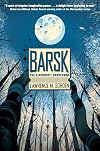
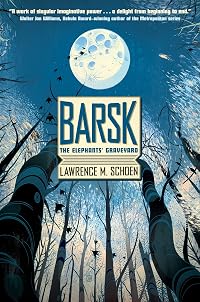
"An historian who speaks with the dead is ensnared by the past. A child who feels no pain and who should not exist sees the future. Between them are truths that will shake worlds. In a distant future, no remnants of human beings remain, but their successors thrive throughout the galaxy. These are the offspring of humanity's genius--animals uplifted into walking, talking, sentient beings. The Fant are one such species: anthropomorphic elephants ostracized by other races, and long ago exiled show more to the rainy ghetto world of Barsk. There, they develop medicines upon which all species now depend. The most coveted of these drugs is koph, which allows a small number of users to interact with the recently deceased and learn their secrets. To break the Fant's control of koph, an offworld shadow group attempts to force the Fant to surrender their knowledge. Jorl, a Fant Speaker with the dead, is compelled to question his deceased best friend, who years ago mysteriously committed suicide. In so doing, Jorl unearths a secret the powers that be would prefer to keep buried forever. Meanwhile, his dead friend's son, a physically challenged young Fant named Pizlo, is driven by disturbing visions to take his first unsteady steps toward an uncertain future"-- show lessTags
Recommendations






Member Reviews
This was the best of my holiday reads, and not just because I'm a furry. I know this because it took me exactly two days to finish it and then I dreamed about it. I listened to the audio version, of course. If you ask me the story is more fantasy than sci-fi, like a fantasy that wore a sci-fi jacket. The magical system is explained in vaguely science-like words, but it reminded me a lot of the force. lol What I liked most was that the Fant culture was talked about a lot. I'm really interested in how other uplifted species cultures are described further in the second book (when it comes out). In the negatives, I seem to not have understood that there were two kinds of Fant (and what that really looked like) until late in the book, and show more the climax of the story was a bit odd to me. I certainly would not have made the decisions the main character did, but then, I'm not Fant. show less
In a galactic culture of creatures that Humanity uplifted to sentience before we faded away, Barsk is both the sole source of a narcotic that allows psychic adepts to speak to the traces of personality left behind by the dead and the home of the uplifted elephants; beings who are deeply disliked by the rest of galactic culture for reasons that are none too rational. This is a politically unstable situation and much of the conflict in this book is driven by these realities, as the "Fant" historian and adept Jorl tries to make sense of certain prophecies left by the first Fant adept who spoke to the dead. As for the influences on this book David Brin and Ursula K. LeGuin seem to be the biggest ones, but it's also hard not to invoke George show more Orwell's "Animal Farm." While the ending was a little pat I liked this novel quite a lot.
As to how one speaks to the dead, the real basis of the plot, that is a business of manipulating "nefshons," which are essentially particles of memory. I'm not sure that anyone else has brought this up but this is very reminiscent of some of the ideas Konstantin Tsiolkovsky invoked about how the rationale of going into space was to gather together all the particles that had made up the dead so that they could live again. Maybe the next time I see the author I'll remember to ask him about it! show less
As to how one speaks to the dead, the real basis of the plot, that is a business of manipulating "nefshons," which are essentially particles of memory. I'm not sure that anyone else has brought this up but this is very reminiscent of some of the ideas Konstantin Tsiolkovsky invoked about how the rationale of going into space was to gather together all the particles that had made up the dead so that they could live again. Maybe the next time I see the author I'll remember to ask him about it! show less
This is a book that had themes that seemed from science fiction during the 90's - this isn't a bad thing, but it felt a bit surreal. The story is really quite well done, the different civilizations of animals were interesting. When we got to the psychic powers and the nefshons (particles that hold memory), it felt out of place with the space faring civilization and science stuff.
There are parts of this story that needed more explanation, like with the Phants were so persecuted - it is hinted at, but the explanation wasn't enough to cover the hatred of the other species.
Once all the different elements were written, it was fairly easy to see where the story was going. The ending was fairly predictable, and needed a bit more finesse - the show more actions of the major characters at times, felt forced.
However, with all the problems, I found this to be an amazing read. I really want to know about the different cultures in this world, and how they differ from each other. I will read a second book in this universe, if one is ever published. show less
There are parts of this story that needed more explanation, like with the Phants were so persecuted - it is hinted at, but the explanation wasn't enough to cover the hatred of the other species.
Once all the different elements were written, it was fairly easy to see where the story was going. The ending was fairly predictable, and needed a bit more finesse - the show more actions of the major characters at times, felt forced.
However, with all the problems, I found this to be an amazing read. I really want to know about the different cultures in this world, and how they differ from each other. I will read a second book in this universe, if one is ever published. show less
Barsk is darn good scifi that explores issues of history, race, and existence through the plights of anthropomorphic elephants and a wide cast of other creatures. It touches on hard science fiction issues but never goes too far. Most importantly, it's a book with a heart. It gripped me right from the start with a Fant accepting his call to go where all his kind must go when they die, but on the way he is kidnapped and held captive. The poor guy just wants to go and die in peace.
All of the characters are fantastic. I adored the precocious young Pizlo and a particular sloth character who gave me all the feels. Jorl is a fantastic protagonist, a Fant who is called far beyond his comfort zone as he begins his hero's quest. This book will show more definitely be on my nomination lists for the Hugo and Nebula. show less
All of the characters are fantastic. I adored the precocious young Pizlo and a particular sloth character who gave me all the feels. Jorl is a fantastic protagonist, a Fant who is called far beyond his comfort zone as he begins his hero's quest. This book will show more definitely be on my nomination lists for the Hugo and Nebula. show less
**I purchased a copy of this book for my own enjoyment.**
Welcome to the richly complex world of Barsk, home to the Fant. It is a lush world of jungle archipelagos, where the arboreal inhabitants live high above the shadowed forest floor. The Fant, divided into the slightly different Lox and Eleph, live in a harmonious balance with nature. Once elderly, each Fant receives a special vision of a place to go, a final resting place.
There are those few, among the Fant, and among other races, who can Speak with the dead, through special training and use of koph. Jorl is one such Speaker, special even among this rare group for the honour of bearing an Aleph. When Jorl begins having difficulty summoning the dead, he fears an ancient prophecy is show more coming into play, and sets out to solve the mystery of the Silence. His journey will take him worlds away, and worlds within, opening unfathomable possibility.
Following Jorl on a different path is Pizlo, a young albino Fant who lives wild, shunned by all but his mother, and Jorl. Pizlo has a special roll to play in the events to come, for he is another special Fant, burdened and gifted with visions, and an ability to commune with nature. Each will suffer greatly on their paths, and emerge from the forge tempered stronger than before, but will they be strong enough?
In Barsk, Schoen has opened the door to a world quite unlike most. Barsk is inhabited by the Fant, a race of beings who resemble anthropomorphised elephants. They are just one of a multitude of 'raised mammals’ living on far flung worlds. Here Schoen has shone a light on our own penchant for discrimination. In a place where every race is fundamentally different, the Fant are despised for having no fur, as all the rest of the species do. (I do wonder what these racist beings would make of meeting a raised mammoth or mastodon?) Threaded through are the echoes of our past, where might makes right. The Fant have chosen to be less technologically dependent, and have chosen isolation from the rest of the galaxy. When the Alliance decides they want the secrets Barsk harbours, they break the pact and come to take by terrible force that which they seek.
Barsk: The Elephant's Graveyard is a richly woven tapestry of life and death, love and hate, sacrifice and greed, and the timeless beats between.. One part Planet of the Apes, one part Avatar, yet wholly original, this story is immersive; it will pull you in, and keep you reading long past your bedtime! I eagerly await the next in the series.
🎻🎻🎻🎻🎻 Highly recommended. Can't recommend enough. You need this book in your life. show less
Welcome to the richly complex world of Barsk, home to the Fant. It is a lush world of jungle archipelagos, where the arboreal inhabitants live high above the shadowed forest floor. The Fant, divided into the slightly different Lox and Eleph, live in a harmonious balance with nature. Once elderly, each Fant receives a special vision of a place to go, a final resting place.
There are those few, among the Fant, and among other races, who can Speak with the dead, through special training and use of koph. Jorl is one such Speaker, special even among this rare group for the honour of bearing an Aleph. When Jorl begins having difficulty summoning the dead, he fears an ancient prophecy is show more coming into play, and sets out to solve the mystery of the Silence. His journey will take him worlds away, and worlds within, opening unfathomable possibility.
Following Jorl on a different path is Pizlo, a young albino Fant who lives wild, shunned by all but his mother, and Jorl. Pizlo has a special roll to play in the events to come, for he is another special Fant, burdened and gifted with visions, and an ability to commune with nature. Each will suffer greatly on their paths, and emerge from the forge tempered stronger than before, but will they be strong enough?
In Barsk, Schoen has opened the door to a world quite unlike most. Barsk is inhabited by the Fant, a race of beings who resemble anthropomorphised elephants. They are just one of a multitude of 'raised mammals’ living on far flung worlds. Here Schoen has shone a light on our own penchant for discrimination. In a place where every race is fundamentally different, the Fant are despised for having no fur, as all the rest of the species do. (I do wonder what these racist beings would make of meeting a raised mammoth or mastodon?) Threaded through are the echoes of our past, where might makes right. The Fant have chosen to be less technologically dependent, and have chosen isolation from the rest of the galaxy. When the Alliance decides they want the secrets Barsk harbours, they break the pact and come to take by terrible force that which they seek.
Barsk: The Elephant's Graveyard is a richly woven tapestry of life and death, love and hate, sacrifice and greed, and the timeless beats between.. One part Planet of the Apes, one part Avatar, yet wholly original, this story is immersive; it will pull you in, and keep you reading long past your bedtime! I eagerly await the next in the series.
🎻🎻🎻🎻🎻 Highly recommended. Can't recommend enough. You need this book in your life. show less
Barsk is a novel of a many parts, let down by an inability to grasp some ineffable quality of grandeur. In the far future, science has proved the existence of souls, and a select group of Speakers can commune with the dead by taking the drug Koph, which grows only on one planet. All the humans are gone, and the sentient beings are various species of uplifted animals. Barsk, source of the drug, is also home to the despised Fants, descended from elephants. For 800 years, their world has been defined by the compact, where they provide pharmaceuticals including Koph to the galaxy, and the galaxy leaves them the hell alone, as laid out by the prophetic visions and political wiles of their long dead matriarch.
Into this mess stumbles Jorl, a show more Speaker of rare talent who faces a prophesied crises called the Silence. His quest involves the mysterious suicide of his best friend, his friend's troubled and gifted son Pizlo, a Senator willing to commit any crime to maintain his hold on power, and a new formulation of koph which turns the user into the next best thing to a God.
Now I read a lot of science-fiction, so this might be on me, but I can see where the main ideas of Barsk have been done before and with more style. The uplifted animals and messy galactic confederations are from David Brin, and there's a stylistic similarity with Brin beyond the uplift part, except that Brin at his best is pulpy and daring, where Barsk plods. The intermingling of precognition, politics, and a planet that is the sole source of a vital drug are the key elements of Dune, but Dune is a masterpiece which reflects some uncomfortable truths about human nature and potential, and Barsk falls into a mundane Zootopia style "species as destiny". The physical reality of souls, precocious children, and the term Speaker comes from Orson Scott Card's Ender series (though the speaking is very different, without the transgressive humanism of Card's Speakers for the Dead). And say what you will about Card, he has at times a keen eye for character and as a good a prose style as anyone in the genre. Again, Barsk is just average.
It's frustrating, because this isn't an bad book, and it kept me entertained all the way through, but it just had so little to say. There's a really good novella at the heart of this book, about a man (okay, elephant thing) who can intercede between the living and the dead, and how existing in that ultimate liminal space transforms his world. Does he heal traumas that we must learn to grieve over, or does he reopen wounds that are best left closed? Unfortunately, that novella is buried under a bunch of space opera cruft. show less
Into this mess stumbles Jorl, a show more Speaker of rare talent who faces a prophesied crises called the Silence. His quest involves the mysterious suicide of his best friend, his friend's troubled and gifted son Pizlo, a Senator willing to commit any crime to maintain his hold on power, and a new formulation of koph which turns the user into the next best thing to a God.
Now I read a lot of science-fiction, so this might be on me, but I can see where the main ideas of Barsk have been done before and with more style. The uplifted animals and messy galactic confederations are from David Brin, and there's a stylistic similarity with Brin beyond the uplift part, except that Brin at his best is pulpy and daring, where Barsk plods. The intermingling of precognition, politics, and a planet that is the sole source of a vital drug are the key elements of Dune, but Dune is a masterpiece which reflects some uncomfortable truths about human nature and potential, and Barsk falls into a mundane Zootopia style "species as destiny". The physical reality of souls, precocious children, and the term Speaker comes from Orson Scott Card's Ender series (though the speaking is very different, without the transgressive humanism of Card's Speakers for the Dead). And say what you will about Card, he has at times a keen eye for character and as a good a prose style as anyone in the genre. Again, Barsk is just average.
It's frustrating, because this isn't an bad book, and it kept me entertained all the way through, but it just had so little to say. There's a really good novella at the heart of this book, about a man (okay, elephant thing) who can intercede between the living and the dead, and how existing in that ultimate liminal space transforms his world. Does he heal traumas that we must learn to grieve over, or does he reopen wounds that are best left closed? Unfortunately, that novella is buried under a bunch of space opera cruft. show less
Far in the future, there are no remnants of human life left. In a distant solar system, the uplifted elephant-like species of Barsk, the Fant live out their daily lives excluded from the many other uplifted species. However, Barsk is the only planet that can grow the plants for a variety of medicinal drugs. One drug, called koph helps those with the talent of Speaking to interact with the dead. Jorl is a Fant who is a Speaker and a historian who has specialized in the prophesies of the Matriarch. Jorls often Speaks to his best friend, Arlo and helps to take care of his son, Pizlo. While Speaking, Jorl notices that he cannot connect with several Fant's that have just passed, this knowledge combined with some interesting visions that show more Pizlo has begun to see, causes Jorl to believe that he is part of one of the prophesies.
Barsk: The Elephant's Graveyard is a unique fantasy that pulled me into a different world. This is a story that you have to allow yourself to go with the flow and immerse yourself into the world of Barsk. The inhabitants of Barsk and the other worlds are all mammals that have been somehow integrated with human thought process, language and emotions while still having traits of the animal they originated from. This made for an interesting conflicts between beings as well as a mystery as to why everyone else disliked the Fant. Since there was so much going on, I focused on Jorl and his insights as well as Pizlo. Pizlo was the most intriguing character for me. He is an outcast, since he was born to parents who were not fully bonded. Fant- besides his mother and Jorl ignore Pizlo, however Pizlo seems to have the greatest sense about what is going on with Barsk and those who are after its resources. Once Jorl and Pizlo begin to investigate the issues with the dead, things get complicated. The draw of koph has pulled in many other inhabitants from around the galaxy and they are not about to play nicely. Tensions rise as Speakers try to draw out knowledge from deceased Fant as well as almost deceased Fant. From here the story got very political and could easily relate to many trade situations happening on Earth. Pizlo's character added the elements of innocence and fantasy to keep the story on track for me. The ending also surprised me with what they were all hiding. Overall, a distinctive fantasy that has a lot to offer.
This book was received for free in return for an honest review. show less
Barsk: The Elephant's Graveyard is a unique fantasy that pulled me into a different world. This is a story that you have to allow yourself to go with the flow and immerse yourself into the world of Barsk. The inhabitants of Barsk and the other worlds are all mammals that have been somehow integrated with human thought process, language and emotions while still having traits of the animal they originated from. This made for an interesting conflicts between beings as well as a mystery as to why everyone else disliked the Fant. Since there was so much going on, I focused on Jorl and his insights as well as Pizlo. Pizlo was the most intriguing character for me. He is an outcast, since he was born to parents who were not fully bonded. Fant- besides his mother and Jorl ignore Pizlo, however Pizlo seems to have the greatest sense about what is going on with Barsk and those who are after its resources. Once Jorl and Pizlo begin to investigate the issues with the dead, things get complicated. The draw of koph has pulled in many other inhabitants from around the galaxy and they are not about to play nicely. Tensions rise as Speakers try to draw out knowledge from deceased Fant as well as almost deceased Fant. From here the story got very political and could easily relate to many trade situations happening on Earth. Pizlo's character added the elements of innocence and fantasy to keep the story on track for me. The ending also surprised me with what they were all hiding. Overall, a distinctive fantasy that has a lot to offer.
This book was received for free in return for an honest review. show less
Members
- Recently Added By
Author Information

65+ Works 587 Members
Lawrence M. Schoen was born on July 27, 1959 in Chicago, Illinois. He has a Ph.D. in cognitive psychology and psycholinguistics. He is the publisher and chief editor of Paper Golem, a speculative fiction small press. Prime Codex was his first book. His other edited works include Alembical 3, with Arthur Dorrance, and Cats in Space. He is also an show more author and has written numerous short stories, novellas and poetry. Barsk: The Elephant's Graveyard is his first novel. (Bowker Author Biography) show less

Lawrence M. Schoen is a LibraryThing Author, an author who lists their personal library on LibraryThing.
Some Editions
Awards and Honors
Awards
Series

Work Relationships
Is abridged in
Common Knowledge
- Original publication date
- 2015-12
- People/Characters
- Jorl ben Tral; Pizlo
- Epigraph
- These limits only I place upon you,
that never shall a Speaker summon a Speaker,
that never shall a Speaker summon the living,
that never shall a Speaker summon herself.
By these laws abide. - Dedication
- For Sol, Neal, and Ghang,
you gave me no choice but to invent nefshons - First words
- Rüsul traveled to meet his death.
- Last words
- (Click to show. Warning: May contain spoilers.)He paused for just a moment to see the smile and tears on Tolta's face, and went outside into the night.
- Publisher's editor
- Palmieri, Marco
- Blurbers
- Beyer, Kirsten; Gladstone, Max; Cambias, James L.; Schroeder, Karl; Gannon, Charles E.; Sawyer, Robert J. (show all 7); Williams, Walter Jon
Classifications
Statistics
- Members
- 296
- Popularity
- 107,852
- Reviews
- 15
- Rating
- (3.71)
- Languages
- English
- Media
- Paper, Audiobook, Ebook
- ISBNs
- 6
- ASINs
- 3