On This Page
Description
"An unlikely journalist, a murder case in Mississippi, and a fascinating literary true crime story in the style of Jon Ronson. A notorious white supremacist named Richard Barrett was brutally murdered in Mississippi in 2010 by a young black man named Vincent McGee. At first the murder seemed a twist on old Deep South race crimes. But then new revelations and complications came to light. Maybe it was a dispute over money rather than race-or, maybe and intriguingly, over sex. John Safran, a show more young white Jewish Australian documentarian, had been in Mississippi and interviewed Barrett for a film on race. When he learned of Barrett's murder, he returned to find out what happened and became caught up in the twists and turns of the case. During his time in Mississippi, Safran got deeper and deeper into this gothic southern world, becoming entwined in the lives of those connected with the murder-white separatist frenemies, black lawyers, police investigators, oddball neighbors, the stunned families, even the killer himself. And the more he talked with them, the less simple the crime-and the people involved-seemed to be. In the end, he discovered how profoundly and indelibly complex the truth about someone's life-and death-can be. This is a brilliant, haunting, hilarious, unsettling story about race, money, sex, and power in the modern American South from an outsider's point of view"-- "An unlikely journalist, a murder case in Mississippi, and a fascinating literary true crime story about race, money, sex, and power in the modern American South"-- show lessTags
Recommendations











Member Recommendations
Member Reviews
A messy but unsettling read -- and a good one, too. If you're not familiar with Safran's somewhat loose style, this might not be the best primer, but his true-crime investigation of the slaying of a confused white supremacist by a down-on-his-luck black youth is quite startling. The killer's identity is never in question, but almost everything else is.
As I said, the book is messy -- that is, a lot of it comes across as taken directly from Safran's notes; it's not edited or overly thematic like, say, that of Capote; and the difference between earlier true-crime works and those of the 21st century - where bureaucracy has more power to elude but social media threatens to devour the truth and make us all masters of our own narratives - show more sometimes obscures what really happened. Indeed, Safran walks away with only glimmers of insight.
Yet, "Murder in Mississippi" is ultimately a success. That's partly because self-avowed "Race Trekkie" Safran refuses to let the uneasy questions go unasked (and in this, his status as not just an outsider but a foreigner - and a Jewish one at that - makes things much easier, in some ways). But it's also because what we find in the killing of Richard Barrett is a nasty, nasty situation. Barrett was undoubtedly a loathsome man, but as we gradually realise, every impression of him was different - and some were determined not to see racism at all. And the killer, Vincent, is undoubtedly a victim of his society - yet it gradually becomes clear that for all his victimhood, the young man is also severely messed up. More to the point, as Safran's investigation takes in the wider community of Mississippi, he inadvertantly stumbles on much greater questions like: how much does it really take to bring about change? Integration may have been forced on these people by a Yankee government, but every page brings us to new areas of discrimination and petty power plays, a lot of it hidden between an awkward silence and a smile.
As a Melbournian myself, my response to many of the local issues is as bewildered as Safran's; if there are answers, I don't claim to know them. And that's ultimately what this book does well: it asks the questions and lets the murky haze of non-sequiturs hang there, illuminated for at least a moment by his flashlight. show less
As I said, the book is messy -- that is, a lot of it comes across as taken directly from Safran's notes; it's not edited or overly thematic like, say, that of Capote; and the difference between earlier true-crime works and those of the 21st century - where bureaucracy has more power to elude but social media threatens to devour the truth and make us all masters of our own narratives - show more sometimes obscures what really happened. Indeed, Safran walks away with only glimmers of insight.
Yet, "Murder in Mississippi" is ultimately a success. That's partly because self-avowed "Race Trekkie" Safran refuses to let the uneasy questions go unasked (and in this, his status as not just an outsider but a foreigner - and a Jewish one at that - makes things much easier, in some ways). But it's also because what we find in the killing of Richard Barrett is a nasty, nasty situation. Barrett was undoubtedly a loathsome man, but as we gradually realise, every impression of him was different - and some were determined not to see racism at all. And the killer, Vincent, is undoubtedly a victim of his society - yet it gradually becomes clear that for all his victimhood, the young man is also severely messed up. More to the point, as Safran's investigation takes in the wider community of Mississippi, he inadvertantly stumbles on much greater questions like: how much does it really take to bring about change? Integration may have been forced on these people by a Yankee government, but every page brings us to new areas of discrimination and petty power plays, a lot of it hidden between an awkward silence and a smile.
As a Melbournian myself, my response to many of the local issues is as bewildered as Safran's; if there are answers, I don't claim to know them. And that's ultimately what this book does well: it asks the questions and lets the murky haze of non-sequiturs hang there, illuminated for at least a moment by his flashlight. show less
This was a lot like watching a Safran TV show but in book form - entertaining, confronting, ethically dubious, challenging and often funny. Safran tells the story of the murder of Richard Barrett, a white supremacist who he'd played a prank on in an earlier TV series and who was stabbed to death by a young black man. Starting out with a fascinating story about race, Safran quickly realises he's got a fascinating story about race, sex, money and power and he follows every thread to try to make sense of it all. The often contradictory stories and perceptions leave Safran frustrated, but become the key revelation of the tale - nobody really knew Barrett and nobody really knows why he was killed (except the Vincent McGee, the killer, show more obviously, whose self-serving interviews are strikingly implausible). It's a nicely put together story - part the story of the murder and part the story of Safran getting entangled in everybody's lives. If you're a fan of his various tv series (particularly Race Relations) then you'll definitely enjoy this.
I'm still wrestling with the ethical ramifications of Safran's dealing with McGee - I'm not sure the payoff is worth the pretty exploitative relationship that Safran develops with him. He's well aware of this of course, with one whole chapter reading simply, "What would Janet Malcolm think?" show less
I'm still wrestling with the ethical ramifications of Safran's dealing with McGee - I'm not sure the payoff is worth the pretty exploitative relationship that Safran develops with him. He's well aware of this of course, with one whole chapter reading simply, "What would Janet Malcolm think?" show less
Most Australians have probably heard of John Safran. His television shows tend to attract controversy and letters to the editor – me, I find them insightful and willing to tackle the big issues, such as race and religion. So how does John Safran on the page compare to him on the screen?
Very, very well. In fact, I’d go so far to say that I enjoyed his writing more than the television programmes (except for the lack of Father Bob). Safran picks a big topic for his first book – true crime. To make things even more complex, a white supremacist John interviewed for Race Relations has now been found murdered. The murderer’s identity isn’t in doubt – but what makes the crime more curious is that it was a black man. What was the show more motive? Was it race?
John travels to Mississippi to find out more. He tells his story of tracking down and meeting the victim’s associates (Richard didn’t really have friends) and family. Things get even more odd when Richard’s will is revealed – how are the beneficiaries linked to Richard and why is the government of Iran on there? John’s investigations lead him to think that this wasn’t a race-motivated murder – was it related to homosexuality? Was it just an argument? John tracks down the murderer’s family and even befriends Vincent in gaol. Armed with a plethora of Walmart Green Dot cards, he’ll find out why Vincent changed his story of what motivated him to murder.
While the book isn’t an expose of a murder or miscarriage of justice, it’s a fascinating insight into Mississippi, past and present. John details previous race-related crimes in the state and how they were dealt with (or swept under the carpet). His descriptions of the people, both black and white, poor and rich are fascinating. I found it really amusing when one of his interviewees asked about the Australian Aboriginal people and John just about jumped out of his skin, as most people seemed determinedly fixed on Mississippi prior to that. John also provides an insight into his own Jewish heritage in Melbourne.
As stories go, it’s not exactly a three act narrative because it’s real life. If you like your true crime stories to have a secret murder uncovered and the wrong person incarcerated before being saved by a heroic journalist, you won’t enjoy this. If you enjoy the unfolding of the details behind a crime with a marriage proposal by proxy, you’ll like this. The book is injected with humour (including the use of the word ‘murble’ for when John doesn’t understand a word said) and I enjoyed the way it was told, diary style as events unfold. The language is easy-going and engaging; the pace quick enough to maintain interest without becoming overwhelmed with names and motives.
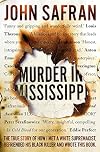
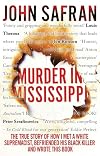
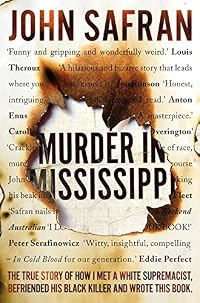
Kudos must go to the cover designer(s) of this book. In real life, the cover almost looks three dimensional, with parts of it burned out. The text is a little dramatic, but it’s all part of a conversation he had with Richard’s murderer.
John’s included his contact details at the end of the book for leads for his next true crime story – I hope you find something John, because I’ll definitely read the book!
Thank you to Penguin Australia and The Reading Room for the copy of this book.
http://samstillreading.wordpress.com show less
Very, very well. In fact, I’d go so far to say that I enjoyed his writing more than the television programmes (except for the lack of Father Bob). Safran picks a big topic for his first book – true crime. To make things even more complex, a white supremacist John interviewed for Race Relations has now been found murdered. The murderer’s identity isn’t in doubt – but what makes the crime more curious is that it was a black man. What was the show more motive? Was it race?
John travels to Mississippi to find out more. He tells his story of tracking down and meeting the victim’s associates (Richard didn’t really have friends) and family. Things get even more odd when Richard’s will is revealed – how are the beneficiaries linked to Richard and why is the government of Iran on there? John’s investigations lead him to think that this wasn’t a race-motivated murder – was it related to homosexuality? Was it just an argument? John tracks down the murderer’s family and even befriends Vincent in gaol. Armed with a plethora of Walmart Green Dot cards, he’ll find out why Vincent changed his story of what motivated him to murder.
While the book isn’t an expose of a murder or miscarriage of justice, it’s a fascinating insight into Mississippi, past and present. John details previous race-related crimes in the state and how they were dealt with (or swept under the carpet). His descriptions of the people, both black and white, poor and rich are fascinating. I found it really amusing when one of his interviewees asked about the Australian Aboriginal people and John just about jumped out of his skin, as most people seemed determinedly fixed on Mississippi prior to that. John also provides an insight into his own Jewish heritage in Melbourne.
As stories go, it’s not exactly a three act narrative because it’s real life. If you like your true crime stories to have a secret murder uncovered and the wrong person incarcerated before being saved by a heroic journalist, you won’t enjoy this. If you enjoy the unfolding of the details behind a crime with a marriage proposal by proxy, you’ll like this. The book is injected with humour (including the use of the word ‘murble’ for when John doesn’t understand a word said) and I enjoyed the way it was told, diary style as events unfold. The language is easy-going and engaging; the pace quick enough to maintain interest without becoming overwhelmed with names and motives.
Kudos must go to the cover designer(s) of this book. In real life, the cover almost looks three dimensional, with parts of it burned out. The text is a little dramatic, but it’s all part of a conversation he had with Richard’s murderer.
John’s included his contact details at the end of the book for leads for his next true crime story – I hope you find something John, because I’ll definitely read the book!
Thank you to Penguin Australia and The Reading Room for the copy of this book.
http://samstillreading.wordpress.com show less
It was difficult to pick up MURDER IN MISSISSIPPI with many standard preconceptions. Safran's not somebody who immediately comes to mind when you think True Crime writing (investigative or explorative). He certainly comes to mind when you think a bit of good old-fashioned shit stirring with a very big stick. Which combined with the Deep South, white supremacists, a possible hidden homosexual link, and six months research still wasn't exactly scanning naturally. Getting into the book however, it's hard not to hear Safran's speaking voice, even for somebody like me whose TV watching is sporadic at best, and has only occassionally taken in his work.
All of which made the style of this book somewhat surprising. Hard to describe really. Push show more comes to shove it came across to this reader as the story of the research into the subject matter of the book. Along the way I'm not 100% sure I'm any clearer on the truth of the death of the victim, nor the confirmation of guilt or innocence of the perpetrator. What I am a lot clearer on is the difficulties of the situation. The level of discomfort that Safran ended up feeling, poking around in the lives of others, especially in a world that's very different from the somewhat protected, Melbourne suburban environment that he comes from.
It's definitely not like any other true crime book I've ever read, and the writing style whilst engaging and quite conversational, has a rawness to it that I don't remember encountering for quite a while. It's definitely the author's voice, loud and clear. It's self-deprecating in points as well, and brilliantly draws a picture of the sheer confusion of the difference between where he comes from and where Mississippi comes from.
For this reader, it was fascinating. It's also distinctly possible that for other readers it will be the most irritating thing they (try to) read. Maybe it's going to come down to whether or not you're a Safran fan. Maybe it will be what preconceptions you come to the book with. But, in a most unexpected way it was a reading highlight for me.
My copy of MURDER IN MISSISSIPPI came from https://au.readerstore.sony.com/
http://www.austcrimefiction.org/review/review-murder-mississippi-john-safran show less
All of which made the style of this book somewhat surprising. Hard to describe really. Push show more comes to shove it came across to this reader as the story of the research into the subject matter of the book. Along the way I'm not 100% sure I'm any clearer on the truth of the death of the victim, nor the confirmation of guilt or innocence of the perpetrator. What I am a lot clearer on is the difficulties of the situation. The level of discomfort that Safran ended up feeling, poking around in the lives of others, especially in a world that's very different from the somewhat protected, Melbourne suburban environment that he comes from.
It's definitely not like any other true crime book I've ever read, and the writing style whilst engaging and quite conversational, has a rawness to it that I don't remember encountering for quite a while. It's definitely the author's voice, loud and clear. It's self-deprecating in points as well, and brilliantly draws a picture of the sheer confusion of the difference between where he comes from and where Mississippi comes from.
For this reader, it was fascinating. It's also distinctly possible that for other readers it will be the most irritating thing they (try to) read. Maybe it's going to come down to whether or not you're a Safran fan. Maybe it will be what preconceptions you come to the book with. But, in a most unexpected way it was a reading highlight for me.
My copy of MURDER IN MISSISSIPPI came from https://au.readerstore.sony.com/
http://www.austcrimefiction.org/review/review-murder-mississippi-john-safran show less
I love a good factual true crime book, and I'm also a giant nerd for books about the writing process - so this pleasantly surprised me on both counts! God'll Cut You Down is not only a book about a crime (the fatal stabbing of a white supremacist in his home by a young black neighbor) but a book about true crime as a genre...and a bit of a memoir of the author's entire experience of researching and putting together the book. It's a surprisingly quick read, given the page count, but it's broken up into little vignettes (interviews, encounters, and personal anecdotes, some less than a page in length) and winds up moving along at a fast clip.
I can see why this book has been most frequently compared to Midight in the Garden of Good and show more Evil, as the author himself is present as a "character" similarly in both books. Like Berendt, John Safran abandons pretense of neutrality and instead documents his biases directly, putting down in print the moments during interviews when he desperately wants a friend of the victim to say something salacious, and the times he finds himself looking for a way to spin the facts he's collected in a certain directly, and even the times he finds himself drawn to certain players. It works well in this context given that there are no clear answers to be found in this particular case, as the author can really only present (and investigate) the several conflicting versions of events the killer has presented. There's a most likely answer, of course, but even that is complicated when one looks closely at all of its pieces. show less
I can see why this book has been most frequently compared to Midight in the Garden of Good and show more Evil, as the author himself is present as a "character" similarly in both books. Like Berendt, John Safran abandons pretense of neutrality and instead documents his biases directly, putting down in print the moments during interviews when he desperately wants a friend of the victim to say something salacious, and the times he finds himself looking for a way to spin the facts he's collected in a certain directly, and even the times he finds himself drawn to certain players. It works well in this context given that there are no clear answers to be found in this particular case, as the author can really only present (and investigate) the several conflicting versions of events the killer has presented. There's a most likely answer, of course, but even that is complicated when one looks closely at all of its pieces. show less
This is not your typical true crime book and John Safran lets you know this right up front. He's somewhat of an Australian comedian known for pranks who has a comedy show. He first meets "white supremacist" Richard Barrett when he travels to the state of Mississippi in the US to interview the unknowing subject for one of these pranks. As a non-practicing Jew, can he join the we hate almost everyone who isn't white, male and Christian organization, (no, not THAT political party) the KKK. The story takes off from there and develops into an actual book when Safran hears Barrett has been murdered by a black man and heads back to this southern state to find out what really happened. What results is a mash up of Midnight in the Garden of Good show more and Evil with The Daily Show, Django Unchained and a dash of Scooby Doo. Safran provides a decent snapshot of the history of civil rights and race relations in Mississippi and brings the characters to life. The southern small town becomes the caricature that it often is. At times humorous, ironic and sometimes just plain sad, God'll Cut You Down is the right read for the right audience. Here's a favorite quote from Safran: "Mississippi. Where even our homosexuals are rednecks." Yes? You're the right audience. Provided by publisher show less
John Safran is a household name in Australia, known for stirring the pot, tackling awkward and controversial subjects, causing strife and making us laugh.
My favourite John Safran creation would have to be the Not The Sunscreen Song, a parody of Everybody's Free (To Wear Sunscreen) by Baz Luhrman.
So, after being a fan of his documentaries and funny antics (such as getting a fatwa put out on Rove) I was very interested to learn John Safran had turned his hand to writing. Murder In Mississippi is Safran's first book and it's a true crime story.
Safran was lured to Mississippi after the murder of a white supremacist in the deep South by a young black man. A year earlier, Safran had spent a couple of days with the white supremacist in a prank show more for his series Race Relations. Shocked that he'd been murdered, Safran (a fan of true crime and Truman Capote's In Cold Blood) went to the US to find out more.
Safran meets many white supremacists, the killer's family, lawyers and various other people connected to the murder case. He finds himself in some unusual situations and even develops a relationship with the killer. John is fair in his approach to what he thought would be a race motivated case, finding instead something altogether different.
Murder In Mississippi is very readable, even if this is your first true crime book. Safran raises some ideas and points of view for examination and reflection and is clearly a deep thinker. He is not afraid to say what he thinks and has the courage to go where few of us would dare venture. Perfect for book clubs and those looking to sink their teeth into something meaty over Christmas; you can't go wrong!
After reading Murder In Mississippi, I had the opportunity to participate in a Google Hangout hosted by The Reading Room. Along with 3 others, I was able to chat with John Safran about his book amongst other things. The interview was watched live and is now available on YouTube. show less
My favourite John Safran creation would have to be the Not The Sunscreen Song, a parody of Everybody's Free (To Wear Sunscreen) by Baz Luhrman.
So, after being a fan of his documentaries and funny antics (such as getting a fatwa put out on Rove) I was very interested to learn John Safran had turned his hand to writing. Murder In Mississippi is Safran's first book and it's a true crime story.
Safran was lured to Mississippi after the murder of a white supremacist in the deep South by a young black man. A year earlier, Safran had spent a couple of days with the white supremacist in a prank show more for his series Race Relations. Shocked that he'd been murdered, Safran (a fan of true crime and Truman Capote's In Cold Blood) went to the US to find out more.
Safran meets many white supremacists, the killer's family, lawyers and various other people connected to the murder case. He finds himself in some unusual situations and even develops a relationship with the killer. John is fair in his approach to what he thought would be a race motivated case, finding instead something altogether different.
Murder In Mississippi is very readable, even if this is your first true crime book. Safran raises some ideas and points of view for examination and reflection and is clearly a deep thinker. He is not afraid to say what he thinks and has the courage to go where few of us would dare venture. Perfect for book clubs and those looking to sink their teeth into something meaty over Christmas; you can't go wrong!
After reading Murder In Mississippi, I had the opportunity to participate in a Google Hangout hosted by The Reading Room. Along with 3 others, I was able to chat with John Safran about his book amongst other things. The interview was watched live and is now available on YouTube. show less
Members
- Recently Added By
Author Information

6+ Works 407 Members
John Safran is the author of Murder in Mississippi which made the finalist for the $30,000 Best Writing Award, presented for `a piece of published or produced work of outstanding clarity, originality and creativity by a Victorian writer¿. (Bowker Author Biography)
Awards and Honors
Series

Common Knowledge
- Canonical title
- Murder in Mississippi
- Original title
- Murder in Mississippi
- Alternate titles
- God'll Cut You Down
- People/Characters
- Vincent McGee
- Important places
- Mississippi, USA
- Disambiguation notice
- Published under the title God'll Cut You Down: The Tangled Tale of a White Supremacist, a Black Hustler, a Murder, and How I Lost a Year in Mississippi in the United States.
Classifications
- Genres
- Nonfiction, General Nonfiction, Politics and Government, Biography & Memoir
- DDC/MDS
- 364.152309762 — Social sciences Social problems and social services Criminology Criminal offenses Offenses against the person Homicide Murder History, geographic treatment, biography North America
- LCC
- HV6533 .M7 .S34 — Social sciences Social pathology. Social and public welfare. Criminology Social pathology. Social and public welfare. Criminology Crimes and offenses
- BISAC
Statistics
- Members
- 283
- Popularity
- 113,302
- Reviews
- 13
- Rating
- (3.55)
- Languages
- English
- Media
- Paper, Audiobook, Ebook
- ISBNs
- 14
- ASINs
- 4