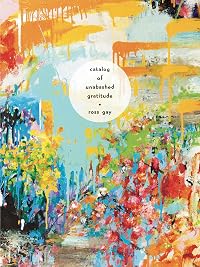
Catalog of Unabashed Gratitude
by Ross Gay
On This Page
Description
Catalog of Unabashed Gratitude is a sustained meditation on that which goes away--loved ones, the seasons, the earth as we know it--that tries to find solace in the processes of the garden and the orchard. That is, this is a book that studies the wisdom of the garden and orchard, those places where all--death, sorrow, loss--is converted into what might, with patience, nourish us.Tags
Recommendations

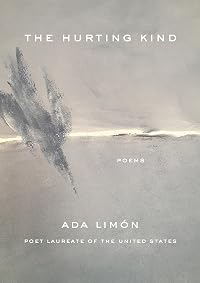

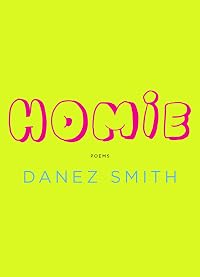
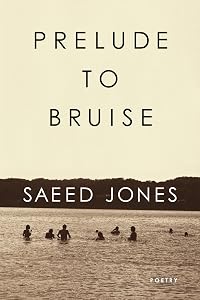
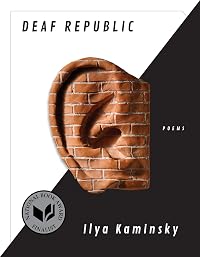

Member Reviews
The subjects of Ross Gay's poetry reminds me of Billy Collins: it's the everyday joys and sorrows, that of working in the garden or walking down the street. But Gay has a rhythm and style all his own. Many of the poems have almost no punctuation, giving them a breathless quality. He breaks the fourth wall often, calling the reader "friend" and talking to you directly, or a tongue-in-cheek statement that poetry doesn't talk about what he's writing. My favorite was the title poem "Catalog of Unabashed Gratitude," surprising me with its deep emotion of both gratitude and pain, all that is life.
An incredible collection of affirmative, celebratory poetry that has spent a couple months on my nightstand, and isn't going anywhere anytime soon. This is pure and glorious stuff, and I cannot recommend it highly enough. Stream of consciousness at its best...one image blends into another, and sometimes one collides with another, and sometimes you feel like you're racing after the poet breathlessly trying to catch up...but it's all simply beautiful. Thank YOU, Ross Gay.
On Saturdays, G has a theatre class downtown so Jesse & I will wander around the library or the Japanese Garden or find food (Golden Oak! SO GOOD.) Today was a little different, G & I headed downtown early and went to the library together, we sat and read for a little bit. She was agog over the size of the library and wants to go back next week. Then we walked over to her class and I was alone. So I went back to the library and perused the poetry section. This colorful cover caught my eye so I snagged it and fell into someone else's stream of consciousness.
These poems felt like I was in the poet's head, invading his thoughts. I loved the nature, the imagery of a goldfinch on a sunflower. "To the mulberry tree" describes a lucky bird show more swill and mulberry trees filled with birds that fortunately stick to the fruit at the top. The entirety of the title poem is an excellent reminder of everything we have to be grateful for — the small, the big, nature, ourselves, family. And figs throughout. I love figs, even if I have to share with the ants (not a euphemism I've heard before, but I have shared a fig with a bug before).
Beyond nature, these poems are of grief, love, family, and friends. show less
These poems felt like I was in the poet's head, invading his thoughts. I loved the nature, the imagery of a goldfinch on a sunflower. "To the mulberry tree" describes a lucky bird show more swill and mulberry trees filled with birds that fortunately stick to the fruit at the top. The entirety of the title poem is an excellent reminder of everything we have to be grateful for — the small, the big, nature, ourselves, family. And figs throughout. I love figs, even if I have to share with the ants (not a euphemism I've heard before, but I have shared a fig with a bug before).
Beyond nature, these poems are of grief, love, family, and friends. show less
Devoured this delicious book of poetry during breaks at Soulfire Farm's Black and Latino Farmer Immersion.
I loved listening to, meeting and communing with permaculture poet Ross Gay. There is no substitute for the animated way he reads his work. Definitely go see him reading live if you have the opportunity.
A must-savor collection for anyone who digs nature, gardening, farming, orchards, the outdoors and vibrant imagery. The way Ross sees the world, his divine diction and rhythm, playfully (and sometimes painfully) etched with tiny heart-opening moments of the abundance of the simple life is a gift to us all. Thank you!
I loved listening to, meeting and communing with permaculture poet Ross Gay. There is no substitute for the animated way he reads his work. Definitely go see him reading live if you have the opportunity.
A must-savor collection for anyone who digs nature, gardening, farming, orchards, the outdoors and vibrant imagery. The way Ross sees the world, his divine diction and rhythm, playfully (and sometimes painfully) etched with tiny heart-opening moments of the abundance of the simple life is a gift to us all. Thank you!
I discovered a copy of this book at one of the Little Free Libraries in my neighborhood and I was SO DELIGHTED. This collection reminded me of Sufi poets a bit, with its melding of sacred joy and the profane, but Gay's poems are so much more grounded in earth and mulberry juice and insects. This had been on my to-read list forever and I enjoyed it so much.
I love, love, love this book. It truly lives up to the title.
I plan to quote from several of the poems. Since there's no plot to be revealed, I don't think it's technically a spoiler, but for those who don't want to read excerpts, be advised.
I first heard of this author when I happened to catch a radio interview with him on my car radio. WFIU, Bloomington. He teaches poetry at Indiana University. He is also on the board of the Bloomington Community Orchard. The interviewer asked about the connection between his work with orchards and teaching poetry.
Ode to the flute
A man sings/by opening his/mouth a man/sings by opening/ his lungs by/turning himself into air/a flute can/be made of a man/nothing is explained/a flute lays/on its side/and show more prays a wind/might enter it/and make of it/at least/ a small final song
Nature fills his poetry - fruit, flowers, trees, insects, shit, puke, sex and death. Exuberantly short lines roll down the page. Even his longer poems keep pulling me along, and providing, from time to time, marvelous nuggets of insight.
In the poem Patience, he talks about his springtime garden and some bees. The flowers are compared to lips: "the way this bee/before me after whispering in my ear dips her head/into those dainty lips not exactly like on entering a chapel/ and friends/as if that wasn't enough/blooms forth with her forehead dusted pink/like she had been licked/and so blessed/by the kind of God/to whom this poem is prayer.
Feet is about his ugly feet and a girl who told him he had pretty feet. ""the poet says/I wish I could tell you,/truly, of the little factory/in my head: the smokestacks/chuffing, the dandelions/and purslane and willows of sweet clover/prying through the blacktop/. . ./in the factory/where loss makes all things beautiful grow.
The poem Spoon is in memory of his gay black friend who was murdered. The poem spells out just how unwelcome a black man can feel in this part of the Midwest. The poet is a black man himself.
The title poem is a long one. Those who know my taste realize that I generally prefer poems that will fit on a single page - or maybe two. This one goes on for twelve pages. I'll quote a part near the end. "I want so badly to rub the sponge of gratitude/over every last thing."
He can even find joy in the simple act of putting on (or taking off) his clothes. He called the poem "Ode to buttoning and unbuttoning my shirt".
In the poem Burial, he tells about planting a tree, and deciding to add some of his father's ashes (cremains, the funeral people call them) in the soil. "watering it in all with one hand/ while holding the tree/ with the other straight as the flag/to the nation of simple joy/of which my father is now a naturalized citizen" and concluding with the fruit of that tree. "almost dancing now in the plum,/in the tree, and the way he did as a person,/bent over and biting his lip/and chucking the one hip out/then the other with his elbows cocked/and fists loosely made/and eyes closed and mouth made trumpet/when he knew he could make you happy/just by being a little silly/and sweet.
Enduring the estrangement
from my mother's sadness, which was
to me, unbearable, until,
it felt to me
not like what I thought it felt like
to her, and so felt inside myself - like death,
like dying, which I would almost
have rather done, though adding to her sadness
would rather die than do -
but, by sitting still, liked what, in fact, it was-
a form of gratitude
which when last it came
drifted like a meadow lit by torches
of cardinal flower, one of whose crimson blooms,
when a hummingbird hovered nearby,
I slipped into my mouth
thereby coaxing the bird
to scrawl on my tongue
its heart's frenzy, its fleet
nectar-questing song,
with whom, with you, dear mother,
I now sing along.
A bit of advice addressed to his unheeding students in poetry class, he writes in the poem To the mistake: "the mistake/I say is a gift/don't be afraid/see what it teaches you/about what the poem/can be"
Another long poem, The opening, is an extended meditation on memory, family, philosophy. It begins with a kind of out-of-body experience. "You might wonder what I am doing here/in the passenger's seat of this teal Mitsubishi//with the hood secured by six or seven strips of duct tape,/sitting next to Myself, who sits in the drivers seat,//. . . //you wonder rightly what it is I am saying/quietly in the ear of Myself, and what I am pointing at//with one hand while the other rests on Myself's shoulder,/tenderly if not a bit tentatively, for Myself//is still a very big man, and quick, and trying hard/not to take anyone with him over the ledge on which he stands,//. . .//given the long prayer he found himself giving/the chickadee that met its death on his windshield//"
Later he remembers birds trapped in an attic and they become metaphors, "And the birds I'm talking about are not birds at all/but common sorrow made murderous simply by nailing//the shingles tight, and caulking with the tar always boiling out back/all possible cracks" and later, "the roaring in his head, which was nothing//more, it turns out, than the sounds of not weeping, the sounds/of sadness turned back. Nothing savage, nothing cruel or vicious,//not a bird in sight - just sadness. Which is to say/in other words, just being alive."
I think the poem I liked best, however, was the one called Weeping. It tells about a day spent by his niece Mikayla with her little friend Emma, "who left without saying goodbye." In the course of the poem, we learn that Emma is able to fly and land on Mikayla's finger. Emma' wings are brown and gold. Later in the poem we also learn that Emma has multiple legs. A butterfly. Emma spend the day around Mikayla, but the little girl is sad, is weeping when Emma leaves without saying goodbye. The sadness is there in the poem, but I was amazed by the miracle that Emma would stay nearby for an entire day. show less
I plan to quote from several of the poems. Since there's no plot to be revealed, I don't think it's technically a spoiler, but for those who don't want to read excerpts, be advised.
I first heard of this author when I happened to catch a radio interview with him on my car radio. WFIU, Bloomington. He teaches poetry at Indiana University. He is also on the board of the Bloomington Community Orchard. The interviewer asked about the connection between his work with orchards and teaching poetry.
Ode to the flute
A man sings/by opening his/mouth a man/sings by opening/ his lungs by/turning himself into air/a flute can/be made of a man/nothing is explained/a flute lays/on its side/and show more prays a wind/might enter it/and make of it/at least/ a small final song
Nature fills his poetry - fruit, flowers, trees, insects, shit, puke, sex and death. Exuberantly short lines roll down the page. Even his longer poems keep pulling me along, and providing, from time to time, marvelous nuggets of insight.
In the poem Patience, he talks about his springtime garden and some bees. The flowers are compared to lips: "the way this bee/before me after whispering in my ear dips her head/into those dainty lips not exactly like on entering a chapel/ and friends/as if that wasn't enough/blooms forth with her forehead dusted pink/like she had been licked/and so blessed/by the kind of God/to whom this poem is prayer.
Feet is about his ugly feet and a girl who told him he had pretty feet. ""the poet says/I wish I could tell you,/truly, of the little factory/in my head: the smokestacks/chuffing, the dandelions/and purslane and willows of sweet clover/prying through the blacktop/. . ./in the factory/where loss makes all things beautiful grow.
The poem Spoon is in memory of his gay black friend who was murdered. The poem spells out just how unwelcome a black man can feel in this part of the Midwest. The poet is a black man himself.
The title poem is a long one. Those who know my taste realize that I generally prefer poems that will fit on a single page - or maybe two. This one goes on for twelve pages. I'll quote a part near the end. "I want so badly to rub the sponge of gratitude/over every last thing."
He can even find joy in the simple act of putting on (or taking off) his clothes. He called the poem "Ode to buttoning and unbuttoning my shirt".
In the poem Burial, he tells about planting a tree, and deciding to add some of his father's ashes (cremains, the funeral people call them) in the soil. "watering it in all with one hand/ while holding the tree/ with the other straight as the flag/to the nation of simple joy/of which my father is now a naturalized citizen" and concluding with the fruit of that tree. "almost dancing now in the plum,/in the tree, and the way he did as a person,/bent over and biting his lip/and chucking the one hip out/then the other with his elbows cocked/and fists loosely made/and eyes closed and mouth made trumpet/when he knew he could make you happy/just by being a little silly/and sweet.
Enduring the estrangement
from my mother's sadness, which was
to me, unbearable, until,
it felt to me
not like what I thought it felt like
to her, and so felt inside myself - like death,
like dying, which I would almost
have rather done, though adding to her sadness
would rather die than do -
but, by sitting still, liked what, in fact, it was-
a form of gratitude
which when last it came
drifted like a meadow lit by torches
of cardinal flower, one of whose crimson blooms,
when a hummingbird hovered nearby,
I slipped into my mouth
thereby coaxing the bird
to scrawl on my tongue
its heart's frenzy, its fleet
nectar-questing song,
with whom, with you, dear mother,
I now sing along.
A bit of advice addressed to his unheeding students in poetry class, he writes in the poem To the mistake: "the mistake/I say is a gift/don't be afraid/see what it teaches you/about what the poem/can be"
Another long poem, The opening, is an extended meditation on memory, family, philosophy. It begins with a kind of out-of-body experience. "You might wonder what I am doing here/in the passenger's seat of this teal Mitsubishi//with the hood secured by six or seven strips of duct tape,/sitting next to Myself, who sits in the drivers seat,//. . . //you wonder rightly what it is I am saying/quietly in the ear of Myself, and what I am pointing at//with one hand while the other rests on Myself's shoulder,/tenderly if not a bit tentatively, for Myself//is still a very big man, and quick, and trying hard/not to take anyone with him over the ledge on which he stands,//. . .//given the long prayer he found himself giving/the chickadee that met its death on his windshield//"
Later he remembers birds trapped in an attic and they become metaphors, "And the birds I'm talking about are not birds at all/but common sorrow made murderous simply by nailing//the shingles tight, and caulking with the tar always boiling out back/all possible cracks" and later, "the roaring in his head, which was nothing//more, it turns out, than the sounds of not weeping, the sounds/of sadness turned back. Nothing savage, nothing cruel or vicious,//not a bird in sight - just sadness. Which is to say/in other words, just being alive."
I think the poem I liked best, however, was the one called Weeping. It tells about a day spent by his niece Mikayla with her little friend Emma, "who left without saying goodbye." In the course of the poem, we learn that Emma is able to fly and land on Mikayla's finger. Emma' wings are brown and gold. Later in the poem we also learn that Emma has multiple legs. A butterfly. Emma spend the day around Mikayla, but the little girl is sad, is weeping when Emma leaves without saying goodbye. The sadness is there in the poem, but I was amazed by the miracle that Emma would stay nearby for an entire day. show less
Mostly I do not care for poetry or houses after about 1940. The post-war housing boom in the US brought lower ceilings, and car-centric communities, and an avoidance of local climate concessions in favor of the expedience of standardization. Poetry just eluded me. Possibly it became so free that the page ceased to convey the rhythm even though song lyrics remained, well, lyrical. And yet, Amanda Gorman moved me to tears reciting [b:The Hill We Climb: An Inaugural Poem for the Country|56914101|The Hill We Climb An Inaugural Poem for the Country|Amanda Gorman|https://i.gr-assets.com/images/S/compressed.photo.goodreads.com/books/1612178266l/56914101._SX50_.jpg|90207932]. Indeed, the memory makes me tear up again.
In [b:Why We Read: On show more Bookworms, Libraries, and Just One More Page Before Lights Out|127975811|Why We Read On Bookworms, Libraries, and Just One More Page Before Lights Out|Shannon Reed|https://i.gr-assets.com/images/S/compressed.photo.goodreads.com/books/1700591104l/127975811._SY75_.jpg|147519094], Shannon Reed drew my attention to poetry again, encouraging me to wade back in. Possibly it was the idea of reading one poem each day, just one, that worked, because it is a managably small commitment. Back in January, I happened to hear Ross Gay speaking on the radio about joy, and gratitude, and I was intrigued enough to look him up at the library soon after.
And so, it has taken me three months and several renewals to work my way through. Some days, many days, I didn't read a poem, some days I read more than one. And now I know that it isn't poetry that has eluded me, it was the slower pace needed to really wallow in a poem and find the sounds. And too, it's clear that song lyrics worked only because I was always hearing them first.
So I've learned something, and found poetry pleasurable again, and hopefully established a practice that might continue to work. To Gay for his exuberance, and Gorman for her hope, and Reed for her advice: my gratitude.
And while I am at it, thanks to Carolyn Hax at the Washington Post for repeating the lesson to give others, and myself, a little grace. Another practice I am working on with the gratitude and the poetry reading.
Lastly, my thanks to the public libraries for making all of these writers easily accessible, and extending the grace of all those renewals and no fines when I still misseda return date show less
In [b:Why We Read: On show more Bookworms, Libraries, and Just One More Page Before Lights Out|127975811|Why We Read On Bookworms, Libraries, and Just One More Page Before Lights Out|Shannon Reed|https://i.gr-assets.com/images/S/compressed.photo.goodreads.com/books/1700591104l/127975811._SY75_.jpg|147519094], Shannon Reed drew my attention to poetry again, encouraging me to wade back in. Possibly it was the idea of reading one poem each day, just one, that worked, because it is a managably small commitment. Back in January, I happened to hear Ross Gay speaking on the radio about joy, and gratitude, and I was intrigued enough to look him up at the library soon after.
And so, it has taken me three months and several renewals to work my way through. Some days, many days, I didn't read a poem, some days I read more than one. And now I know that it isn't poetry that has eluded me, it was the slower pace needed to really wallow in a poem and find the sounds. And too, it's clear that song lyrics worked only because I was always hearing them first.
So I've learned something, and found poetry pleasurable again, and hopefully established a practice that might continue to work. To Gay for his exuberance, and Gorman for her hope, and Reed for her advice: my gratitude.
And while I am at it, thanks to Carolyn Hax at the Washington Post for repeating the lesson to give others, and myself, a little grace. Another practice I am working on with the gratitude and the poetry reading.
Lastly, my thanks to the public libraries for making all of these writers easily accessible, and extending the grace of all those renewals and no fines when I still misseda return date show less
Members
- Recently Added By
Lists

Favorite Recent Poetry: 1980-2022
178 works; 70 members

Spirituality
195 works; 1 member

Poetry
78 works; 1 member
Author Information

15+ Works 2,333 Members
Ross Gay is the author of the essay collection Inciting Joy and four books of poetry. His Catalog of Unabashed Gratitude won the National Book Critics Circle Award and the Kingsley Tufts Poetry Award and was a finalist for the National Book Award, and in 2021 Be Holding won the PEN/Jean Stein Book Award. He teaches at Indiana University.
Awards and Honors
Awards
Series
Belongs to Publisher Series
Common Knowledge
- Canonical title
- Catalog of Unabashed Gratitude
Classifications
Statistics
- Members
- 534
- Popularity
- 56,000
- Reviews
- 18
- Rating
- (4.42)
- Languages
- English
- Media
- Paper, Ebook
- ISBNs
- 3
- ASINs
- 2