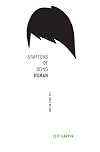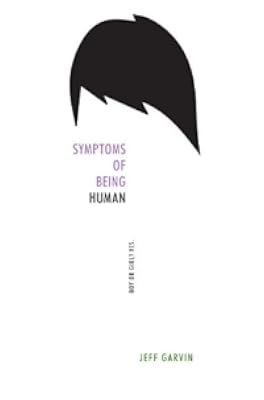
Symptoms of Being Human
by Jeff Garvin
On This Page
Description
Starred reviews from Publishers Weekly and Booklist * YALSA Top Ten Quick Pick for Reluctant Readers * ALA Best Fiction for Young Adults List * 2017 RainbowA sharply honest and moving debut perfect for fans of The Perks of Being a Wallflower and Ask the Passengers.
Riley Cavanaugh is many things: Punk rock. Snarky. Rebellious. And gender fluid. Some days Riley identifies as a boy, and others as a girl. But Riley isn't exactly out yet. And between starting a new school and having a show more congressman father running for reelection in über-conservative Orange County, the pressure—media and otherwise—is building up in Riley's life.
On the advice of a therapist, Riley starts an anonymous blog to vent those pent-up feelings and tell the truth of what it's really like to be a gender fluid teenager. But just as Riley's starting to settle in at school—even developing feelings for a mysterious outcast—the blog goes viral, and an unnamed commenter discovers Riley's real identity, threatening exposure. And Riley must make a choice: walk away from what the blog has created—a lifeline, new friends, a cause to believe in—or stand up, come out, and risk everything.
From debut author Jeff Garvin comes a powerful and uplifting portrait of a modern teen struggling with high school, relationships, and what it means to be a person.
. show less
Tags
Recommendations











Member Reviews
Riley Cavanaugh is a gender fluid teen struggling with the pressures of starting a new school, trying to decide how to/who to/when to come out, clinical anxiety, and being the child of a congressman whose re-election campaign puts his family in the spotlight. I loved this book. Riley is both snarky and funny, and following them while they make new friends, figure out how to talk to their family, and discover their voice (both on- and off-line) was wonderful. Garvin writes the whole book without ever identifying what gender Riley was assigned at birth or using any personal pronouns to refer to them. The narrative is in first person from Riley's point of view, so this is easier than it might sound at first, but even so, that Garvin does show more this almost seamlessly is no mean feat. That Riley's parents (to whom Riley is not out) never refer to them with any gendered language seems a bit odd at first, but it really didn't bother me much as I was reading. The only moments when I really saw the seams of this narrative decision was when Riley would talk about formal clothes their mom had picked out for them that they hated wearing because they were so gendered. It's very obvious here that the narrative is intentionally not telling the reader what kind of clothes they are (suit? dress?), but even then, since the narrative is from Riley's pov, it's easy to read this as information Riley simply doesn't choose to share. (And in presenting the clothes this way, it subtly emphasizes that it is okay that Riley doesn't share that information; that if Riley doesn't want others to know that about them, then it isn't our business.) And the effect of not knowing how Riley is seen by others (like their parents) is that the reader see's Riley as gender fluid instead as a human with x genitals who identifies as y. The reader has no choice but to read Riley as both instead of as one or the other. In addition to being a great YA story about all kinds of teenaged problems as well as gender identity, The Symptoms of Being Human is an excellent exploration of gender and why/whether/when it matters. Recommended. show less
I picked up this story of a gender fluid teenager coming into their own via an outing on their blog as a light read -- not because the subject matter is light (with some inference there are actually some very heavy scenes) but because it seemed like the sort of book that would follow a predictable path and not require much thought. By that definition of a light read, this book definitely qualifies. I devoured it. I didn't want to put it aside.
It is a bit formulaic, but it handles gender fluidity and coming out and anxiety extremely well, it is humorous, and it doesn't make any demands. My only complaint would be that for all the careful attention to getting gender fluidity right, the author has some gaping holes when it comes to show more veganism (a recurring Starburst theme is only the tip of the nonexistent vegan research iceberg). Disappointing given the quality of the rest of the book in introducing mainstream readers to new worlds.
Excellent book in the "what the cover says is what you get" genre. I am giving it 3.5 stars because that is about where that genre caps out for me -- but I enjoyed it immensely and would recommend it to others, especially as an introduction to trans identities. show less
It is a bit formulaic, but it handles gender fluidity and coming out and anxiety extremely well, it is humorous, and it doesn't make any demands. My only complaint would be that for all the careful attention to getting gender fluidity right, the author has some gaping holes when it comes to show more veganism (a recurring Starburst theme is only the tip of the nonexistent vegan research iceberg). Disappointing given the quality of the rest of the book in introducing mainstream readers to new worlds.
Excellent book in the "what the cover says is what you get" genre. I am giving it 3.5 stars because that is about where that genre caps out for me -- but I enjoyed it immensely and would recommend it to others, especially as an introduction to trans identities. show less
I loved this book. The author does an outstanding job writing realistically about gender nonconformity, about coming out, and about anxiety and panic attacks. Riley suffers from severe anxiety related to gender dysphoria and being closeted in a situation where Riley's family is in the spotlight, having a father who is a politician running for re-election. Riley walks a tightrope of gender ambiguity, choosing to cultivate an androgynous exterior - a "neutral" shell - that the teen determines will be less-offensive and less-confusing to people. However, Riley doesn't feel non-binary and doesn't actually like this middle ground. Staying in the middle is just a form of survival. So that on days when Riley wakes up feeling like a girl they show more can wear chapstick and cross their legs at the knee, and when Riley wakes up feeling like it's a boy day, they can spread their legs and alter their walk, maybe put on a beanie to feel right in their skin. But their choice of clothing is intentionally neutral - a jeans and tee that would work for either gender. This actually confused people because many can't tell at first glance whether Riley is a girl or a boy. Riley knows they are neither, and both. But also knows that presenting as a boy one day and as a girl the next would be so much worse than leaving people to wonder. But being stuck in the middle, without really being able to settle into either gender, often leaves Riley riddled with anxiety and feeling panicked.
We really get into the mind of Riley. The other characters we know less about what they're thinking and feeling, and why. Riley is starting at public school for the first time, so we get the normal teenage torture of making new friends, navigating the high school social structure, but it is all magnified by Riley's at-home pressure of being part of a political family and trying to decide how, when, and whether to come out to parents all while dealing with daily, worsening anxiety due to hiding their gender identity. show less
We really get into the mind of Riley. The other characters we know less about what they're thinking and feeling, and why. Riley is starting at public school for the first time, so we get the normal teenage torture of making new friends, navigating the high school social structure, but it is all magnified by Riley's at-home pressure of being part of a political family and trying to decide how, when, and whether to come out to parents all while dealing with daily, worsening anxiety due to hiding their gender identity. show less
As a scholar interested in the way that gender is represented within young adult books, I'm always on the look out for any book that breaks gender binaries, and this book definitely fit the bill. While browsing at Barnes and Noble one day (a frequent occasion for me), this book caught my eye because it featured a genderfluid protagonist, something that isn't seen often (if at all) in young adult literature. So I obviously had to read it to see if it was any good, right? Right.
Symptoms of Being Human follows the story of Riley, a genderfluid teenager who begins an anonymous blog at the prompting of their therapist, to help deal with anxiety. But the blog takes off in a way that Riley could have never imagined, quickly gaining hundreds of show more followers overnight, not all of them wishing Riley well. Someone at Riley's new school knows Riley's secret and is threatening to expose them; Riley must decide between shutting down a blog that has become a lifeline for others, or to risk everything and finally come out and take a stand in their ultra-conservative community.
So I loved this book. I absolutely loved it. I thought that Jeff Garvin did a fantastic job writing a realistic account of not only genderfluidity (from my own limited knowledge and perspective), but also realistically portrayed anxiety and panic attacks. Holistically, I think Garvin created a story that many different teens can relate to, one that might be important in showing them that they aren't alone, that others are experiencing the things that they do. Sometimes when authors deal with these kinds of issues it can feel fake or like the book is doing too much, but in this case, I think the elements that Garvin combined worked really well together, not only making the story accurate, but also engaging. I was rooting for Riley throughout the entire book, and I didn't wan to put the book down until I knew Riley's fate.
The other thing I really enjoyed about this book is that Riley is never assigned a gender identity besides genderfluid. There are perhaps a few instances where the reader might be able to deduce the gender that Riley was "assigned," but nothing in Garvin's language actually gives it away, and that's definitely not an easy thing to do. I've tried to write stories where the characters aren't gendered, and there are so many little things that you don't really think about being stereotypically assigned to one gender or another until someone else reads your story and points it out. I applaud Garvin for working to eliminate that within his book, and except for a few small (very, very small) scenes, for instance getting dressed for one of Riley's dad's fundraisers or the ending scene of the book, I think the book 100% sticks to Riley's identity. And I think that makes this book even more deserving of praise.
All in all, a great read that I would highly recommend, and one that I might just read again. show less
Symptoms of Being Human follows the story of Riley, a genderfluid teenager who begins an anonymous blog at the prompting of their therapist, to help deal with anxiety. But the blog takes off in a way that Riley could have never imagined, quickly gaining hundreds of show more followers overnight, not all of them wishing Riley well. Someone at Riley's new school knows Riley's secret and is threatening to expose them; Riley must decide between shutting down a blog that has become a lifeline for others, or to risk everything and finally come out and take a stand in their ultra-conservative community.
So I loved this book. I absolutely loved it. I thought that Jeff Garvin did a fantastic job writing a realistic account of not only genderfluidity (from my own limited knowledge and perspective), but also realistically portrayed anxiety and panic attacks. Holistically, I think Garvin created a story that many different teens can relate to, one that might be important in showing them that they aren't alone, that others are experiencing the things that they do. Sometimes when authors deal with these kinds of issues it can feel fake or like the book is doing too much, but in this case, I think the elements that Garvin combined worked really well together, not only making the story accurate, but also engaging. I was rooting for Riley throughout the entire book, and I didn't wan to put the book down until I knew Riley's fate.
The other thing I really enjoyed about this book is that Riley is never assigned a gender identity besides genderfluid. There are perhaps a few instances where the reader might be able to deduce the gender that Riley was "assigned," but nothing in Garvin's language actually gives it away, and that's definitely not an easy thing to do. I've tried to write stories where the characters aren't gendered, and there are so many little things that you don't really think about being stereotypically assigned to one gender or another until someone else reads your story and points it out. I applaud Garvin for working to eliminate that within his book, and except for a few small (very, very small) scenes, for instance getting dressed for one of Riley's dad's fundraisers or the ending scene of the book, I think the book 100% sticks to Riley's identity. And I think that makes this book even more deserving of praise.
All in all, a great read that I would highly recommend, and one that I might just read again. show less
Thought this was book was really good! Funny, sharp, and readable. And the form fits the content. Garvin does a great job of hiding the protagonist's assigned-at-birth gender in a way that doesn't feel forced: that mechanism by itself does a lot to hold up a mirror to the reader's own preconceptions. Book was filled with warmth and understanding, I blew through it a morning.
(I got an advanced reader copy of this book through an ARC tour for debut authors, but the copy carried no expectation or requirement that I review the book).
(I got an advanced reader copy of this book through an ARC tour for debut authors, but the copy carried no expectation or requirement that I review the book).
I greatly enjoyed the book. I found Riley to not be the most likable protagonist at the start, but I recognized that a large part of that was where they started and that they would grow, which they did, exceptionally. The one thing I wish I had had some warning about was the assault, which was jarring for me and could be very triggering for some people. I did feel that it was handled with care, however, with the fact that we don't get many details and the story quickly moves on to the aftermath. I would still recommend giving anyone you recommend this book a heads up about it . Overall, I feel that the book gives some great insight into some aspects of life that genderfluid people encounter.
I really liked this one. This is the second book about a non-binary character I've read, and my favorite so far. I'm delighted that more non-binary people are being written about. Riley was honest, and for a cis person, Jeff Garvin wrote the struggles of trans people quite well. This was also pretty diverse, which was nice; there wasn't just solely trans dudes (like *cough* other books about "non-binary" people), but trans girls as well, and more than one non-binary person. It was handled really well. I'm pleasantly surprised. The only criticism I have is it does sound clinical at times, but this is used to educate people. Garvin even points out that Riley is in a privileged situation compared to other transgender people, which is cool. show more And Riley's gender assigned at birth is never revealed.
All of the characters were very endearing. This is a novel a lot of teens will relate to, trans or not, but for trans and non-binary teens, this is definitely one of the better ones out there. It discusses things in terms that teens see today, rather than outdated descriptions of "born in the wrong body" and all. It is heavy at points, but Riley has a sense of humor that keeps the narration going at a steady pace and doesn't make things too dark. This book is a success, and I'm glad it was written. show less
All of the characters were very endearing. This is a novel a lot of teens will relate to, trans or not, but for trans and non-binary teens, this is definitely one of the better ones out there. It discusses things in terms that teens see today, rather than outdated descriptions of "born in the wrong body" and all. It is heavy at points, but Riley has a sense of humor that keeps the narration going at a steady pace and doesn't make things too dark. This book is a success, and I'm glad it was written. show less
Members
- Recently Added By
Lists

Best LGBT Fiction
144 works; 25 members

Transgender Characters
91 works; 5 members

School library books removed after TX state legislator inquiry
429 works; 6 members

Pride Wishlist
54 works; 1 member

Queer Books I Love
10 works; 2 members

Books Read in 2019
4,052 works; 110 members

Books recommended by Calgary Public Library staff
1,588 works; 4 members

Books That Changed Our Perspective
423 works; 168 members
Author Information

3 Works 960 Members
Awards and Honors
Awards
Distinctions
Common Knowledge
- Original publication date
- 2016
- Dedication
- To my parents,
who told me I could be whatever I wanted when I grew up. Sorry I kept you waiting. - First words
- NEW POST: ONE OR THE OTHER
- Last words
- (Click to show. Warning: May contain spoilers.)I get all the way to the far edge, until there's only a sliver of black remaining -- And I reach up with my brush and paint it white.
- Blurbers
- Talley, Robin; Price, Lissa; Adler, Dahlia; Ahdieh, Renée
Classifications
- Genres
- LGBTQ+, Teen, Fiction and Literature, Young Adult
- DDC/MDS
- 813.6 — Literature & rhetoric American literature in English American fiction in English 2000-
- LCC
- PZ7.1 .G377 .S — Language and Literature Fiction and juvenile belles lettres Fiction and juvenile belles lettres Juvenile belles lettres
- BISAC
Statistics
- Members
- 898
- Popularity
- 30,047
- Reviews
- 31
- Rating
- (4.00)
- Languages
- English, Portuguese, Spanish
- Media
- Paper, Audiobook, Ebook
- ISBNs
- 19
- ASINs
- 2