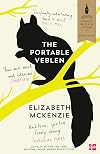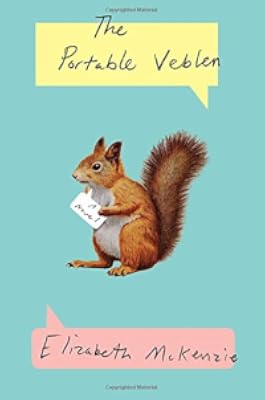
The Portable Veblen
by Elizabeth McKenzie
On This Page
Description
"A young couple on the brink of marriage--the charming Veblen and her fiancé Paul, a brilliant neurologist--find their engagement in danger of collapse. Along the way they weather everything from each other's dysfunctional families, to the attentions of a seductive pharmaceutical heiress, to an intimate tête-à-tête with a very charismatic squirrel. Veblen (named after the iconoclastic economist Thorstein Veblen, who coined the term "conspicuous consumption") is one of the most refreshing show more heroines in recent fiction. Not quite liberated from the burdens of her hypochondriac, narcissistic mother and her institutionalized father, Veblen is an amateur translator and "freelance self"; in other words, she's adrift. Meanwhile, Paul--the product of good hippies who were bad parents--finds his ambition soaring. His medical research has led to the development of a device to help minimize battlefield brain trauma--an invention that gets him swept up in a high-stakes deal with the Department of Defense, a Bizarro World that McKenzie satirizes with granular specificity"-- show lessTags
Recommendations




Member Recommendations

Member Reviews
The Publisher Says: The Portable Veblen is a dazzlingly original novel that’s as big-hearted as it is laugh-out-loud funny. Set in and around Palo Alto, amid the culture clash of new money and old (antiestablishment) values, and with the specter of our current wars looming across its pages, The Portable Veblen is an unforgettable look at the way we live now. A young couple on the brink of marriage—the charming Veblen and her fiancé Paul, a brilliant neurologist—find their engagement in danger of collapse. Along the way they weather everything from each other’s dysfunctional families, to the attentions of a seductive pharmaceutical heiress, to an intimate tête-à-tête with a very charismatic squirrel.
Veblen (named after the show more iconoclastic economist Thorstein Veblen, who coined the term “conspicuous consumption”) is one of the most refreshing heroines in recent fiction. Not quite liberated from the burdens of her hypochondriac, narcissistic mother and her institutionalized father, Veblen is an amateur translator and “freelance self”; in other words, she’s adrift. Meanwhile, Paul—the product of good hippies who were bad parents—finds his ambition soaring. His medical research has led to the development of a device to help minimize battlefield brain trauma—an invention that gets him swept up in a high-stakes deal with the Department of Defense, a Bizarro World that McKenzie satirizes with granular specificity.
As Paul is swept up by the promise of fame and fortune, Veblen heroically keeps the peace between all the damaged parties involved in their upcoming wedding, until she finds herself falling for someone—or something—else. Throughout, Elizabeth McKenzie asks: Where do our families end and we begin? How do we stay true to our ideals? And what is that squirrel really thinking? Replete with deadpan photos and sly appendices, The Portable Veblen is at once an honest inquiry into what we look for in love and an electrifying reading experience.
I RECEIVED AN ARC FROM THE PUBLISHER. THANK YOU.
My Review: A debut novel that, for its subject, takes on greed, Othering, and intergenerational family toxicity. While Author McKenzie published stories before this book appeared in 2016, the appearance of the novel was warbled delightedly about by Jeff VanderMeer, Ursula K. LeGuin, and Karen Joy Fowler. Reviews from the New York, and Los Angeles, and Seattle Timeses, the Boston Globe, Library Journal and Kirkus and NPR...several programs!...was longlisted for a National Book Award...you get the idea, it was down as The Next Big Deal.
But I forgot it existed. I read it in the dark year, and I came up dry on things to say about it.
In having a clear-out, I found the ARC again. It's such a strange title that I remembered it straight away. How many people in 2022 recall who Thorstein Veblen was? Not a lot more, or fewer honestly, than did in 2016. It's an odd and slightly off-putting thing to first-name your main character. It does efficiently Other her from the get-go. I wasn't sure that I liked that. I remember thinking that it was a darn good thing that she was the sort of person who could, in all seriousness, ask “Do you think wishful thinking is a psychiatric condition?”
So why did I resurrect this long-ago gift from a publisher who clearly never thought to hear from me about it again? Because, in flipping through it, I was caught by some unusually persuasive turns of phrase:
This is a writer speaking her truth. I love finding these moments. I think I left the book by the wayside because I couldn't, in the dark year, process the anticapitalist message as anything but the confirmation bias of my brain. In the decades of being steadily more and more radicalized by capitalism's failures of me, my chosen people, and the world my descendants will live in, I've resharpened that mental blade many times. This time I felt Author McKenzie's edge slash closer to me than before.
Author McKenzie reserves her loudest klaxon, her angriest blast of Gabriel's horn, for we-the-consumers. The sneaky message under Veblen's dithering disconnectedness is there. It's not unique, nor even original, but it's heartfelt and it's eloquent...and she's correct:
Awomen. show less
Veblen (named after the show more iconoclastic economist Thorstein Veblen, who coined the term “conspicuous consumption”) is one of the most refreshing heroines in recent fiction. Not quite liberated from the burdens of her hypochondriac, narcissistic mother and her institutionalized father, Veblen is an amateur translator and “freelance self”; in other words, she’s adrift. Meanwhile, Paul—the product of good hippies who were bad parents—finds his ambition soaring. His medical research has led to the development of a device to help minimize battlefield brain trauma—an invention that gets him swept up in a high-stakes deal with the Department of Defense, a Bizarro World that McKenzie satirizes with granular specificity.
As Paul is swept up by the promise of fame and fortune, Veblen heroically keeps the peace between all the damaged parties involved in their upcoming wedding, until she finds herself falling for someone—or something—else. Throughout, Elizabeth McKenzie asks: Where do our families end and we begin? How do we stay true to our ideals? And what is that squirrel really thinking? Replete with deadpan photos and sly appendices, The Portable Veblen is at once an honest inquiry into what we look for in love and an electrifying reading experience.
I RECEIVED AN ARC FROM THE PUBLISHER. THANK YOU.
My Review: A debut novel that, for its subject, takes on greed, Othering, and intergenerational family toxicity. While Author McKenzie published stories before this book appeared in 2016, the appearance of the novel was warbled delightedly about by Jeff VanderMeer, Ursula K. LeGuin, and Karen Joy Fowler. Reviews from the New York, and Los Angeles, and Seattle Timeses, the Boston Globe, Library Journal and Kirkus and NPR...several programs!...was longlisted for a National Book Award...you get the idea, it was down as The Next Big Deal.
But I forgot it existed. I read it in the dark year, and I came up dry on things to say about it.
In having a clear-out, I found the ARC again. It's such a strange title that I remembered it straight away. How many people in 2022 recall who Thorstein Veblen was? Not a lot more, or fewer honestly, than did in 2016. It's an odd and slightly off-putting thing to first-name your main character. It does efficiently Other her from the get-go. I wasn't sure that I liked that. I remember thinking that it was a darn good thing that she was the sort of person who could, in all seriousness, ask “Do you think wishful thinking is a psychiatric condition?”
So why did I resurrect this long-ago gift from a publisher who clearly never thought to hear from me about it again? Because, in flipping through it, I was caught by some unusually persuasive turns of phrase:
She had once concluded everyone on earth was a servant to the previous generation—born from the body’s factory for entertainment and use. A life could be spent like an apology—to prove you had been worth it.
–and–
Veblen espoused the Veblenian opinion that wanting a big house full of cheaply produced versions of so-called luxury items was the greatest soul-sucking trap of modern civilization, and that these copycat mansions away from the heart and soul of a city had ensnared their overmortgaged owners—yes, trapped and relocated them like pests.
–and–
The sharing of simple meals and discussing the day's events, of waking up together with plans for the future, things that feel practically bacchanalian when you're used to being on your own.
This is a writer speaking her truth. I love finding these moments. I think I left the book by the wayside because I couldn't, in the dark year, process the anticapitalist message as anything but the confirmation bias of my brain. In the decades of being steadily more and more radicalized by capitalism's failures of me, my chosen people, and the world my descendants will live in, I've resharpened that mental blade many times. This time I felt Author McKenzie's edge slash closer to me than before.
Author McKenzie reserves her loudest klaxon, her angriest blast of Gabriel's horn, for we-the-consumers. The sneaky message under Veblen's dithering disconnectedness is there. It's not unique, nor even original, but it's heartfelt and it's eloquent...and she's correct:
“I pledge allegiance, to the marketplace,
of the United States of America. TM.
And to the conglomerates, for which we shill,
one nation under Exxon-Mobile/Halliburton/Boeing/Walmart,
nonrefundable,
with litter and junk mail for all!”
Awomen. show less
When Veblen, who talks to squirrels, falls for Paul, who is a vivisectionist, you gotta think, this ain't gonna work. The only thing they seem to have in common are families who are certifiably strange, in their own ways. Intrusive families. Loving families? Sometimes. Horrible families? Sometimes.
This novel is funny and touching and entertaining, and more than adequately quirky. I didn't much care for Paul, but people who cut up live animals for a living aren't likely to be on my BFF list, even if their reasons are supposedly noble.
The book, even the e-book, contains some wonderful photos that add to the atmosphere of the story. There were words new to me, that I had to look up. This is a fun, light read, and if you think your family show more is a bubble off plane, will make you feel positively mainstream.
And I really like squirrels with attitude. show less
This novel is funny and touching and entertaining, and more than adequately quirky. I didn't much care for Paul, but people who cut up live animals for a living aren't likely to be on my BFF list, even if their reasons are supposedly noble.
The book, even the e-book, contains some wonderful photos that add to the atmosphere of the story. There were words new to me, that I had to look up. This is a fun, light read, and if you think your family show more is a bubble off plane, will make you feel positively mainstream.
And I really like squirrels with attitude. show less
Veblen Amundsen-Hovda is engaged in temporary secretarial work. She has a fascination for her namesake, Thorstein Veblen, the 19th century economist and academic outlier. She contributes to translation work for the Norwegian Diaspora project. She sometimes talks to squirrels. She is in love with Dr Paul Vreeland, a medical researcher who has invented a portable device for emergency craniotomies. Paul is ambitious but susceptible to temptation. When a representative from a powerful medical supply corporation lures him with riches and potential fame, everything that Paul holds dear is put at risk. Mostly Veblen.
This is a wild and raucous story of debilitating families, misplaced ambition, guilt, greed, and capitalist critique. Not to put show more too fine a point on it, it is rather difficult to pin down. Perhaps “fun” would be the best word to describe it. Despite the zaniness of many of the characters, you’ll find that you come to care for them all, even Veblen’s mother. A very fun read. Recommended. show less
This is a wild and raucous story of debilitating families, misplaced ambition, guilt, greed, and capitalist critique. Not to put show more too fine a point on it, it is rather difficult to pin down. Perhaps “fun” would be the best word to describe it. Despite the zaniness of many of the characters, you’ll find that you come to care for them all, even Veblen’s mother. A very fun read. Recommended. show less
This book was a bit strange. Veblen is named for economist Thorstein Veblen, who coined “conspicuous consumption”. So, it is a commentary on the haves and the have nots, but the real story is the love story between Veblen and Paul, a neuroscientist, and a squirrel! It also examines their relationship as well as the medical industry. Paul is studying traumatic brain injury, and is targeted by a wealthy family involved in healthcare.
Both Veblen and Paul have odd families and their relationship is strange. Sadly, I wasn't invested in any of the characters. A bit bizarre for me.
Both Veblen and Paul have odd families and their relationship is strange. Sadly, I wasn't invested in any of the characters. A bit bizarre for me.
A unique book that might not be to everyone's taste. The heroine, Veblen, likes to talk to squirrels and eschews most trappings of the modern consumerist society. When her boyfriend Paul proposes after a few months of dating, she thinks she has found her perfect soul mate, as well as a family of in-laws that will offer her the warmth that her own narcissistic, hypochondriacal mother never provided. Paul loves Veblen, but his lifetime goal is to become a successful medical researcher who can afford a fancy home and a boat, to compensate for the childhood he spent on a commune with his loving neo-hippy parents. True love is great, but when it's followed by harrowing meetings with your in-laws-to-be, and the growing realization that you show more and your fiance have contrasting values ( not to mention opposing views on the merits of squirrels), a happy ending is not a sure thing.
Any book that covers family dynamics, war veteran PTSD, obscure economists, evil pharmaceutical executives and of course more information than you need to know about squirrels (including how to say the word in 65 different languages) is going to register as something you don't encounter every day. I could quibble that Veblen's mother is so godawful that she crosses the line into a cartoon villain, and that Veblen's quirks don't really add up to a full personality, but that didn't stop me from inhaling this 400 page book in less than 24 hours. It's funny, sad, sweet, thought-provoking and ultimately hopeful. show less
Any book that covers family dynamics, war veteran PTSD, obscure economists, evil pharmaceutical executives and of course more information than you need to know about squirrels (including how to say the word in 65 different languages) is going to register as something you don't encounter every day. I could quibble that Veblen's mother is so godawful that she crosses the line into a cartoon villain, and that Veblen's quirks don't really add up to a full personality, but that didn't stop me from inhaling this 400 page book in less than 24 hours. It's funny, sad, sweet, thought-provoking and ultimately hopeful. show less
I really felt like this novel was more of a 3.5, but I'm rounding down. Elizabeth Mckenzie really wants the reader to see Veblen as a literary iteration of the Manic Pixie Dream Girl: a really unique, quirky, aloof, slightly damaged, and highly intelligent character. And that's cool - I don't mind that. It felt a little forced and perhaps ultimately formed more of a list of personality traits rather than a person with real thoughts and feelings. Veblen drifts through the novel passively, and I wanted her to really take action.
The other characters that make up the cast of the novel were far more interesting without feeling fabricated. Let's get some novels dedicated to them, or the Vreeland family, or Melanie and Linus. Those could feel show more a bit more authentic. show less
The other characters that make up the cast of the novel were far more interesting without feeling fabricated. Let's get some novels dedicated to them, or the Vreeland family, or Melanie and Linus. Those could feel show more a bit more authentic. show less
This must be my year for quirky protagonists created by women writers. Veblen Amundsen-Hovda may well be my favorite.
She is the young heroine of Elizabeth McKenzie’s The Portable Veblen. She’s named for the nonconformist economist Thorstein Veblen, and lives in Palo Alto, where this creator of the term conspicuous consumption also spent time.
Our Veblen is a temp typist, who loves the act of typing, and a freelance translator of Norwegian prose. She finds a little house that is close to falling apart and turns it into a home. That little place is a haven, and why Veblen would love to create and have and hold a haven becomes clear as the story rolls along.
She also has a beau. Paul is a brilliant neurologist who has found Veblen show more enchanting and restful. She is both. Even though he is already a doctor and a researcher, Paul feels he has something to prove. So when a giant pharma medical supply corporate daughter who runs the firm finds his instrument fascinating, he is gullible and entranced. He signs on.
As this pair realizes that they have committed themselves to a life together, their former lives come into play. Oh dear. It’s time to introduce the loved one to one’s parents.
Although McKenzie has already set a light tone in her style, with side musings that show depth, she kicks this style into high gear with the families involved. Veblen’s mother is neurotic and an uber hypochondriac. She fusses over Veblen something fierce.
In the midst of the light-hearted quirkiness, we see why. Veblen is rather nervous when Paul sets a trap in her attic’s house to keep the squirrels out. No wonder she’s nervous. She thinks one of them has been communicating with her for years. Growing up in a little place named Cobb, Veblen was akin to the Bronte sisters with her own created world:
The map represented a place called Wobb, with all the topography and various special places sketched in. No, it wasn’t quite like Cobb. It was a place where animals had been gathering to reinstate their rights, and where a runaway girl lived by herself in a tree house and was somehow an important part of their world. Humans simply could no longer see the intrinsic value of anything. Squirrels, for instance, had thought that after fifty million years on the North American continent, it was safe to let down their guard. They had made a bad contract with people in innocence and trust, and had paid the price.
Little noticings that make big points were a reading highlight, such as “Humans simply could no longer see the intrinsic value of anything” (as looking at the news today will tell us) and that any living creature might make “a bad contract with people in innocence and trust” because those qualities still do exist.
Or, as a character notes: “Do you think wishful thinking is a psychiatric condition?”
Veblen and her mother have had a strong relationship for years not only because they love each other, but because they have had to deal with Veblen’s father, who was institutionalized. Veblen’s stepfather is a librarian; she has grown up immersed in books, reading and living in other people’s words and creating her own:
The smell was the London of Dickens, the catacombs on the Appia Antica, the Gobi Desert in winter, a dark monastery in Tibet. It was Nevada City in the gold rush. It was a telegraph office near the Mexican border. It was a captain’s trunk coming around the Horn. It was a dressing room on the Great White Way in New York. Sometimes, it was a breezy little tree house in Wobb.
Paul’s family has had its struggles as well. He grew up under the shadow of his father’s brother dying a hero in Vietnam. Paul’s medical device that the big corporation has decided to develop could help battlefield medics. Paul’s brother is developmentally disabled and concern for him controls everything that has happened to the family for years. Paul’s a bit tired of that and he most definitely does not want this overwhelming concern to ruin his wedding.
This makes the novel sound more distraught and heavy lifting than it actually is. McKenzie has a light and assured narrative style that allows the characters to learn to be honest about themselves and their loved ones without an underlying sense of despair or nihilism. Yes, bad things happen. People can be greedy and selfish. But they also can hurt and try not to let it overcome them. They can acknowledge the burdens of others and they can be forgiving. They can continue to reach out. And they can love and be loved.
Even as Veblen and Paul figure out if they are grown-up and if they want to marry, let alone marry each other, the way they view their families and each other’s is a solid part of their journey. Seeing beyond the irritations or slights can do that:
Through the rough glass she saw gestures of familiarity as they huddled over the pictures. Marion placed a hand on Paul’s shoulder. Justin leaned on Bill. Bill talked to his boys, and for that moment, listening to their father, they sat as brothers absorbed in family lore. What did she know about families, and how they ran?
Another character sees this family later and knows how significant their moments of togetherness are, as we know how important family is to the observant character. It is one of those sweet moments in a novel that is the equivalent of a warm fire, comfy chair and blanket, and beverage of choice.
Occasionally we see through the eyes of other characters; these times throughout the book are not overdone, but including them adds depth. Returning to Veblen’s perspective, it’s easier to see why she has come to her conclusions.
And as for the squirrel -- an element that is not overdone and not as twee as some may think -- it’s worth the journey of reading the entire novel just to find out about its significance. show less
She is the young heroine of Elizabeth McKenzie’s The Portable Veblen. She’s named for the nonconformist economist Thorstein Veblen, and lives in Palo Alto, where this creator of the term conspicuous consumption also spent time.
Our Veblen is a temp typist, who loves the act of typing, and a freelance translator of Norwegian prose. She finds a little house that is close to falling apart and turns it into a home. That little place is a haven, and why Veblen would love to create and have and hold a haven becomes clear as the story rolls along.
She also has a beau. Paul is a brilliant neurologist who has found Veblen show more enchanting and restful. She is both. Even though he is already a doctor and a researcher, Paul feels he has something to prove. So when a giant pharma medical supply corporate daughter who runs the firm finds his instrument fascinating, he is gullible and entranced. He signs on.
As this pair realizes that they have committed themselves to a life together, their former lives come into play. Oh dear. It’s time to introduce the loved one to one’s parents.
Although McKenzie has already set a light tone in her style, with side musings that show depth, she kicks this style into high gear with the families involved. Veblen’s mother is neurotic and an uber hypochondriac. She fusses over Veblen something fierce.
In the midst of the light-hearted quirkiness, we see why. Veblen is rather nervous when Paul sets a trap in her attic’s house to keep the squirrels out. No wonder she’s nervous. She thinks one of them has been communicating with her for years. Growing up in a little place named Cobb, Veblen was akin to the Bronte sisters with her own created world:
The map represented a place called Wobb, with all the topography and various special places sketched in. No, it wasn’t quite like Cobb. It was a place where animals had been gathering to reinstate their rights, and where a runaway girl lived by herself in a tree house and was somehow an important part of their world. Humans simply could no longer see the intrinsic value of anything. Squirrels, for instance, had thought that after fifty million years on the North American continent, it was safe to let down their guard. They had made a bad contract with people in innocence and trust, and had paid the price.
Little noticings that make big points were a reading highlight, such as “Humans simply could no longer see the intrinsic value of anything” (as looking at the news today will tell us) and that any living creature might make “a bad contract with people in innocence and trust” because those qualities still do exist.
Or, as a character notes: “Do you think wishful thinking is a psychiatric condition?”
Veblen and her mother have had a strong relationship for years not only because they love each other, but because they have had to deal with Veblen’s father, who was institutionalized. Veblen’s stepfather is a librarian; she has grown up immersed in books, reading and living in other people’s words and creating her own:
The smell was the London of Dickens, the catacombs on the Appia Antica, the Gobi Desert in winter, a dark monastery in Tibet. It was Nevada City in the gold rush. It was a telegraph office near the Mexican border. It was a captain’s trunk coming around the Horn. It was a dressing room on the Great White Way in New York. Sometimes, it was a breezy little tree house in Wobb.
Paul’s family has had its struggles as well. He grew up under the shadow of his father’s brother dying a hero in Vietnam. Paul’s medical device that the big corporation has decided to develop could help battlefield medics. Paul’s brother is developmentally disabled and concern for him controls everything that has happened to the family for years. Paul’s a bit tired of that and he most definitely does not want this overwhelming concern to ruin his wedding.
This makes the novel sound more distraught and heavy lifting than it actually is. McKenzie has a light and assured narrative style that allows the characters to learn to be honest about themselves and their loved ones without an underlying sense of despair or nihilism. Yes, bad things happen. People can be greedy and selfish. But they also can hurt and try not to let it overcome them. They can acknowledge the burdens of others and they can be forgiving. They can continue to reach out. And they can love and be loved.
Even as Veblen and Paul figure out if they are grown-up and if they want to marry, let alone marry each other, the way they view their families and each other’s is a solid part of their journey. Seeing beyond the irritations or slights can do that:
Through the rough glass she saw gestures of familiarity as they huddled over the pictures. Marion placed a hand on Paul’s shoulder. Justin leaned on Bill. Bill talked to his boys, and for that moment, listening to their father, they sat as brothers absorbed in family lore. What did she know about families, and how they ran?
Another character sees this family later and knows how significant their moments of togetherness are, as we know how important family is to the observant character. It is one of those sweet moments in a novel that is the equivalent of a warm fire, comfy chair and blanket, and beverage of choice.
Occasionally we see through the eyes of other characters; these times throughout the book are not overdone, but including them adds depth. Returning to Veblen’s perspective, it’s easier to see why she has come to her conclusions.
And as for the squirrel -- an element that is not overdone and not as twee as some may think -- it’s worth the journey of reading the entire novel just to find out about its significance. show less
Members
- Recently Added By
Lists

2016 Baileys Women's Prize for Fiction
18 works; 10 members

Baileys Women's Prize for Fiction Winners and Shortlisted Books
61 works; 11 members

Mothers and Daughters
114 works; 11 members

Kirkus Starred Fiction Reviews of Books Published in 2016
63 works; 3 members

Books Read in 2016
4,666 works; 197 members
Author Information

5+ Works 950 Members
Awards and Honors
Awards
Distinctions
Notable Lists
Common Knowledge
- Canonical title
- The Portable Veblen
- Original publication date
- 2016
- People/Characters
- Veblen Amundsen-Hovda; Paul Vreeland
- Important places
- Palo Alto, California, USA
- Epigraph
- "If you love it enough, anything will talk with you." -- G. W. Carver
- Dedication
- for James Ross Cox
- First words
- Huddled together on the last block of Tasso Street, in a California town known as Palo Alto, was a pair of humble bungalows, each one aplot in lilies.
- Last words
- (Click to show. Warning: May contain spoilers.)And from a branch in the tall tree, a small grey squirrel released a mighty roar.
- Original language
- English US
Classifications
Statistics
- Members
- 673
- Popularity
- 42,700
- Reviews
- 43
- Rating
- (3.52)
- Languages
- Dutch, English, German
- Media
- Paper, Audiobook, Ebook
- ISBNs
- 17
- ASINs
- 3