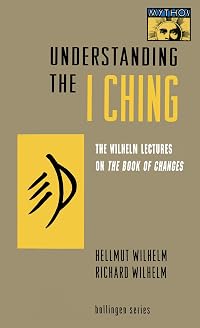
Understanding the I Ching
by Hellmut Wilhelm
142 Members (3.73)
On This Page
Description
The West's foremost translator of the I Ching, Richard Wilhelm thought deeply about how contemporary readers could benefit from this ancient work and its perennially valid insights into change and chance. For him and for his son, Hellmut Wilhelm, the Book of Changes represented not just a mysterious book of oracles or a notable source of the Taoist and Confucian philosophies. In their hands, it emerges, as it did for C. G. Jung, as a vital key to humanity's age-old collective unconscious. show more Here the observations of the Wilhelms are combined in a volume that will reward specialists and aficionados with its treatment of historical context--and that will serve also as an introduction to the I Ching and the meaning of its famous hexagrams. show lessTags
Recommendations














Member Reviews
Members
- Recently Added By
Author Information
11+ Works 427 Members
Common Knowledge
- First words
- Our object is to spend some hours together discussing the Book of Changes.
- Last words
- (Click to show. Warning: May contain spoilers.)It is seriousness and sanctity that makes death appear not as something terrible; it is that which makes life into eternity.
Classifications
- Genres
- Nonfiction, Religion & Spirituality, Philosophy, General Nonfiction
- DDC/MDS
- 299.51282 — Religion Other religions Shintoism/Taoism/Other Mythologies Of Asian Origin Religions of Chinese Origin The I Ching and related works
- LCC
- PL2464 .Z7 .W53 — Language and Literature Languages and literatures of Eastern Asia, Africa, Oceania Languages of Eastern Asia, Africa, Oceania Chinese language and literature Chinese literature Collections
- BISAC
Statistics
- Members
- 142
- Popularity
- 231,432
- Rating
- (3.73)
- Languages
- English
- Media
- Paper
- ISBNs
- 1