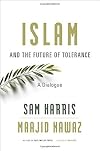
Islam and the Future of Tolerance: A Dialogue
by Sam Harris, Maajid Nawaz
On This Page
Description
In this short book, Sam Harris and Maajid Nawaz invite you to join an urgently needed conversation: Is Islam a religion of peace or war? Is it amenable to reform? Why do so many Muslims seem drawn to extremism? What do words like Islamism, jihadism, and fundamentalism mean in today's world? Remarkable for the breadth and depth of its analysis, this dialogue between a famous atheist and a former radical is all the more startling for its decorum. Harris and Nawaz have produced something show more genuinely new: they engage one of the most polarizing issues of our time -- fearlessly and fully -- and actually make progress. Islam and the Future of Tolerance has been published with the explicit goal of inspiring a wider public discussion by way of example. In a world riven by misunderstanding and violence, Harris and Nawaz demonstrate how two people with very different views can find common ground. show lessTags
Recommendations
































Member Reviews
There are three ways to resolve any conflict between two competing positions when neither of the parties is willing to acquiesce to the other:
1. Common ground is discovered through dialogue
2. The matter is adjudicated by an objective third party (legal proceedings, for instance)
3. One party forces compliance on the other through violence
We should all be striving for 1 and 2 while working to eliminate 3, which is the stated goal of both Sam Harris and Maajid Nawaz. Only through civil debate, open dialogue, and the willingness to challenge any and all beliefs can we ever hope to achieve reconciliation through nonviolent means.
That’s why I appreciate the value of this book, regardless of either author’s particular position. Beyond the show more typical name-calling and emotionally charged language (that you find here even in the Goodreads reviews), there is a serious issue that needs to be discussed and this book is a great start.
I tend to agree with Harris’ position on religion, but I also recognize that religion is here to stay at least for the foreseeable future. That’s why any hope for the further reduction in violence is going to have to come from the influence of the liberally-minded religious that are willing to question dogma and promote dialogue and human rights.
It’s the only way forward. In fact, what’s the alternative? show less
1. Common ground is discovered through dialogue
2. The matter is adjudicated by an objective third party (legal proceedings, for instance)
3. One party forces compliance on the other through violence
We should all be striving for 1 and 2 while working to eliminate 3, which is the stated goal of both Sam Harris and Maajid Nawaz. Only through civil debate, open dialogue, and the willingness to challenge any and all beliefs can we ever hope to achieve reconciliation through nonviolent means.
That’s why I appreciate the value of this book, regardless of either author’s particular position. Beyond the show more typical name-calling and emotionally charged language (that you find here even in the Goodreads reviews), there is a serious issue that needs to be discussed and this book is a great start.
I tend to agree with Harris’ position on religion, but I also recognize that religion is here to stay at least for the foreseeable future. That’s why any hope for the further reduction in violence is going to have to come from the influence of the liberally-minded religious that are willing to question dogma and promote dialogue and human rights.
It’s the only way forward. In fact, what’s the alternative? show less
This book is more of a informal dialogue around the tough questions around Islam and radicalism .
Couple points which stood out for me was Maajid's view of the "minority within the minority" ; people tend to be politically correct addressing the issues within Islam ; however the real victims are the feminist voice , the gay voice within Islam which are crushed by an authoritarian ideology ; Also Sam's concerns about people gravitating towards the far right in order to counteract islamic fundamentalism is also a serious threat to modern liberal values of humanity , current political landscape is a testimony to this phenomena .
Overall this was a brilliant collaboration between Sam , who I have found to be one of the most logical voices in show more US and Maajid who comes across as immensely knowledgeable about the nature and factions of Islam and a very articulated individual . show less
Couple points which stood out for me was Maajid's view of the "minority within the minority" ; people tend to be politically correct addressing the issues within Islam ; however the real victims are the feminist voice , the gay voice within Islam which are crushed by an authoritarian ideology ; Also Sam's concerns about people gravitating towards the far right in order to counteract islamic fundamentalism is also a serious threat to modern liberal values of humanity , current political landscape is a testimony to this phenomena .
Overall this was a brilliant collaboration between Sam , who I have found to be one of the most logical voices in show more US and Maajid who comes across as immensely knowledgeable about the nature and factions of Islam and a very articulated individual . show less
I was excited about this book when I read about it, but I'm happy that I got it from the library rather than purchasing it. I only got a little more than half way though. The topic interests me, but something about it annoyed me so I had to force myself to keep reading. It finally came to me: I didn't care for Sam Harris. He came across and self-centered and interested mainly in showing off how much he knows about religions and faith. Perhaps I am doing him a disservice because I don't know him, but that is how I felt about his half of the dialogue.
I also wish there had been some sort of introduction or context not just the exchange between Harris and Nawaz. I looked it up and found the conversation took place at Harvard last fall. show more There is a YouTube video of it which maybe I'll watch sometime. show less
I also wish there had been some sort of introduction or context not just the exchange between Harris and Nawaz. I looked it up and found the conversation took place at Harvard last fall. show more There is a YouTube video of it which maybe I'll watch sometime. show less
I read this (well, listened in Audible) because it seemed to be the subject of some controversy online. It was fairly content-free; an interesting introduction to Maajid Hawaz, but really nothing new or interesting.
The beginning of a conversation that must happen in the west if we are to go forward. I want to read more by Maajid Nawaz.
Update 2026: Sam Harris is an awful person.
Update 2026: Sam Harris is an awful person.
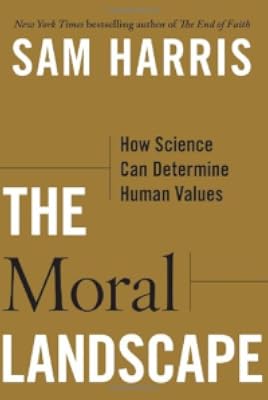
About the authors: quoting from the book's dust jacket, "Sam Harris is the author of the 'New York Times' best sellers "The End of Faith,' 'Letter to a Christian Nation,' 'The Moral Landscape,' 'Free Will,' and 'Waking Up,' among other writings. Maajid Nawaz is the author of 'Radical' and a cofounder and the chair of Quilliam--a globally active think tank focusing on religious freedom, extremism, and citizenship." About the book: quoting from the book's dust jacket, "Remarkable for the breadth and depth of its analysis, this dialogue between a famous atheist and a former radical is all the more startling for its decorum. Harris and Nawaz have produced something genuinely new: they engage one of the most polarizing issues of our show more time--fearlessly and fully--and actually make progress.
"'Islam and the Future of Tolerance' has been the published with the explicit goal of inspiring a wider public discussion by way of example. In a world riven by misunderstanding and violence, Harris and Nawaz demonstrate how two people with very different views can find common ground." This work contains a list for further reading and is well indexed. show less
"'Islam and the Future of Tolerance' has been the published with the explicit goal of inspiring a wider public discussion by way of example. In a world riven by misunderstanding and violence, Harris and Nawaz demonstrate how two people with very different views can find common ground." This work contains a list for further reading and is well indexed. show less
Ratings
Members
- Recently Added By
Lists

Books Read in 2016
4,666 works; 199 members
Author Information

14+ Works 15,618 Members
Sam Harris received a degree in philosophy from Stanford University and a Ph. D in neuroscience from UCLA. His works include Letter to a Christian Nation, The Moral Landscape, and Free Will. The End of Faith won the 2005 PEN Award for Nonfiction. He is the co-founder and CEO of Project Reason, a nonprofit foundation devoted to spreading scientific show more knowledge and secular values in society. His title Waking Up: A Guide to Spirituality Without Religion made The New York Times Best Seller List. (Bowker Author Biography) show less

3 Works 597 Members
Maajid Nawaz is the cofounder of Quilliam. He has addressed the US Senate, has been interviewed by 60 Minutes and the New York Times, and has written for the London Times, Wall Street Journal, and others. He lives in London.
Awards and Honors
Notable Lists
Classifications
- Genres
- Religion & Spirituality, Nonfiction, General Nonfiction, Philosophy
- DDC/MDS
- 297.2 — Religion Other religions Islam Theological Conceptions and Doctrines
- LCC
- BP171.5 .I365 — Philosophy, Psychology and Religion Islam. Bahaism. Theosophy, etc. Islam. Bahai Faith. Theosophy, etc. Relation of Islam to other religions
- BISAC
Statistics
- Members
- 371
- Popularity
- 84,975
- Reviews
- 6
- Rating
- (3.90)
- Languages
- English, Swedish
- Media
- Paper, Audiobook, Ebook
- ISBNs
- 6
- UPCs
- 1
- ASINs
- 5