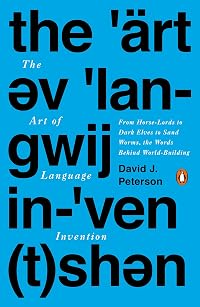
The Art of Language Invention: From Horse-Lords to Dark Elves, the Words behind World-Building
by David J. Peterson
On This Page
Description
An insider's tour through the construction of invented languages from the bestselling author and creator of languages for the HBO series Game of Thrones and the Syfy series Defiance From master language creator David J. Peterson comes a creative guide to language construction for sci-fi and fantasy fans, writers, game creators, and language lovers. Peterson offers a captivating overview of language creation, covering its history from Tolkien's creations and Klingon to today's thriving show more global community of conlangers. He provides the essential tools necessary for inventing and evolving new languages, using examples from a variety of languages including his own creations, punctuated with references to everything from Star Wars to Michael Jackson. Along the way, behind-the-scenes stories lift the curtain on how he built languages like Dothraki for HBO's Game of Thrones and Shiväisith for Marvel's Thor: The Dark World, and an included phrasebook will start fans speaking Peterson's constructed languages. The Art of Language Invention is an inside look at a fascinating culture and an engaging entry into a flourishing art form--and it might be the most fun you'll ever have with linguistics. show lessTags
Recommendations






Member Reviews
My four star rating is very much based on my own experience of this book -- I think for a conlanger starting out this book is probably a five star resource, for a linguist proper this might drag a bit because it covers a lot of intro-level ground you're probably already familiar with, and for someone expecting this to be more memoirish or quick-and-easy you should readjust your expectations.
I think Peterson makes his intentions quite clear in the book's intro: "This work is a sincere attempt to give new conlangers a place to start by detailing what things I take into account when creating a language." It does read in some places like a textbook, but a well-written and humorous one, and I personally enjoyed a refresher of basic show more linguistics info in addition to the material that was new to me (the only major section I skipped was the tech walk-through about creating digital fonts). I liked that Peterson draws not only from his own conlangs, but also natural languages and conlangs created by others for his examples. I wish we had gotten even more of the fascinating history of conlangs that was briefly outlined in the intro.
In general I thought the book created a unique and interesting lens through which to view linguistic and orthographic change. Definitely the "case study" gray-edged sections are worth the price of admission alone. show less
I think Peterson makes his intentions quite clear in the book's intro: "This work is a sincere attempt to give new conlangers a place to start by detailing what things I take into account when creating a language." It does read in some places like a textbook, but a well-written and humorous one, and I personally enjoyed a refresher of basic show more linguistics info in addition to the material that was new to me (the only major section I skipped was the tech walk-through about creating digital fonts). I liked that Peterson draws not only from his own conlangs, but also natural languages and conlangs created by others for his examples. I wish we had gotten even more of the fascinating history of conlangs that was briefly outlined in the intro.
In general I thought the book created a unique and interesting lens through which to view linguistic and orthographic change. Definitely the "case study" gray-edged sections are worth the price of admission alone. show less
If you're looking for a quick and fun read about the experience of creating languages for and maybe behind the scenes scoops about Game of Thrones or Defiance, this is not it. If you're looking for a long, complex, and fun read about the experience and practice of creating languages in general, this is definitely it.
I admit, I was expecting the former, which was why I requested a digital galley from Penguin's First to Read program. And it was, shall we say, startling to very early on begin to explore the nuts and bolts of language invention – conlanging. Here, suddenly, were terms I hadn't seen since the days when some school friends and I wandered the halls on our way to Latin class chanting "Nom Gen Dat Acc Abl… Nom Gen Dat Acc show more Abl… " (which stood for Nominative, Genitive, Dative, Accusative, Ablative.) (Yes, we were weird.)(You probably should have gotten that from "we voluntarily took Latin".) I hadn't given those terms another thought since. (I kind of liked it that way.) And then came flurries of terms I had never heard before in my life…I admit it: I skimmed. But I never quit, because the writing was so entertaining. (David J. Peterson hates onions. Just saying.)
Every time the skimming almost did turn into "ok, that's enough, moving on", I came across a cool fact – like "The tilde on top of the ń began its existence as a second letter n written directly above the main n" (or "…In American Deaf culture, deaf with a lowercase d refers to the inability to hear; Deaf with an uppercase D refers to the ability to sign."); or an even cooler revelation about language, or life, that made me blink and smile and even possibly let out a faint squeak, like the bit about the pronunciation of "knight". (And "And stories like this one lie behind all grammar.")(And "…Is one a word? Sure. Two? Of course. Twenty-three? Yes… But if that's the case, doesn't English then have an infinite number of words…?") The examples given are interesting and attention-retaining. ("What is David Bowie?"). Even skimming, I learned quite a bit from this book, and had fun doing it.
The next time anyone complains about English being a difficult language, point them to Finnish. Or Chinese. Or "the Tsez language, spoken in the Caucasus mountains, [which] has sixty-four cases, fifty-six of which are local (not a joke)." "It rained. What rained? The clouds? The sky? The … weather?" ("…English, whose orthography was devised by a team of misanthropic, megalomaniacal cryptographers who distrusted and despised one another, and so sought to hide the meanings they were tasked with encoding by employing crude, arcane spellings that no one can explain. ("Ha, ha! I shall spell 'could' with an ell! They will powerless to stop me!")
One of the things I learned was that, quite possibly, conlanging is one of those things – like crochet and making gifs – from which I need to put my hands up and back away slowly, because I could far too easily become interested, find myself sucked down a rabbithole, and *poof* would go vast tracts of time I should be spending on one of the things I'm already involved with. I don't know if I would ever take the plunge – but I have too many hobbies and potential hobbies and projects and distractions than are good for me. Until I learn to do without sleep, I need to keep my distance from anything else that might suck me in.
And remember – "Do not call a conlang a fake language. Those who do only make themselves look foolish." show less
I admit, I was expecting the former, which was why I requested a digital galley from Penguin's First to Read program. And it was, shall we say, startling to very early on begin to explore the nuts and bolts of language invention – conlanging. Here, suddenly, were terms I hadn't seen since the days when some school friends and I wandered the halls on our way to Latin class chanting "Nom Gen Dat Acc Abl… Nom Gen Dat Acc show more Abl… " (which stood for Nominative, Genitive, Dative, Accusative, Ablative.) (Yes, we were weird.)(You probably should have gotten that from "we voluntarily took Latin".) I hadn't given those terms another thought since. (I kind of liked it that way.) And then came flurries of terms I had never heard before in my life…I admit it: I skimmed. But I never quit, because the writing was so entertaining. (David J. Peterson hates onions. Just saying.)
Every time the skimming almost did turn into "ok, that's enough, moving on", I came across a cool fact – like "The tilde on top of the ń began its existence as a second letter n written directly above the main n" (or "…In American Deaf culture, deaf with a lowercase d refers to the inability to hear; Deaf with an uppercase D refers to the ability to sign."); or an even cooler revelation about language, or life, that made me blink and smile and even possibly let out a faint squeak, like the bit about the pronunciation of "knight". (And "And stories like this one lie behind all grammar.")(And "…Is one a word? Sure. Two? Of course. Twenty-three? Yes… But if that's the case, doesn't English then have an infinite number of words…?") The examples given are interesting and attention-retaining. ("What is David Bowie?"). Even skimming, I learned quite a bit from this book, and had fun doing it.
The next time anyone complains about English being a difficult language, point them to Finnish. Or Chinese. Or "the Tsez language, spoken in the Caucasus mountains, [which] has sixty-four cases, fifty-six of which are local (not a joke)." "It rained. What rained? The clouds? The sky? The … weather?" ("…English, whose orthography was devised by a team of misanthropic, megalomaniacal cryptographers who distrusted and despised one another, and so sought to hide the meanings they were tasked with encoding by employing crude, arcane spellings that no one can explain. ("Ha, ha! I shall spell 'could' with an ell! They will powerless to stop me!")
One of the things I learned was that, quite possibly, conlanging is one of those things – like crochet and making gifs – from which I need to put my hands up and back away slowly, because I could far too easily become interested, find myself sucked down a rabbithole, and *poof* would go vast tracts of time I should be spending on one of the things I'm already involved with. I don't know if I would ever take the plunge – but I have too many hobbies and potential hobbies and projects and distractions than are good for me. Until I learn to do without sleep, I need to keep my distance from anything else that might suck me in.
And remember – "Do not call a conlang a fake language. Those who do only make themselves look foolish." show less
This book was far more in-depth, technical, and intense than I expected, and I'm all the happier for it. Peterson is clearly a linguistic expert, and he is clearly passionate about the subject. I was impressed by the breadth of information in a book of this size and topic - here we have some background on the development of several conlangs, some historical context on naturalistic language development (which made my behavioral heart sing), some historical context on conlangs, discussion of various linguistic structures, development of writing systems and fonts, and lastly, Peterson drops the idea of conlangs as an art form in our laps to chew on. The book has a wonderful 'voice' - Peterson uses humor and personal anecdotes to good show more effect.
If your interest in the book is purely out of love of Game of Thrones, you probably will be disappointed - this isn't a collection of behind-the-scenes stories about Martin, or the actors, or the filming process. Peterson doesn't go into detail on the story world of Game of Thrones. I don't consider this a flaw in the book - just make sure you know what you are getting.
If you have a deep background in linguistics, much of the middle of the book is probably information you already know. For me, it was a more detailed look at structure than I've been exposed to. It was challenging at times (there's a lot of terminology), but it felt manageable and digestible. I honestly learned a lot from this book.
I had never thought of conlangs as an art form before this book. It makes total sense, the way Peterson lays it out. If a movie, novel, or video game can be art (games are art, fight me irl), why not this? Language can be both the medium of art and an art form itself. I'm still thinking about the idea of a flavor-based language - would the writing system describe the flavors and textures themselves....or just be a recipe?
A word of warning:
This isn't something you can listen to in the car and get much out of it. I really think the way to go is to get this in audiobook format and keep the pdf close at hand, or get both an audio and text copy of the book. Think of it as a course more than anything else. You really need to hear the pronunciation differences to get it...but you also really need to see the examples as they are written (doubly so for the discussion of writing and fonts). Also - when Peterson asks you to do an exercise (e.g., touch your throat and pronounces various sounds), do it.
My only criticisms:
-Trust us, as readers, to remember the major languages and what they were for. Almost every single time Shiväisith was mentioned, we were reminded "Hey this is for Thor: The Dark World!" Multiple times a chapter. After the second time it was brought up in the book, I got it. Ditto for Sondiv and the languages in Defiance.
-It drags a bit in the middle - understandably, as its really technical and its hard to spice up with stories or humor as Peterson does so effectively in other parts.
-You are left wanting more. Again, this is understandable. We're warned that this is a toe-dip, just the tip of the ice berg in conlangs. But there are so many fascinating ideas that are touched on and then dropped for time. I was sad when the book was over.
Oh, and Peterson? Totally taking you up on that offer of coffee. I'll buy the scones. show less
If your interest in the book is purely out of love of Game of Thrones, you probably will be disappointed - this isn't a collection of behind-the-scenes stories about Martin, or the actors, or the filming process. Peterson doesn't go into detail on the story world of Game of Thrones. I don't consider this a flaw in the book - just make sure you know what you are getting.
If you have a deep background in linguistics, much of the middle of the book is probably information you already know. For me, it was a more detailed look at structure than I've been exposed to. It was challenging at times (there's a lot of terminology), but it felt manageable and digestible. I honestly learned a lot from this book.
I had never thought of conlangs as an art form before this book. It makes total sense, the way Peterson lays it out. If a movie, novel, or video game can be art (games are art, fight me irl), why not this? Language can be both the medium of art and an art form itself. I'm still thinking about the idea of a flavor-based language - would the writing system describe the flavors and textures themselves....or just be a recipe?
A word of warning:
This isn't something you can listen to in the car and get much out of it. I really think the way to go is to get this in audiobook format and keep the pdf close at hand, or get both an audio and text copy of the book. Think of it as a course more than anything else. You really need to hear the pronunciation differences to get it...but you also really need to see the examples as they are written (doubly so for the discussion of writing and fonts). Also - when Peterson asks you to do an exercise (e.g., touch your throat and pronounces various sounds), do it.
My only criticisms:
-Trust us, as readers, to remember the major languages and what they were for. Almost every single time Shiväisith was mentioned, we were reminded "Hey this is for Thor: The Dark World!" Multiple times a chapter. After the second time it was brought up in the book, I got it. Ditto for Sondiv and the languages in Defiance.
-It drags a bit in the middle - understandably, as its really technical and its hard to spice up with stories or humor as Peterson does so effectively in other parts.
-You are left wanting more. Again, this is understandable. We're warned that this is a toe-dip, just the tip of the ice berg in conlangs. But there are so many fascinating ideas that are touched on and then dropped for time. I was sad when the book was over.
Oh, and Peterson? Totally taking you up on that offer of coffee. I'll buy the scones. show less
I've always been fascinated with Tolkien's conlangs. Once every year or so I find myself sifting through his books, clicking through the "Ardalambion" website (a relic from the 90's that is just as informative now as it was back then), and reading about them as much as I can. It's not the languages themselves, but Tolkien's process of creating them and the role that they played in his world building that has interested me. Back in high school (before the LOTR movies came out!), Tolkien's enthusiasm inspired me to study Esperanto as a senior project. While I never become a linguist (or fully fluent in another language besides English), it's given me a deep appreciation of language study and etymology, which I now enjoy studying as a show more hobby. So it was a no-brainer that I would eventually pick up a copy of Mr. Peterson's book.
I've read reviews here on Goodreads that criticize The Art of Language Invention to be a beginner's guide to linguistics. I can't comment on that since I've never taken a linguistics course. Instead, I approached this book from a speech therapy perspective. Much of the material was an excellent refresher for me (can I call it "sideways studying" in preparation for a new semester?), especially the first two chapters that discuss speech sounds and grammar. It seems that linguistics and speech therapy are two different sides of the same coin. But the second two chapters, involving language evolution and writing systems, were entirely new for me.
A small (and possibly incorrect) criticism: several times while reading this text, I found myself questioning Mr. Peterson's use of the vowel /a/, wondering if he actually meant /ɑ/ instead. I've witnessed people in the speech language pathology field use /a/ for /ɑ/ in much the same way that /r/ is used for /ɹ/ to transcribe English. To clarify, /a/ is the first part in the diphthongs /aɪ/ (the "long i" sound) and /aʊ/ (the "oww!" sound); by itself, /a/ is not used in English. Instead, we have the back vowel /ɑ/ (the "ahh," or "long o" sound). My understanding is that this confusion between the two, at least in English language speech therapy, is a result of following this logic:
(1) /ɑ/ is harder to type, and (2) /a/ by itself doesn't exist as a sound in English, SO why not just make things easier by interchanging /a/ for /ɑ/?
I'll admit that this criticism is mostly this is a pet peeve of mine; 99.99% or all other readers aren't going to give a darn. But it was a personal annoyance that I seemed to encounter across a few times in the text. I'm going crazy flipping through the pages to find those instances right now (since I don't like to offer criticism if I don't have the evidence to back me up). The only instance I can locate at the moment is on page 130, a phonetic transcription of an Indojisnen sentence:
[ˈkɔ.ɾak.sut ˈɑɾ.kɔ.ɲu ˈtʃɛw.tlɛn]
As you can see, both /a/ and /ɑ/ are used here. In other phonetic transcriptions of this language in the book, only /a/ appears. On Mr. Peterson's blog, http://dedalvs.tumblr.com/post/121367295256/indojisnen-glyph-charts he only lists /a/ and not /ɑ/ in Indojisnen's vowel inventory. But then again, he doesn't list /ɾ/ in its phonemic inventory, either. Perhaps /ɑ/ and /ɾ/ are allophonic in Indojisnen? I don't know. Again, this is entirely my own personal problem (and I can't locate other instances in the book right now), but I really think that /a/ and /ɑ/ need to be clearly differentiated since they represent different sounds yet their graphemes are similar.
As a whole, this book was enjoyable and insightful, but the material can be dense and overwhelming at times. It's awakened within me an interest to create my own language from scratch (which I've never really felt before). I don't plan to read it cover-to-cover again, but I do expect to happily reference it again and again. It will happily share shelf space next to my SLP textbooks. show less
I've read reviews here on Goodreads that criticize The Art of Language Invention to be a beginner's guide to linguistics. I can't comment on that since I've never taken a linguistics course. Instead, I approached this book from a speech therapy perspective. Much of the material was an excellent refresher for me (can I call it "sideways studying" in preparation for a new semester?), especially the first two chapters that discuss speech sounds and grammar. It seems that linguistics and speech therapy are two different sides of the same coin. But the second two chapters, involving language evolution and writing systems, were entirely new for me.
A small (and possibly incorrect) criticism: several times while reading this text, I found myself questioning Mr. Peterson's use of the vowel /a/, wondering if he actually meant /ɑ/ instead. I've witnessed people in the speech language pathology field use /a/ for /ɑ/ in much the same way that /r/ is used for /ɹ/ to transcribe English. To clarify, /a/ is the first part in the diphthongs /aɪ/ (the "long i" sound) and /aʊ/ (the "oww!" sound); by itself, /a/ is not used in English. Instead, we have the back vowel /ɑ/ (the "ahh," or "long o" sound). My understanding is that this confusion between the two, at least in English language speech therapy, is a result of following this logic:
(1) /ɑ/ is harder to type, and (2) /a/ by itself doesn't exist as a sound in English, SO why not just make things easier by interchanging /a/ for /ɑ/?
I'll admit that this criticism is mostly this is a pet peeve of mine; 99.99% or all other readers aren't going to give a darn. But it was a personal annoyance that I seemed to encounter across a few times in the text. I'm going crazy flipping through the pages to find those instances right now (since I don't like to offer criticism if I don't have the evidence to back me up). The only instance I can locate at the moment is on page 130, a phonetic transcription of an Indojisnen sentence:
[ˈkɔ.ɾak.sut ˈɑɾ.kɔ.ɲu ˈtʃɛw.tlɛn]
As you can see, both /a/ and /ɑ/ are used here. In other phonetic transcriptions of this language in the book, only /a/ appears. On Mr. Peterson's blog, http://dedalvs.tumblr.com/post/121367295256/indojisnen-glyph-charts he only lists /a/ and not /ɑ/ in Indojisnen's vowel inventory. But then again, he doesn't list /ɾ/ in its phonemic inventory, either. Perhaps /ɑ/ and /ɾ/ are allophonic in Indojisnen? I don't know. Again, this is entirely my own personal problem (and I can't locate other instances in the book right now), but I really think that /a/ and /ɑ/ need to be clearly differentiated since they represent different sounds yet their graphemes are similar.
As a whole, this book was enjoyable and insightful, but the material can be dense and overwhelming at times. It's awakened within me an interest to create my own language from scratch (which I've never really felt before). I don't plan to read it cover-to-cover again, but I do expect to happily reference it again and again. It will happily share shelf space next to my SLP textbooks. show less
Don't be fooled by the author's lighthearted conversational tone, this is hardcore linguistics and hence highly technical. Although he does his best to make the material accessible, it's easy to get overwhelmed by the terminology and symbology.
To get the most out of the book, it's best to read along with the written text while listening to the audio version, unless you see the symbols while hearing the pronunciations, it's hard to follow.
To get the most out of the book, it's best to read along with the written text while listening to the audio version, unless you see the symbols while hearing the pronunciations, it's hard to follow.
Interesting, could have been more accessible.
Exhaustive, though also exhausting.
I'm very impressed by the breadth and depth Peterson provides to anyone interesting in Conlang-ing (making up languages). The book is more than a bit daunting though - while it would make a good textbook, it's not light reading. I'm not sure how to suggest it could be improved. I have a memory of the Time-Life book on language, sadly now absent from my public library - it was comprehensive and gave a good overview of how language works and was much more accessible.
Exhaustive, though also exhausting.
I'm very impressed by the breadth and depth Peterson provides to anyone interesting in Conlang-ing (making up languages). The book is more than a bit daunting though - while it would make a good textbook, it's not light reading. I'm not sure how to suggest it could be improved. I have a memory of the Time-Life book on language, sadly now absent from my public library - it was comprehensive and gave a good overview of how language works and was much more accessible.
If you have any interest in language, do not dismiss this book based on its title. While the fantastical implications may cater to a particular audience, they certainly don’t invalidate the wealth of knowledge contained within The Art of Language Invention.
David Peterson introduces the breadth and depth of linguistics in a light-hearted manner that is surprisingly easy to consume – not an easy task. The book covers many topics including, but not limited to, phonetics, casing, inflections, tenses, voicing, grammar and even orthography. I would highly recommend this book (in part or entirety) to anyone generally interested in language, writing, and especially, language creation (though I’m no conlanger).
David Peterson introduces the breadth and depth of linguistics in a light-hearted manner that is surprisingly easy to consume – not an easy task. The book covers many topics including, but not limited to, phonetics, casing, inflections, tenses, voicing, grammar and even orthography. I would highly recommend this book (in part or entirety) to anyone generally interested in language, writing, and especially, language creation (though I’m no conlanger).
Members
- Recently Added By
Lists

Great Books About Language
73 works; 48 members

Top Five Books of 2016
795 works; 229 members
Author Information

4+ Works 687 Members
Common Knowledge
- Canonical title
- The Art of Language Invention: From Horse-Lords to Dark Elves, the Words behind World-Building
- Original publication date
- 2015
- Canonical DDC/MDS
- 499.99
Classifications
- Genres
- Nonfiction, General Nonfiction
- DDC/MDS
- 499.99 — Language Other languages Non-Austronesian languages of Oceania, Austronesian languages, miscellaneous languages Miscellaneous languages Artificial languages
- LCC
- PM8008 .P48 — Language and Literature Hyperborean, Native American, and artificial languages Hyperborean, Indian, and artificial languages Artificial languages--Universal languages
- BISAC
Statistics
- Members
- 574
- Popularity
- 51,214
- Reviews
- 16
- Rating
- (3.99)
- Languages
- English
- Media
- Paper, Audiobook, Ebook
- ISBNs
- 3
- ASINs
- 2