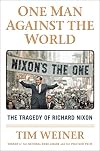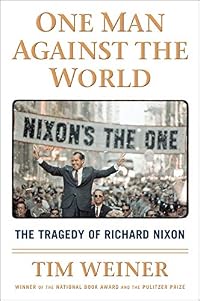
One Man Against the World: The Tragedy of Richard Nixon
by Tim Weiner
On This Page
Description
Draws on recently declassified documents to chronicle one of the most disastrous presidencies in U.S. history, presenting a portrait of a brilliant man overcome by his deep insecurities and his distrust of his cabinet, Congress, and the American people. Here is the first history of President Richard Nixon covering all of his secret tapes and documents, many declassified in the past two years. Award-winning journalist Tim Weiner presents a devastating portrait of a tortured and tormented man, show more showing how, in Nixon's mind, the conflict in Vietnam and the crimes of Watergate were one war, fought on two fronts. He trusted no one--not his Cabinet, not his closest advisers, not the American people. Elected to unite a nation as discordant as it was at the close of the Civil War, Nixon disdained domestic policies and programs. He wanted above all to create what he called "a generation of peace"--by asking the world's leading Communist dictators to help him end the Vietnam War. He saw antiwar American citizens as opponents no less dangerous than the enemy in Vietnam. Gripped by rage and insomnia, he fought his foes without mercy. Abroad, his best weapons were B-52 bombers. At home, he used undercover agents, warrantless wiretaps, break-ins, and burglaries. Almost all his presidency is recorded on tape or preserved on paper, creating a remarkable record of the most intimate and damning conversations. Only recently, after forty years of struggle, has much of this jaw-dropping information been made public. Nixon saw himself not only as the leader of the free world but "the world leader"--yet he was addicted to the gutter politics that ruined him. His political suicide has no equal in American history. --Adapted from book jacket. show lessTags
Recommendations






Member Reviews
I know I’m dating myself, but I was born while Richard Nixon was president. Going forward, Richard Nixon was someone who was rarely discussed, particularly in light of the Watergate scandal. Most of the bits and pieces of information that I heard about him were negative. With the declassification of government information relating to Nixon’s presidency in the last few years, several related titles have been published in recent months, I figured that it was a good time for me to learn more about this controversial figure in United States history.
While Weiner does give a brief outline Nixon’s political career up to his presidency, he puts most of the focus on Nixon’s time in the White House, specifically detailing his handling of show more the Vietnam War and the Watergate scandal. Weiner expresses very little sympathy for Nixon, painting him as a power-hungry control freak who was willing to resort to illegal activities to ensure his election to a second term as President. He does an excellent job documenting the flawed thought process that would ultimately lead to Nixon’s downfall as president and ultimate loss of respect by the American people for both him personally and the office of the President. I highly recommend this read. show less
While Weiner does give a brief outline Nixon’s political career up to his presidency, he puts most of the focus on Nixon’s time in the White House, specifically detailing his handling of show more the Vietnam War and the Watergate scandal. Weiner expresses very little sympathy for Nixon, painting him as a power-hungry control freak who was willing to resort to illegal activities to ensure his election to a second term as President. He does an excellent job documenting the flawed thought process that would ultimately lead to Nixon’s downfall as president and ultimate loss of respect by the American people for both him personally and the office of the President. I highly recommend this read. show less
Richard Nixon was a legitimately terrifying human being. Triply so because he was president. I never figured him for a super great guy, but the Nixon depicted in this book is clinically paranoid, petty and far more vindictive than he has any right to be. You need a little background for this book, which is the only reason I left off a star - it's an accounting of the secrets that have come out of Nixon's presidency only in this millennium as the secret tapes and documents have been made public.
In a weird way, Nixon was right: It's far better for the United States that the things he did, said and thought were kept from people. However, the ultimate tragedy (for Nixon, sure, but for the rest of us as well) is that it's only true because show more Nixon was given power - if he weren't so awful, we wouldn't have needed the secrecy. show less
In a weird way, Nixon was right: It's far better for the United States that the things he did, said and thought were kept from people. However, the ultimate tragedy (for Nixon, sure, but for the rest of us as well) is that it's only true because show more Nixon was given power - if he weren't so awful, we wouldn't have needed the secrecy. show less
The life of Richard Nixon is a subject about which historians never tire of finding something say, and ONE MAN AGAINST THE WORLD: THE TRAGEDY OF RICHARD NIXON, by Tim Weiner, is one of the better recent ones. This is not a “life and times” full out biography of the 37th President’s life and career chronicling the rise and fall, then rise and even greater fall again, but a hard look at the crimes that surrounded and led to the Watergate scandal. Weiner’s book is a relatively short – 300 pages and change – account of the man’s crimes and mendacity while in the White House, based on documents and tapes released in the 21st Century. The writing is tight; the chapters are of manageable length, broken down further into show more subsections that focus on particular illuminating events. Whenever possible Weiner lets Nixon’s own words make the case against him.
It is quite a case indeed, starting with an account of how the Nixon campaign sabotaged LBJ’s effort to achieve a cease fire in the Vietnam War on the eve of the 1968 election; this amounted to rank treason, a crime that stained the new administration at its conception. Duplicity, especially when it came to Vietnam, was practiced from day one; so too a desire to thwart and destroy the endless enemies in Congress, the media, higher education and the streets that the Nixon White House saw on all sides. Weiner shows how the President governed with only a small circle of like minded aides in the Oval Office, ignoring most of his cabinet, while plotting secret bombing campaigns, black bag jobs, illegal wire taps, raising slush funds, and to use the IRS and the FBI for their political ends. The Houston Plan, Operation Gemstone, the Ellsburg break-in, and the burglary at the Democratic HQ at the Watergate Complex are recounted in damning detail; making it clear that all of it was done with the President’s tacit approval. One revelation that caught my attention was how the secret bombing of Cambodia was covered up by falsifying the flight records of B-52s used on the bombing runs; hardly the foundation for “Peace with Honor.” Nixon believed the Kennedys had stolen the Presidency from him in 1960, and had spied on his campaign for Governor of California in 1962, so he was justified in his actions – a self serving rationalization if there ever was one. Then there were Nixon’s minions that were in it up to their necks: John Mitchell, H. R. Haldeman, John Erlichman, John Dean, Charles Colson, Jeb Magruder, Howard Hunt, G. Gordon Liddy, and the rest. The picture of Henry Kissinger that emerges in these pages is far different than the one of esteemed elder statesman.
But the most damning portrait that emerges is of Nixon himself. On the public stage, the man was the very portrait of pious rectitude, the defender of the Silent Majority’s traditional American values, standing firm against the long hairs and elitists who supported the Viet Cong abroad, and sympathized with drug dealing criminals at home. Weiner shows us the foul mouthed, prejudiced, corrupt, over bearing man who came out behind closed doors when no one was listening but his palace guard, and the tape recorder that preserved his damning words for the ages. Weiner also touches on Nixon’s excessive drinking, and confirms that he was passed out in the White House family quarters and took no part in an October 1973 NSC meeting where American armed forces were put on a worldwide alert because the Soviets were shipping nuclear warheads to Egypt during the Yom Kippur War. Nixon was a capable statesman, one who recognized the futility of the Cold War, and tried to do something about it, but one cannot help but come to the conclusion that his corruption tainted everything.
This book is best read by those already familiar with the details of Nixon’s life and Presidency, as Weiner does spend much time on back story and background. I would recommend Rick Perlstein’s NIXONLAND and THE INVISIBLE BRIDGE for the uninitiated, as it covers much of the same period and subject, but with a wealth more of detail.
Tim Weiner’s book is truly informative, and makes the case against Richard Nixon in full. It was a tragedy, for the man, and for the country, but sadly, for anyone who has lived through the last half of the second decade of the 21st Century, we must say that we have now seen worse. show less
It is quite a case indeed, starting with an account of how the Nixon campaign sabotaged LBJ’s effort to achieve a cease fire in the Vietnam War on the eve of the 1968 election; this amounted to rank treason, a crime that stained the new administration at its conception. Duplicity, especially when it came to Vietnam, was practiced from day one; so too a desire to thwart and destroy the endless enemies in Congress, the media, higher education and the streets that the Nixon White House saw on all sides. Weiner shows how the President governed with only a small circle of like minded aides in the Oval Office, ignoring most of his cabinet, while plotting secret bombing campaigns, black bag jobs, illegal wire taps, raising slush funds, and to use the IRS and the FBI for their political ends. The Houston Plan, Operation Gemstone, the Ellsburg break-in, and the burglary at the Democratic HQ at the Watergate Complex are recounted in damning detail; making it clear that all of it was done with the President’s tacit approval. One revelation that caught my attention was how the secret bombing of Cambodia was covered up by falsifying the flight records of B-52s used on the bombing runs; hardly the foundation for “Peace with Honor.” Nixon believed the Kennedys had stolen the Presidency from him in 1960, and had spied on his campaign for Governor of California in 1962, so he was justified in his actions – a self serving rationalization if there ever was one. Then there were Nixon’s minions that were in it up to their necks: John Mitchell, H. R. Haldeman, John Erlichman, John Dean, Charles Colson, Jeb Magruder, Howard Hunt, G. Gordon Liddy, and the rest. The picture of Henry Kissinger that emerges in these pages is far different than the one of esteemed elder statesman.
But the most damning portrait that emerges is of Nixon himself. On the public stage, the man was the very portrait of pious rectitude, the defender of the Silent Majority’s traditional American values, standing firm against the long hairs and elitists who supported the Viet Cong abroad, and sympathized with drug dealing criminals at home. Weiner shows us the foul mouthed, prejudiced, corrupt, over bearing man who came out behind closed doors when no one was listening but his palace guard, and the tape recorder that preserved his damning words for the ages. Weiner also touches on Nixon’s excessive drinking, and confirms that he was passed out in the White House family quarters and took no part in an October 1973 NSC meeting where American armed forces were put on a worldwide alert because the Soviets were shipping nuclear warheads to Egypt during the Yom Kippur War. Nixon was a capable statesman, one who recognized the futility of the Cold War, and tried to do something about it, but one cannot help but come to the conclusion that his corruption tainted everything.
This book is best read by those already familiar with the details of Nixon’s life and Presidency, as Weiner does spend much time on back story and background. I would recommend Rick Perlstein’s NIXONLAND and THE INVISIBLE BRIDGE for the uninitiated, as it covers much of the same period and subject, but with a wealth more of detail.
Tim Weiner’s book is truly informative, and makes the case against Richard Nixon in full. It was a tragedy, for the man, and for the country, but sadly, for anyone who has lived through the last half of the second decade of the 21st Century, we must say that we have now seen worse. show less
Richard Nixon was a legitimately terrifying human being. Triply so because he was president. I never figured him for a super great guy, but the Nixon depicted in this book is clinically paranoid, petty and far more vindictive than he has any right to be. You need a little background for this book, which is the only reason I left off a star - it's an accounting of the secrets that have come out of Nixon's presidency only in this millennium as the secret tapes and documents have been made public.
In a weird way, Nixon was right: It's far better for the United States that the things he did, said and thought were kept from people. However, the ultimate tragedy (for Nixon, sure, but for the rest of us as well) is that it's only true because show more Nixon was given power - if he weren't so awful, we wouldn't have needed the secrecy. show less
In a weird way, Nixon was right: It's far better for the United States that the things he did, said and thought were kept from people. However, the ultimate tragedy (for Nixon, sure, but for the rest of us as well) is that it's only true because show more Nixon was given power - if he weren't so awful, we wouldn't have needed the secrecy. show less
Now that all of Nixon’s tapes and documents have finally been released to the public, we get to see who Nixon really was, and it is a terrifying portrait! The author follows the political history of a man who became president through hard work, a little luck and lots of sordid deeds. He is a man who trusted no one, including his staff and “friends.” His desire to extricate the country from the losing war in Vietnam “without losing” caused him to make many disastrous errors in judgment, ones that ultimately caused the collapse of his presidency. The author shows how Nixon’s personality, the situation in Vietnam and the crimes associated with Watergate, which was more than a simply burglary attempt at the DNC headquarters, show more were related. I was never a Nixon fan, and now I feel more justified than ever about my opinions regarding him as a president and as a man. show less
He was (Nixon) -- as an English earl once said of warlord Oliver Cromwell -- a great, bad man.
One Man Against the World: The Tragedy of Richard Nixon by Tim Weiner is a unique history of a president. Weiner reported for The New York Times for many years as a foreign correspondent and as a national security correspondent in Washington, DC. He has won the Pulitzer Prize for National Reporting and the National Book Award for Legacy of Ashes: The History of the CIA.
There are probably only a very few who would argue the Nixon presidency was not a failure. The very high points of his presidency should have created a lasting legacy of greatness. Man walked on the moon and returned safely on his watch. Mao and Nixon met and established show more diplomatic relations tilting the balance of the Cold War. Nixon was the first president to visit the Kremlin and engage the Soviets in arms control. He beat McGovern is an unprecedented landslide. Nixon should be sharing a spot with the greatest presidents.
However, the Watergate break-in and cover-up canceled everything. The House voting on three articles of impeachment and Nixon's resignation destroyed his presidency and America's faith in its government. Everything above is fairly well known and shouldn't surprise many. I was barely old enough to remember the news about the Nixon tapes and executive privilege; I was ten at the time and learned what impeachment was. Of course, there was the Vietnam war too and all the peripheral secret bombing that went along with it.
The above is all well recorded in history. What makes One Man Against the World unique in the historical perspective is that it gets inside Nixon’s head and personal habits. Nixon's drinking was well beyond social and seemed to be his escape in much the same way a junkie would use heroin. It wasn't used to relax. It was used to obliterate the outside world.
Perhaps the strangest part of "the most powerful man in the world" was his loneliness. It was not from the lack of people but from his fear and paranoia. Politics taught Nixon not to trust anyone and as president that paranoia reached heights that were on par with the space program. He distrusted and did not hold high opinions of those in his own party. He thought of Reagan as a light weight and Ford as a decent human being, but not the brightest guy around. Foreign policy was no different. He hated India and did what he could to covertly support Pakistan. As a president who did not win his first term with a majority, he overthrew another leader who also won with a plurality. He believed the president’s role was foreign policy and was frustrated when the most powerful nation in the world could not get its way despite overwhelming military superiority.
Weiner spends a great deal of the book on Nixon's two greatest obsessions: Vietnam and his enemies. One Man Against the World looks more at the person Nixon actually was from newly released information. Nixon is examined outside of the historical events as the man he was and the man who lead this country. America has elected bad presidents, but Nixon devolved into being a bad person as well as president. Despite questionable recent presidents, questionable wars and drone attacks, spying on the American public, torture, and secret prisons, Nixon still stands out. Weiner presents a biography that is disturbing. It shows how little the American people actually know about the person they elect -- the real person, not the image and sound bite.
show less
One Man Against the World: The Tragedy of Richard Nixon by Tim Weiner is a unique history of a president. Weiner reported for The New York Times for many years as a foreign correspondent and as a national security correspondent in Washington, DC. He has won the Pulitzer Prize for National Reporting and the National Book Award for Legacy of Ashes: The History of the CIA.
There are probably only a very few who would argue the Nixon presidency was not a failure. The very high points of his presidency should have created a lasting legacy of greatness. Man walked on the moon and returned safely on his watch. Mao and Nixon met and established show more diplomatic relations tilting the balance of the Cold War. Nixon was the first president to visit the Kremlin and engage the Soviets in arms control. He beat McGovern is an unprecedented landslide. Nixon should be sharing a spot with the greatest presidents.
However, the Watergate break-in and cover-up canceled everything. The House voting on three articles of impeachment and Nixon's resignation destroyed his presidency and America's faith in its government. Everything above is fairly well known and shouldn't surprise many. I was barely old enough to remember the news about the Nixon tapes and executive privilege; I was ten at the time and learned what impeachment was. Of course, there was the Vietnam war too and all the peripheral secret bombing that went along with it.
The above is all well recorded in history. What makes One Man Against the World unique in the historical perspective is that it gets inside Nixon’s head and personal habits. Nixon's drinking was well beyond social and seemed to be his escape in much the same way a junkie would use heroin. It wasn't used to relax. It was used to obliterate the outside world.
Perhaps the strangest part of "the most powerful man in the world" was his loneliness. It was not from the lack of people but from his fear and paranoia. Politics taught Nixon not to trust anyone and as president that paranoia reached heights that were on par with the space program. He distrusted and did not hold high opinions of those in his own party. He thought of Reagan as a light weight and Ford as a decent human being, but not the brightest guy around. Foreign policy was no different. He hated India and did what he could to covertly support Pakistan. As a president who did not win his first term with a majority, he overthrew another leader who also won with a plurality. He believed the president’s role was foreign policy and was frustrated when the most powerful nation in the world could not get its way despite overwhelming military superiority.
Weiner spends a great deal of the book on Nixon's two greatest obsessions: Vietnam and his enemies. One Man Against the World looks more at the person Nixon actually was from newly released information. Nixon is examined outside of the historical events as the man he was and the man who lead this country. America has elected bad presidents, but Nixon devolved into being a bad person as well as president. Despite questionable recent presidents, questionable wars and drone attacks, spying on the American public, torture, and secret prisons, Nixon still stands out. Weiner presents a biography that is disturbing. It shows how little the American people actually know about the person they elect -- the real person, not the image and sound bite.
show less
Many books have been written on Nixon, including a number of recent titles prompted by the release of the last of the tapes of his White House conversations in 2013. Few will better this concise but well written journalistic history.
Nixon will always be a fascinating figure who did more than any individual to undermine the Presidency of the US. At times I felt that surely Weiner was being selective and only focusing on the negatives. That may be true, but any diplomatic or economic feats would not overcome the corruption, arrogance and abuse of power clearly conveyed in these pages in Nixon's own words. The tapes, his notes and his aid Haldeman's diary provide fascinating sources without which the events of the Nixon presidency could show more and would be dismissed as fantasy. An extraordinary story well told. show less
Nixon will always be a fascinating figure who did more than any individual to undermine the Presidency of the US. At times I felt that surely Weiner was being selective and only focusing on the negatives. That may be true, but any diplomatic or economic feats would not overcome the corruption, arrogance and abuse of power clearly conveyed in these pages in Nixon's own words. The tapes, his notes and his aid Haldeman's diary provide fascinating sources without which the events of the Nixon presidency could show more and would be dismissed as fantasy. An extraordinary story well told. show less
Members
- Recently Added By
Lists

Chronological 2015
39 works; 1 member
Author Information

11 Works 4,384 Members
Tim Weiner was born on June 20, 1956. He was educated at Columbia University. As a correspondent for The New York Times, he covered war and terrorism in Afghanistan, Pakistan, the Sudan, and other nations. His articles on secret government programs received the Pulitzer Prize for National Reporting. He has written several books including Blank show more Check: The Pentagon's Black Budget, Enemies: A History of the FBI, and One Man Against the World: The Tragedy of Richard Nixon. Legacy of Ashes: The History of the CIA won the National Book Award. (Bowker Author Biography) show less
Some Editions
Common Knowledge
- Canonical title*
- Eén man tegen de wereld: de tragiek van Richard Nixon
- Original title
- One Man Against the World. The Tragedy of Richard Nixon
- Original publication date
- 2015
- People/Characters
- Richard M. Nixon; Henry Kissinger; H. R. Haldeman
- Important events
- Vietnam War, 1961-1975; Watergate Scandal; Resignation of the President of the United States (1974-08-09)
- Dedication
- To Kate, Emma, and Ruby Doyle, with everlasting love
- Original language*
- Engels
*Some information comes from Common Knowledge in other languages. Click "Edit" for more information.
Classifications
- Genres
- History, Nonfiction, Biography & Memoir, General Nonfiction
- DDC/MDS
- 973.924092 — History & geography History of North America United States 1901- Cold War, Vietnam War, Digital Age (1953-2001) Richard Nixon 1969-1974 Biography
- LCC
- E856 .W425 — History of the United States United States Later twentieth century, 1961-2000 Nixon's administrations, 1969-August 9, 1974
- BISAC
Statistics
- Members
- 270
- Popularity
- 119,065
- Reviews
- 13
- Rating
- (4.22)
- Languages
- Dutch, English, German
- Media
- Paper, Audiobook, Ebook
- ISBNs
- 12
- ASINs
- 4