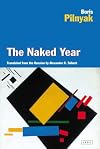
The Naked Year
by Boris Pilnjak
On This Page
Description
Boris Pilnyak, an important stylistic force in twentieth-century Russian literature, never shied from controversy.Tags
Recommendations
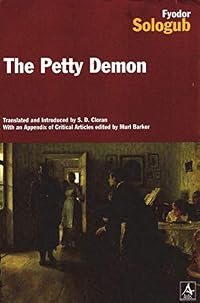
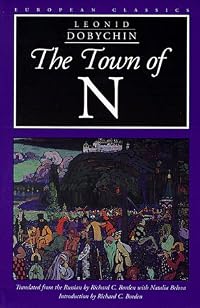
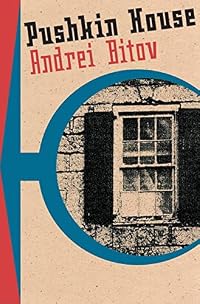
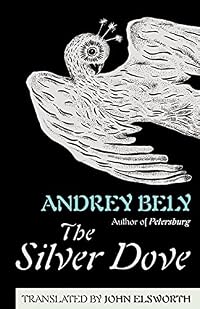















Member Reviews
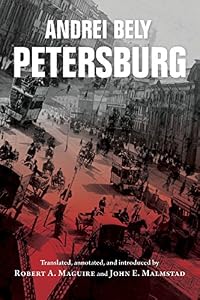
I loved his stories but I just can’t finish this first, clearly experimental, novel (published in 1922). Pilnyak was heavily influenced by Bely but Bely was far better at this kind of Symbolist writing. Even so, Pilnyak was enormously popular in the 1920s and is considered a significant influence on Dubravka Ugrešić and Danilo Kiš, among others. It is certainly possible that part of the problem is the translation. Though it seems good to me, I can’t be certain. The novel has only been translated into English one other time to my knowledge. Fortunately, the translator (Alexander R. Tulloch) contributed an exceptionally helpful Afterword that discusses much of what Pilnyak did (or tried to do) and places him among other Russian show more modernists and Symbolists. As Tulloch explains:
“The very shape of this novel is anti-Western…. In order to depict the [Russian] Revolution in terms of an anti-Western rebellion, and at the same time portray its chaotic nature, it was necessary that the form of the novel should also bear as little resemblance as possible to anything in Western culture, and produce feelings of confusion and incomprehension in the reader. Thus at first sight, to the uninitiated reader, the novel resembles an unsystematic collection of random jottings, disjointed or unrelated camera shots of the violation and disorder which characterized the Revolution. And…characters do not develop in the ‘normal’ way—they are presented in an impressionistic manner. They have little or no psychology and appear only to portray different viewpoints of the Revolution, or as the various aspects of pre- and post-Revolutionary society….”
Trying to present or recount the two-thirds I’ve read would be next to impossible. I do hope to return to this at some point, in part because from time to time I do feel like I have a sense of what Pilnyak is trying to do. But mostly it’s a slog and I don’t see it becoming easier. show less
“The very shape of this novel is anti-Western…. In order to depict the [Russian] Revolution in terms of an anti-Western rebellion, and at the same time portray its chaotic nature, it was necessary that the form of the novel should also bear as little resemblance as possible to anything in Western culture, and produce feelings of confusion and incomprehension in the reader. Thus at first sight, to the uninitiated reader, the novel resembles an unsystematic collection of random jottings, disjointed or unrelated camera shots of the violation and disorder which characterized the Revolution. And…characters do not develop in the ‘normal’ way—they are presented in an impressionistic manner. They have little or no psychology and appear only to portray different viewpoints of the Revolution, or as the various aspects of pre- and post-Revolutionary society….”
Trying to present or recount the two-thirds I’ve read would be next to impossible. I do hope to return to this at some point, in part because from time to time I do feel like I have a sense of what Pilnyak is trying to do. But mostly it’s a slog and I don’t see it becoming easier. show less
La sperimentazione di Pil'njak si mette al servizio del moderno epos rivoluzionario e utilizza elementi prettamente poetici quali la ripetizione che dà al testo la musicalità ritmica dei poemi epici della letteratura popolare e l'interruzione del flusso delle frasi, l'esposizione volutamente enigmatica e la ricerca di una comprensibilità incompleta e il linguaggio figurativo impiegato.
-Arricchito da una (acida) (ma utile) postfazione di Solzhenitsyn (da cui ho attinto per il commento).
-Arricchito da una (acida) (ma utile) postfazione di Solzhenitsyn (da cui ho attinto per il commento).
I wanted this book to be about someone spending a year naked. It wasn't, but it's still good.
Ratings
Members
- Recently Added By
Lists

For Further Reading: A List of 160 Novels from 15 Literatures
160 works; 4 members
Author Information

76+ Works 387 Members
Pilnyak was a leading and controversial writer of the 1920s. He became very popular after the publication of The Naked Year (1921), which deals with the Bolshevik Revolution and its impact on Russia. His subsequent career was marred by several scandals. A 1926 story, "The Tale of the Unextinguished Moon," presented the death of a high-ranking show more military leader in terms similar to the actual fate of the celebrated army commissar Frunze. All copies of the magazine carrying the story were confiscated. A more dangerous situation arose when the story "Mahogany" (1929) was published in Germany. A campaign of vilification forced Pilnyak from the All-Russian Union of Writers, of which he was chairman. During the 1930s, Pilnyak slowly faded from view. He was arrested during the purges and apparently was shot in 1937. Pilnyak's great impact on literature came largely from his style. He created a literary language that combines epic solemnity with lyricism, draws on folklore, and freely creates complex, often striking or shocking, constructions. The attraction of such techniques was so strong that charges of "Pilnyakism" were leveled against many writers who followed in a similar vein. Pilnyak's works are very carefully crafted and express complex philosophical ideas. (Bowker Author Biography) show less
Some Editions
Awards and Honors
Notable Lists
Common Knowledge
- Canonical title*
- Het naakte jaar
- Original title
- Golyj god; Голый год
- Alternate titles*
- Het naakte jaar : roman
- Original publication date
- 1928 (English Translation) (English Translation); 1922
- Epigraph
- Born in the deaf years
They do not remember their way.
We, the children of Russia's terrible years,
Are unable to forget anything.
A. Blok - Original language
- Russian
*Some information comes from Common Knowledge in other languages. Click "Edit" for more information.
Classifications
- Genres
- Fiction and Literature, General Fiction
- DDC/MDS
- 891.7342 — Literature & rhetoric Asian Literature East Indo-European and Celtic literatures Russian and East Slavic languages Russian fiction USSR 1917–1991 Early 20th century 1917–1945
- LCC
- PG3476 .V6 .G613 — Language and Literature Slavic languages and literatures. Baltic languages. Albanian language Slavic. Baltic. Albanian Russian literature Individual authors and works 1917-1960
- BISAC
Statistics
- Members
- 102
- Popularity
- 315,838
- Reviews
- 3
- Rating
- (3.69)
- Languages
- 10 — Dutch, English, Finnish, French, German, Italian, Russian, Serbian, Spanish, Swedish
- Media
- Paper, Ebook
- ISBNs
- 17
- ASINs
- 7