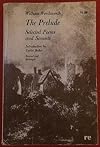
The Prelude: Selected Poems and Sonnets
by William Wordsworth
On This Page
Tags
Recommendations

























Member Reviews
Includes an Introduction by Carlos Baker who reminds us that WW is one of the giants, and "giantism...has its embarrassments", as when Captain Gulliver visited the land of the Brobdingnagians, and he finds the minor imperfections of his hulking hosts became unhappily visible. [iii]. WW himself predicted that readers would "look round for poetry and will be induced to inquire by what species of courtesy these attempts can be permitted to assume that title".
Includes the Preface, Appendix, and "Essay Supplementary to the Preface" in which WW attempts to lay out a "defense of the theory upon which the poems were written". [2] WW anticipated the production of poetry excited by his recommendations "well adapted to interest mankind show more permanently". [32]
Coleridge adored WW {and his sister}, but found his poetic philosophy "inept". Byron found him "dull". Keats was discomfited by the ever-recurrent self-immolating "I" of Wordsworth's sonorous ego. Shelley added to the parodies widely bandied about. Yet all made the compliment of imitation, and we acknowledge as did Shelley in "Peter Bell", that WW awakened "a sort of thought in sense" that was new and modern in his time.
This collection includes the famous "Tintern Abbey" -- which allegedly presents a "philosophy" of Nature-loving, but in my opinion should be noted for its exposure of WW's profound debt and sexual attraction to his sister, with whom he spent the 4 days hiking in the "wilderness" ruins. [96] show less
Includes the Preface, Appendix, and "Essay Supplementary to the Preface" in which WW attempts to lay out a "defense of the theory upon which the poems were written". [2] WW anticipated the production of poetry excited by his recommendations "well adapted to interest mankind show more permanently". [32]
Coleridge adored WW {and his sister}, but found his poetic philosophy "inept". Byron found him "dull". Keats was discomfited by the ever-recurrent self-immolating "I" of Wordsworth's sonorous ego. Shelley added to the parodies widely bandied about. Yet all made the compliment of imitation, and we acknowledge as did Shelley in "Peter Bell", that WW awakened "a sort of thought in sense" that was new and modern in his time.
This collection includes the famous "Tintern Abbey" -- which allegedly presents a "philosophy" of Nature-loving, but in my opinion should be noted for its exposure of WW's profound debt and sexual attraction to his sister, with whom he spent the 4 days hiking in the "wilderness" ruins. [96] show less
Ratings
Members
- Recently Added By
Author Information

544+ Works 11,600 Members
All Editions
Work Relationships
Has as a student's study guide
Classifications
Statistics
- Members
- 151
- Popularity
- 217,053
- Reviews
- 1
- Rating
- (3.30)
- Languages
- English
- Media
- Paper
- ISBNs
- 2
- ASINs
- 12