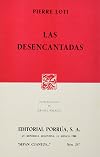
Disenchanted
by Pierre Loti
On This Page
Description
Au d#65533;but du XXe si#65533;cle, un #65533;crivain fran#65533;ais d#65533;j#65533; c#65533;l#65533;bre occupe un poste diplomatique #65533; Istanbul. Une jeune femme de la haute soci#65533;t#65533; turque et deux de ses amies entrent secr#65533;tement en contact avec lui. Entre ces admiratrices voil#65533;es, prisonni#65533;res d'un mode de vie ancestral et l'auteur captiv#65533; se met en place un jeu relationnel subtil et violent o#65533; #65533;motions et sentiments parfois show more contradictoires s'expriment dans un d#65533;cor envo#65533;tant...Les D#65533;senchant#65533;es est le dernier roman de Loti est aussi le plus m#65533;connu de ses livres. Il ne r#65533;v#65533;le pas seulement le soup#65533;on d'un #65533;crivain fin-de-si#65533;cle #65533; l'#65533;gard du romanesque, mais une pratique narrative tr#65533;s personnelle, tendue entre la fiction et la biographie. show lessTags
Recommendations































Member Reviews
Some twenty-five years before the publication of Les Désenchantées (Disenchanted women), Loti had achieved fame with another Turkish-themed semi-autobiographical novel, Aziyadé, also about an unhappy secret romance between a Western man and a green-eyed Turkish woman, told in letters and diary entries. Aziyadé is something of a cultural landmark, having favourably influenced French opinion on Turkey at the time, as well as making Loti famous in Turkey. The latter point is much expanded on in Les Désenchantées where both Loti and his first novel appear barely disguised, as the hero "André Lhéry" and his bestseller "Medjé". It is probable that Loti drew on his own fan mail and circumstantial acquaintances rather than on an actual show more affair.
The plot is minimal: a young upper class Turkish woman he's never met strikes up a correspondence with novelist André Lhéry just before her arranged marriage, expressing her admiration for his books and unhappiness with her lot as a Muslim woman. Coincidentally, Lhéry soon returns to a diplomatic post in Istanbul, which enables him to meet up with Djenane, but never alone--she is always accompanied by two friends, Zeyneb and Melek, who also add postscriptums and independent notes to Djenane's letters. All four meet in strictest secret in deserted spots, and during the entire time Lhéry is allowed only a single glimpse of their three faces. The adventure ends as Melek dies from some mysterious illness (but could be just melancholy!), Djenane kills herself after the husband she had divorced managed to get the divorce annulled, and Lhéry's service is over.
The three women relish this "friendship of the souls" with a man, an impossible occurrence in the gender-segregated Turkish society. In relationship to him they become persons. And that's something I wasn't expecting, just as I was surprised by the sensitivity and sympathy Loti exhibits in his attitude toward these characters. And the story of Djenane's marriage, to a man she doesn't love and who doesn't love her (they meet for the first time on the day of the wedding), but which nevertheless becomes sexually very passionate, is told in such normal, unprejudiced tone it would be remarkable today, let alone then. show less
The plot is minimal: a young upper class Turkish woman he's never met strikes up a correspondence with novelist André Lhéry just before her arranged marriage, expressing her admiration for his books and unhappiness with her lot as a Muslim woman. Coincidentally, Lhéry soon returns to a diplomatic post in Istanbul, which enables him to meet up with Djenane, but never alone--she is always accompanied by two friends, Zeyneb and Melek, who also add postscriptums and independent notes to Djenane's letters. All four meet in strictest secret in deserted spots, and during the entire time Lhéry is allowed only a single glimpse of their three faces. The adventure ends as Melek dies from some mysterious illness (but could be just melancholy!), Djenane kills herself after the husband she had divorced managed to get the divorce annulled, and Lhéry's service is over.
The three women relish this "friendship of the souls" with a man, an impossible occurrence in the gender-segregated Turkish society. In relationship to him they become persons. And that's something I wasn't expecting, just as I was surprised by the sensitivity and sympathy Loti exhibits in his attitude toward these characters. And the story of Djenane's marriage, to a man she doesn't love and who doesn't love her (they meet for the first time on the day of the wedding), but which nevertheless becomes sexually very passionate, is told in such normal, unprejudiced tone it would be remarkable today, let alone then. show less
Le grand roman de mon adolescence, relu en 2005. Il me semblait que si j'avais autant de fois lu ce livre, c'était surtout pour la grande histoire d'amour platonique et impossible entre Djénane, musulmane voilée vivant à Istambul et André Lhery, écrivain français en poste pour deux ans dans cette ville. A l’époque, je finissais toujours ce livre en larmes et me disais que c'était ça le véritable amour (impossible et platonique).
Cette fois-ci, je n'ai pas pleuré, ce qui m'a vraiment marquée c'est la mélancolie et la nostalgie qui se dégagent tout au long des pages. J'ai eu l'impression que le propos d'André Lhéry était inspiré de mes pensées. André, ne profite pas du moment présent parce qu’il ne dure pas. Il show more ne veut pas vivre dans le regret d’un passé à jamais révolu. Il n’oublie jamais que le temps file, ne s’arrête pas, que toutes les choses ont une fin, que tout meurt. Il me semble avoir récupéré toutes les angoisses du personnage. Je me demande si ce livre, parce que lu trop de fois, n'a pas réellement façonner mon esprit, mon mode de pensée. Cette relecture était très troublante. show less
Cette fois-ci, je n'ai pas pleuré, ce qui m'a vraiment marquée c'est la mélancolie et la nostalgie qui se dégagent tout au long des pages. J'ai eu l'impression que le propos d'André Lhéry était inspiré de mes pensées. André, ne profite pas du moment présent parce qu’il ne dure pas. Il show more ne veut pas vivre dans le regret d’un passé à jamais révolu. Il n’oublie jamais que le temps file, ne s’arrête pas, que toutes les choses ont une fin, que tout meurt. Il me semble avoir récupéré toutes les angoisses du personnage. Je me demande si ce livre, parce que lu trop de fois, n'a pas réellement façonner mon esprit, mon mode de pensée. Cette relecture était très troublante. show less
Mar 23, 2008French
Les désenchantées - Roman des harems Turc comtemporains.
Dec 30, 2011French
Ratings
Members
- Recently Added By
Lists

Women and the Family, European Fiction, 1900-1934
68 works; 1 member
Author Information

147+ Works 1,837 Members
Common Knowledge
- Canonical title
- Disenchanted
- Original title
- Les désenchantées
- Original language
- French
Classifications
Statistics
- Members
- 74
- Popularity
- 426,259
- Reviews
- 3
- Rating
- (3.58)
- Languages
- 6 — English, French, German, Hungarian, Spanish, Turkish
- Media
- Paper, Ebook
- ISBNs
- 14
- ASINs
- 14