On This Page
Description
For forty years Charles Alavoine has sleepwalked through his life. Then, one night, laden with Christmas presents, this model family man meets Martine, and it is time for the sleeper to awake.Tags
Recommendations






















Member Reviews
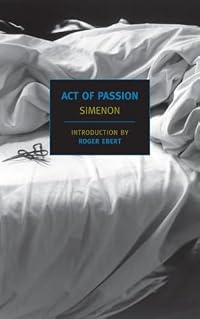
Originally published in 1947, Georges Simenon’s compelling existential tale, Act of Passion, is one of the very few of his five hundred novels written in the first-person. Although assuming the form of a lengthy letter penned in a jail cell by condemned prisoner Charles Alavoine, for our ease of reading Alavoine’s letter has all the usual punctuation for dialogue and takes the form of a conventional novel.
Also fortunate for readers is how this New York Review Books (NYRB) edition includes a keenly astute Introduction by film critic Roger Ebert. And since Act of Passion is one of the author’s “hard novels,” a psychological study of character rather than detective mystery, I’ll focus on what I perceive as key moments and show more conflicts in the life of the narrator.
Charles Alavoine, a man Roger Ebert deems as entirely encased within himself, devoid of any capacity for empathy. Charles is a country doctor, his mother’s choice (either doctor or priest), a career he himself considers no more than a job; indeed, Charles would much rather be outside in the fields.
Of course, a French novel of a country doctor by the name of Charles married to a beautiful wife (actually, his second wife) will have inevitable associations with Flaubert’s Madame Bovary. I suspect an entire essay could be written comparing the two novels but I will refrain from making any further parallels beyond noting these obvious similarities.
“From my bench I could see the jurors scowling and wrinkling up their foreheads, sometimes jotting down notes like detective story readers whom an author, without seeming to do so, has switched on to a new track.” What a great Simenon line – from an author of many dozen Detective Maigret stories. Anyway, Charles has the distinct impression he has broken through to the other side, “I have enormous advantage for I have killed” - claiming the man he is writing to, the Examining Magistrate, is the only person he would like to comprehend the underlying reasons for his murder, reasons expressing his own profound wisdom of the true workings of the world. "It would be so much easier if you too had killed!"
But there’s the rub. How much wisdom and understanding does Charles Alavoine, in fact, possess? For starters, as Roger Ebert remarks, Alavoine is a fetishist: “His eye for specifics is that of a fetishist: he remembers a street, a café, a room, a train, how the light fell – and always the lonely Alavoine is at the center. The accretion of details suggests the mind of a masturbator re-creating scenes of past erotic intensity. It is possible to imagine Alavoine reading over his own pages and feeling aroused.”
Moreover, after the premature death of his docile first wife delivering her second daughter, Charles has to deal with the stunning Armande, a gorgeous blonde who initially enters his household as his daughter’s nurse but eventually completely takes over. And Armande’s domination is total, including, in effect, forcing Charles into marriage and holding Charles's mother under her powerful thumb. How much does Armande’s perfectionism and control (nowadays our term for such a personality is “control freak”) have on pushing Charles Alavoine to hook up with young barfly Martine from the Belgian city of Liège (nice touch, Georges, since Liège is also your native city), the woman Alavoine falls in love with and eventually strangles?
Charles also writes of the terrible emptiness he feels, how he alone realizes just how indifferent the universe is to our fragile human desires. An all-pervasive uneasiness forces Charles to conclude he is wasting his life. But then it happens: Martine awakens in him a furious desire - not only a sexual desire but also a desire to "find his shadow.” Ah, the mention of finding one's shadow opens the novel up to a thoroughly Jungian interpretation, the shadow referring to the unconscious, dark aspects of personality.
However, there’s a price for his newfound passion. Charles is so totally bound to Martine, wants to melt into her, such that he has "awakened the phantoms" and thus loses psychic control, even to the point where he hates all other men who so much as approach her. He desires Martine and demands the world completely accommodate his desire. Big problem. A force, a passion, has been given to him, a man who up until this point in his life “didn’t even have a shadow.” We hear echoes from Jean-Paul Sartre’s “No Exit that "hell is other people” when Charles rages against what he labels “the Other,” when he rages against an entire society he deems a suffocating net. And there are times when Charles's rage, his phantoms, boil over - he physically assaults Martine.
Charles recognizes he is, at times, possessed by his rage. He also realizes there are other times his obsession for Martine becomes overwhelming. But what about his own ignorance? Throughout his letter, Charles claims a capacity for unique awareness and a rarefied understanding.
Alas, by my eye, one of the key philosophical issues of Simenon’s novel: Charles can detect when he is in the grip of rage, of anger; likewise, he can identify those other times when he is filled with greed, of the need to make Martine his own. But how about his pervading ignorance, his lack of compassion and empathy? Such a lack can be much more pernicious, insidious and destructive since it is all inclusive; in other words, it doesn’t have an edge - he is continually snared in its grip.
And how much of our own life can we detect in Charles Alavoine? In the spirit of French existential novels written in first-person, such as Camus’s The Fall and Jean-Paul Sartre’s Nausea, Simenon's Act of Passion is a work of probing life-and-death questions, one I highly recommend.
"I burst into a rage, your Honour. Not only against Armande. Against all of you, against life, as you understand it, against the idea you have of the union of two beings and the heights of passion they can attain." - Georges Simenon, Act of Passion show less
Originally published in 1947, Georges Simenon’s compelling existential tale, Act of Passion, is perhaps the only one of Simenon’s over five hundred novels written in the first-person. Although assuming the form of a lengthy letter penned in a jail cell by condemned prisoner Charles Alavoine, for our ease of reading Alavoine’s letter has all the usual punctuation for dialogue and takes the form of a conventional novel. Also fortunate for readers is how this New York Review Books (NYRB) edition includes a keenly astute Introduction by film critic Roger Ebert. And since Act of Passion is one of the author’s “hard novels,” a psychological study of character rather than detective mystery, I’ll focus on what I perceive as key show more moments and conflicts in the life of the narrator.
Charles Alavoine, a man Roger Ebert deems as entirely encased within himself, devoid of any capacity for empathy. Charles is a country doctor, his mother’s choice (either doctor or priest), a career he himself considers no more than a job; indeed, Charles would much rather be outside in the fields. Of course, a French novel of a country doctor by the name of Charles married to a beautiful wife (actually, his second wife) will have inevitable associations with Flaubert’s Madame Bovary. I suspect an entire essay could be written comparing the two novels but I will refrain from making any further parallels beyond noting these obvious similarities.
“From my bench I could see the jurors scowling and wrinkling up their foreheads, sometimes jotting down notes like detective story readers whom an author, without seeming to do so, has switched on to a new track.” What a great Simenon line – from an author of many dozen Detective Maigret stories. Anyway, Charles has the distinct impression he has broken through to the other side, “I have enormous advantage for I have killed” - claiming the man he is writing to, the Examining Magistrate, is the only person he would like to comprehend the underlying reasons for his murder, reasons expressing his own profound wisdom of the true workings of the world. "It would be so much easier if you too had killed!"
But there’s the rub. How much wisdom and understanding does Charles Alavoine, in fact, possess? For starters, as Roger Ebert remarks, Alavoine is a fetishist: “His eye for specifics is that of a fetishist: he remembers a street, a café, a room, a train, how the light fell – and always the lonely Alavoine is at the center. The accretion of details suggests the mind of a masturbator re-creating scenes of past erotic intensity. It is possible to imagine Alavoine reading over his own pages and feeling aroused.”
Moreover, after the premature death of his docile first wife delivering her second daughter, Charles has to deal with the stunning Armande, a gorgeous blonde who initially enters his household as his daughter’s nurse but eventually completely takes over. And Armande’s domination is total, including, in effect, forcing Charles into marriage and holding Charles's mother under her powerful thumb. How much does Armande’s perfectionism and control (nowadays our term for such a personality is “control freak”) have on pushing Charles Alavoine to hook up with young barfly Martine from the Belgian city of Liège (nice touch, Georges, since Liège is also your native city), the woman Alavoine falls in love with and eventually strangles?
Charles also writes of the terrible emptiness he feels, how he alone realizes just how indifferent the universe is to our fragile human desires. An all-pervasive uneasiness forces Charles to conclude he is wasting his life. But then it happens: Martine awakens in him a furious desire - not only a sexual desire but also a desire to "find his shadow.” Ah, the mention of finding ones shadow opens the novel up to a thoroughly Jungian interpretation, the shadow referring to the unconscious, dark aspects of personality.
However, there’s a price for his newfound passion. Charles is so totally bound to Martine, wants to melt into her, such that he has "awakened the phantoms" and thus loses psychic control, even to the point where he hates all other men who so much as approach her. He desires Martine and demands the world completely accommodate his desire. Big problem. A force, a passion, has been given to him, a man who up until this point in his life “didn’t even have a shadow.” We hear echoes from Jean-Paul Sartre’s “No Exit that "hell is other people” when Charles rages against what he labels “the Other,” when he rages against an entire society he deems a suffocating net. And there are times when Charles's rage, his phantoms, boil over - he physically assaults Martine.
Charles recognizes he is, at times, possessed by his rage. He also realizes there are other times his obsession for Martine becomes overwhelming. But what about his own ignorance? Throughout his letter, Charles claims a capacity for unique awareness and a rarefied understanding. Alas, by my eye, one of the key philosophical issues of Simenon’s novel: Charles can detect when he is in the grip of rage, of anger; likewise, he can identify those other times when he is filled with greed, of the need to make Martine his own. But how about his pervading ignorance, his lack of compassion and empathy? Such a lack can be much more pernicious, insidious and destructive since it is all inclusive; in other words, it doesn’t have an edge - he is continually snared in its grip. And how much of our own life can we detect in Charles Alavoine? In the spirit of French existential novels written in first-person, such as Camus’s The Fall and Jean-Paul Sartre’s Nausea, Simenon's Act of Passion is a work of probing life-and-death questions, one I highly recommend. show less
Charles Alavoine, a man Roger Ebert deems as entirely encased within himself, devoid of any capacity for empathy. Charles is a country doctor, his mother’s choice (either doctor or priest), a career he himself considers no more than a job; indeed, Charles would much rather be outside in the fields. Of course, a French novel of a country doctor by the name of Charles married to a beautiful wife (actually, his second wife) will have inevitable associations with Flaubert’s Madame Bovary. I suspect an entire essay could be written comparing the two novels but I will refrain from making any further parallels beyond noting these obvious similarities.
“From my bench I could see the jurors scowling and wrinkling up their foreheads, sometimes jotting down notes like detective story readers whom an author, without seeming to do so, has switched on to a new track.” What a great Simenon line – from an author of many dozen Detective Maigret stories. Anyway, Charles has the distinct impression he has broken through to the other side, “I have enormous advantage for I have killed” - claiming the man he is writing to, the Examining Magistrate, is the only person he would like to comprehend the underlying reasons for his murder, reasons expressing his own profound wisdom of the true workings of the world. "It would be so much easier if you too had killed!"
But there’s the rub. How much wisdom and understanding does Charles Alavoine, in fact, possess? For starters, as Roger Ebert remarks, Alavoine is a fetishist: “His eye for specifics is that of a fetishist: he remembers a street, a café, a room, a train, how the light fell – and always the lonely Alavoine is at the center. The accretion of details suggests the mind of a masturbator re-creating scenes of past erotic intensity. It is possible to imagine Alavoine reading over his own pages and feeling aroused.”
Moreover, after the premature death of his docile first wife delivering her second daughter, Charles has to deal with the stunning Armande, a gorgeous blonde who initially enters his household as his daughter’s nurse but eventually completely takes over. And Armande’s domination is total, including, in effect, forcing Charles into marriage and holding Charles's mother under her powerful thumb. How much does Armande’s perfectionism and control (nowadays our term for such a personality is “control freak”) have on pushing Charles Alavoine to hook up with young barfly Martine from the Belgian city of Liège (nice touch, Georges, since Liège is also your native city), the woman Alavoine falls in love with and eventually strangles?
Charles also writes of the terrible emptiness he feels, how he alone realizes just how indifferent the universe is to our fragile human desires. An all-pervasive uneasiness forces Charles to conclude he is wasting his life. But then it happens: Martine awakens in him a furious desire - not only a sexual desire but also a desire to "find his shadow.” Ah, the mention of finding ones shadow opens the novel up to a thoroughly Jungian interpretation, the shadow referring to the unconscious, dark aspects of personality.
However, there’s a price for his newfound passion. Charles is so totally bound to Martine, wants to melt into her, such that he has "awakened the phantoms" and thus loses psychic control, even to the point where he hates all other men who so much as approach her. He desires Martine and demands the world completely accommodate his desire. Big problem. A force, a passion, has been given to him, a man who up until this point in his life “didn’t even have a shadow.” We hear echoes from Jean-Paul Sartre’s “No Exit that "hell is other people” when Charles rages against what he labels “the Other,” when he rages against an entire society he deems a suffocating net. And there are times when Charles's rage, his phantoms, boil over - he physically assaults Martine.
Charles recognizes he is, at times, possessed by his rage. He also realizes there are other times his obsession for Martine becomes overwhelming. But what about his own ignorance? Throughout his letter, Charles claims a capacity for unique awareness and a rarefied understanding. Alas, by my eye, one of the key philosophical issues of Simenon’s novel: Charles can detect when he is in the grip of rage, of anger; likewise, he can identify those other times when he is filled with greed, of the need to make Martine his own. But how about his pervading ignorance, his lack of compassion and empathy? Such a lack can be much more pernicious, insidious and destructive since it is all inclusive; in other words, it doesn’t have an edge - he is continually snared in its grip. And how much of our own life can we detect in Charles Alavoine? In the spirit of French existential novels written in first-person, such as Camus’s The Fall and Jean-Paul Sartre’s Nausea, Simenon's Act of Passion is a work of probing life-and-death questions, one I highly recommend. show less
Simenon è sempre ….. Simenon!
L’ennesimo libro su una ossessione amorosa? Si, ma è scritto da Simenon. E la differenza diventa subito evidente. Simenon è sempre immenso nello scrivere, rimango sempre rapito dalla sua incredibile capacità narrativa.
Charles Alavoine, un medico che viveva una vita scialba e incolore, dapprima nella campagna e poi in una cittadina della provincia francese, incontra Martine, donna con un passato strano, forse torbido, e fatto di fallimenti in serie e però docile e malleabile. Un incontro casuale, ma che è sconvolgente nella vita del medico. Una vita portata avanti senza lampi di felicità e fatta assecondando la corrente che lo sospinge a sopravvivere più che a vivere, senza un senso al suo agire. show more Senza oltretutto rendersi conto che viveva la una vita scialba.
“Per anni e anni, insomma, avevo vissuto senza accorgermene. Avevo fatto tutto quello che mi avevano detto di fare con scrupolo, meglio che potevo: ma senza cercare di conoscerne il motivo, senza cercare di capire.”
“Perché? Continuavo a fare i gesti di ogni giorno, ma non creda che fossi infelice; avevo soltanto l’impressione di girare a vuoto.”
Dapprima sposa una donna del suo paese, che muore presto di parto, una gravidanza fatta solo per accontentare lo “status” di buon padre di famiglia che deve avere tanti figli. In seguito sposa Armande, vedova piacente e di certa classe che vive nella cittadina in cui si trasferisce per affermarsi come medico di città e non più di campagna. Armande pur essendo una donna bella e intelligente, che lo rende oggetto di una certa invidia sociale, è però una donna fredda, attaccata alle apparenze della società, che vive i doveri del matrimonio come un qualcosa a cui si può e vuole soprassedere. L’importante per lei è dominare la vita che la circonda e impossessarsi dei beni sotto il suo controllo. Rendendo Charles sempre più un uomo infelice, succube e incapace di farsi valere.
“È terribile pensare che siamo tutti uomini, tutti destinati, chi più chi meno, a portare il nostro fardello sotto un cielo sconosciuto, e che non vogliamo fare il minimo sforzo per capirci a vicenda.”
“Era lei che m’impediva di essere libero, di vivere una vera vita da uomo. La osservavo, non la perdevo mai d’occhio: tutto ciò che diceva e ognuno dei suoi gesti mi confermavano nella mia idea.”
È l’incontro con Martine che gli rende evidente il suo stato di vita incolore e scialba. La passione che lo possiede, letteralmente, lo porta a mollare la sua famiglia per rifugiarsi con lei a vivere una nuova vita. Fregandosene delle apparenze e del conformismo sociale.
“C’era un uomo che non poteva agire diversamente, punto e basta. E non poteva perché a un tratto, dopo quarant’anni, era in gioco la sua felicità, quella di cui non si era mai preoccupato nessuno, nemmeno lui, una felicità che non aveva cercato, che gli era piovuta dal cielo e che non doveva lasciarsi sfuggire.”
È quindi, ripeto, l’ennesimo libro che ci parla di una ossessione amorosa? Certo. Ma questo è stato scritto parecchi decenni fa, quindi non è un precursore ma quasi. Poi è scritto da Simenon, e la differenza la vivi dentro di te leggendo il romanzo. I personaggi sono delineati con poche parole, ma dense di significato e che fanno capire tutto. Ogni aspetto psicologico dei personaggi è chiaro e incontrovertibile, non ci sono possibili interpretazioni dell’agire dei personaggi.
Però dopo aver letto un po’ di romanzi di Simenon, e avendone ammirato lo stile e la presa che hanno sul lettore, mi viene da notare anche alcuni aspetti negativi, a mio parere, dello scrivere di Simenon.
I suoi racconti e i suoi personaggi sono tutti senza speranza. Vivono una vita senza senso e senza la ricerca di questo. Tirano avanti la loro vita senza il desiderio che questa abbia una speranza. E se compiono un delitto non sanno neanche loro perché lo hanno fatto. Lo compiono perché gli capita di farlo, ma possono tranquillamente essere sia colpevoli che innocenti. Anche nei libri che hanno il commissario Maigret come protagonista i personaggi sono così. Compiono il male indifferentemente da come potrebbero compiere il bene. Maigret ha però la capacità di affrontare le indagini con questa consapevolezza e disincanto sull’animo umano.
In questo romanzo i protagonisti non sembrano uomini, ma bestie che vivono di istinti poco più che primordiali. Tanto che qui il medico scatena una violenza inaudita e senza senso verso l’oggetto della sua ossessione, una donna oltremodo totalmente condiscendente al suo volere. Ed è forse proprio per questa bestialità che ad un certo punto della lettera al giudice il protagonista dice:
“Vedo ancora quei due scimpanzé, maschio e femmina, che si tenevano abbracciati e ci guardavano con occhi simili a quelli con cui io guardavo voialtri durante il processo, signor giudice.”
Ovviamente non dico come finisce il racconto, aggiungo solo che tutto il libro da molto da pensare e da riflettere su tanti aspetti della esistenza umana. show less
L’ennesimo libro su una ossessione amorosa? Si, ma è scritto da Simenon. E la differenza diventa subito evidente. Simenon è sempre immenso nello scrivere, rimango sempre rapito dalla sua incredibile capacità narrativa.
Charles Alavoine, un medico che viveva una vita scialba e incolore, dapprima nella campagna e poi in una cittadina della provincia francese, incontra Martine, donna con un passato strano, forse torbido, e fatto di fallimenti in serie e però docile e malleabile. Un incontro casuale, ma che è sconvolgente nella vita del medico. Una vita portata avanti senza lampi di felicità e fatta assecondando la corrente che lo sospinge a sopravvivere più che a vivere, senza un senso al suo agire. show more Senza oltretutto rendersi conto che viveva la una vita scialba.
“Per anni e anni, insomma, avevo vissuto senza accorgermene. Avevo fatto tutto quello che mi avevano detto di fare con scrupolo, meglio che potevo: ma senza cercare di conoscerne il motivo, senza cercare di capire.”
“Perché? Continuavo a fare i gesti di ogni giorno, ma non creda che fossi infelice; avevo soltanto l’impressione di girare a vuoto.”
Dapprima sposa una donna del suo paese, che muore presto di parto, una gravidanza fatta solo per accontentare lo “status” di buon padre di famiglia che deve avere tanti figli. In seguito sposa Armande, vedova piacente e di certa classe che vive nella cittadina in cui si trasferisce per affermarsi come medico di città e non più di campagna. Armande pur essendo una donna bella e intelligente, che lo rende oggetto di una certa invidia sociale, è però una donna fredda, attaccata alle apparenze della società, che vive i doveri del matrimonio come un qualcosa a cui si può e vuole soprassedere. L’importante per lei è dominare la vita che la circonda e impossessarsi dei beni sotto il suo controllo. Rendendo Charles sempre più un uomo infelice, succube e incapace di farsi valere.
“È terribile pensare che siamo tutti uomini, tutti destinati, chi più chi meno, a portare il nostro fardello sotto un cielo sconosciuto, e che non vogliamo fare il minimo sforzo per capirci a vicenda.”
“Era lei che m’impediva di essere libero, di vivere una vera vita da uomo. La osservavo, non la perdevo mai d’occhio: tutto ciò che diceva e ognuno dei suoi gesti mi confermavano nella mia idea.”
È l’incontro con Martine che gli rende evidente il suo stato di vita incolore e scialba. La passione che lo possiede, letteralmente, lo porta a mollare la sua famiglia per rifugiarsi con lei a vivere una nuova vita. Fregandosene delle apparenze e del conformismo sociale.
“C’era un uomo che non poteva agire diversamente, punto e basta. E non poteva perché a un tratto, dopo quarant’anni, era in gioco la sua felicità, quella di cui non si era mai preoccupato nessuno, nemmeno lui, una felicità che non aveva cercato, che gli era piovuta dal cielo e che non doveva lasciarsi sfuggire.”
È quindi, ripeto, l’ennesimo libro che ci parla di una ossessione amorosa? Certo. Ma questo è stato scritto parecchi decenni fa, quindi non è un precursore ma quasi. Poi è scritto da Simenon, e la differenza la vivi dentro di te leggendo il romanzo. I personaggi sono delineati con poche parole, ma dense di significato e che fanno capire tutto. Ogni aspetto psicologico dei personaggi è chiaro e incontrovertibile, non ci sono possibili interpretazioni dell’agire dei personaggi.
Però dopo aver letto un po’ di romanzi di Simenon, e avendone ammirato lo stile e la presa che hanno sul lettore, mi viene da notare anche alcuni aspetti negativi, a mio parere, dello scrivere di Simenon.
I suoi racconti e i suoi personaggi sono tutti senza speranza. Vivono una vita senza senso e senza la ricerca di questo. Tirano avanti la loro vita senza il desiderio che questa abbia una speranza. E se compiono un delitto non sanno neanche loro perché lo hanno fatto. Lo compiono perché gli capita di farlo, ma possono tranquillamente essere sia colpevoli che innocenti. Anche nei libri che hanno il commissario Maigret come protagonista i personaggi sono così. Compiono il male indifferentemente da come potrebbero compiere il bene. Maigret ha però la capacità di affrontare le indagini con questa consapevolezza e disincanto sull’animo umano.
In questo romanzo i protagonisti non sembrano uomini, ma bestie che vivono di istinti poco più che primordiali. Tanto che qui il medico scatena una violenza inaudita e senza senso verso l’oggetto della sua ossessione, una donna oltremodo totalmente condiscendente al suo volere. Ed è forse proprio per questa bestialità che ad un certo punto della lettera al giudice il protagonista dice:
“Vedo ancora quei due scimpanzé, maschio e femmina, che si tenevano abbracciati e ci guardavano con occhi simili a quelli con cui io guardavo voialtri durante il processo, signor giudice.”
Ovviamente non dico come finisce il racconto, aggiungo solo che tutto il libro da molto da pensare e da riflettere su tanti aspetti della esistenza umana. show less
From the very first page, we know who the killer is; we know that he'll be captured, found guilty and sentenced to prison; but we don't know who his victim is.
Georges Simenon's novel Acts of Passion takes the form of a long letter, written by a killer to the judge who sentenced him. The killer wants to explain why he did what he did; he wants someone to understand his actions, to see him as reasonable in spite of it all. The judge knows who he killed, of course, so there's no reason for him to mention the murder until he has to. This is what gives Act of Passion its narrative tension, a tension the reader feels almost at once.
The killer begins with the first days of his marriage. Did he kill his wife? It seems like a good marriage, show more though there are hints of trouble to come. A mother-in-law who is around much too often. Does he kill her? After several years together, the killer takes a much younger mistress. Will she be his victim? He manages to introduce the young woman to his wife and to convince his wife that she is alone in the world and in need of help. His wife agrees to let the girl live in their spare bedroom.
This certainly can't end well.
In his introduction Roger Ebert explains that Simenon deliberately wrote without style; that whenever he encountered a particularly literary turn of phrase in his writing, Simenon edited it out. The result is some of the most spare writing you'll find, even in a crime novel. I imagine that while writing Acts of Passion whenever Simenon came across a passage that built up suspense he took it away as well. He never tries to make this novel a page turner. His killer is not hiding the truth from the reader just to keep the reader reading. He's telling his story to the judge, trying to explain his actions, not to justify them but to make them understandable. He's not trying to tell a suspenseful yarn. But he does.
Acts of Passion has obvious links to Dostoevsky's Crime and Punishment. Both deal with a man who comes to kill and is then haunted by the act. If you were to say that Simenon is not in Dostoevsky's league, I would agree of course, but I think you may be structuring the comparison incorrectly. It's not that he's in a different league, it's that he's playing a different game in the first place. Dostoevsky's wonderful novel is concerned with higher philosophical issues. The crime in Simenon's novel is based on passion alone. The killer cannot bring the judge or the reader to understand his actions in the end because we have not shared his passion. Dostoevsky's hero becomes mad as his story progresses. Simenon's killer is mad from the outset. That he seeks understanding is a sign of his own madness. He's similar to the narrator of Edgar Allen Poe's "Tell-Tale Heart" who keeps insisting he is not mad right up until the end.
All of this makes Act of Passion an anti-thriller thriller. Without using any of the typical tropes one finds in thrillers, without overtly forcing suspense on the narrative, Simenon keeps the reader turning pages caught up in the story in spite of it all. show less
Georges Simenon's novel Acts of Passion takes the form of a long letter, written by a killer to the judge who sentenced him. The killer wants to explain why he did what he did; he wants someone to understand his actions, to see him as reasonable in spite of it all. The judge knows who he killed, of course, so there's no reason for him to mention the murder until he has to. This is what gives Act of Passion its narrative tension, a tension the reader feels almost at once.
The killer begins with the first days of his marriage. Did he kill his wife? It seems like a good marriage, show more though there are hints of trouble to come. A mother-in-law who is around much too often. Does he kill her? After several years together, the killer takes a much younger mistress. Will she be his victim? He manages to introduce the young woman to his wife and to convince his wife that she is alone in the world and in need of help. His wife agrees to let the girl live in their spare bedroom.
This certainly can't end well.
In his introduction Roger Ebert explains that Simenon deliberately wrote without style; that whenever he encountered a particularly literary turn of phrase in his writing, Simenon edited it out. The result is some of the most spare writing you'll find, even in a crime novel. I imagine that while writing Acts of Passion whenever Simenon came across a passage that built up suspense he took it away as well. He never tries to make this novel a page turner. His killer is not hiding the truth from the reader just to keep the reader reading. He's telling his story to the judge, trying to explain his actions, not to justify them but to make them understandable. He's not trying to tell a suspenseful yarn. But he does.
Acts of Passion has obvious links to Dostoevsky's Crime and Punishment. Both deal with a man who comes to kill and is then haunted by the act. If you were to say that Simenon is not in Dostoevsky's league, I would agree of course, but I think you may be structuring the comparison incorrectly. It's not that he's in a different league, it's that he's playing a different game in the first place. Dostoevsky's wonderful novel is concerned with higher philosophical issues. The crime in Simenon's novel is based on passion alone. The killer cannot bring the judge or the reader to understand his actions in the end because we have not shared his passion. Dostoevsky's hero becomes mad as his story progresses. Simenon's killer is mad from the outset. That he seeks understanding is a sign of his own madness. He's similar to the narrator of Edgar Allen Poe's "Tell-Tale Heart" who keeps insisting he is not mad right up until the end.
All of this makes Act of Passion an anti-thriller thriller. Without using any of the typical tropes one finds in thrillers, without overtly forcing suspense on the narrative, Simenon keeps the reader turning pages caught up in the story in spite of it all. show less
Epistolary. First person. Dr. Alavoine, recently convicted for murder, is writing to M. Coméliau, the Examining Magistrate in his recent murder trial. The convict believes that during discovery he established some sort of connection with the judge. For many weeks the two men and their lawyers sat across from each other discussing details of the case. Now Dr. Alavoine is writing to the judge from prison. He wants the judge to know that his opinion that he acted without premeditation was incorrect.
Dr Alavoine and the village setting in which he practices are meant to evoke thoughts of Charles Bovary. I wouldn't pursue this idea if his given name weren’t in fact also Charles. But this is a very libertine Charles. He screws any female show more who walks. He kills his first wife with his sexual attentions, so intent is he upon siring the traditional son and heir. Jeanne, the wife, delivers a large girl as if to spite him, though she is in fact quite docile; then she dies. Then the rare thing happens. The woman who will soon be Dr. Alavoine’s second wife, Armande, who possesses truly Madame Bovary-like beauty, waltzes into his life. She is without the flaws of her literary double. In fact, the woman is a wonder. But Charles can only think of women as either whores or sheep. How could he possibly think himself equal to such an amazing woman. He can’t. It is he who's submissive to Armande. This arrangement represents a profound humiliation for him.
His life comes to seem strange. He feels detached, as if he were watching a movie with himself in a minor role. The kindness of neighbors and colleagues, his high standing in the community -- all this leaves him in disbelief. Eventually his low self-esteem blossoms into a grander alienation. He descends into a kind of dissociative state. He sees himself as hungry, but he doesn’t know for what. Certainly it isn’t the comfortable existence at the side of this exquisite woman. He decides to be unfaithful to Armande and succeeds with a fat sleazy hooker who appalls even him.
Then on a professional trip to Nantes he meets Martine. He flips for her. She is submissive--the only sort of woman he can feel superior to. But how does this lead to murder? Martine we learn is heading to a meeting with a well-known rake in La Roche-sur-Yon, where Charles lives and practices. There's no way she can work for that lush, that reprobate, Charles thinks. He takes Martine home to his wife, explaining that she is a charge sent to him by a colleague. Martine moves into the spare room. Armande welcomes her and helps her find a flat. It's all Charles can do to stay sane when at home in his surgery seeing patients. For having Martine in the house with his wife means not having Martine.
Finally, she moves out and Charles goes to see her where she shares the home of a widow. He is the sort of man who gets jealous of a woman's past liaisons. And now that she is out of his home, out of his control, he explodes with rage. Under duress he coerces a confession of dubious accuracy from her about her past. The only way to cleanse her of this past, of course, is to kill her. This will be her deliverance.
Its not hard to see, coming from the home he did, how Charles has missed a crucial part his development. He is incapable of having an adult relationship, but must seek out a barfly half his age to fall head over heels in love with. So when the pangs of love do finally come, he is unfamiliar with them and lacks the emotional maturity to master his primitive jealousies. He begins to lay out his rationale for murder. Certainly, he believes in the distinctions he makes, but to the reader they are gibberish, madness. He’s around the bend, has been for some time, and his attempts to reconstruct, to justify the murder are pathetic, futile, meaningless.
He possesses no ability to forgive Martine much less to forget her past. His god-like attitude is 'why hasn’t this woman better prepared herself for my inevitable arrival?' He takes her failure in this regard as a personal insult. Why has she been so sleazy? Why has she fucked so many men? He reminded me here for a moment of the crazed Eric Roberts character in the film Star 80. As for Martine, from her we no longer hear a peep. She has been subsumed by Charles’s crazy scheming. He is constantly on the look out for “the Other”; that is to say, her previous libertine character. He is determined to beat any trace of it out of her. Any reminder of that previous life — he beats her senseless. Nor is she allowed to show fear.
I came to hate Charles. He is without a single sympathetic shard to his character. An utter dread builds in the reader at the prospect of what he might do next. Certainly death for poor Martine comes to seem preferable. Charles is a psycho, truly reprehensible. I didn't want to spend any more time with him and longed for the novel to end, but it didn't. I think however that this was a flaw in the reader, who does not possess the requisite macabre fascination such fiction demands.
This is good Simenon, though not his best. It's funny, the first person Simenons I’ve read tend to be his weakest. But then I've only read about eight novels or so out of four hundred, hardly a statistically reliable sample. The strongest works I’ve read are rendered in third-person; they are The Strangers in the House and Dirty Snow. 3-½ stars for this one. Recommended with some reservations. show less
Dr Alavoine and the village setting in which he practices are meant to evoke thoughts of Charles Bovary. I wouldn't pursue this idea if his given name weren’t in fact also Charles. But this is a very libertine Charles. He screws any female show more who walks. He kills his first wife with his sexual attentions, so intent is he upon siring the traditional son and heir. Jeanne, the wife, delivers a large girl as if to spite him, though she is in fact quite docile; then she dies. Then the rare thing happens. The woman who will soon be Dr. Alavoine’s second wife, Armande, who possesses truly Madame Bovary-like beauty, waltzes into his life. She is without the flaws of her literary double. In fact, the woman is a wonder. But Charles can only think of women as either whores or sheep. How could he possibly think himself equal to such an amazing woman. He can’t. It is he who's submissive to Armande. This arrangement represents a profound humiliation for him.
His life comes to seem strange. He feels detached, as if he were watching a movie with himself in a minor role. The kindness of neighbors and colleagues, his high standing in the community -- all this leaves him in disbelief. Eventually his low self-esteem blossoms into a grander alienation. He descends into a kind of dissociative state. He sees himself as hungry, but he doesn’t know for what. Certainly it isn’t the comfortable existence at the side of this exquisite woman. He decides to be unfaithful to Armande and succeeds with a fat sleazy hooker who appalls even him.
Then on a professional trip to Nantes he meets Martine. He flips for her. She is submissive--the only sort of woman he can feel superior to. But how does this lead to murder? Martine we learn is heading to a meeting with a well-known rake in La Roche-sur-Yon, where Charles lives and practices. There's no way she can work for that lush, that reprobate, Charles thinks. He takes Martine home to his wife, explaining that she is a charge sent to him by a colleague. Martine moves into the spare room. Armande welcomes her and helps her find a flat. It's all Charles can do to stay sane when at home in his surgery seeing patients. For having Martine in the house with his wife means not having Martine.
Finally, she moves out and Charles goes to see her where she shares the home of a widow. He is the sort of man who gets jealous of a woman's past liaisons. And now that she is out of his home, out of his control, he explodes with rage. Under duress he coerces a confession of dubious accuracy from her about her past. The only way to cleanse her of this past, of course, is to kill her. This will be her deliverance.
Its not hard to see, coming from the home he did, how Charles has missed a crucial part his development. He is incapable of having an adult relationship, but must seek out a barfly half his age to fall head over heels in love with. So when the pangs of love do finally come, he is unfamiliar with them and lacks the emotional maturity to master his primitive jealousies. He begins to lay out his rationale for murder. Certainly, he believes in the distinctions he makes, but to the reader they are gibberish, madness. He’s around the bend, has been for some time, and his attempts to reconstruct, to justify the murder are pathetic, futile, meaningless.
He possesses no ability to forgive Martine much less to forget her past. His god-like attitude is 'why hasn’t this woman better prepared herself for my inevitable arrival?' He takes her failure in this regard as a personal insult. Why has she been so sleazy? Why has she fucked so many men? He reminded me here for a moment of the crazed Eric Roberts character in the film Star 80. As for Martine, from her we no longer hear a peep. She has been subsumed by Charles’s crazy scheming. He is constantly on the look out for “the Other”; that is to say, her previous libertine character. He is determined to beat any trace of it out of her. Any reminder of that previous life — he beats her senseless. Nor is she allowed to show fear.
I came to hate Charles. He is without a single sympathetic shard to his character. An utter dread builds in the reader at the prospect of what he might do next. Certainly death for poor Martine comes to seem preferable. Charles is a psycho, truly reprehensible. I didn't want to spend any more time with him and longed for the novel to end, but it didn't. I think however that this was a flaw in the reader, who does not possess the requisite macabre fascination such fiction demands.
This is good Simenon, though not his best. It's funny, the first person Simenons I’ve read tend to be his weakest. But then I've only read about eight novels or so out of four hundred, hardly a statistically reliable sample. The strongest works I’ve read are rendered in third-person; they are The Strangers in the House and Dirty Snow. 3-½ stars for this one. Recommended with some reservations. show less
In its way as good as Camus or Dostoyevsky. I love first person narration, so it's the best of his vast output I've experienced. I definitely have a preference for his 'hard novels'. Really penetrating psychologically.
at first this book reminded me of Camus' The Stranger, however as I read more it more the story of DV. told by the peson that committeds the viloence.
Members
- Recently Added By
Author Information

1,317+ Works 62,710 Members
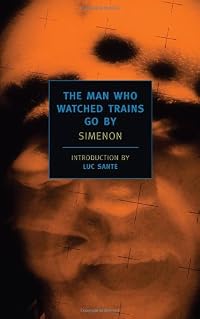
The prolific Belgian-born writer Georges Simenon produced hundreds of fictional works under his own name and 17 pseudonyms, in addition to more than 70 books about Inspector Maigret, long "the favorite sleuth of highbrow detective-story readers" (SR). More than 50 "Simenons" have been made into films. In addition to his mystery stories, he wrote show more what he called "hard" books, the serious psychological novels numbering well over 100. The autobiographical Pedigree, set in his native town of Liege, is perhaps his finest work. The publication of Simenon's intimate memoirs also attracted considerable attention. Simenon himself once said that he would never write a "great novel." Yet Gide called him "a great novelist, perhaps the greatest and truest novelist we have in French literature today," and Thornton Wilder (see Vol. 1) found that Simenon's narrative gift extends "to the tips of his fingers." The following are some of Simenon's novels, exclusive of the Maigret detective stories, that are in print. (Bowker Author Biography) Georges Simenon was born on February 13, 1903 in Liege, Belgium. He wrote more than 200 fiction works under 16 different pseudonyms. His first book, The Case of Peter the Lent led to 80 more of the like including the main character, Inspector Maigret. He published over 400 books that were translated into 50 different languages and sold by the millions. He also wrote psychological novels, including The Man Who Watched the Train Go By. He died on September 4, 1989 in Lausanne. (Bowker Author Biography) show less
Some Editions
Series

Belongs to Publisher Series
Gli Adelphi [Adelphi] (224)
Work Relationships
Common Knowledge
- Canonical title
- Act of Passion
- Original title
- Lettre à mon juge
- Original publication date
- 1947; 2015 (new dutch translation) (new dutch translation); 1961 (dutch) (dutch)
- First words*
- Ik wou dat iemand, een enkel mens, mij begreep.
Ik zou willen dat één man, één enkele, mij begrijpt. - Last words*
- (Click to show. Warning: May contain spoilers.)Er is een onderzoek ingesteld.
- Original language*
- Frans
*Some information comes from Common Knowledge in other languages. Click "Edit" for more information.
Classifications
- Genres
- Fiction and Literature, General Fiction, Mystery
- DDC/MDS
- 843.912 — Literature & rhetoric French Literature French fiction 1900- 20th Century 1900-1945
- LCC
- PQ2637 .I53 .L413 — Language and Literature French, Italian, Spanish and Portuguese literatures French literature Modern literature 1900-1960
- BISAC
Statistics
- Members
- 456
- Popularity
- 66,689
- Reviews
- 14
- Rating
- (3.65)
- Languages
- 11 — Danish, Dutch, English, Finnish, French, German, Italian, Norwegian (Bokmål), Norwegian, Portuguese, Spanish
- Media
- Paper, Audiobook, Ebook
- ISBNs
- 22
- ASINs
- 15