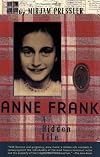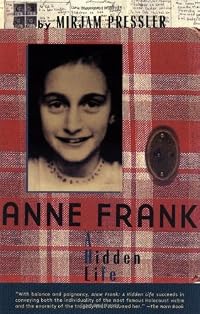
Anne Frank: A Hidden Life
by Mirjam Pressler, Gryn Hugo (Foreword)
On This Page
Description
Describes the background in which Anne Frank's life and diary were set as she hid in an attic in Nazi-occupied Holland for two years.Tags
Recommendations













Member Reviews
The more I read about Anne, the more grateful i feel about having this life full of comforts and luxury.
Her energy and outlook towards living a life during those war days is such a humble reminder for all of us to be more humane in our approach to living our lives now, six decades later.
I always think of how Anne would have lived her life had she been alive. She's a constant source of unfailing inspiration and my personal guide in times of distress.
You'll live forever, Dear Anne!
Her energy and outlook towards living a life during those war days is such a humble reminder for all of us to be more humane in our approach to living our lives now, six decades later.
I always think of how Anne would have lived her life had she been alive. She's a constant source of unfailing inspiration and my personal guide in times of distress.
You'll live forever, Dear Anne!
Anne Frank: A Hidden Life
Summary:
Anne Frank is one of the nonfiction biographies of this victim of war and the fanaticism of Adolf Hitler’s final solution. Anne Frank was forced to live in the attic of a country house known to her father with her whole family during the two-year German occupation until they were discovered and relocated to Auschwitz and then on to Bergen-Belsen, the concentration camp where she died in 1945. The first Dutch addition of her diary was written in 1947 after its discovery. Our author provides us a blend of third person omniscient point of view with a first-person tribute to this renowned victim through her diaries that were emphasize by italics. This is more than a story of an occupation force who raped, show more plundered and murdered many child’s innocence while taking the property and then lives of their parents. The children were also killed unless they could be used as child labor in support of the German machine. Early in the story, Anne Frank could not know what was going on beyond the room where her and 7 others were hidden and often clashed because of proximity. The family housing them was understanding of her 11-year-old impudence under a circumstance that was beyond anything any one could have believed capable of beings called human until discovered when she and the rest became the story of merciless horror. The peritext adds incredible value to this nonfiction informational aspect of this classic story of the atrocities that happened under the orders of a fanatic.
Personal Reaction:
Having been to a German concentration camp, Dachau, in the 80s, I am personally familiar with the atrocities that befell anyone who challenged the forces of evil that threatened to take over the world. This story expanded my understanding of what the victims thought and felt while living in hell. Seeing pictures of the human carnage does not provide a clear picture beyond the enormity and sheer number of victims. Anne Frank’s own words make it live as you feel through her eyes, the fear and resilience of this young victim.
Classroom Extension Ideas:
1. This book would be a primary source of information for anyone looking for information on life in a concentration camp during WWII; teachers should assign this book to older children to support the information provided in the text.
2. When looking for an example of resilience in the face of unimaginable peril; Anne Frank is that example. Teachers can broaden the perspective of the students as they learn what happens when one race decides that they are above the rest of the world and be assigned to report other examples in history when race was a crime subject to a death sentence.
3. Form a class literature circle for reading Anne Frank and have a group discussion that questions the children’s understanding of prejudice and intolerance. Ask each student the night prior to meeting to come prepared to discuss prejudice or intolerance with examples that support their position. show less
Summary:
Anne Frank is one of the nonfiction biographies of this victim of war and the fanaticism of Adolf Hitler’s final solution. Anne Frank was forced to live in the attic of a country house known to her father with her whole family during the two-year German occupation until they were discovered and relocated to Auschwitz and then on to Bergen-Belsen, the concentration camp where she died in 1945. The first Dutch addition of her diary was written in 1947 after its discovery. Our author provides us a blend of third person omniscient point of view with a first-person tribute to this renowned victim through her diaries that were emphasize by italics. This is more than a story of an occupation force who raped, show more plundered and murdered many child’s innocence while taking the property and then lives of their parents. The children were also killed unless they could be used as child labor in support of the German machine. Early in the story, Anne Frank could not know what was going on beyond the room where her and 7 others were hidden and often clashed because of proximity. The family housing them was understanding of her 11-year-old impudence under a circumstance that was beyond anything any one could have believed capable of beings called human until discovered when she and the rest became the story of merciless horror. The peritext adds incredible value to this nonfiction informational aspect of this classic story of the atrocities that happened under the orders of a fanatic.
Personal Reaction:
Having been to a German concentration camp, Dachau, in the 80s, I am personally familiar with the atrocities that befell anyone who challenged the forces of evil that threatened to take over the world. This story expanded my understanding of what the victims thought and felt while living in hell. Seeing pictures of the human carnage does not provide a clear picture beyond the enormity and sheer number of victims. Anne Frank’s own words make it live as you feel through her eyes, the fear and resilience of this young victim.
Classroom Extension Ideas:
1. This book would be a primary source of information for anyone looking for information on life in a concentration camp during WWII; teachers should assign this book to older children to support the information provided in the text.
2. When looking for an example of resilience in the face of unimaginable peril; Anne Frank is that example. Teachers can broaden the perspective of the students as they learn what happens when one race decides that they are above the rest of the world and be assigned to report other examples in history when race was a crime subject to a death sentence.
3. Form a class literature circle for reading Anne Frank and have a group discussion that questions the children’s understanding of prejudice and intolerance. Ask each student the night prior to meeting to come prepared to discuss prejudice or intolerance with examples that support their position. show less
Ratings
Members
- Recently Added By
Lists

World War II Books
34 works; 1 member
Author Information

87+ Works 1,642 Members
Mirjam Pressler was born on June 18, 1940 in Darmstadt, Germany. She is the author of several novels that have won awards in her native Germany and also received high praise from critics after being translated into English. In Malka and Halinka Pressler focuses on young Jewish protagonists who have been forced by fate to endure the Holocaust, show more while in Shylock's Daughter she returns readers to fifteenth-century Italy as she attempts to answer haunting questions surrounding the motivations of characters in a popular play by William Shakespeare. While receiving notice for her novels, Pressler is most well known for her work revising the diaries of Jewish Holocaust victim Anne Frank, and she is considered an expert on Franks's life and writings. She made the finalist for the Hans Christian Andersen Awards 2016 in the author category. (Bowker Author Biography) show less
Some Editions
Awards and Honors
Common Knowledge
- Canonical title*
- Qui était Anne Frank ? L'histoire de sa vie
- Original title
- Ich sehne mich so. Die Lebensgeschichte der Anne Frank
- Original publication date
- 1992
- People/Characters
- Anne Frank
- Important places
- Amsterdam, North Holland, Netherlands
- Original language*
- Allemand
*Some information comes from Common Knowledge in other languages. Click "Edit" for more information.
Classifications
Statistics
- Members
- 240
- Popularity
- 134,466
- Reviews
- 2
- Rating
- (4.38)
- Languages
- 5 — Dutch, English, French, German, Spanish
- Media
- Paper
- ISBNs
- 16
- ASINs
- 1