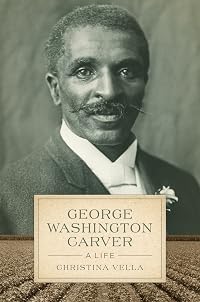
George Washington Carver: A Life (Southern Biography Series)
by Christina Vella
On This Page
Description
Nearly every American can cite at least one of the accomplishments of George Washington Carver. The many tributes honoring his contributions to scientific advancement and black history include a national monument bearing his name, a U.S.-minted coin featuring his likeness, and induction into the National Inventors Hall of Fame. Born into slavery, Carver earned a master's degree at Iowa State Agricultural College and went on to become that university's first black faculty member. A keen show more painter who chose agricultural studies over art, he focused the majority of his research on peanuts and sweet potatoes. His scientific breakthroughs with the crops-both of which would replenish the cotton-leached soil of the South-helped spare multitudes of sharecroppers from poverty. Despite Carver's lifelong difficulties with systemic racial prejudice, when he died in 1943, millions of Americans mourned the passing of one of the nation's most honored and well-known scientists. Scores of children's books celebrate the contributions of this prolific botanist, but no biographer has fully examined both his personal life and career until now.Christina Vella offers a thorough biography of George Washington Carver, including in-depth details of his relationships with his friends, colleagues, supporters, and those he loved. Despite the exceptional trajectory of his career, Carver was not immune to the racism of the Jim Crow era or the privations and hardships of the Great Depression and two world wars. Yet throughout this tumultuous period, his scientific achievements aligned him with equally extraordinary friends, including Teddy Roosevelt, Mohandas Gandhi, Henry A. Wallace, and Henry Ford.In pursuit of the man behind the historical figure, Vella discovers an unassuming intellectual with a quirky sense of humor, striking eccentricities, and an unwavering religious faith. She explores Carver's anguished dealings with Booker T. Washington across their nineteen years working together at the Tuskegee Institute-a turbulent partnership often fraught with jealousy. Uneasy in personal relationships, Carver lost one woman he loved to suicide and, years later, directed his devotion toward a white man.A prodigious and generous scholar whose life was shaped by struggle and heartbreak as well as success and fame, George Washington Carver remains a key figure in the history of southern agriculture, botanical advancement, and the struggle for civil rights. Vella's extensively researched biography offers a complex and compelling portrait of one of the most brilliant men of the last century. show lessTags
Recommendations





Member Reviews
Although it's a bit of happenstance that I chose to read a modern biography of Carver at this point in time, I would note that it would have been hard to avoid him as an exemplar of the "safe" Black man at the time when I was in primary and secondary school. Also, though I really didn't think about the man for a long while, I suppose that at the back of my mind I've had the question of just how much of an exemplar Carver really was.
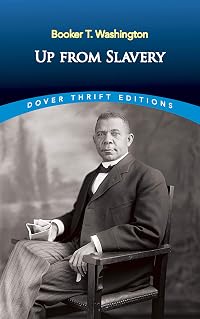
Vella, however, does make a strong case that Carver remains a great exemplar. This is considering his humanity, intellectual engagement, and commitment; perhaps too much commitment. While Booker T. Washington badly wanted Carver as a trophy hire for the Tuskegee Institute, the real guts of this book is how show more Vella documents the remarkably poor treatment that Carver received while on the school's payroll. The fact is that Carver only really flourished as a researcher once Washington passed on, as opposed to merely being the nominal manager of the school's agricultural operations. There is a whole constellation of reasons for this, but Washington was under pressure from the trustees to make the school pay for itself, whereas Carver was trying to run an experimental farm. In trying to do everything, and Washington trying to keep up appearances, nothing was done well; Washington cuts a remarkable shabby figure as an institutional leader in this telling.
From there, and the last third of Carver's life, Vella examines how the man went from being an obscure regional figure to becoming a national treasure; much helped by Carver's unlikely friendship with Henry Ford.
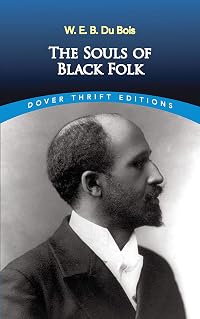
Going forward from this exercise, I find that I really do need to study more about the long-running conflict between Booker T. Washington and W.E.B. Du Bois, which Carver was on the fringes of. show less
Vella, however, does make a strong case that Carver remains a great exemplar. This is considering his humanity, intellectual engagement, and commitment; perhaps too much commitment. While Booker T. Washington badly wanted Carver as a trophy hire for the Tuskegee Institute, the real guts of this book is how show more Vella documents the remarkably poor treatment that Carver received while on the school's payroll. The fact is that Carver only really flourished as a researcher once Washington passed on, as opposed to merely being the nominal manager of the school's agricultural operations. There is a whole constellation of reasons for this, but Washington was under pressure from the trustees to make the school pay for itself, whereas Carver was trying to run an experimental farm. In trying to do everything, and Washington trying to keep up appearances, nothing was done well; Washington cuts a remarkable shabby figure as an institutional leader in this telling.
From there, and the last third of Carver's life, Vella examines how the man went from being an obscure regional figure to becoming a national treasure; much helped by Carver's unlikely friendship with Henry Ford.
Going forward from this exercise, I find that I really do need to study more about the long-running conflict between Booker T. Washington and W.E.B. Du Bois, which Carver was on the fringes of. show less
Ratings
Members
- Recently Added By
Lists

African American History Month
99 works; 2 members
Author Information
3 Works 165 Members
Christina Vella was born in New Orleans, Louisiana on March 14, 1942. She received a bachelor's degree in history from Louisiana State University in 1965, a master's degree in history from the University of New Orleans in 1971, and a doctorate in modern European and American history from Tulane University in 1990. She taught history at St. Bernard show more Community College and Tulane University. She wrote several books including Intimate Enemies: The Two Worlds of the Baroness de Pontalba, Indecent Secrets: The Infamous Murri Murder Affair, George Washington Carver: A Life, and The Hitler Kiss: A Memoir of the Czech Resistance written with Radomir Luza. She died from cancer on March 22, 2017 at the age of 75. (Bowker Author Biography) show less
Classifications
Statistics
- Members
- 35
- Popularity
- 799,166
- Reviews
- 1
- Rating
- (4.00)
- Languages
- English
- Media
- Paper, Ebook
- ISBNs
- 5