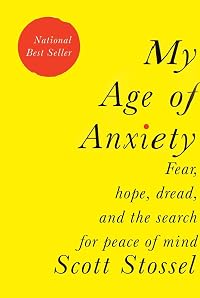
My Age of Anxiety: Fear, Hope, Dread, and the Search for Peace of Mind
by Scott Stossel
On This Page
Description
A riveting, revelatory, and moving account of the author’s struggles with anxiety, and of the history of efforts by scientists, philosophers, and writers to understand the conditionAs recently as thirty-five years ago, anxiety did not exist as a diagnostic category. Today, it is the most common form of officially classified mental illness. Scott Stossel gracefully guides us across the terrain of an affliction that is pervasive yet too often misunderstood.
Drawing on his own show more long-standing battle with anxiety, Stossel presents an astonishing history, at once intimate and authoritative, of the efforts to understand the condition from medical, cultural, philosophical, and experiential perspectives. He ranges from the earliest medical reports of Galen and Hippocrates, through later observations by Robert Burton and Søren Kierkegaard, to the investigations by great nineteenth-century scientists, such as Charles Darwin, William James, and Sigmund Freud, as they began to explore its sources and causes, to the latest research by neuroscientists and geneticists. Stossel reports on famous individuals who struggled with anxiety, as well as on the afflicted generations of his own family. His portrait of anxiety reveals not only the emotion’s myriad manifestations and the anguish anxiety produces but also the countless psychotherapies, medications, and other (often outlandish) treatments that have been developed to counteract it. Stossel vividly depicts anxiety’s human toll—its crippling impact, its devastating power to paralyze—while at the same time exploring how those who suffer from it find ways to manage and control it.
My Age of Anxiety is learned and empathetic, humorous and inspirational, offering the reader great insight into the biological, cultural, and environmental factors that contribute to the affliction. show less
Tags
Recommendations



Member Reviews
Scott Stossel has had a rewarding and successful life on a superficial glance. He graduated from Harvard, wrote a well regarded biography of the politician and JFK aide Sargent Shriver, previously served as the executive editor of The American Prospect, is currently the editor of The Atlantic magazine, and is happily married with two young children. However, this brief summary does not reveal his all encompassing struggle with anxiety disorder, which has been a constantly disturbing and occasionally crippling problem for most of his life. In his search to tame his inner doubts and fears by disclosing them openly, and in an effort to learn more about this malady and how it has affected him and his relatives, he has written a show more comprehensive history of anxiety disorders, from ancient times to the modern era.
In the opening chapter of My Age of Anxiety Stossel provides the reader with some basic facts about the disorder in the US, and the Western world. It is the most common form of mental illness, which affects nearly one in seven Americans (40 million) at any time and has a lifetime prevalence of nearly 25%. It is an affliction of affluent societies, particularly those in which freedom of choice and the potential of upward—or downward—mobility can be liberating to some, but disabling to others. Anxiety disorder and related conditions such as irritable bowel syndrome, chronic abdominal pain or headaches, palpitations, shortness of breath and fatigue, are common causes of visits to primary care providers (physicians, physician assistants and nurse practitioners) and mental health professionals, and trillions of dollars are spent annually on medications to chemically alleviate these symptoms, often with only modest benefit. Anxiety is not limited to humans; numerous studies have demonstrated that higher animals also experience these symptoms, whether they roam independently or are members of hierarchical societies led by alpha males or females.
The book provides a detailed history of anxiety as it was understood by Hippocrates and Aristotle, who viewed it as a medical illness; Plato and Spinoza, who believed that it was a philosophical problem with no organic basis; Kierkegaard and Freud, who viewed anxiety as a result of existential uncertainty; and researchers in the middle of the 20th century, who discovered that imbalances in neurotransmitters such as serotonin, glutamate and GABA and their receptors on neurons played a major role in mood disorders and discovered effective medications that allowed millions of the afflicted to lead normal or vastly improved lives. Stossel also discusses the controversies throughout history, including the difficulties in accurately defining anxiety and other mood disorders, the differences of the psychoanalytic, the cognitive-behavioral and the biomedical approaches to the disorders, the pharmaceutical industry's efforts to widen the use of these medications for their own benefit and the associated overuse of these medications by clinicians, and the harms that they have caused, including the deaths of Marilyn Monroe, Judy Garland, Jimi Hendrix and countless others from barbiturate overdoses.
Stossel's book is at its best when he describes his own struggles with anxiety, and how it has affected him and his family, as he traces the roots of the disorder in his family tree. His great grandfather Chester Hanford was the popular Dean of Harvard College for 20 years and a professor at the university for four decades, but his worsening anxiety led to his premature retirement, hospitalizations at the famed McLean Psychiatric Hospital, multiple medication trials and several rounds of electroshock treatments throughout his later years. Sadly, his daughter is demonstrating some of the same anxious behaviors that he had as a child, which correlates with the body of evidence that mood disorders can be inherited.
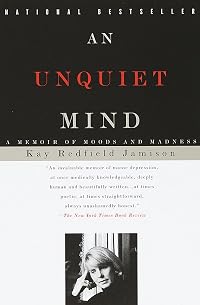
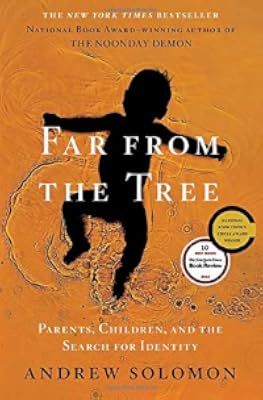
My Age of Anxiety is a valuable contribution to the field of psychiatric disorders, similar to books such as The Noonday Demon: An Atlas Of Depression by Andrew Solomon and An Unquiet Mind: A Memoir of Moods and Madness by Kay Redfield Jamison, which were also written by authors who suffered from depression and bipolar disorder, respectively. Readers with little interest in the development of pharmaceutical agents for mood disorders or the different treatment models can skip over those sections without missing much, and focus on the far more compelling personal accounts and struggles of the author, who deserves praise and credit for discussing his illness so openly in this book. It is written for a general audience, and I would highly recommend it to everyone. show less
In the opening chapter of My Age of Anxiety Stossel provides the reader with some basic facts about the disorder in the US, and the Western world. It is the most common form of mental illness, which affects nearly one in seven Americans (40 million) at any time and has a lifetime prevalence of nearly 25%. It is an affliction of affluent societies, particularly those in which freedom of choice and the potential of upward—or downward—mobility can be liberating to some, but disabling to others. Anxiety disorder and related conditions such as irritable bowel syndrome, chronic abdominal pain or headaches, palpitations, shortness of breath and fatigue, are common causes of visits to primary care providers (physicians, physician assistants and nurse practitioners) and mental health professionals, and trillions of dollars are spent annually on medications to chemically alleviate these symptoms, often with only modest benefit. Anxiety is not limited to humans; numerous studies have demonstrated that higher animals also experience these symptoms, whether they roam independently or are members of hierarchical societies led by alpha males or females.
The book provides a detailed history of anxiety as it was understood by Hippocrates and Aristotle, who viewed it as a medical illness; Plato and Spinoza, who believed that it was a philosophical problem with no organic basis; Kierkegaard and Freud, who viewed anxiety as a result of existential uncertainty; and researchers in the middle of the 20th century, who discovered that imbalances in neurotransmitters such as serotonin, glutamate and GABA and their receptors on neurons played a major role in mood disorders and discovered effective medications that allowed millions of the afflicted to lead normal or vastly improved lives. Stossel also discusses the controversies throughout history, including the difficulties in accurately defining anxiety and other mood disorders, the differences of the psychoanalytic, the cognitive-behavioral and the biomedical approaches to the disorders, the pharmaceutical industry's efforts to widen the use of these medications for their own benefit and the associated overuse of these medications by clinicians, and the harms that they have caused, including the deaths of Marilyn Monroe, Judy Garland, Jimi Hendrix and countless others from barbiturate overdoses.
Stossel's book is at its best when he describes his own struggles with anxiety, and how it has affected him and his family, as he traces the roots of the disorder in his family tree. His great grandfather Chester Hanford was the popular Dean of Harvard College for 20 years and a professor at the university for four decades, but his worsening anxiety led to his premature retirement, hospitalizations at the famed McLean Psychiatric Hospital, multiple medication trials and several rounds of electroshock treatments throughout his later years. Sadly, his daughter is demonstrating some of the same anxious behaviors that he had as a child, which correlates with the body of evidence that mood disorders can be inherited.
My Age of Anxiety is a valuable contribution to the field of psychiatric disorders, similar to books such as The Noonday Demon: An Atlas Of Depression by Andrew Solomon and An Unquiet Mind: A Memoir of Moods and Madness by Kay Redfield Jamison, which were also written by authors who suffered from depression and bipolar disorder, respectively. Readers with little interest in the development of pharmaceutical agents for mood disorders or the different treatment models can skip over those sections without missing much, and focus on the far more compelling personal accounts and struggles of the author, who deserves praise and credit for discussing his illness so openly in this book. It is written for a general audience, and I would highly recommend it to everyone. show less
“Anxiety” is a fiendishly difficult affliction to pin down and define; although written about for thousands of years, it was only formally recognised as a condition by the medical profession as late as 1980. Millions of lives, though, are altered, crippled or completely swallowed up by it every year. And it is also, once set in motion, an example of a self-worsening debility, amplifying itself over years or decades if left untreated.
Scott Stossel, as a life-long sufferer, knows it better than most and in this book has pulled together everything there is to say about it. Chapters cover, first, anxiety as a riddle (what is it exactly?) and the variety of forms it can take. Then there’s its treatment (history of, and show more effectiveness or otherwise—do any of them even work?). He explores the question of what causes it: nurture (infant-parent relationships)? Or nature (genetics)? Or culture (modern life, prosperity, or perhaps even, particularly in the Western capitalist democracies, having more freedom of choice than ever before in history)?
Some of the descriptions of Stossel’s own state of mind and resulting behaviour when in the grip of the worst bouts of his own anxiety are, at times, scarcely believable and excruciating to read. This is not only a comprehensive and exceptionally well-researched book, it’s harrowing in places too and, above all, incredibly honest. The writing itself is simply brilliant, as readable as a book on a subject as perplexing as this could be. show less
Scott Stossel, as a life-long sufferer, knows it better than most and in this book has pulled together everything there is to say about it. Chapters cover, first, anxiety as a riddle (what is it exactly?) and the variety of forms it can take. Then there’s its treatment (history of, and show more effectiveness or otherwise—do any of them even work?). He explores the question of what causes it: nurture (infant-parent relationships)? Or nature (genetics)? Or culture (modern life, prosperity, or perhaps even, particularly in the Western capitalist democracies, having more freedom of choice than ever before in history)?
Some of the descriptions of Stossel’s own state of mind and resulting behaviour when in the grip of the worst bouts of his own anxiety are, at times, scarcely believable and excruciating to read. This is not only a comprehensive and exceptionally well-researched book, it’s harrowing in places too and, above all, incredibly honest. The writing itself is simply brilliant, as readable as a book on a subject as perplexing as this could be. show less
A very courageous book . Stossel writes so openly and disarmingly about his anxious episodes with, at times, such an amazing sense of humor that I laughed out loud, while at the same time feeling tremendous compassion for him. At times I skimmed the dense sections of research which I imagine were quite calming for him to compile.
He's accomplished so much and, as his therapist advises, I hope he has given himself more credit.
He's accomplished so much and, as his therapist advises, I hope he has given himself more credit.
I bought this book impulsively with my birthday book token, having opened it in the shop and read that one of author’s main anxiety symptoms is emetophobia (fear of vomiting). Since I also experience this and had never read mention of it elsewhere, this was curiously reassuring. Indeed, if you suffer from anxiety, this book is a curious mixture of worrying and calming. On the one hand, Stossel has an especially severe manifestation of anxiety and recounts many other horrifying case studies as well as his own misery. Thus the book makes you realise just how bad anxiety can get. Conversely, there is definitely something to be said for gaining some understanding of what your brain is doing, as well as realising you are not the only one show more to experience such dysfunction. So there is a sense of companionship to be found here - although mercifully I have nowhere near as serious a case of anxiety as the author, sometimes I had a real sense of familiarity with Stossel’s writing.
Perhaps unusually, the autobiographical and wider historical elements of this book mesh really well. Moreover, the rival social and medical explanations for anxiety are nicely balanced. Stossel, like me, is somewhat uncomfortable with the current tendency to seek neat explanations for every human emotion and behaviour in fMRI scans and gene testing. Many interesting findings from such research are recounted here, but always with caveats. The earlier history of anxiety is also covered thoroughly, rather than an excitable over-emphasis on New Findings (a trap many pop social science books fall into). I liked the clarity of this - that the symptoms we now arbitrarily classify as anxiety have existed as far back as records go, under a range of different names. I hadn’t previously realised the extent to which the current categories of mental illness were crystallised as a direct result of drugs being developed to treat them. Stossel notes that some psychologists still insist depression and anxiety are the same thing and that sub-categorising them is meaningless.
The ongoing interdisciplinary disagreements between psychologists and psychiatrists regarding the treatment of anxiety are also fascinating. Stossel recounts personal experiences which exemplify this - one professional prescribes him high doses of SSRIs as the other tells him to give up the drugs to focus on CBT. In the end neither worked for him and he remains deeply anxious. In a way, this makes the ending of book unusually downbeat; there are no hopeful platitudes about finding a treatment that works for you and not letting anxiety effect your life. Whatever the causes of anxiety, Stossel has experienced it since early childhood and seems to expect this to continue for the rest of his life. He is also honest about using alcohol as a coping mechanism, an especially bad idea given he has a family history of alcoholism. Nonetheless, I didn’t find the book depressing overall. I was left feeling very sorry for Stossel but much better informed about anxiety as a condition. I find feeling better informed to be comforting.
The only quibble I have with the book is that it’s very male; nearly all the examples of anxious people from history are men. Moreover, there is a gendered element to the way anxiety symptoms (however characterised) have been discussed and treated over the years, which is glossed over. Clearly this level of detail is outside Stossel’s scope, so it just creeps in here and there in sentences like, 'In 1975, it was estimated that one in every five women and one in every thirteen men in America had taken Librium, Valium, or some other benzodiazepine'. That's a major difference! There are no doubt other works to be found on this specific subject, though. Overall, I would recommend this book to anyone who has experienced anxiety or is close to someone that does. It is an excellent, compelling read. show less
Perhaps unusually, the autobiographical and wider historical elements of this book mesh really well. Moreover, the rival social and medical explanations for anxiety are nicely balanced. Stossel, like me, is somewhat uncomfortable with the current tendency to seek neat explanations for every human emotion and behaviour in fMRI scans and gene testing. Many interesting findings from such research are recounted here, but always with caveats. The earlier history of anxiety is also covered thoroughly, rather than an excitable over-emphasis on New Findings (a trap many pop social science books fall into). I liked the clarity of this - that the symptoms we now arbitrarily classify as anxiety have existed as far back as records go, under a range of different names. I hadn’t previously realised the extent to which the current categories of mental illness were crystallised as a direct result of drugs being developed to treat them. Stossel notes that some psychologists still insist depression and anxiety are the same thing and that sub-categorising them is meaningless.
The ongoing interdisciplinary disagreements between psychologists and psychiatrists regarding the treatment of anxiety are also fascinating. Stossel recounts personal experiences which exemplify this - one professional prescribes him high doses of SSRIs as the other tells him to give up the drugs to focus on CBT. In the end neither worked for him and he remains deeply anxious. In a way, this makes the ending of book unusually downbeat; there are no hopeful platitudes about finding a treatment that works for you and not letting anxiety effect your life. Whatever the causes of anxiety, Stossel has experienced it since early childhood and seems to expect this to continue for the rest of his life. He is also honest about using alcohol as a coping mechanism, an especially bad idea given he has a family history of alcoholism. Nonetheless, I didn’t find the book depressing overall. I was left feeling very sorry for Stossel but much better informed about anxiety as a condition. I find feeling better informed to be comforting.
The only quibble I have with the book is that it’s very male; nearly all the examples of anxious people from history are men. Moreover, there is a gendered element to the way anxiety symptoms (however characterised) have been discussed and treated over the years, which is glossed over. Clearly this level of detail is outside Stossel’s scope, so it just creeps in here and there in sentences like, 'In 1975, it was estimated that one in every five women and one in every thirteen men in America had taken Librium, Valium, or some other benzodiazepine'. That's a major difference! There are no doubt other works to be found on this specific subject, though. Overall, I would recommend this book to anyone who has experienced anxiety or is close to someone that does. It is an excellent, compelling read. show less
This book had been catching my eye but I had been looking past it, thinking (per the title) it was a memoir of one guy’s experience with anxiety. But when I discovered that the “guy” is editor of The Atlantic magazine, I figured it might be a substantive memoir. And, not too far into it, I realized not only is it substantive but it’s broader than a memoir -- it’s a biography of anxiety.
It’s the history of anxiety (as distinguished from fear) -- both of the experience, dating from ancient times and affecting famous names (e.g. Charles Darwin), and the modern-day medicalization of it. It's an exploration of the science, psychology and sociology (particularly the degree of choice in today’s culture) of its causes and show more treatments. Throughout, Stossel illuminates aspects by folding in examples from his decades-long (and, in his family, generations-long) debility from anxiety.
He writes, "{A}nxiety is at once a function of biology and philosophy, body and mind, instinct and reason, personality and culture. {…} In computer terms, it’s both a hardware problem (I’m wired badly) and a software problem (I run faulty logic programs that make me think anxious thoughts)."
I'm in healthcare and although I didn’t learn much new, I came away with a more saturated perspective. It’s a very interesting, accessible exploration for the general reader.
(Review based on an advance reading copy provided by the publisher.) show less
It’s the history of anxiety (as distinguished from fear) -- both of the experience, dating from ancient times and affecting famous names (e.g. Charles Darwin), and the modern-day medicalization of it. It's an exploration of the science, psychology and sociology (particularly the degree of choice in today’s culture) of its causes and show more treatments. Throughout, Stossel illuminates aspects by folding in examples from his decades-long (and, in his family, generations-long) debility from anxiety.
He writes, "{A}nxiety is at once a function of biology and philosophy, body and mind, instinct and reason, personality and culture. {…} In computer terms, it’s both a hardware problem (I’m wired badly) and a software problem (I run faulty logic programs that make me think anxious thoughts)."
I'm in healthcare and although I didn’t learn much new, I came away with a more saturated perspective. It’s a very interesting, accessible exploration for the general reader.
(Review based on an advance reading copy provided by the publisher.) show less
What better guide to the world of anxiety than a person who lives with anxiety every single day? Scott Stossel draws on his own decades-long experience with anxiety, panic attacks, and various phobias as he explains the history of how anxiety came to be recognized and classified as a mental health condition. He discusses the various lenses through which treatment is provided (is anxiety a sign of neurosis or repressed feelings, or is it the result of chemical imbalances in the brain?). He highlights the writings of noteworthy historical personages who could be said to have anxiety as we know it today: Darwin, Samuel Johnson, even Freud himself. Along the way, Stossel writes candidly and bravely about his (at-times-horrific) panic show more attacks and visits to various psychiatrists and the pharmacist’s shop of drugs he’s been prescribed over the years.
Overall, this was a fascinating book. I respected his candour and ability to write down what must have been terrifying experiences for him, and some of his comments about anxiety had me nodding in recognition. The only part where my attention really wandered was the section talking about the various prescription drugs developed and marketed over the years; not necessarily the actual development and marketing, but more the part where he explained what receptors they acted upon and how they differed from other drugs. And he was probably simplifying things, too.
I highly recommend this if you’re curious about what it’s like to live with anxiety or if you are interested in psychological memoirs or mental health issues. show less
Overall, this was a fascinating book. I respected his candour and ability to write down what must have been terrifying experiences for him, and some of his comments about anxiety had me nodding in recognition. The only part where my attention really wandered was the section talking about the various prescription drugs developed and marketed over the years; not necessarily the actual development and marketing, but more the part where he explained what receptors they acted upon and how they differed from other drugs. And he was probably simplifying things, too.
I highly recommend this if you’re curious about what it’s like to live with anxiety or if you are interested in psychological memoirs or mental health issues. show less
In general, I like books about psychology, so I was predisposed toward this one from the beginning. The book itself is a very comprehensive look at anxiety from every angle - neurobiological to philosophical to historical. The informative aspects of the book are interwoven with Scott's memoirs regarding his own really serious struggle with anxiety and phobias.
True confession, I, myself, struggle from some anxiety issues. I joke that if I don't have anything to worry about, I'm sure to find something soon. But anything I've endured is NOTHING compared to what Scott has had to deal with. Even after years and years of therapy and a myriad of medication and excruciating knowledge of the condition, he still suffers. It pained me to read as I show more felt a great deal of empathy for the guy.
Turns out, the underlying causes of anxiety disorders are pretty murky. There's definitely some biochemical components and some genetic ones. But it seems that parenting can contribute or exacerbate the underlying predisposition.
My only criticism of this well written and researched book is that the first chapter is by far the least compelling. After that, I found it very interesting and educational. show less
True confession, I, myself, struggle from some anxiety issues. I joke that if I don't have anything to worry about, I'm sure to find something soon. But anything I've endured is NOTHING compared to what Scott has had to deal with. Even after years and years of therapy and a myriad of medication and excruciating knowledge of the condition, he still suffers. It pained me to read as I show more felt a great deal of empathy for the guy.
Turns out, the underlying causes of anxiety disorders are pretty murky. There's definitely some biochemical components and some genetic ones. But it seems that parenting can contribute or exacerbate the underlying predisposition.
My only criticism of this well written and researched book is that the first chapter is by far the least compelling. After that, I found it very interesting and educational. show less
Members
- Recently Added By
Published Reviews
ThingScore 100
By combining such unfiltered honesty with deep reporting, Stossel has delivered an enlightening, empowering read. But all of his disclosures serve a higher purpose, too. His candor about his sense of unrest — as well as his gnawing, conflicted feelings about admitting to it — serve as the foundation for his investigation into the panic and apprehension that afflict millions of Americans.
added by melmore
His new book, “My Age of Anxiety,” uses his experience as a guide through the disorder, tracing its legacy in thought and culture. He seeks to understand what anxiety is and what it means; he probes the condition’s ambiguities. The result is ambitious, and bravely intimate: a ruminative book that often breaks into a thrilling intellectual chase.
added by melmore
Author Information

8+ Works 738 Members
Scott Stossel is the editor of The Atlantic. He is the author of Sarge: The Life and Times of Sargent Shriver and My Age of Anxiety: Fear, Hope, Dread, and the Search for Peace of Mind. (Bowker Author Biography)
Awards and Honors
Common Knowledge
- Original title
- My age of anxiety : fear, hope, dread and the search for peace of mind
- Original publication date
- 2013
- Dedication
- For Maren and Nathaniel—may you be spared.
- First words
- I have an unfortunate tendency to falter at crucial moments.
- Last words
- (Click to show. Warning: May contain spoilers.)I suppose I’ll find out soon enough.
- Publisher's editor
- Frank, Dan
Classifications
- Genres
- Nonfiction, General Nonfiction, Biography & Memoir
- DDC/MDS
- 616.85 — Applied science & technology Medicine & health Diseases, Allergies, Skin Conditions Nervous Disorders: Autism, Anorexia, OCD Miscellaneous
- LCC
- RC531 .S758 — Medicine Internal medicine Internal medicine Neurosciences. Biological psychiatry. Neuropsychiatry Psychiatry Psychopathology Neuroses
- BISAC
Statistics
- Members
- 642
- Popularity
- 45,134
- Reviews
- 24
- Rating
- (3.85)
- Languages
- 5 — English, Finnish, German, Portuguese, Spanish
- Media
- Paper, Audiobook, Ebook
- ISBNs
- 20
- ASINs
- 8