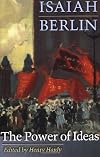
The Power of Ideas
by Isaiah Berlin
On This Page
Description
The essays collected in this new volume reveal Isaiah Berlin at his most lucid and accessible. He was constitutionally incapable of writing with the opacity of the specialist, but these shorter, more introductory pieces provide the perfect starting-point for the reader new to his work. Those who are already familiar with his writing will also be grateful for this further addition to his collected essays. The connecting theme of these essays, as in the case of earlier volumes, is the crucial show more social and political role--past, present and future--of ideas, and of their progenitors. A rich variety of subject-matters is represented--from philosophy to education, from Russia to Israel, from Marxism to romanticism--so that the truth of Heine's warning is exemplified on a broad front. It is a warning that Berlin often referred to, and provides an answer to those who ask, as from time to time they do, why intellectual history matters. Among the contributions are "My Intellectual Path," Berlin's last essay, a retrospective autobiographical survey of his main preoccupations; and "Jewish Slavery and Emancipation," the classic statement of his Zionist views, long unavailable in print. His other subjects include the Enlightenment, Giambattista Vico, Vissarion Belinsky, Alexander Herzen, G.V. Plekhanov, the Russian intelligentsia, the idea of liberty, political realism, nationalism, and historicism. The book exhibits the full range of his enormously wide expertise and demonstrates the striking and enormously engaging individuality, as well as the power, of his own ideas. "Over a hundred years ago, the German poet Heine warned the French not to underestimate the power of ideas: philosophical concepts nurtured in the stillness of a professor's study could destroy a civilization."--Isaiah Berlin, Two Concepts of Liberty, 1958. This new edition adds a number of previously uncollected pieces, including Berlin's earliest statement of the pluralism of values for which he is famous. show lessTags
Recommendations









Member Reviews
In 2000 Henry Hardy edited a collection of his shorter essays called The Power of Ideas from the following quotation:
Over a hundred years ago, the German poet Heine warned the French not to underestimate the power of ideas: philosophical concepts nurtured in the stillness of a professor's study could destroy a civilisation. (Isaiah Berlin, Two Concepts of Liberty, 1958)
This collection demonstrates both the power and the breadth of Berlin's thought with essays covering topics in the nature and history of philosophy, Russian intellectual history, political philosophy, Zionism, and the history of ideas. Power is indeed present to both analyze and understand human thought and history. Berlin shares his admiration for the enlightenment while show more analyzing the meaning of those ideas. It is a book that will lead you to other books, both by Sir Isaiah himself and others. It may spur an interest in the literature of nineteenth century Russia, or encourage you to read Karl Marx's Das Kapital to find out why John Maynard Keynes did not like it. Berlin's writing style is elegant and always readable, even when the most difficult ideas are being discussed. Most of all the essays included in this collection demonstrate the strength of classical liberal thought and the fundamental humaneness of the mind of Sir Isaiah Berlin. I came to this collection with an appreciation for Berlin's thought that was only confirmed and augmented by my reading of this book. show less
Over a hundred years ago, the German poet Heine warned the French not to underestimate the power of ideas: philosophical concepts nurtured in the stillness of a professor's study could destroy a civilisation. (Isaiah Berlin, Two Concepts of Liberty, 1958)
This collection demonstrates both the power and the breadth of Berlin's thought with essays covering topics in the nature and history of philosophy, Russian intellectual history, political philosophy, Zionism, and the history of ideas. Power is indeed present to both analyze and understand human thought and history. Berlin shares his admiration for the enlightenment while show more analyzing the meaning of those ideas. It is a book that will lead you to other books, both by Sir Isaiah himself and others. It may spur an interest in the literature of nineteenth century Russia, or encourage you to read Karl Marx's Das Kapital to find out why John Maynard Keynes did not like it. Berlin's writing style is elegant and always readable, even when the most difficult ideas are being discussed. Most of all the essays included in this collection demonstrate the strength of classical liberal thought and the fundamental humaneness of the mind of Sir Isaiah Berlin. I came to this collection with an appreciation for Berlin's thought that was only confirmed and augmented by my reading of this book. show less
Una serie de ensayos de Berlin, algunos algo viejos con el tiempo otro muy vigentes respecto a lo que significó la iluminación y su reacción el romanticismo, así como algunos análisis sobre el marxismo muy intersante
Jul 2, 2018Spanish
Berlin, Isaiah
Il potere delle idee / Isaiah Berlin ; a cura di Henry Hardy ; traduzione di Giovanni Ferrara Degli Uberti. - Milano : Adelphi, 2003. - 352 p. ; 22 cm. - (Saggi. Nuova serie ; 44).) - [ISBN] 978-88-459-1830-8.
SEGUE RECENSIONE E INDICE
RECENSIONE
Una raccolta di saggi in cui si esplora il ruolo delle idee nella storia umana e nella formazione della società. Berlin, filosofo e storico delle idee, esamina come le idee influenzano la politica, la cultura e la morale.
Il libro è caratterizzato da una serie di riflessioni su figure chiave del pensiero occidentale e su movimenti intellettuali che hanno avuto un impatto significativo sul mondo moderno. Berlin discute di filosofi, politici e artisti, analizzando come le loro idee show more abbiano modellato le società in cui vivevano e oltre.
Un tema centrale dell'opera è la distinzione tra il concetto di libertà positiva e libertà negativa, un argomento che Berlin ha esplorato ampiamente nel corso della sua carriera. La libertà negativa si riferisce all'assenza di coercizione da parte degli altri, mentre la libertà positiva riguarda la capacità di essere il proprio padrone e di perseguire i propri obiettivi.
In "Il potere delle idee", Berlin enfatizza l'importanza di comprendere le idee per capire il corso della storia umana. Egli crede che le idee abbiano il potere di cambiare il mondo e che sia essenziale esaminare come queste si sviluppano e si diffondono.
La raccolta offre una visione affascinante e approfondita del pensiero di Berlin e del suo approccio unico alla filosofia e alla storia delle idee, rendendo chiaro quanto le convinzioni e le teorie intellettuali possano influenzare e modellare il destino delle nazioni e degli individui.
INDICE
Prefazione del Curatore 9
IL POTERE DELLE IDEE
Il mio itinerario intellettuale 23
1. La filosofia di Oxford prima della seconda
guerra mondiale 23
11. Storia delle idee e teoria politica 28
Lo scopo della filosofia 55
I filosofi dell'Illuminismo 71
Uno dei più arditi innovatori nella storia del pensiero umano 94
La storia intellettuale russa 115
L'uomo che diventò un mito 130
Un rivoluzionario senza fanatismo 143
Il ruolo dell' intelligencija 164
La libertà 175
La filosofia di Karl Marx 181
Il padre del marxismo russo 196
Il realismo in politica 208
Le origini di Israele 220
Schiavitù ed emancipazione degli ebrei 246
La leadership di Chaim Weizmann 280
La ricerca dello status 293
L'essenza del Romanticismo europeo 300
Meinecke e lo storicismo 307
La cultura generale 319
Indice analitico a cura di Douglas Matthews 333 show less
Il potere delle idee / Isaiah Berlin ; a cura di Henry Hardy ; traduzione di Giovanni Ferrara Degli Uberti. - Milano : Adelphi, 2003. - 352 p. ; 22 cm. - (Saggi. Nuova serie ; 44).) - [ISBN] 978-88-459-1830-8.
SEGUE RECENSIONE E INDICE
RECENSIONE
Una raccolta di saggi in cui si esplora il ruolo delle idee nella storia umana e nella formazione della società. Berlin, filosofo e storico delle idee, esamina come le idee influenzano la politica, la cultura e la morale.
Il libro è caratterizzato da una serie di riflessioni su figure chiave del pensiero occidentale e su movimenti intellettuali che hanno avuto un impatto significativo sul mondo moderno. Berlin discute di filosofi, politici e artisti, analizzando come le loro idee show more abbiano modellato le società in cui vivevano e oltre.
Un tema centrale dell'opera è la distinzione tra il concetto di libertà positiva e libertà negativa, un argomento che Berlin ha esplorato ampiamente nel corso della sua carriera. La libertà negativa si riferisce all'assenza di coercizione da parte degli altri, mentre la libertà positiva riguarda la capacità di essere il proprio padrone e di perseguire i propri obiettivi.
In "Il potere delle idee", Berlin enfatizza l'importanza di comprendere le idee per capire il corso della storia umana. Egli crede che le idee abbiano il potere di cambiare il mondo e che sia essenziale esaminare come queste si sviluppano e si diffondono.
La raccolta offre una visione affascinante e approfondita del pensiero di Berlin e del suo approccio unico alla filosofia e alla storia delle idee, rendendo chiaro quanto le convinzioni e le teorie intellettuali possano influenzare e modellare il destino delle nazioni e degli individui.
INDICE
Prefazione del Curatore 9
IL POTERE DELLE IDEE
Il mio itinerario intellettuale 23
1. La filosofia di Oxford prima della seconda
guerra mondiale 23
11. Storia delle idee e teoria politica 28
Lo scopo della filosofia 55
I filosofi dell'Illuminismo 71
Uno dei più arditi innovatori nella storia del pensiero umano 94
La storia intellettuale russa 115
L'uomo che diventò un mito 130
Un rivoluzionario senza fanatismo 143
Il ruolo dell' intelligencija 164
La libertà 175
La filosofia di Karl Marx 181
Il padre del marxismo russo 196
Il realismo in politica 208
Le origini di Israele 220
Schiavitù ed emancipazione degli ebrei 246
La leadership di Chaim Weizmann 280
La ricerca dello status 293
L'essenza del Romanticismo europeo 300
Meinecke e lo storicismo 307
La cultura generale 319
Indice analitico a cura di Douglas Matthews 333 show less
Jul 21, 2024Italian
Ratings
Members
- Recently Added By
Author Information

84+ Works 9,137 Members
Philosopher, political theorist, and essayist, Isaiah Berlin was born in 1909 to Russian-speaking Jewish parents in Latvia. Reared in Latvia and later in Russia, Berlin developed a strong Russian-Jewish identity, having witnessed both the Social-Democratic and the Bolshevik Revolutions. At the age of 12, Berlin moved with his family to England, show more where he attended prep school and then St. Paul's. In 1928, he went up as a scholar to Corpus Christi College in Oxford. After an unsuccessful attempt at the Manchester Guardian, Berlin was offered a position as lecturer in philosophy at New College. Almost immediately, he was elected to a fellowship at All Souls. During this time at All Souls, Berlin wrote his brilliant biographical study of Marx, titled Karl Marx: His Life and Environment (1939), for the Home University Library. Berlin continued to teach through early World War II, and was then sent to New York by the Ministry of Information, and subsequently to the Foreign Office in Washington, D.C. It was during these years that he drafted several fine works regarding the changing political mood of the United States, collected in Washington Despatches 1941-1945 (1981). By the end of the war, Berlin had shifted his focus from philosophy to the history of ideas, and in 1950 he returned to All Souls. In 1957, he was elected to the Chichele Chair of Social and Political Theory, delivering his influential and best-known inaugural lecture, Two Concepts of Liberty. Some of his works include Liberty, The Soviet Mind: Russian Culture under Communism, Flourishing: Selected Letters 1928 - 1946, Political Ideas in the Romantic Age: Their Rise and Influence on Modern Thought, and Unfinished Dialogue, Prometheus. Berlin died in Oxford on November 5, 1997. (Bowker Author Biography) show less
All Editions
Common Knowledge
- Original title
- The Power of Ideas
- Original publication date
- 2000
- Original language
- English
Classifications
- Genres
- Philosophy, Nonfiction, History, General Nonfiction, Politics and Government
- DDC/MDS
- 100 — Philosophy and Psychology Philosophy Philosophy, parapsychology and occultism, psychology
- LCC
- B1618 .B451 .H467 — Philosophy, Psychology and Religion Philosophy (General) By period Modern By region or country
- BISAC
Statistics
- Members
- 248
- Popularity
- 130,264
- Reviews
- 3
- Rating
- (4.08)
- Languages
- 8 — Chinese, English, German, Italian, Farsi/Persian, Portuguese (Portugal), Romanian, Spanish
- Media
- Paper, Ebook
- ISBNs
- 17
- ASINs
- 3