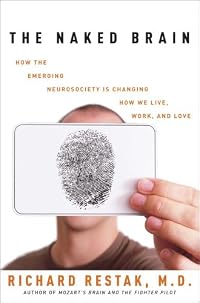
The Naked Brain: How the Emerging Neurosociety is Changing How We Live, Work, and Love
by Richard Restak M.D.
On This Page
Description
Consider a world in which • Marketers use brain scans to determine consumer interest in a product • Politicians use brain-image-based profiles to target voters • A test could determine your suitability for a job or to whom you will be romantically attracted Far from science fiction, this “neurosociety”—a society in which brain science influences every aspect of daily life—is already here. Innovative researchers and cutting-edge technology, like brain imaging and brain scanning show more devices, have revolutionized our understanding of how we process information, communicate, trust, sympathize, and love. However, scientists and doctors are not the only ones interested in the naked brain; advertisers, politicians, economists, and others are using the latest findings on the human brain to reshape our lives, from the bedroom to the boardroom. Despite the potential benefits, there’s obvious peril in the promise. Richard Restak explores the troubling moral and legal dilemmas that arise from corporate and political applications of this new brain research. Someday we may live in a world where our choices, our professional and personal prospects, even our morals and ethics will be controlled by those armed with an elite understanding of the principles of neuroscience. Eye-opening and provocative, The Naked Brain is a startling look at the impact such unprecedented access to our most secret thoughts and tendencies will have on all of us. In The Naked Brain, bestselling author Richard Restak explores how the latest technology and research have exposed the brain and how we think, feel, remember, and socialize in unprecedented and often surprising ways. Now that knowledge is being used by doctors, advertisers, politicians, and others to influence and revolutionize nearly every aspect of our daily lives. Restak is our guide to this neurosociety, a brave new world in which brain science influences our present and will even more tangibly shape our future. Citing social trends, shifts in popular culture, the rise and fall of products in the public favor, even changes in the American vernacular, The Naked Brain is an illuminating and often troubling investigation of the impending opportunities and dangers being created by the neuroscience revolution, and a revelation for anyone who ever wondered why they prefer Coke over Pepsi or Kerry over Bush. From the Hardcover edition. show lessTags
Recommendations




















Member Reviews
Clearly written, well-organized, by a scientist not a journalist. Good practical information with fairly up-to-date neuro-biology (think of it as advanced/modern psychology).
Fairly light exploration of emerging trends in neuroscience. Not as in depth as Freakonomics, and the research cited isn't explained in any great detail. It's OK.
An informative read for me a layman, but lack the depth that I'm looking for
Ratings
Members
- Recently Added By
Author Information

37+ Works 2,481 Members
He is a neuropsychiatrist and clinical professor of neurology at George Washington University Medical Center. Author of the bestselling The Brain, a companion to the PBS series of the same name, as well as The Mind and The Brain Has a Mind of Its Own, he lives in Washington, D.C. (Bowker Author Biography)
Some Editions
Common Knowledge
- Canonical title
- The Naked Brain: How the Emerging Neurosociety is Changing How We Live, Work, and Love
- Original publication date
- 2009-01-16
- Dedication
- To my mother, Alice Hynes Restak
- First words
- During the first half of the twenty-first century our understanding of the human brain will revolutionize how we think about ourselves and our interactions with other people. (Introduction)
As a first step in appreciating the impact of social neurosience, it helps to understand the power of imaging techniques to provide a windo into events happening within the brain. - Quotations
- Perhaps you're thinking that the amygdala response is the only indicator that is really important, the the "real person" is the one reflected by that automatic activation of the amygdala. If that's how you think, you're not... (show all) alone. That idea is commonly held in our culture. Typically, the argument goes something like this: Even though the "real" self may be momentarily "repressed" by more socially acceptable sentiments, it eventually emerges, oftentimes spontaneously and unbidden. According to this assumption, automatic responses reveal the "real" you, with the follow-up response entailing nothing more than an attempt to make nice. But when you think about it, why should those automatic responses over which we have no control be granted precedence over our more thoughtful reactions, which reflect our consciously espoused beliefs and value? In other word, is the real you accurately revealed on the basis of unbidden, transient, and unconscious thoughts that erupt over the span of milliseconds? Or is the real you the personality that emerges after your primitive automatic responses have been dealt with by your higher brain centers? (Chap. 4, "How our Brain Constructs Our Mental World"
[...] Bartels believes we may only be a few years away from a reliable means of chemically creating sexual attraction; "You can inject an animal with oxytocin and make it pair-bond with a stranger. All we need to do is appl... (show all)y it to humans." (Chap.10 "The Perils of the Neurosociety")
[the reader shudders at some of the uses to which this might be put] - Last words
- (Click to show. Warning: May contain spoilers.)To this extent, social neuroscience can provide us a path toward the achievement of both personal and collective liberation.
Classifications
Statistics
- Members
- 130
- Popularity
- 250,108
- Reviews
- 3
- Rating
- (3.70)
- Languages
- English
- Media
- Paper, Ebook
- ISBNs
- 4
- ASINs
- 1