On This Page
Description
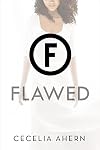
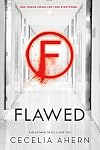
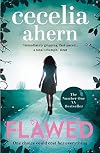
"In a future society where 'flawed' people who have committed crimes are branded with an F, a young girl takes a stand"--Tags
Recommendations










Member Reviews
Read: August 2018
Rating: 5/5 stars
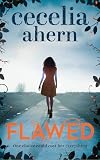
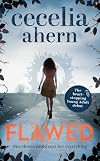
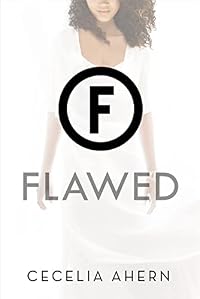
Flawed was first brought to my attention by my daughter when she bought it for herself about six months ago. When my daughter decided to de-clutter her bookshelves a few weeks ago Flawed was one of the books she put aside to donate to a charity shop. I thought the cover was really pretty and when I read the synopsis I decided to remove it from the ‘donate’ pile and moved it over to my bookshelves to keep for myself!
The premise really intrigued me; a dystopian future society where a person can be judged and branded as a ‘flawed’ human being for decisions or actions that – while not illegal – are immoral or unethical. As there are no rules for how not to be flawed, everyone lives with a show more heightened sense of having to be ‘perfect’ lest their actions, however innocently intended, lead them to be judged as flawed. Once branded with the ‘F’ symbol, those people become second class citizens with restrictions on travel, jobs and even on having families with each other – two flawed people who have a baby together risk having that baby taken away to allow it to grow up without the influence of its morally corrupt parents.
Our protagonist is Celeste, a teenage girl who has grown up with, and is comfortable in her society. She doesn’t make waves or rebel or stand out from the crowd in any way. She believes she knows her place in the world and what her future holds and she’s happy with it until one day she meets a flawed person and behaves compassionately towards him. This compassion has unforeseen, horrific consequences for Celeste and her family and she is forced to confront the fact that the society she has always accepted as right and good is actually very wrong indeed.
When I first read the premise for the book, I was immediately reminded of Uglies by Scott Westerfeld which provides a great comparison and contrast to Flawed. One deals with inner perfection as the ideal and the other with outer perfection, never mind the morality of anything. I really enjoyed reading Flawed; I think Ahern makes an interesting point about society and where we are heading in reality and I am looking forward to reading the sequel. show less
Rating: 5/5 stars
Flawed was first brought to my attention by my daughter when she bought it for herself about six months ago. When my daughter decided to de-clutter her bookshelves a few weeks ago Flawed was one of the books she put aside to donate to a charity shop. I thought the cover was really pretty and when I read the synopsis I decided to remove it from the ‘donate’ pile and moved it over to my bookshelves to keep for myself!
The premise really intrigued me; a dystopian future society where a person can be judged and branded as a ‘flawed’ human being for decisions or actions that – while not illegal – are immoral or unethical. As there are no rules for how not to be flawed, everyone lives with a show more heightened sense of having to be ‘perfect’ lest their actions, however innocently intended, lead them to be judged as flawed. Once branded with the ‘F’ symbol, those people become second class citizens with restrictions on travel, jobs and even on having families with each other – two flawed people who have a baby together risk having that baby taken away to allow it to grow up without the influence of its morally corrupt parents.
Our protagonist is Celeste, a teenage girl who has grown up with, and is comfortable in her society. She doesn’t make waves or rebel or stand out from the crowd in any way. She believes she knows her place in the world and what her future holds and she’s happy with it until one day she meets a flawed person and behaves compassionately towards him. This compassion has unforeseen, horrific consequences for Celeste and her family and she is forced to confront the fact that the society she has always accepted as right and good is actually very wrong indeed.
When I first read the premise for the book, I was immediately reminded of Uglies by Scott Westerfeld which provides a great comparison and contrast to Flawed. One deals with inner perfection as the ideal and the other with outer perfection, never mind the morality of anything. I really enjoyed reading Flawed; I think Ahern makes an interesting point about society and where we are heading in reality and I am looking forward to reading the sequel. show less
This is an interesting dystopian setting where any “flaw” in behavior gets you permanently branded and cast out in society, a la the “A” in “The Scarlet Letter.” Celestine starts out dating the son of one of the behavioral judges, but after she helps an elderly man on a bus who happens to be “flawed” she is cast out as well. Very engaging writing and excellent pacing.
Author Ceceila Ahern does a brilliant job of getting down to the meat of feelings and trauma and examining how Celestine has had her former life ripped away from her in a split second. Really, she could be talking about so many life events, and the visceral way each moment of shame, anger, rage and terror is described is so well done.
Please excuse show more typos/name misspellings. Entered on screen reader. show less
Author Ceceila Ahern does a brilliant job of getting down to the meat of feelings and trauma and examining how Celestine has had her former life ripped away from her in a split second. Really, she could be talking about so many life events, and the visceral way each moment of shame, anger, rage and terror is described is so well done.
Please excuse show more typos/name misspellings. Entered on screen reader. show less
Flawed by Cecelia Ahern introduces readers to a gripping dystopian world where perfection reigns supreme and even the smallest errors bring life-shattering consequences. In this meticulously crafted narrative, the author vividly illustrates a society plagued by rigid conformity and the chilling power of the Guild, an organization that ruthlessly enforces moral standards. The story revolves around Celestine North, whose journey from model citizen to pariah is portrayed with heart-wrenching authenticity.
Ahern skillfully explores profound themes of individuality, ethics, and societal conformity, all while maintaining impeccable pacing and tension. This thought-provoking tale is a stirring reminder of the perils of blind adherence to norms show more and an engaging exploration of a teenager's courage and rebellion. Flawed is a must-read that seamlessly weaves together elements of bullying, corruption, family drama, and the relentless pursuit of perfection. Highly recommended for those seeking a captivating and socially relevant narrative.
Read the detailed review here - Books Charming show less
Ahern skillfully explores profound themes of individuality, ethics, and societal conformity, all while maintaining impeccable pacing and tension. This thought-provoking tale is a stirring reminder of the perils of blind adherence to norms show more and an engaging exploration of a teenager's courage and rebellion. Flawed is a must-read that seamlessly weaves together elements of bullying, corruption, family drama, and the relentless pursuit of perfection. Highly recommended for those seeking a captivating and socially relevant narrative.
Read the detailed review here - Books Charming show less
On the outset, I was disappointed, thinking this was 'Scarlet Letter' meets 'Divergent', yet not with the faction less, instead with the Flawed. Although there are some similarities in this dystopian novel, there are originalities too, which is what prodded me onward, and I'm glad they did.
In Celestine's country, there is a difference between being a criminal and being flawed. If you are found guilty of being morally or ethically flawed, you are branded, need to wear an armband and have to live by a different set of rules than the rest of society. I was reminiscent of the Civil Rights Movement, Jim Crow Laws, Amish and shunning, and the Jewish plight during the onset of the Holocaust. There's a great mix of all of these atrocities that show more make up the experience of the Flawed and those that discriminate against them. The Guild, or 'Purveyors of Perfection' are those who judge, and Judge Crevan in particular seems to have absolute power, and you know what they say about that! It's a good thing we don't live in this dystopian society, as the mistakes that mark growing up and living are the very things in which we'd all be judged as 'Flawed'.
Celestine is a strong and interesting girl- the epitome of Type A personality, she follows the rules, everything is black and white, until one fateful day when compassion and human decency infringe on her conscience, and she'll never be the same. Sometimes it takes bravery and strength to do the right thing, which Celestine does in spades. She realizes that it 'takes courage to overcome, but it takes extreme fear to be courageous," as she endures barbarities that no person should have to go through.
Quickly, the fear and oppression Celestine has weathered from the one she thought could help her, but who turns into her maniacal oppressor, turns to anger and defiance at the horrendous situation in which she finds both herself and the Flawed in general. There is an uprising brewing, and Celestine finds herself toted as the poster girl for the persecuted, all because she does what feels right, and humane. She also has her own revengeful reasons for bringing down the Guild, and Judge Crevan in particular, but staying safe and finding the proof is going to prove challenging.
Ahern has written a fabulous YA dystopian novel, which does have hints of other novels out there, but proves its worth in its originality and engaging characters. It definitely stirred my passion for justice, and I'm now waiting with baited breath for the next installment of 'Flawed'!
*I received an arc for an honest review show less
In Celestine's country, there is a difference between being a criminal and being flawed. If you are found guilty of being morally or ethically flawed, you are branded, need to wear an armband and have to live by a different set of rules than the rest of society. I was reminiscent of the Civil Rights Movement, Jim Crow Laws, Amish and shunning, and the Jewish plight during the onset of the Holocaust. There's a great mix of all of these atrocities that show more make up the experience of the Flawed and those that discriminate against them. The Guild, or 'Purveyors of Perfection' are those who judge, and Judge Crevan in particular seems to have absolute power, and you know what they say about that! It's a good thing we don't live in this dystopian society, as the mistakes that mark growing up and living are the very things in which we'd all be judged as 'Flawed'.
Celestine is a strong and interesting girl- the epitome of Type A personality, she follows the rules, everything is black and white, until one fateful day when compassion and human decency infringe on her conscience, and she'll never be the same. Sometimes it takes bravery and strength to do the right thing, which Celestine does in spades. She realizes that it 'takes courage to overcome, but it takes extreme fear to be courageous," as she endures barbarities that no person should have to go through.
Quickly, the fear and oppression Celestine has weathered from the one she thought could help her, but who turns into her maniacal oppressor, turns to anger and defiance at the horrendous situation in which she finds both herself and the Flawed in general. There is an uprising brewing, and Celestine finds herself toted as the poster girl for the persecuted, all because she does what feels right, and humane. She also has her own revengeful reasons for bringing down the Guild, and Judge Crevan in particular, but staying safe and finding the proof is going to prove challenging.
Ahern has written a fabulous YA dystopian novel, which does have hints of other novels out there, but proves its worth in its originality and engaging characters. It definitely stirred my passion for justice, and I'm now waiting with baited breath for the next installment of 'Flawed'!
*I received an arc for an honest review show less
This will be a negative review - my personal, subjective negative review,- so if you liked the book let's just agree to disagree.
So, we have a community that sees anybody less than perfect as a danger to society. Something with greedy, deceitful and corrupted leaders who had ruined the economy and almost brought the country to an end. And now the community's purity is guarded by an organization that separates righteous from the tainted by branding them Flawed.
Made a mistake in your sales report? Flawed! Agreed to help someone end his/her life? Flawed! Not pleasing enough, so your poor husband cheated on you? Flawed! Talked to a Flawed person? Flawed! Now go get yourself branded and live the rest of your life as a social pariah, eating show more basic food (nooooooooo), obeying the curfew limitations, being prohibited from travelling, sitting on the only two allowed sits in the bus and other untouchables' stuff.
Here enters our mc, Celestine, - a perfect, law-abiding, straight A citizen - and gets herself into trouble. And, as the story usually goes, she starts to question the status quo, and her life turns upside down, and she becomes a pawn in some political game and doesn't even know now who she likes more, the old-time friend and freshly made boyfriend or this new dark-eyed branded guy.
I'll be honest, I felt no chemistry with [b:Flawed|23438288|Flawed (Flawed, #1)|Cecelia Ahern|https://d.gr-assets.com/books/1433842801s/23438288.jpg|43002885] from the very beginning. And I knew exactly what put me off. It was my first book by Cecelia Ahern and I honestly hope her other books deserve all the praises they received, but, well, Flawed was flat. Flat and disappointingly unchallenging. But the book is due to release in the beginning of April, 2016, and you know how tempting it is to be in the know while others are still in torturous waiting.
To those readers who have preferences in regards to the POV, the story is told via the mc - which required Celestine to be at least relatable if not charismatic. But while even she described herself as rational, logical and grammar-correcting girl, I couldn't help but dislike her at once. And the issue was not only with the writing, it's the way we are introduced to her character that makes further sympathizing troublesome. Ahern pushed Celestine's transformation too soon, not giving the reader enough time to get to know old Celestine. This prevents you to feel for her, to perceive her struggle as something more than a teen's longing to be special. Naturally, the same went for the way she lead the narration. Her story was eventful, descriptions detailed, musings coherent. But not deep or revealing enough to feel real.
I read the words, understood their meaning but never was given a chance to imagine something more than what was written. Like a screenplay without actors to breathe life into it. No thought-provoking insights, no free-diving into the characters, no open space for speculations. You just get what you read.
The premise of the book was rather promising, really. But in the same way as Flawed's fictional community didn't allow its citizens to deviate from the established norms and, thus, learning and getting to know themselves, the rather insipid execution of the novel didn't offer an opportunity to imagine and enrich the story with your own personal discoveries, ideas and conclusions. show less
So, we have a community that sees anybody less than perfect as a danger to society. Something with greedy, deceitful and corrupted leaders who had ruined the economy and almost brought the country to an end. And now the community's purity is guarded by an organization that separates righteous from the tainted by branding them Flawed.
Made a mistake in your sales report? Flawed! Agreed to help someone end his/her life? Flawed! Not pleasing enough, so your poor husband cheated on you? Flawed! Talked to a Flawed person? Flawed! Now go get yourself branded and live the rest of your life as a social pariah, eating show more basic food (nooooooooo), obeying the curfew limitations, being prohibited from travelling, sitting on the only two allowed sits in the bus and other untouchables' stuff.
Here enters our mc, Celestine, - a perfect, law-abiding, straight A citizen - and gets herself into trouble. And, as the story usually goes, she starts to question the status quo, and her life turns upside down, and she becomes a pawn in some political game and doesn't even know now who she likes more, the old-time friend and freshly made boyfriend or this new dark-eyed branded guy.
I'll be honest, I felt no chemistry with [b:Flawed|23438288|Flawed (Flawed, #1)|Cecelia Ahern|https://d.gr-assets.com/books/1433842801s/23438288.jpg|43002885] from the very beginning. And I knew exactly what put me off. It was my first book by Cecelia Ahern and I honestly hope her other books deserve all the praises they received, but, well, Flawed was flat. Flat and disappointingly unchallenging. But the book is due to release in the beginning of April, 2016, and you know how tempting it is to be in the know while others are still in torturous waiting.
To those readers who have preferences in regards to the POV, the story is told via the mc - which required Celestine to be at least relatable if not charismatic. But while even she described herself as rational, logical and grammar-correcting girl, I couldn't help but dislike her at once. And the issue was not only with the writing, it's the way we are introduced to her character that makes further sympathizing troublesome. Ahern pushed Celestine's transformation too soon, not giving the reader enough time to get to know old Celestine. This prevents you to feel for her, to perceive her struggle as something more than a teen's longing to be special. Naturally, the same went for the way she lead the narration. Her story was eventful, descriptions detailed, musings coherent. But not deep or revealing enough to feel real.
I read the words, understood their meaning but never was given a chance to imagine something more than what was written. Like a screenplay without actors to breathe life into it. No thought-provoking insights, no free-diving into the characters, no open space for speculations. You just get what you read.
The premise of the book was rather promising, really. But in the same way as Flawed's fictional community didn't allow its citizens to deviate from the established norms and, thus, learning and getting to know themselves, the rather insipid execution of the novel didn't offer an opportunity to imagine and enrich the story with your own personal discoveries, ideas and conclusions. show less
As the risk of starting this review with a bit of a bad pun... Flawed is inherently... flawed.
I'll start with the good. The concept of this dystopian world is fascinating and not so outlandish it couldn't be possible. There's a great pressure to fulfill a sort of expectation as human culture evolves, and with with rise of social media, the pressure to keep up with others and to be perceived as perfect grows and grows. So why not take it a step further - create visible brands for those who are imperfect, so they can't hide it and we know? That way, we could avoid the "scum of the earth" and make strides toward a more perfect version of humanity.
This is all interesting, and the bare bones of it are well conceived. But beyond the idea, show more beyond the ticking clock of Celestine's courtroom case... the story begins to unravel. There's not a lot of support for this society, and things shift too quickly. Even Celestine herself, an outspoken supporter of the Flawed system, finds herself completely changing her worldview after a single, seemingly inconsequential event. And, somehow, this girl inspires the country? The plot pieces fall too perfectly into place without anything substatial to support the change.
Similarly, the characters are shallow. They chase their minds and change their stories at a moment's notice to serve the author's grand design of the story... no motivation required. It was impossible to care about the characters because they never went more than words. They lacked a multifaceted depth that made them relatable. So many characters seemed to appear solely to create a subplot. Subplots that never blossomed into fruition, to my opinion.
The story moved along quickly enough, so I'll give it points in that respect. I'm not sure if the general shallowness was because of Cecelia Ahern's writing, or if she's just better suited to her usual adult novels instead of YA. It just didn't grip me as much as I felt like it should.
As a whole, there's a lot of potential in Flawed, but it failed to follow through. The elements were there, but the lack of depth in characters and the apparent whimsy in the plot shifts are dealbreakers for me. I appreciate the idea, but as a package, this did not work for me. I won't be adding the sequel to my TBR. show less
I'll start with the good. The concept of this dystopian world is fascinating and not so outlandish it couldn't be possible. There's a great pressure to fulfill a sort of expectation as human culture evolves, and with with rise of social media, the pressure to keep up with others and to be perceived as perfect grows and grows. So why not take it a step further - create visible brands for those who are imperfect, so they can't hide it and we know? That way, we could avoid the "scum of the earth" and make strides toward a more perfect version of humanity.
This is all interesting, and the bare bones of it are well conceived. But beyond the idea, show more beyond the ticking clock of Celestine's courtroom case... the story begins to unravel. There's not a lot of support for this society, and things shift too quickly. Even Celestine herself, an outspoken supporter of the Flawed system, finds herself completely changing her worldview after a single, seemingly inconsequential event. And, somehow, this girl inspires the country? The plot pieces fall too perfectly into place without anything substatial to support the change.
Similarly, the characters are shallow. They chase their minds and change their stories at a moment's notice to serve the author's grand design of the story... no motivation required. It was impossible to care about the characters because they never went more than words. They lacked a multifaceted depth that made them relatable. So many characters seemed to appear solely to create a subplot. Subplots that never blossomed into fruition, to my opinion.
The story moved along quickly enough, so I'll give it points in that respect. I'm not sure if the general shallowness was because of Cecelia Ahern's writing, or if she's just better suited to her usual adult novels instead of YA. It just didn't grip me as much as I felt like it should.
As a whole, there's a lot of potential in Flawed, but it failed to follow through. The elements were there, but the lack of depth in characters and the apparent whimsy in the plot shifts are dealbreakers for me. I appreciate the idea, but as a package, this did not work for me. I won't be adding the sequel to my TBR. show less
I'll start with the TL;DR: unless you are committed to reading the gamut of dystopian YA published this year, don't waste your time on this one; there are much better options out there. At the same time, it's not entirely devoid of charm, and there are much worse ways to spend a few hours.
This was one of 3 recent YA fantasy or speculative fiction series debuts that I had in my TBR, so I decided to devote this weekend to them. This was the first I read, because I have a lot of respect for Cecelia Ahern's prodigious chick lit output and was eager to see what she'd do with YA.
A brief aside: the speculative/dystopian YA genre has gotten pretty crowded. In my opinion, to succeed in this field, you need a really strong, inspiring main show more character, a tight, well-thought-out and creative premise, and -- because it's YA -- a little bit of a commitment to melodrama. Teenagers' emotions and hormones run high, and I think talented YA writers can be faithful to that without seeming forced or ridiculous.
Unfortunately, Ahern fails in the first two categories, though she nails the third one.
Her protagonist, Celestine, is confusing -- and not in a good, complex way, but in a frustratingly inconsistent way. She tells us over and over that she's a by-the-book girl who has always followed all of the rules, but then with virtually no hesitation, she throws out all the rules in a moment to offer some fairly minimal assistance to a total stranger. The conversion from good girl to rebel was, for me, wildly unconvincing.
Wait, you might be saying. Why is it rebellious to offer assistance to a stranger (in this case, helping a sick man find a seat on a bus)? (And if it is, isn't the obvious comparison to Rosa Parks just a little bit uncomfortable?)
Glad you asked. I tried so very hard to buy into the premise of this book, because it's creative and has some interesting possibilities, and I really wanted to be swept up into the world of the book. In this world, anyone who tells a tiny lie, or makes a bad business decision, gets hauled before a tribunal and declared "Flawed," whereupon they are branded and forced to live by a strict set of rules, of which plain food and curfews seem to be the most salient. The obvious question is, how does society continue to function? If you tell a lie or are seen helping someone who's Flawed, teams of Whistleblowers literally swoop down and carry you away, and there's an enormous expenditure of time and manpower to put you through a trial and then essentially remove you from the consumer structure, which has to be terrible for the economy.
Then the inconsistencies start. The Flawless can be imprisoned for helping the Flawed, and the Flawed are so shunned that they have to be buried in separate graveyards and people shrink from (or spit at) them in public... And yet Flawed and Flawless people apparently marry and procreate and live together all the time.
More troublingly, in what seems like an obsessively rule-conscious society, Celestine's judge goes absolutely off the deep end when she admits what she did, andnot only hands down a sentence that is dramatically more serious than apparently the most serious sentence in the history of the commission, but starts demanding that the punishment administrators give her additional, unsanctioned punishments. Maybe he thinks he's beyond the law, but it seems strangely easy for him to break rules without consequences, and that just doesn't seem to fit in the world of the book.
Ahern does nail the melodramatic teen inner monologue, though, and I liked Celestine much better when I was in her head than when I was watching her more inexplicable actions unfold.
However, I hated the "love triangle." Yes, it's a staple of the YA genre, but that doesn't mean it needs to be in every story. Here, Celestine has a boyfriend she's madly in love with, and who's madly in love with her. Plenty of romance. But for reasons that I assume will become apparent in the sequel, Ahern forces Celestine todevelop an odd puppy love for a fellow prisoner -- whom she sees for maybe three days total, and speaks to maybe once. But there's heavy foreshadowing that he will rescue her! And together, they will fight the forces of darkness! Poor boyfriend doesn't stand a chance.
At the end of the day, though, I do want to see Celestine triumph over the unrealistically evil judge and change her unrealistically draconian society. There's a fair to middling chance I'll pick up the next book if it catches me at the right time.
Note: I received a complimentary copy of this ebook from the publisher in exchange for my honest review. show less
This was one of 3 recent YA fantasy or speculative fiction series debuts that I had in my TBR, so I decided to devote this weekend to them. This was the first I read, because I have a lot of respect for Cecelia Ahern's prodigious chick lit output and was eager to see what she'd do with YA.
A brief aside: the speculative/dystopian YA genre has gotten pretty crowded. In my opinion, to succeed in this field, you need a really strong, inspiring main show more character, a tight, well-thought-out and creative premise, and -- because it's YA -- a little bit of a commitment to melodrama. Teenagers' emotions and hormones run high, and I think talented YA writers can be faithful to that without seeming forced or ridiculous.
Unfortunately, Ahern fails in the first two categories, though she nails the third one.
Her protagonist, Celestine, is confusing -- and not in a good, complex way, but in a frustratingly inconsistent way. She tells us over and over that she's a by-the-book girl who has always followed all of the rules, but then with virtually no hesitation, she throws out all the rules in a moment to offer some fairly minimal assistance to a total stranger. The conversion from good girl to rebel was, for me, wildly unconvincing.
Wait, you might be saying. Why is it rebellious to offer assistance to a stranger (in this case, helping a sick man find a seat on a bus)? (And if it is, isn't the obvious comparison to Rosa Parks just a little bit uncomfortable?)
Glad you asked. I tried so very hard to buy into the premise of this book, because it's creative and has some interesting possibilities, and I really wanted to be swept up into the world of the book. In this world, anyone who tells a tiny lie, or makes a bad business decision, gets hauled before a tribunal and declared "Flawed," whereupon they are branded and forced to live by a strict set of rules, of which plain food and curfews seem to be the most salient. The obvious question is, how does society continue to function? If you tell a lie or are seen helping someone who's Flawed, teams of Whistleblowers literally swoop down and carry you away, and there's an enormous expenditure of time and manpower to put you through a trial and then essentially remove you from the consumer structure, which has to be terrible for the economy.
Then the inconsistencies start. The Flawless can be imprisoned for helping the Flawed, and the Flawed are so shunned that they have to be buried in separate graveyards and people shrink from (or spit at) them in public... And yet Flawed and Flawless people apparently marry and procreate and live together all the time.
More troublingly, in what seems like an obsessively rule-conscious society, Celestine's judge goes absolutely off the deep end when she admits what she did, and
Ahern does nail the melodramatic teen inner monologue, though, and I liked Celestine much better when I was in her head than when I was watching her more inexplicable actions unfold.
However, I hated the "love triangle." Yes, it's a staple of the YA genre, but that doesn't mean it needs to be in every story. Here, Celestine has a boyfriend she's madly in love with, and who's madly in love with her. Plenty of romance. But for reasons that I assume will become apparent in the sequel, Ahern forces Celestine to
At the end of the day, though, I do want to see Celestine triumph over the unrealistically evil judge and change her unrealistically draconian society. There's a fair to middling chance I'll pick up the next book if it catches me at the right time.
Note: I received a complimentary copy of this ebook from the publisher in exchange for my honest review. show less
Members
- Recently Added By
Lists

Science Fiction
72 works; 1 member
Author Information

83+ Works 24,008 Members
Cecelia Ahern was born on September 30, 1981 in Dublin, Ireland. She received a degree in journalism and media communications from Griffith College Dublin. She wrote her first novel PS, I Love You at the age of 21. This novel was made into a movie starring Hilary Swank. Some of her other novels include If You Could See Me Now, A Place Called Here, show more There's No Place Like Here, and Thanks for the Memories. She won the 2005 Irish Post Award for Literature and a 2005 Corine Award for Where Rainbows End. She is also the co-creator and producer of the television show Samantha Who? (Bowker Author Biography) show less
Awards and Honors
Awards
Distinctions
Series

Common Knowledge
- Canonical title
- Flawed
- Original title
- Flawed
- Original publication date
- 2016-03-03
- People/Characters
- Celestine North; Bosco Crevan; Art Crevan; Carrick Vane; Angelina Tinder
- Dedication
- For you, Dad.
- First words
- I am a girl of definitions, of logic, of black and white. Remember this.
- Quotations
- I am a girl of definitions, of logic, of black and white. Remember this.
- Last words
- (Click to show. Warning: May contain spoilers.)I run.
- Original language
- English
Classifications
- Genres
- Teen, Fiction and Literature, Young Adult, Science Fiction
- DDC/MDS
- 823.92 — Literature & rhetoric English & Old English literatures English fiction 1900- 2000-
- LCC
- PZ7.1 .A33 .F — Language and Literature Fiction and juvenile belles lettres Fiction and juvenile belles lettres Juvenile belles lettres
- BISAC
Statistics
- Members
- 943
- Popularity
- 28,026
- Reviews
- 32
- Rating
- (3.90)
- Languages
- 9 — Danish, English, French, German, Italian, Polish, Portuguese (Portugal), Romanian, Spanish
- Media
- Paper, Audiobook, Ebook
- ISBNs
- 33
- ASINs
- 9