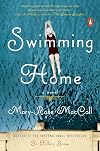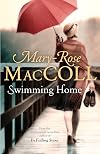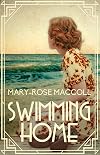
Swimming Home: A Novel
by Mary-Rose MacColl
On This Page
Description
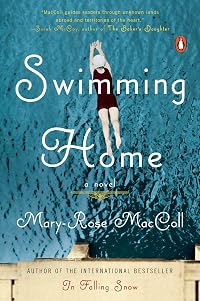
From the author of the international bestseller In Falling Snow, a beautifully written, heartwarming novel of a young woman swimmer in 1925 London 1925: Fifteen-year-old Catherine Quick longs to feel once more the warm waters of her home, to strike out into the ocean off the Torres Strait Islands in Australia and swim, as she's done since she was a child. But now, orphaned and living with her aunt Louisa in London, Catherine feels that everything she values has been stripped away from her. show more Louisa, a London surgeon who fought boldly for equality for women, holds strict views on the behavior of her young niece. She wants Catherine to pursue an education, just as she herself did. Catherine is rebellious, and Louisa finds it difficult to block painful memories from her past. It takes the enigmatic American banker Manfred Lear Black to convince Louisa to bring Catherine to New York where Catherine can train to become the first woman to swim the English Channel. And finally, Louisa begins to listen to what her own heart tells her. show lessTags
Recommendations
























Member Reviews
Swimming Home is the sixth novel by Mary-Rose MacColl, her previous book In Falling Snow was a favourite read of mine in 2012.
Exploring the themes of family, belonging, regret, and redemption, Swimming Home is a gracious and engaging novel.
When fifteen year old Catherine is orphaned, her aunt, Dr Louisa Quick, insists she abandons her idyllic island home in the Torres Strait and move with her to London. An independent and busy surgeon, Louisa is determined to provide her niece with the opportunity to become a well educated and successful young lady, but Catherine is miserable in her exclusive day school, missing the warmth of her Islander family, and the ocean. It's not until Catherine swims the width of the Thames on a dare and Louisa show more is approached by the enigmatic banker Manfred Lear Black, that she reconsiders her plans for her niece.
As a doctor, Louisa is intelligent and confident, but she struggles to relate to her niece and, uncomfortable with emotion, she makes some poor decisions when it comes to seeing to Catherine's well being. Though there is no malice intended, Louisa's actions have far reaching consequences and she suffers a crisis of conscience as the novel progresses. Louisa is not a particularly likeable character at times but I think MacColl portrays her well, and I was sympathetic to her flaws.
Catherine is resigned to her new life in London and wants to please her aunt, but she is lonely and homesick. Having spent almost everyday of her life swimming in the ocean, she jumps at the chance to swim to under Manfred Lear Black's patronage in New York. I felt for Catherine, whose loving and idyllic childhood came to such an abrupt end. She is remarkably stoic, but her longing is palpable and she obviously feels out of place, London contrasts sharply with her island home, as does the New York 'tanks' to her beloved ocean.
There are two subtle threads of mystery that run through the story, and a few surprises in the plot though Swimming Home progresses at a measured pace. What action there is stems largely from the Black's determination that Catherine will be the first woman to swim the breadth of the English Channel. MacColl weaves fiction with fact as she writes of Catherine's competitors, including Gertrude Ederle who was the first woman to swim the channel in 1926 and I enjoyed learning something about the birth of competitive swimming for women.
Set in an interesting period, with complex characters and a thoughtful story, Swimming Home is a finely written, poignant and pensive, but ultimately uplifting novel. show less
Exploring the themes of family, belonging, regret, and redemption, Swimming Home is a gracious and engaging novel.
When fifteen year old Catherine is orphaned, her aunt, Dr Louisa Quick, insists she abandons her idyllic island home in the Torres Strait and move with her to London. An independent and busy surgeon, Louisa is determined to provide her niece with the opportunity to become a well educated and successful young lady, but Catherine is miserable in her exclusive day school, missing the warmth of her Islander family, and the ocean. It's not until Catherine swims the width of the Thames on a dare and Louisa show more is approached by the enigmatic banker Manfred Lear Black, that she reconsiders her plans for her niece.
As a doctor, Louisa is intelligent and confident, but she struggles to relate to her niece and, uncomfortable with emotion, she makes some poor decisions when it comes to seeing to Catherine's well being. Though there is no malice intended, Louisa's actions have far reaching consequences and she suffers a crisis of conscience as the novel progresses. Louisa is not a particularly likeable character at times but I think MacColl portrays her well, and I was sympathetic to her flaws.
Catherine is resigned to her new life in London and wants to please her aunt, but she is lonely and homesick. Having spent almost everyday of her life swimming in the ocean, she jumps at the chance to swim to under Manfred Lear Black's patronage in New York. I felt for Catherine, whose loving and idyllic childhood came to such an abrupt end. She is remarkably stoic, but her longing is palpable and she obviously feels out of place, London contrasts sharply with her island home, as does the New York 'tanks' to her beloved ocean.
There are two subtle threads of mystery that run through the story, and a few surprises in the plot though Swimming Home progresses at a measured pace. What action there is stems largely from the Black's determination that Catherine will be the first woman to swim the breadth of the English Channel. MacColl weaves fiction with fact as she writes of Catherine's competitors, including Gertrude Ederle who was the first woman to swim the channel in 1926 and I enjoyed learning something about the birth of competitive swimming for women.
Set in an interesting period, with complex characters and a thoughtful story, Swimming Home is a finely written, poignant and pensive, but ultimately uplifting novel. show less
I read this book by mistake - don't usually read historical fiction. (I thought it was the book, of the same title, by Deborah Levy, that I had already read and didn't really care for!). When I realized it was set in the 1920s I was disappointed, but despite all that it was pretty good. Interesting dynamics between the much freer Australian and the up-tight English doctor. And the swimming parts were very good.
Some great themes here: girl power, women's rights regarding their bodies, imperialism vs. cultural identity, all handled with a light touch and an engaging story. It is 1925 -- the scandalous beginning of true modernization of short hair and short skirts, jazz music and loosened strictures about men and women mixing. Dr. Louisa Quick is a competent surgeon, but a much less competent guardian of her niece Catherine who has newly moved to London from Australia after the death of her father, Harry, Louisa's brother. At 15, Catherine is naive, but accomplished in school subjects, which Louisa values, and in swimming, which she does not. Raised on Thursday Island, Catherine had grown up without a mother, but had Florence a native show more housekeeper and Michael her son, who has been like a brother to here. After Harry's sudden death and her subsequent move to London, Catherine is adrift without the anchors of her home life. Staying on the island was never an option to Louisa, who viewed the school there and the life through the lens of British superiority. With the help of her own housekeeper Nellie, Louisa begins to see the depths of Catherine's unhappiness and how she patently does not fit in at her London all girls' school where the cattiness of fellow students and sternness of instructors is counter-intuitive to everything Catherine knows. When she swims across the Thames in a desperate bid for friendship and approval, she is expelled but is also propelled into the limelight and the attention of Manfred Lear Black (an historically accurate character). He believes she can be the first woman to swim the English Channel and the remainder of the story becomes about her quest to do it. Because she is so guileless, Catherine wants to do it for the thrill of swimming and testing herself and pleasing Black rather than the fame and fortune it would bring her. Louisa is uncertain, but sees the positive impact swimming has on her charge, even as she is withholding letters from Florence and Michael in the hope it will make Catherine forget them and move on with her life. She has her own interest in Black who has promised to fund her medical clinic and has also pursued her as a love interest. Though Louisa has been forward-thinking and revolutionary in her own time, place and field, she has trouble extending this attitude toward the Island inhabitants and Catherine herself. She understood that "Poverty did not discriminate between good and bad, clean and dirty, caring and uncaring, or intelligent and stupid. It only changed things like having a roof over your head or not, having enough to eat each day or not." (179) Watching Louisa's growth and Catherine's accomplishment is very satisfying reading and heartening ending. show less
3.5 stars rounded up to 4. I enjoyed this story and the glimpse it offered into the 1920's, and what it was like for women in these changing times and the struggles they still had to endure even after winning the right to vote, as well as practice medicine. I also enjoyed the characters, and would have given this book 4 or even 4.5 stars, however there was a twist near the end that I frankly felt was absolutely unnecessary, even detrimental to the story. Still an overall enjoyable story about a girl who loves to swim.
I really enjoyed Mary-Rose MacColl’s previous book, In Falling Snow, so asking for this book for Christmas was a no-brainer. Once again, it’s historical fiction, taking lesser known aspects of history and forming an intriguing novel. Swimming Home is about a female surgeon in the 1920s, Louisa and her ward, Catherine, a powerful long distance swimmer in the day where ladies didn’t do that kind of thing. It’s eye-opening as to the lack of options for women less than 100 years ago in career and sport choices.
The story opens as Louisa is called out from her clinic. She’s a busy career woman who has no time for love – her heart is in medicine after an unfortunate affair with one of her teachers as a student. Louisa feels marked show more and shamed by that affair, perhaps that is why she is wholly devoted to raising funds for her clinic and caring for the people of London’s East End. What Louisa doesn’t realise is that she’s been called to see her ward Catherine (her brother’s daughter) swim across the Thames. She’s shocked at Catherine’s behaviour – Louisa knew she was a devoted swimmer from her youth in the Torres Strait Islands, but really? A woman swimming in London? It’s just another thing for her to deal with. Louisa wants to do things right for the people she loves, but her motivations can be misguided. She made a decision on behalf of a young girl she later took on as a maid and she wants to keep Catherine out of trouble and accept her new home, so she withholds letters from Catherine’s best friend.
Enter wealthy entrepreneur Manfred Lear Black. He’s seen Catherine swim, now he wants to take her to New York to practise for swimming the English Channel. Louisa is reluctant, but decides to give it a go, especially as her clinic will also benefit. For Catherine, the trip is both joyous and heartbreaking. She makes a friend, yet she’s told that her swimming style is all wrong. Plus she has to swim in a ‘tank’ (aka pool) rather than in the open water. But is racing what she wants or what other people want from her?
I found the story interesting from the point of view of Catherine’s journey. I knew very little about the history of female swimming and the difficulties of it being recognised as a serious sport (other than publishing pictures of women in swimming costumes). Louisa was more difficult for me, as she’s not particularly likeable initially. While I could understand her reasons for withholding information for Catherine, I didn’t agree with it and could foresee it was going to end poorly. The mystery aspects were also a little strange for me – Mr Black’s revelation was strange to me. It fit in with his motivations but it had too many holes compared to what really happened (which was also a bit weird). Plus it made his character seem kind of creepy (maybe he was in it for the swimming costumes)! It was revealed, then we found out what was meant to be the real story and he was never mentioned again. I was a bit confused as to what happened to Louisa’s brother and his wife – what was the real story?
The parts of the book that shone for me were the scenes on Thursday Island. The writing was powerfully evocative, bringing scenes of the ocean and the heat and humidity to mind. It also had a feeling that life was simple, direct and true in direct comparison to London which was grey, cold and cloying. While Swimming Home did not capture my heart in quite the same way that In Falling Snow did, I’ll be on the lookout for Mary-Rose MacColl’s next book. She takes forgotten pieces of history and brings them to the forefront of readers’ minds.
http://samstillreading.wordpress.com show less
The story opens as Louisa is called out from her clinic. She’s a busy career woman who has no time for love – her heart is in medicine after an unfortunate affair with one of her teachers as a student. Louisa feels marked show more and shamed by that affair, perhaps that is why she is wholly devoted to raising funds for her clinic and caring for the people of London’s East End. What Louisa doesn’t realise is that she’s been called to see her ward Catherine (her brother’s daughter) swim across the Thames. She’s shocked at Catherine’s behaviour – Louisa knew she was a devoted swimmer from her youth in the Torres Strait Islands, but really? A woman swimming in London? It’s just another thing for her to deal with. Louisa wants to do things right for the people she loves, but her motivations can be misguided. She made a decision on behalf of a young girl she later took on as a maid and she wants to keep Catherine out of trouble and accept her new home, so she withholds letters from Catherine’s best friend.
Enter wealthy entrepreneur Manfred Lear Black. He’s seen Catherine swim, now he wants to take her to New York to practise for swimming the English Channel. Louisa is reluctant, but decides to give it a go, especially as her clinic will also benefit. For Catherine, the trip is both joyous and heartbreaking. She makes a friend, yet she’s told that her swimming style is all wrong. Plus she has to swim in a ‘tank’ (aka pool) rather than in the open water. But is racing what she wants or what other people want from her?
I found the story interesting from the point of view of Catherine’s journey. I knew very little about the history of female swimming and the difficulties of it being recognised as a serious sport (other than publishing pictures of women in swimming costumes). Louisa was more difficult for me, as she’s not particularly likeable initially. While I could understand her reasons for withholding information for Catherine, I didn’t agree with it and could foresee it was going to end poorly. The mystery aspects were also a little strange for me – Mr Black’s revelation was strange to me. It fit in with his motivations but it had too many holes compared to what really happened (which was also a bit weird). Plus it made his character seem kind of creepy (maybe he was in it for the swimming costumes)! It was revealed, then we found out what was meant to be the real story and he was never mentioned again. I was a bit confused as to what happened to Louisa’s brother and his wife – what was the real story?
The parts of the book that shone for me were the scenes on Thursday Island. The writing was powerfully evocative, bringing scenes of the ocean and the heat and humidity to mind. It also had a feeling that life was simple, direct and true in direct comparison to London which was grey, cold and cloying. While Swimming Home did not capture my heart in quite the same way that In Falling Snow did, I’ll be on the lookout for Mary-Rose MacColl’s next book. She takes forgotten pieces of history and brings them to the forefront of readers’ minds.
http://samstillreading.wordpress.com show less
The early days of women's competitive swimming is the setting for this novel. Catherine Quick has grown up swimming in the water that surrounds her island home off the coast of Queensland, Australia. When she is orphaned she is taken by her new guardian, her Aunt Lousia, to live in England. Women's swimming is not nearly as accepted in England, and Catherine struggles to fit in. Louisa struggles to raise Catherine. Louisa is devoted to her work as a physician, and throws herself into her work to avoid her troubled past. When a wealthy investor offers Louisa funding for her clinic, and Catherine the chance to train with a women's swimming club, they head to the United States. Through this journey we find out what exactly happened in show more Louisa's past, whether Louisa will accept Catherine's swimming, and whether Catherine will become the first woman to swim the English Channel. There's a bit of a twist at the end, though it will likely come as no surprise. In general, this was a pleasant and easy book to read. It's an uplifting story with an interesting setting. show less
An interesting piece of history about swimming and women's independence and a not-uncommon premise about family secrets make Swimming Home by Mary-Rose MacColl an interesting read. The globe-hopping story creates a seemingly quick pace, but the plot itself moves slowly. Although the focus is on fifteen year old Catherine's swimming, this book is very much her aunt Louisa's story. For this reason, this belongs in adult fiction even though Catherine's story has a young adult flair. Either way, the book is a quick, light summer read.
Read my complete review at http://www.memoriesfrombooks.com/2017/06/swimming-home.html
Reviewed for Penguin First to Read program.
Read my complete review at http://www.memoriesfrombooks.com/2017/06/swimming-home.html
Reviewed for Penguin First to Read program.
Members
- Recently Added By
Lists

Books Read in 2017
4,249 works; 129 members
Author Information

10 Works 494 Members
Mary-Rose MacColl is an Australian author of five novels, a nonfiction book, short stories, feature journalism and essays. Her first novel, No Safe Place, was a runner-up for the Australian/Vogel Literary Award, and her first non-fiction book, The Birth Wars, was a finalist in the 2009 Walkley awards for journalism. Her novel In Falling Snow was show more an international bestseller. She won The Courier-Mail 2016 People¿s Choice Queensland Book of the Year with her book Swimming Home. (Bowker Author Biography) show less
Awards and Honors
Awards
Common Knowledge
- Important places
- English Channel
Classifications
- Genres
- Fiction and Literature, General Fiction, Historical Fiction
- DDC/MDS
- 823.914 — Literature & rhetoric English & Old English literatures English fiction 1900- 1901-1999 1945-1999
- LCC
- PR9619.3 .M23 .S95 — Language and Literature English English Literature English literature: Provincial, local, etc.
- BISAC
Statistics
- Members
- 77
- Popularity
- 409,720
- Reviews
- 7
- Rating
- (3.50)
- Languages
- English
- Media
- Paper, Audiobook, Ebook
- ISBNs
- 18
- ASINs
- 2