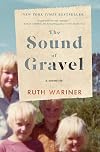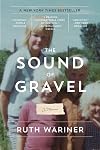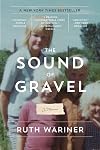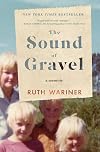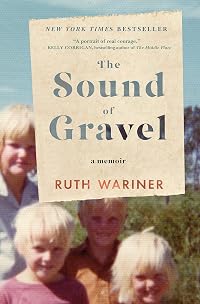
The Sound of Gravel: A Memoir
by Ruth Wariner
On This Page
Description
The true story of one girl's coming-of-age in a polygamist family. Ruth Wariner was the thirty-ninth of her father's forty-two children. Growing up on a farm in rural Mexico, where authorities turn a blind eye to the practices of her community, Ruth lives in a ramshackle house without indoor plumbing or electricity. At church, preachers teach that God will punish the wicked by destroying the world and that women can only ascend to Heaven by entering into polygamous marriages and giving birth show more to as many children as possible. After Ruth's father--the founding prophet of the colony--is brutally murdered by his brother in a bid for church power, her mother remarries, becoming the second wife of another faithful congregant. In need of government assistance and supplemental income, Ruth and her siblings are carted back and forth between Mexico and the United States, where Ruth's mother collects welfare and her stepfather works a variety of odd jobs. Ruth comes to love the time she spends in the States, realizing that perhaps the community into which she was born is not the right one for her. As she begins to doubt her family's beliefs and question her mother's choices, she struggles to balance her fierce love for her siblings with her determination to forge a better life for herself. Recounted from the innocent and hopeful perspective of a child, this is the memoir of one girl's fight for peace and love.--Adapted from book jacket. show lessTags
Recommendations














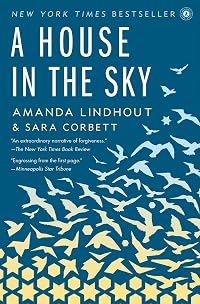
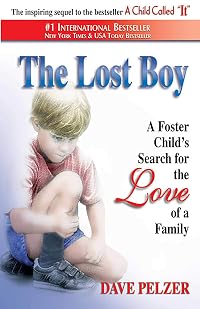
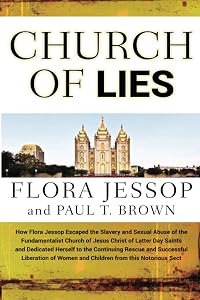





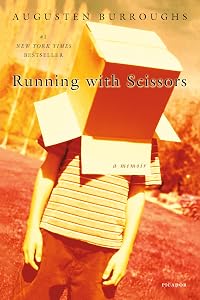












Member Recommendations
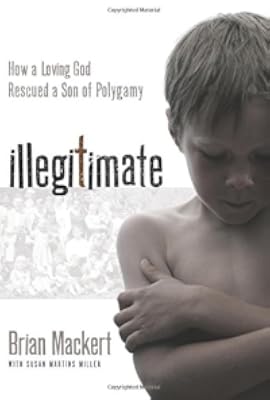
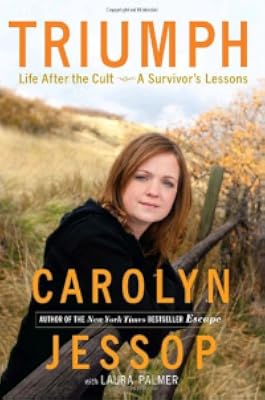
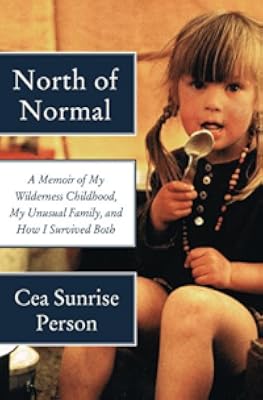
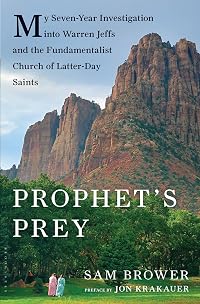
akblanchard Memoirs of growing up in families led by parents who put principles above their children.

ijustgetbored LeBaron and Wariner both write about the same branch of the FLDS (The Church of the Firstborn). Both write about the exceptional poverty and hardships they endured in Mexico as children raised in the FLDS church. Both tell their own stories from their personal perspectives, but readers interested in the LeBaron offshoot of the FLDS will be interested in both narratives.
Member Reviews
"I slowly walked toward my mother's grave. I picked up a large handful of gravel and rolled the hot pieces of stone and sand in my hand, thinking about the place..."
Ruth Wariner blew me away with this captivating memoir. I started it one night, late, with the thought of reading a few pages to get the flavor of the story and found myself reading until I just couldn't stay awake any longer.
What immediately struck me was the dire poverty as compared to other polygamist enclaves I was aware existed. I just couldn't wrap my head around her mother; her deeply entrenched belief that husband was a prophet and her need to raise her children in such squalor. I would love to have been inside the minds of these sister wives.
Rhetorical questions show more keep popping into my mind one after another. What kind of moral example does a parent send to their children when they illegally leach social assistance from the US as a means of survival? How can anyone consider this a religious lifestyle; overlooking sexual predators, murder, malnutrition et al? What drives a man to yearn more and more wives and more and more children that they simply ignore or abuse?
The story is made more powerful as the narration begins when Ruthie is five years old. The horrors and dangers she must overcome are almost unimaginable and made more so as viewed from a young child's perspective; especially a child as perceptive and engaging as Ruth. As we listen to Ruthie's story, as she ages, it becomes unbearable to witness the adult community immune to the needs of these children.
Again, I ask, when given the opportunity several times to make her children's lives more comfortable and safe, why does Ruth's mother return the family to the horrors of Colonia LeBaron?
Ruth packs more than a lifetime of emotion and strength of character in this amazing memoir.
And most importantly, we are asked to question our definitions of religion, trust, love, happiness, loyalty, family tradition, and more. This book will have you thinking about a lot of things for a very long time.
Highly recommended. This brilliant work is a book club must read.
I want to thank the publisher, Flatiron Pres via edelweiss for the free advance e-reader copy in exchange for my honest review. show less
Ruth Wariner blew me away with this captivating memoir. I started it one night, late, with the thought of reading a few pages to get the flavor of the story and found myself reading until I just couldn't stay awake any longer.
What immediately struck me was the dire poverty as compared to other polygamist enclaves I was aware existed. I just couldn't wrap my head around her mother; her deeply entrenched belief that husband was a prophet and her need to raise her children in such squalor. I would love to have been inside the minds of these sister wives.
Rhetorical questions show more keep popping into my mind one after another. What kind of moral example does a parent send to their children when they illegally leach social assistance from the US as a means of survival? How can anyone consider this a religious lifestyle; overlooking sexual predators, murder, malnutrition et al? What drives a man to yearn more and more wives and more and more children that they simply ignore or abuse?
The story is made more powerful as the narration begins when Ruthie is five years old. The horrors and dangers she must overcome are almost unimaginable and made more so as viewed from a young child's perspective; especially a child as perceptive and engaging as Ruth. As we listen to Ruthie's story, as she ages, it becomes unbearable to witness the adult community immune to the needs of these children.
Again, I ask, when given the opportunity several times to make her children's lives more comfortable and safe, why does Ruth's mother return the family to the horrors of Colonia LeBaron?
Ruth packs more than a lifetime of emotion and strength of character in this amazing memoir.
And most importantly, we are asked to question our definitions of religion, trust, love, happiness, loyalty, family tradition, and more. This book will have you thinking about a lot of things for a very long time.
Highly recommended. This brilliant work is a book club must read.
I want to thank the publisher, Flatiron Pres via edelweiss for the free advance e-reader copy in exchange for my honest review. show less
A number of people have used the word "riveting" to characterize this compelling memoir; it certainly packs an emotional wallop. Written in an unadorned style (similar to the memoirs of Jeanette Walls and Frank McCourt, respectively), Ms. Wariner tells a similar story of extreme suffering in childhood - and extraordinary courage and perseverance in overcoming hardship. I had to put it down several times, as it can be very intense.
For those who experience bouts of self-pity, read this memoir and call me in the morning ... You'll quickly see that your life is really not so bad.
While Ms. Wariner's step-father is the monster in her account, there are heroes, too. The author herself is a hero, as are her maternal grandparents (especially her show more grandmother), and one of her step-father's wives (near the end of the memoir). What I simply do not get is Ms. Wariner's resolute love for and devotion to her mother, despite her mother's repeated decisions to neglect and/or fail to protect her children. I understand that there is forgiveness, but Ms. Wariner's mother's irresponsibility is just inexcusable. (I also wonder what caused Ms. Wariner's mother to become the nutcase she was, as she apparently had two caring and functional parents herself.) show less
For those who experience bouts of self-pity, read this memoir and call me in the morning ... You'll quickly see that your life is really not so bad.
While Ms. Wariner's step-father is the monster in her account, there are heroes, too. The author herself is a hero, as are her maternal grandparents (especially her show more grandmother), and one of her step-father's wives (near the end of the memoir). What I simply do not get is Ms. Wariner's resolute love for and devotion to her mother, despite her mother's repeated decisions to neglect and/or fail to protect her children. I understand that there is forgiveness, but Ms. Wariner's mother's irresponsibility is just inexcusable. (I also wonder what caused Ms. Wariner's mother to become the nutcase she was, as she apparently had two caring and functional parents herself.) show less
Disturbing memoir of a woman who was raised in a polygamous LDS sect in Mexico. She described her mother as a 'woman who wanted nothing more than to be loved' while I saw her as a brainwashed woman who subjected her children to her pedophile second husband (not that her first husband was stable - he had visions of the US being destroyed). The fact that she said that he should be 'forgiven' for his sins was enough to make me want to throw the book across the room. I realize that, in the end, the author was a brave woman who made sure that her siblings were safe and is deserving of praise, but part of me wonders if her life as a young, poor, abused child growing up with a group of religious zealots somehow affected her permanently.
The dark side of polygamy is on full display in Ruth Wariner's memoir of growing up in Colonia LeBaron, a fundamentalist Mormon enclave in rural Mexico. Ruth's mother, Kathy, was the fifth wife of colony leader Joel LeBaron (Ruth's father) but after he was murdered, she became another man's third wife. The new husband, Lane, was only periodically attentive to Kathy and her brood, which included three developmentally disabled children. Kathy and her children lived in poverty and almost unimaginable squalor. Remarkably, although Kathy could (and sometimes did) leave Lane to live with her parents in the United States, she never stayed away from him or the colony for long. She believed, with unshakable conviction, that by "living polygamy" show more she was following God's will and storing up blessings for the afterlife.
Ultimately, Kathy's and Lane's selfishness and neglect, as well as the hazardous living conditions to which they subjected their children, led to a preventable tragedy.
The Sound of Gravel is a powerful, moving story, which deserves a place alongside other memoirs of hardscrabble childhoods such as Angela's Ashes, The Glass Castle, and This Life is in Your Hands. I hope it finds a wide readership. show less
Ultimately, Kathy's and Lane's selfishness and neglect, as well as the hazardous living conditions to which they subjected their children, led to a preventable tragedy.
The Sound of Gravel is a powerful, moving story, which deserves a place alongside other memoirs of hardscrabble childhoods such as Angela's Ashes, The Glass Castle, and This Life is in Your Hands. I hope it finds a wide readership. show less
“The Sound of Gravel” is another in the growing and popular memoir genre of dysfunctional families. I’ve read many of them including: “Educated” by Tara Westover, “The Glass Castle” by Jeannette Walls, “The Liar’s Club” by Mary Karr, “Running With Scissors” by Augusten Burroughs, “Angela’s Ashes” by Frank McCourt, “I’m Glad My Mom Died” by Jeanette McCurdy (I bailed on this one about halfway through), and on and on. I have to say with the exception of “Angela’s Ashes,” which I consider a modern day classic, I think Ruth Wariner’s “The Sound of Gravel” is the best of the lot. And, yes, that includes the heralded “The Glass Castle” and “Educated.” The story of Warnier’s growing up show more in a polygamous world of the Mormon Church is harrowing at times, sad at other times, and disturbing at all times. My only complaint about the book is the same complaint I have about all modern memoirs: The authors have such unrealistic memories of details dating back to even their earliest years that credibility is stretched. I guess that is what authors of these books have to do to compete in the genre. That said, I think Ruth Wariner is a gifted writer, and her academic achievements (which we only find out about in the acknowledgements) are remarkable given what she came from. I am in awe of her, and I highly recommend her book and look forward to many more from her. show less
As someone fascinated by the plight of women and children in fundamentalist religions, I started reading this book within hours of hearing about its existence. I've read several books written by survivors of fundamentalist Mormon sects (cults) and, while often thought-provoking, they are not usually well-written, owing undoubtedly to the authors' lack of education. Ruth Wariner's "The Sound of Gravel" was a surprising exception to that rule and I enjoyed the simple, eloquent writing and the pace of her story a great deal.
Because I hope you will read it for yourself and the story has enough interest and suspense to really hook readers, I will spare you any spoilers in my review. Instead, I will just say that the story depicts a lot of show more what you probably expect if you've ever heard anything about the lives of women and children inside similar sects; there's a great deal of poverty, some of it shocking and some of it commonplace, and there's abuse in all its myriad forms. There are also many unexpected details; for example, the women of Ms. Wariner's particular religious sect enjoyed a great deal more freedom than women in some of the other, more well-known Mormon Fundamentalist cults. But more than that, this is a story of strength and quiet dignity living right alongside weakness and complete self-debasement. I found myself wishing it was a novel; not only so that Ms. Wariner would have been spared the trials of her childhood, but because I became deeply interested in the minds of her mother and siblings and wanted, desperately, to know more of their thoughts and feelings.
My only complaint about it is that it isn't long enough. Ms. Wariner chose to end her story suddenly when she finally made her escape from the life of religious poverty and abuse; the rest of her life's story is simply sketched out in the epilog. The sudden ending took me by surprise and I would really love to know about how the children coped outside of their upbringing. This is the story of the author's childhood and her escape from fundamentalism, it isn't her life's story. But it is still a wonderful read and I would encourage anyone with any interest in its main topics to read it. I don't think you would regret the decision to do so.
After you read (AFTER!) do check the author's website where she has a lovely photo gallery of family photos available to view. show less
Because I hope you will read it for yourself and the story has enough interest and suspense to really hook readers, I will spare you any spoilers in my review. Instead, I will just say that the story depicts a lot of show more what you probably expect if you've ever heard anything about the lives of women and children inside similar sects; there's a great deal of poverty, some of it shocking and some of it commonplace, and there's abuse in all its myriad forms. There are also many unexpected details; for example, the women of Ms. Wariner's particular religious sect enjoyed a great deal more freedom than women in some of the other, more well-known Mormon Fundamentalist cults. But more than that, this is a story of strength and quiet dignity living right alongside weakness and complete self-debasement. I found myself wishing it was a novel; not only so that Ms. Wariner would have been spared the trials of her childhood, but because I became deeply interested in the minds of her mother and siblings and wanted, desperately, to know more of their thoughts and feelings.
My only complaint about it is that it isn't long enough. Ms. Wariner chose to end her story suddenly when she finally made her escape from the life of religious poverty and abuse; the rest of her life's story is simply sketched out in the epilog. The sudden ending took me by surprise and I would really love to know about how the children coped outside of their upbringing. This is the story of the author's childhood and her escape from fundamentalism, it isn't her life's story. But it is still a wonderful read and I would encourage anyone with any interest in its main topics to read it. I don't think you would regret the decision to do so.
After you read (AFTER!) do check the author's website where she has a lovely photo gallery of family photos available to view. show less
This is one of those memoirs that will haunt you. It’s hard to put down, but it’s hard to read, too. I didn’t read any reviews before I checked this out. (Due to my high reading volume I don’t often read reviews. I just read the blurb and cross my fingers and hit the “place hold” button.) If I had I probably wouldn’t have read it because I would likely have been warned about the sexual abuse and incest that were just part of what made this story harrowing.
Members
- Recently Added By
Lists

KayStJ's to-read list
1,616 works; 11 members

Extremism
31 works; 1 member

Biographies: Women
112 works; 1 member
Author Information
1 Work 820 Members
Awards and Honors
Awards
Distinctions
Common Knowledge
- Original publication date
- 2015
- Dedication
- For Kathy and her kids
- First words
- I am my mother's fourth child and my father's thirty-ninth. I grew up in Colonia LeBaron, a small town in the Mexican countryside 200 miles south of El Paso, Texas.
- Last words
- (Click to show. Warning: May contain spoilers.)"Okay, here we go," I whisper. Together, the two of us cross yet another border, our brothers and sisters following close behind.
- Blurbers
- Lauck, Jennifer
- Canonical DDC/MDS
- 289.3092
- Canonical LCC
- BX8680.L48
Classifications
- Genres
- Biography & Memoir, Nonfiction, General Nonfiction, Religion & Spirituality
- DDC/MDS
- 289.3092 — Religion Christian denominations Other denominations and sects Mormonism Biography And History Biography
- LCC
- BX8680 .L48 — Philosophy, Psychology and Religion Christian Denominations Christian Denominations Protestantism Other Protestant denominations Mormons. Church of Jesus Christ of Latter-Day Saints
- BISAC
Statistics
- Members
- 821
- Popularity
- 33,631
- Reviews
- 46
- Rating
- (4.15)
- Languages
- English
- Media
- Paper, Audiobook, Ebook
- ISBNs
- 11
- ASINs
- 4