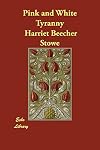
Pink and White Tyranny
by Harriet Beecher Stowe
51 Members (3.14)
On This Page
Description
Originally published in 1871, Pink and White Tyranny is, seemingly, a light, comic story about a frivolous young girl who marries for money. However, as with most of Beecher Stowe's writings, things are not what they appear on the surface. This ""society novel,"" instead, is a critique of the nineteenth-century's dominant view that women should use their femininity to gain power. Reflective of Stowe's progressive moral and domestic views, the novel is a refreshing work of social satire that show more showcases Stowe's comic abilities as well as her progressive views. show lessTags
Recommendations


















Member Reviews
Members
- Recently Added By
Author Information

259+ Works 22,797 Members
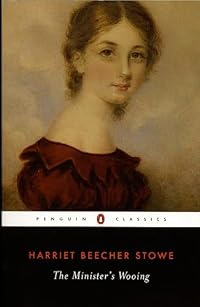
Harriet Beecher was born in Litchfield, Connecticut, one of nine children of the distinguished Congregational minister and stern Calvinist, Lyman Beecher. Of her six brothers, five became ministers, one of whom, Henry Ward Beecher, was considered the finest pulpit orator of his day. In 1832 Harriet Beecher went with her family to Cincinnati, Ohio. show more There she taught in her sister's school and began publishing sketches and stories. In 1836 she married the Reverend Calvin E. Stowe, one of her father's assistants at the Lane Theological Seminary and a strong antislavery advocate. They lived in Cincinnati for 18 years, and six of her children were born there. The Stowes moved to Brunswick, Maine, in 1850, when Calvin Stowe became a professor at Bowdoin College. Long active in abolition causes and knowledgeable about the atrocities of slavery both from her reading and her years in Cincinnati, with its close proximity to the South, Stowe was finally impelled to take action with the passage of the Fugitive Slave Act in 1850. By her own account, the idea of Uncle Tom's Cabin (1852) first came to her in a vision while she was sitting in church. Returning home, she sat down and wrote out the scene describing the death of Uncle Tom and was so inspired that she continued to write on scraps of grocer's brown paper after her own supply of writing paper gave out. She then wrote the book's earlier chapters. Serialized first in the National Era (1851--52), an important abolitionist journal with national circulation, Uncle Tom's Cabin was published in book form in March 1852. It was an immediate international bestseller; 10,000 copies were sold in less than a week, 300,000 within a year, and 3 million before the start of the Civil War. Family legend tells of President Abraham Lincoln (see Vol. 3) saying to Stowe when he met her in 1862: "So this is the little lady who made this big war?" Whether he did say it or not, we will never know, since Stowe left no written record of her interview with the president. But he would have been justified in saying it. Certainly, no other single book, apart from the Bible, has ever had any greater social impact on the United States, and for many years its enormous historical interest prevented many from seeing the book's genuine, if not always consistent, literary merit. The fame of the novel has also unfortunately overshadowed the fiction that Stowe wrote about her native New England: The Minister's Wooing (1859), Oldtown Folks (1869), Poganuc People (1878), and The Pearl of Orr's Island (1862), the novel that, according to Sarah Orne Jewett, began the local-color movement in New England. Here Stowe was writing about the world and its people closest and dearest to her, recording their customs, their legends, and their speech. As she said of one of these novels, "It is more to me than a story. It is my resume of the whole spirit and body of New England." (Bowker Author Biography) Harriet Beecher Stowe (1811-1896) remains one of the most influential writers in American history. Following the publication of "Uncle Tom's Cabin" she became an instant celebrity, speaking against slavery in the United States & Europe. (Publisher Provided) show less
Series
Belongs to Publisher Series
Common Knowledge
- Original publication date
- 1871
- First words
- "Who is that beautiful creature?" said John Seymour, as a light sylph-like form tripped up the steps of the veranda of the hotel where he was lounging away his summer vacation.
Classifications
Statistics
- Members
- 51
- Popularity
- 591,879
- Rating
- (3.14)
- Languages
- English
- Media
- Paper, Ebook
- ISBNs
- 25
- ASINs
- 1