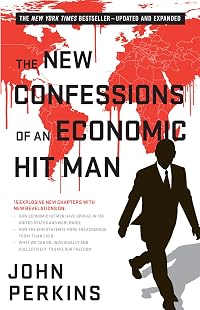
The New Confessions of an Economic Hit Man
by John Perkins
On This Page
Description
Shocking bestseller: the original version of this astonishing tell-all book spent seventy-three weeks on the New York Times bestseller list, has sold more than 1.25 million copies, and has been translated into thirty-two languages. New revelations: featuring fifteen explosive new chapters, this expanded edition of Perkins' classic bestseller brings the story of economic hit men (EHMs) up to date and, chillingly, home to the US. Over forty percent of the book is new, including chapters show more identifying today's EHMs and a detailed chronology extensively documenting EHM activity since the first edition was published in 2004.Former economic hit man John Perkins shares new details about the ways he and others cheated countries around the globe out of trillions of dollars. Then he reveals how the deadly EHM cancer he helped create has spread far more widely and deeply than ever in the United States and everywhere else-to become the dominant system of business, government, and society today. Finally, he gives an insider view of what we each can do to change it. Economic hit men are the shock troops of what Perkins calls the corporatocracy, a vast network of corporations, banks, colluding governments, and the rich and powerful people tied to them. If the EHMs can't maintain the corrupt status quo through nonviolent coercion, the jackal assassins swoop in. The heart of this book is a completely new section, over 100 pages long, that exposes the fact that all the EHM and jackal tools-false economics, false promises, threats, bribes, extortion, debt, deception, coups, assassinations, unbridled military power-are used around the world today exponentially more than during the era Perkins exposed over a decade ago. The material in this new section ranges from the Seychelles, Honduras, Ecuador, and Libya to Turkey, Western Europe, Vietnam, China, and, in perhaps the most unexpected and sinister development, the United States, where the new EHMs-bankers, lobbyists, corporate executives, and others-"con governments and the public into submitting to policies that make the rich richer and the poor poorer."But as dark as the story gets, this reformed EHM also provides hope. Perkins offers a detailed list of specific actions each of us can take to transform what he calls a failing Death Economy into a Life Economy that provides sustainable abundance for all. show lessTags
Recommendations
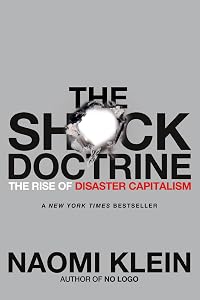
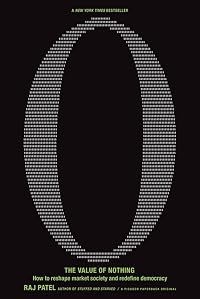
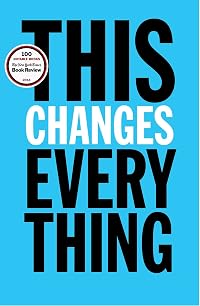

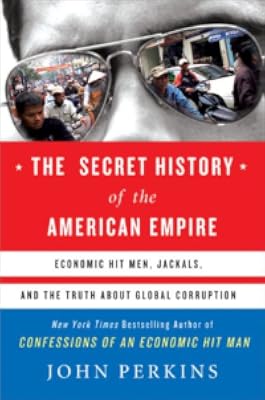


Member Recommendations

by anonymous user
Member Reviews
The post-WWII Pax Americana has been an unprecedented era of power and prosperity for the United States of America. Flareups such as Latin American coups and assassinations, the Iranian revolution of 1979, the Gulf Wars, 9/11, and even the 2008 global recession have never seriously threatened American dominance. In this new edition of John Perkins's book, he recounts his underground role in constructing and defending this new economic order, a global commercial empire built on debt and blood, executed by global lending institutions such as the World Bank, and enforced by the American intelligence communities and military for the benefit of a handful of massive and transnational corporations.
Perkin's book is profoundly unsettling in its show more assertion that many of the conflicts of the past 70 years are actions of and reactions against one of the most powerful and destructive world empires in history: America. This is not the ideal toward which the average American wants to strive, nor the image Americans want to have of themselves. This, in fact, is Perkins's point: that the American dream is no longer the property of the average citizen. The system has been hijacked by a national and global elite who have effectively purchased the American government, using it to drain the world's wealth into the coffers of the wealthiest individuals in history, at tremendous human and environmental cost.
Perkins is clearly a man who has struggled with guilt over his role in bending world leaders and governments to will of his corporate masters. His chosen path of self-redemption has been a turn to Buddhist philosophy and grassroots activism, and many of his recommendations for righting the ship will strike certain readers as hippy flower-child nonsense. Such a reader should be careful to recognize that, whether or not one buys into Perkins's path, it is a path he's chosen because of the tremendous burden of guilt he's borne. The brute fact of his guilty conscience lends credence to his accounts of how he helped bend the needs of the many to the will of the few. This is a book well worth reading for a dark yet thoughtful look inside the halls of power and wealth few of us will ever see. show less
Perkin's book is profoundly unsettling in its show more assertion that many of the conflicts of the past 70 years are actions of and reactions against one of the most powerful and destructive world empires in history: America. This is not the ideal toward which the average American wants to strive, nor the image Americans want to have of themselves. This, in fact, is Perkins's point: that the American dream is no longer the property of the average citizen. The system has been hijacked by a national and global elite who have effectively purchased the American government, using it to drain the world's wealth into the coffers of the wealthiest individuals in history, at tremendous human and environmental cost.
Perkins is clearly a man who has struggled with guilt over his role in bending world leaders and governments to will of his corporate masters. His chosen path of self-redemption has been a turn to Buddhist philosophy and grassroots activism, and many of his recommendations for righting the ship will strike certain readers as hippy flower-child nonsense. Such a reader should be careful to recognize that, whether or not one buys into Perkins's path, it is a path he's chosen because of the tremendous burden of guilt he's borne. The brute fact of his guilty conscience lends credence to his accounts of how he helped bend the needs of the many to the will of the few. This is a book well worth reading for a dark yet thoughtful look inside the halls of power and wealth few of us will ever see. show less
This should be (and should have been) required reading for everyone, worldwide, but it seems many if not most politicians (who I doubt are as smart as their suits and the media makes them look like) are blissfully unaware how they're being played, let alone the people they represent.
Years ago the contents of this book might have been a surprise, enlightning or done away with as lies and fake nonsense, but it seems that the past few years they've given up on trying to hide it.
The New Confessions of an Economic Hit Man by John Perkins, that I've listened to as an audiobook nicely read by Tom Taylorson, gives an interesting documentation on the history of EHM's and as usual a simple explanation for whatever is happening in the world, show more regardless what we're told in the news.
This is now my #1 recommendation for any colleague, friend or family member who is trying to make sense of the world, as on the one hand it offers a lovely read for all the stories it features.. and on the other hand a refreshing reminder of what we're dealing with in this world saving one time by not having to spend much time reading news. show less
Years ago the contents of this book might have been a surprise, enlightning or done away with as lies and fake nonsense, but it seems that the past few years they've given up on trying to hide it.
The New Confessions of an Economic Hit Man by John Perkins, that I've listened to as an audiobook nicely read by Tom Taylorson, gives an interesting documentation on the history of EHM's and as usual a simple explanation for whatever is happening in the world, show more regardless what we're told in the news.
This is now my #1 recommendation for any colleague, friend or family member who is trying to make sense of the world, as on the one hand it offers a lovely read for all the stories it features.. and on the other hand a refreshing reminder of what we're dealing with in this world saving one time by not having to spend much time reading news. show less
This is a sad case of a 4-4.5 star book turned into a 3-3.5 book in the second addition, due to adding a bunch of "woke" to an already "woke hippie" book.
Essentially, it's a (questionably accurate) book about how in the 60s-70s closely government-affiliated multinationals were involved in a quasi-feudal political relationship between developing nations and the US (and the rest of the developed world). In the first edition this was somewhat tolerable and interesting, as it largely involved engineering/project management/construction companies and was somewhat interesting to learn about (as I'm more familiar with the modern forms of these). His thesis is basically that the process of pitching these projects is inherently corrupt, going to show more an elite in the nation and often with the intention of having the government default and then have various assets taken by the lender. Some of this was direct, but mostly via intermediaries like the World Bank and IMF. Lots of CIA assassination plots against wonderful leftist leaders, all development being bad, etc.
In the second edition, he updates to reflect the modern world with lots of asset managers, hedge funds, etc seeking returns. He still tries to imply these entities have some conspiratorial nefarious purpose rather than a simple profit-maximization goal. Then, the last 25% of the book is him being a generic boomer hippie and describing shamanism, environmentalism, etc.
If you're going to read this, just read the first 50% or so (which mostly corresponds to the original book), and take it with a very large grain of salt show less
Essentially, it's a (questionably accurate) book about how in the 60s-70s closely government-affiliated multinationals were involved in a quasi-feudal political relationship between developing nations and the US (and the rest of the developed world). In the first edition this was somewhat tolerable and interesting, as it largely involved engineering/project management/construction companies and was somewhat interesting to learn about (as I'm more familiar with the modern forms of these). His thesis is basically that the process of pitching these projects is inherently corrupt, going to show more an elite in the nation and often with the intention of having the government default and then have various assets taken by the lender. Some of this was direct, but mostly via intermediaries like the World Bank and IMF. Lots of CIA assassination plots against wonderful leftist leaders, all development being bad, etc.
In the second edition, he updates to reflect the modern world with lots of asset managers, hedge funds, etc seeking returns. He still tries to imply these entities have some conspiratorial nefarious purpose rather than a simple profit-maximization goal. Then, the last 25% of the book is him being a generic boomer hippie and describing shamanism, environmentalism, etc.
If you're going to read this, just read the first 50% or so (which mostly corresponds to the original book), and take it with a very large grain of salt show less
Definitely a good read, although at times he can get a bit boring - all those issues on remorse and his conscience, obviously. Still, it gives a great insight of what his job did and how contributed to change this world for the worse. At the end, there are also some suggestions on what to do to counteract the trend for us "normal" people, some I knew already, some new ones. The advice is going to be put to good use.
Fascinating read
This book sheds light on whats really happening jn the US’ dealings with other countries. A little lefty but if you can get past that its a very important book. It seems to me, however, the author doesn’t focus enough on the root of the problem. Instead he focuses primarily in symptoms. Maybe for good reasons...?
This book sheds light on whats really happening jn the US’ dealings with other countries. A little lefty but if you can get past that its a very important book. It seems to me, however, the author doesn’t focus enough on the root of the problem. Instead he focuses primarily in symptoms. Maybe for good reasons...?
It is a must read. I found it both scary & eye opening if true. The concept will change the way one looks at global politics. A couple downsides to the book is that he repeat himself a lot and the last few chapters ended up being a laundry list of things to do to bring change.
I thought the first half was very interesting and I enjoyed it quite a bit. 4-Stars at least. The second half was a great little sleep aid that I just couldn't get interested in. 2-Stars at best.
Members
- Recently Added By
Lists

The Venus Project Recommended Books - Contemporary sources
53 works; 2 members
Author Information

13+ Works 5,212 Members
John Perkins was born on January 28, 1945 in Hanover, New Hampshire. He attended Brown University, and Boston University School of Management during the 1960s. His best-known book is Confessions of an Economic Hit Man (2004), an insider's account of the exploitation or neo-colonization of Third World countries by what Perkins describes as a cabal show more of corporations, banks, and the United States government. His 2007 book, The Secret History of the American Empire, provides more evidence of the negative impact of global corporations on the economies and ecologies of poor countries, as well as offering suggestions for making corporations behave more like good citizens. Since the late 1980's he has been heavily involved with non-profit organizations in Ecuador and around the world. (Bowker Author Biography) show less
Work Relationships
Is an expanded version of
Classifications
Statistics
- Members
- 436
- Popularity
- 70,653
- Reviews
- 8
- Rating
- (3.86)
- Languages
- English, Portuguese, Serbian
- Media
- Paper, Audiobook, Ebook
- ISBNs
- 16
- ASINs
- 5