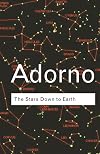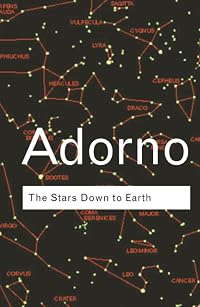
The Stars Down to Earth: And Other Essays on the Irrational in Culture
by Theodor Adorno
259 Members (3.50)
On This Page
Description
The Stars Down to Earth shows us a stunningly prescient Adorno. Haunted by the ugly side of American culture industries he used the different angles provided by each of these three essays to showcase the dangers inherent in modern obsessions with consumption. He engages with some of his most enduring themes in this seminal collection, focusing on the irrational in mass culture - from astrology to new age cults, from anti-semitism to the power of neo-fascist propaganda. He points out that the show more modern state and market forces serve the interest of capital in its basic form. Stephan Crook's introduction grounds Adorno's arguments firmly in the present where extreme religious and political organizations are commonplace - so commonplace in fact that often we deem them unworthy of our attention. Half a century ago Theodore Adorno not only recognised the dangers, but proclaimed them loudly. We did not listen then. Maybe it is not too late to listen now. show lessTags
Recommendations
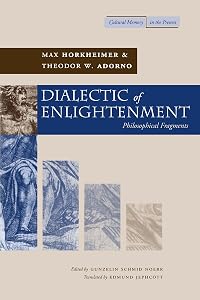
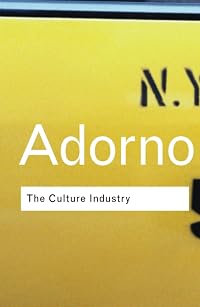
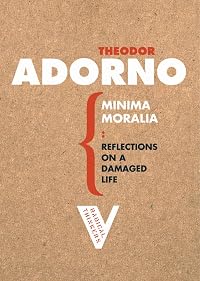
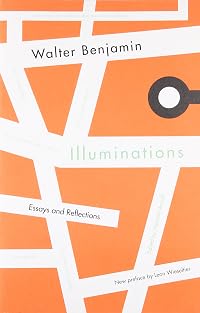










Member Reviews
Members
- Recently Added By
Author Information

327+ Works 14,354 Members
Theodor W. Adorno is the progenitor of critical theory, a central figure in aesthetics, and the century's foremost philosopher of music. He was born and educated in Frankfurt, Germany. After completing his Ph.D. in philosophy, he went to Vienna, where he studied composition with Alban Berg. He soon was bitterly disappointed with his own lack of show more talent and turned to musicology. In 1928 Adorno returned to Frankfurt to join the Institute for Social Research, commonly known as The Frankfurt School. At first a privately endowed center for Marxist studies, the school was merged with Frankfort's university under Adorno's directorship in the 1950s. As a refugee from Nazi Germany during World War II, Adorno lived for several years in Los Angeles before returning to Frankfurt. Much of his most significant work was produced at that time. Critics find Adorno's aesthetics to be rich in insight, even when they disagree with its broad conclusions. Although Adorno was hostile to jazz and popular music, he advanced the cause of contemporary music by writing seminal studies of many key composers. To the distress of some of his admirers, he remained pessimistic about the prospects for art in mass society. Adorno was a neo-Marxist who believed that the only hope for democracy was to be found in an interpretation of Marxism opposed to both positivism and dogmatic materialism. His opposition to positivisim and advocacy of a method of dialectics grounded in critical rationalism propelled him into intellectual conflict with Georg Hegel, Martin Heidegger, and Heideggerian hermeneutics. (Bowker Author Biography) show less
Some Editions
Series
Belongs to Publisher Series
Common Knowledge
- Canonical title
- The Stars Down to Earth: And Other Essays on the Irrational in Culture
- Original title
- Adorno: The Stars Down to Earth and Other Essays on the Irrational in Culture
- Original publication date
- 1994
- Original language
- English
Classifications
Statistics
- Members
- 259
- Popularity
- 125,486
- Rating
- (3.50)
- Languages
- English, French, Italian, Portuguese
- Media
- Paper, Ebook
- ISBNs
- 16
- ASINs
- 2