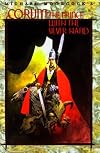
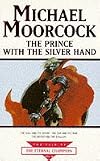
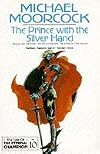
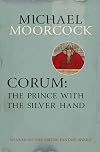
Corum: The Prince With the Silver Hand
by Michael Moorcock
Segunda Trilogía de Corum (libro 2), Corum (Collections and Selections — Omnibus 4-6), The Eternal Champion (Collections and Selections — Corum novels 4-6)
On This Page
Description
In this the tenth epic volume of the Tale of the eternal Champion, Michael Moorcock brings the old Celtic gods alive.Tags
Recommendations

















Member Reviews
The saga of Corum by Michael Moorcock, covering six novels, is perhaps the most satisfying of the Eternal Champion tales. It has a distinct beginning, middle, and end. It is the most cohesive and elegant of the Eternal Champion stories. This volume is the final three "books" of Corum and happen some 80 years after the first three volumes in the saga.
While Corum is not my favorite Eternal Champion incarnation, these three novels are perhaps my favorite collection in the Eternal Champion arc. It is in many ways more profound and somewhat scarier, with the only hinted gigantic idiot demons the Fhoi Myore ruling much of the geography we're concerned with.
We have the usual sword and sorcery mayhem, gore, heroics, dastardly deeds, show more villains, traitors. There is also a distinct Celtic flare to these stories.
Moorcock manages to infuse a few interesting ideas into what on the surface appears to be pure swashbuckling fantasy. He hints that the Fhoi Myore aren't really evil, just screwed up because they got shoved through a crack in time-space of the 15 planes and, through no fault of their own, ended up in a bad place for both them and the good guys of the story. He intimates that in their own place and time they are quite happy and get along fine, maybe aren't even mentally damaged. Their deformities are legion, perhaps due to the transition just as a caged animal is twisted, and Moorcock often has Corum feeling sympathy for them as he sees some of himself, a being caught in the wrong place and the wrong time, in the hideous Fhoi Myore. You see, Corum is the last of the Vadagh race (more like a species) that were all killed by the Mabden (humans like us) who are now the dominant species. Corum is forced to befriend the Mabden both through romantic love and just through survival necessity. He fights for the people that killed his race, because he once loved a Mabden woman and because there ain't nobody else around to party with. Corum, being immortal, is pragmatic.
There is also an underlying theme of destiny/fate versus free will, cause and chance. The Fhoi Myore were not born evil, unlike Tolkien's Orcs, somehow genetically programmed to be evil, but became mentally and physically deformed by passing between the planes of reality. If they were home, they'd be fine.
I'm having a hell of a time writing this as the kitten thinks that the mouse, cursor, keyboard, screen, and desk are strictly here for her amusement.
Where was I? Oh yes, fate. Even Corum's actions and experiences are driven or revealed by prophecy, in the end leaving little doubt that this is the only way it could be. Most people are fooled into thinking this is a conventional epic tragedy when the real tragedy is on a different level. All Corum's actions, thoughts heroic deeds, are foreordained, indeed all the characters', good and evil are. Is this just a clever thing inserted by Moorcock to comment on an author's relationship to his characters and work, or is he trying to say something about the way the universe really is? If so, then good and evil are nonsense in a clockwork or scientifically constrained universe where everything can be traced back to an antecedent cause.
All this in a sword and sorcery yarn? If you're Michael Moorcock, hell yes. show less
While Corum is not my favorite Eternal Champion incarnation, these three novels are perhaps my favorite collection in the Eternal Champion arc. It is in many ways more profound and somewhat scarier, with the only hinted gigantic idiot demons the Fhoi Myore ruling much of the geography we're concerned with.
We have the usual sword and sorcery mayhem, gore, heroics, dastardly deeds, show more villains, traitors. There is also a distinct Celtic flare to these stories.
Moorcock manages to infuse a few interesting ideas into what on the surface appears to be pure swashbuckling fantasy. He hints that the Fhoi Myore aren't really evil, just screwed up because they got shoved through a crack in time-space of the 15 planes and, through no fault of their own, ended up in a bad place for both them and the good guys of the story. He intimates that in their own place and time they are quite happy and get along fine, maybe aren't even mentally damaged. Their deformities are legion, perhaps due to the transition just as a caged animal is twisted, and Moorcock often has Corum feeling sympathy for them as he sees some of himself, a being caught in the wrong place and the wrong time, in the hideous Fhoi Myore. You see, Corum is the last of the Vadagh race (more like a species) that were all killed by the Mabden (humans like us) who are now the dominant species. Corum is forced to befriend the Mabden both through romantic love and just through survival necessity. He fights for the people that killed his race, because he once loved a Mabden woman and because there ain't nobody else around to party with. Corum, being immortal, is pragmatic.
There is also an underlying theme of destiny/fate versus free will, cause and chance. The Fhoi Myore were not born evil, unlike Tolkien's Orcs, somehow genetically programmed to be evil, but became mentally and physically deformed by passing between the planes of reality. If they were home, they'd be fine.
I'm having a hell of a time writing this as the kitten thinks that the mouse, cursor, keyboard, screen, and desk are strictly here for her amusement.
Where was I? Oh yes, fate. Even Corum's actions and experiences are driven or revealed by prophecy, in the end leaving little doubt that this is the only way it could be. Most people are fooled into thinking this is a conventional epic tragedy when the real tragedy is on a different level. All Corum's actions, thoughts heroic deeds, are foreordained, indeed all the characters', good and evil are. Is this just a clever thing inserted by Moorcock to comment on an author's relationship to his characters and work, or is he trying to say something about the way the universe really is? If so, then good and evil are nonsense in a clockwork or scientifically constrained universe where everything can be traced back to an antecedent cause.
All this in a sword and sorcery yarn? If you're Michael Moorcock, hell yes. show less
This may be my favorite of all of the Eternal Champion sets. Corum is not as tormented as Elric, nor quite as doomed as Dorian Hawkmoon. A good man bound by events to pursue revenge, even against the very deities that sometimes sponsor the other champions. However, this one drags on a bit, compared to the Swords Trilogy. Corum once again has to defeat gods, but this time it isn't quite as clear why he's involved, or when any of this will end. That's the point with the Eternal Champion cycle, but sometimes it gets a little too endless.
Corum is still my favorite of all the champions.
Corum is still my favorite of all the champions.
This omnibus contains the second Corum trilogy. Long after his mortal wife and queen has died, Corum lives his life in solitude, until he hears voices calling him. These voices draw him into a distant future, in which the Mabden, the race of men, are threatened with an evil, destructive force.
In order to benefit these dying Mabden, Corum must help them procure their objects of power, each book bears the name of those he seeks in that volume. As with any relic in a Moorcock book, each use comes with its own price, which the characters pay time after time.
Teaming up with his companion from the last trilogy, Jhary, as well as some ancient fey giants, called the Sidi, who bear a striking resemblance to Corum’s own race, the Vadagh, Corum show more rallies the Mabden against the hordes of Chaos, led by the fallen champion himself, Gaynor the Damned.
In classic Moorcock tradition, this story unfolds; enemies become acquaintances, friends become enemies, and tragedy follows the Prince with the Silver Hand wherever he goes.
This volume is definitely recommended for fans of Moorcock’s fantasy, and is a worthy member of the Eternal Champion White Wolf omnibuses. show less
In order to benefit these dying Mabden, Corum must help them procure their objects of power, each book bears the name of those he seeks in that volume. As with any relic in a Moorcock book, each use comes with its own price, which the characters pay time after time.
Teaming up with his companion from the last trilogy, Jhary, as well as some ancient fey giants, called the Sidi, who bear a striking resemblance to Corum’s own race, the Vadagh, Corum show more rallies the Mabden against the hordes of Chaos, led by the fallen champion himself, Gaynor the Damned.
In classic Moorcock tradition, this story unfolds; enemies become acquaintances, friends become enemies, and tragedy follows the Prince with the Silver Hand wherever he goes.
This volume is definitely recommended for fans of Moorcock’s fantasy, and is a worthy member of the Eternal Champion White Wolf omnibuses. show less
Moorcock twists Celtic mythologies, taking them to alternative realities. Corum may be his most accessible personae of the Eternal Champion. Epic and intimate at the same time, somehow.
My reaction to reading this in 1999. Spoilers follow.
“Introduction” - Not much here except a listing of Irish writers that influenced Moorcock.
The Bull and the Spear -- I liked this second Corum trilogy (at least, this first book of the second trilogy) about as well as the first. The cold-enshrouded , winter-bearing Fhoi Myore were interesting villains. Calatin was an intriguing character. With him, Moorcock seemed to be doing a variation on the mad scientist, a critique of the sort of ruthless scientific questing that sacrifices morality, idea logy, and family.
The Oak and the Ram -- It was nice to see the enigmatic Gaynor the Damned as well as Jhary-a-Conel. I liked Moorcock emphasizing Corum and Goffanon’s befuddlement at the show more encroaching magic in the Mabden world (who also, until evoking Corum were incredulous about magic too). I liked the bits about the rescue of Amergin being rescued from Caer Llud. The depiction of the Fhoi Myore (not gods of Chaos but Lords of Limbo, a change of pace for Eternal Champion stories) as not evil but simple-minded, needy entities exiled from their world. The dream visions of Corum into his other incarnations as the Eternal Champion were interesting. I liked Jhary-a-Conel complaining about the limited imagination of the gods in regard to horns: “Horns for bringing the apocalypse [a reference to Elric], horns for calling demons – now horns for handling dogs?”
The Sword and the Stallion -- This was the most interesting book of the second Corum trilogy. The whole end, where Corum is regarded as a traitor, was an interesting turn on the usual Eternal Champion story. Corum’s story echoes (not for the first time proving that some thought went into the ordering of this White Wolf series of Eternal Champion stories) Elric’s in some ways. He gets a magical sword, Traitor, which has a sinister ability to kill Corum’s friends (in this case Goffanon). His life ends at the point of this sword after greatly changing the world, here helping to purge it of “sorcery and demigods” – Corum and Goffanon -- worry about the influence of a alliance with the sinister Malibann (who seem an echo, ruby throne, sorcery, empire and all, of Elric’s Melniboneans) on Mabden rationality. They might view the world magically – presumably the reason Corum can not be allowed to remain in the Mabden world. The treachery of Medhbh (the sinister prophecy warning Corum about a harp, beauty, and a brother) was not unexpected but still shocking. show less
“Introduction” - Not much here except a listing of Irish writers that influenced Moorcock.
The Bull and the Spear -- I liked this second Corum trilogy (at least, this first book of the second trilogy) about as well as the first. The cold-enshrouded , winter-bearing Fhoi Myore were interesting villains. Calatin was an intriguing character. With him, Moorcock seemed to be doing a variation on the mad scientist, a critique of the sort of ruthless scientific questing that sacrifices morality, idea logy, and family.
The Oak and the Ram -- It was nice to see the enigmatic Gaynor the Damned as well as Jhary-a-Conel. I liked Moorcock emphasizing Corum and Goffanon’s befuddlement at the show more encroaching magic in the Mabden world (who also, until evoking Corum were incredulous about magic too). I liked the bits about the rescue of Amergin being rescued from Caer Llud. The depiction of the Fhoi Myore (not gods of Chaos but Lords of Limbo, a change of pace for Eternal Champion stories) as not evil but simple-minded, needy entities exiled from their world. The dream visions of Corum into his other incarnations as the Eternal Champion were interesting. I liked Jhary-a-Conel complaining about the limited imagination of the gods in regard to horns: “Horns for bringing the apocalypse [a reference to Elric], horns for calling demons – now horns for handling dogs?”
The Sword and the Stallion -- This was the most interesting book of the second Corum trilogy. The whole end, where Corum is regarded as a traitor, was an interesting turn on the usual Eternal Champion story. Corum’s story echoes (not for the first time proving that some thought went into the ordering of this White Wolf series of Eternal Champion stories) Elric’s in some ways. He gets a magical sword, Traitor, which has a sinister ability to kill Corum’s friends (in this case Goffanon). His life ends at the point of this sword after greatly changing the world, here helping to purge it of “sorcery and demigods” – Corum and Goffanon -- worry about the influence of a alliance with the sinister Malibann (who seem an echo, ruby throne, sorcery, empire and all, of Elric’s Melniboneans) on Mabden rationality. They might view the world magically – presumably the reason Corum can not be allowed to remain in the Mabden world. The treachery of Medhbh (the sinister prophecy warning Corum about a harp, beauty, and a brother) was not unexpected but still shocking. show less
Corum is my favorite incarnation of the Moorcock's Eternal Champion. Drawn from Irish myth, I am particularly fond of the Silver Hand. Perpetually gloomy and ill at ease with his surroundings, Corum behaves like one who knows his destiny is not in his own hands. And it isn't.
(Alistair) Back to the sword-and-sorcery with Michael Moorcock, and the sequel omnibus to the Swords Trilogy (this one collecting The Bull and The Spear, The Oak and The Ram, and The Sword and The Stallion.).
In which Corum skips a long way down the timeline to once again save the human - well, "Mabden" - race, after the death of his human lover and much time to sink into apathy and heroic deeds to start to look good again, the Mabden of Lwyn-an-Esh have evolved into proto-Celts (given the names, and that the Big Bad is now the Cold Folk, also known as the Fhoi Myore), and Humans Are Still Bastards, inasmuch as nsgre gurl hfr uvz gb jva gurve jne, gur Znoqra xvyy Pbehz, be engure, unir uvf arj ybir qb vg, gb rafher gur jbeyq vf "serr bs show more nyy fbeprel naq nyy qrzvtbqf".
Again, recommended, for those who like this type of fantasy.
( http://weblog.siliconcerebrate.com/cerebrate/2009/06/mass_booklogging.html ) show less
In which Corum skips a long way down the timeline to once again save the human - well, "Mabden" - race, after the death of his human lover and much time to sink into apathy and heroic deeds to start to look good again, the Mabden of Lwyn-an-Esh have evolved into proto-Celts (given the names, and that the Big Bad is now the Cold Folk, also known as the Fhoi Myore), and Humans Are Still Bastards, inasmuch as nsgre gurl hfr uvz gb jva gurve jne, gur Znoqra xvyy Pbehz, be engure, unir uvf arj ybir qb vg, gb rafher gur jbeyq vf "serr bs show more nyy fbeprel naq nyy qrzvtbqf".
Again, recommended, for those who like this type of fantasy.
( http://weblog.siliconcerebrate.com/cerebrate/2009/06/mass_booklogging.html ) show less
Members
- Recently Added By
Lists

2016 UpROOTed
11 works; 1 member
Author Information

658+ Works 65,036 Members
Michael Moorcock, 1939 - Writer Michael Moorcock was born December 18, 1939 in Mitcham, Surrey, England. Moorcock was the editor of the juvenile magazine Tarzan Adventures from 1956-58, an editor and writer for the Sexton Blake Library and for comic strips and children's annuals from 1959-61, an editor and pamphleteer for Liberal Party in 1962, show more and became editor and publisher for the science fiction magazine New Worlds in 1964. He has worked as a singer-guitarist, has worked with the rock bands Hawkwind and Blue Oyster Cult and is a member of the rock band Michael Moorcock and the Deep Fix. Moorcock's writing covers a wide range of science fiction and fantasy genres. "The Chronicles of Castle Brass" was a sword and sorcery novel, and "Breakfast in the Ruins: A Novel of Inhumanity" uses the character Karl Glogauer as a different person in different times. Karl participates in the political violence of the French Revolution, the Paris Commune, and a Nazi concentration camp. Moorcock also wrote books and stories that featured the character Jerry Cornelius, who had no consistent character or appearance. "The Condition of Muzak" completed the initial Jerry Cornelius tetralogy and won Guardian Literary Prize in 1977. "Byzantium Endures" and "The Laughter of Carthage" are two autobiographical novels of the Russian emigre Colonel Pyat and were the closest Moorcock came to conventional literary fiction. "Byzantium Endures" focuses on the first twenty years of Pyat's life and tells of his role in the Russian revolution. Pyat survives the revolution and the subsequent civil war by working first for one side and then another. "The Laughter of Carthage" covers Pyat's life from 1920-1924 telling of his escape from Communist Russia and his travels in Europe and America. It's a sweeping picture of the world during the 1920's because it takes the character from living in Constantinople to Hollywood. Moorcock returned to the New Wave style in "Blood: A Southern Fantasy" (1994) and combined mainstream fiction with fantasy in "The Brothel of Rosenstrasse," which is set in the imaginary city of Mirenburg. MoorCock won the 1967 Nebula Award for Behold the Man and the 1979 World Fantasy Award for his novel, Gloriana. (Bowker Author Biography) show less
Some Editions
Series

Segunda Trilogía de Corum
3 works (libro 2)

Corum
6 works (Collections and Selections — Omnibus 4-6)

The Eternal Champion
63 works (Collections and Selections — Corum novels 4-6)
Belongs to Publisher Series
Work Relationships
Common Knowledge
- Canonical title
- Corum: The Prince With the Silver Hand
- Original title
- The Chronicles of Corum
- Original publication date
- 1978
- People/Characters
- Corum Jhaelen Irsei
- Dedication
- For Marianne
- First words
- In those days there were oceans of light and cities in the skies and wild flying beasts of bronze.
- Last words
- (Click to show. Warning: May contain spoilers.)Then Corum died.
- Original language*
- English
*Some information comes from Common Knowledge in other languages. Click "Edit" for more information.
Classifications
Statistics
- Members
- 898
- Popularity
- 29,904
- Reviews
- 10
- Rating
- (3.93)
- Languages
- 6 — English, German, Lithuanian, Norwegian, Russian, Spanish
- Media
- Paper
- ISBNs
- 19
- ASINs
- 3