
The Jewel in the Skull
by Michael Moorcock
Hawkmoon (1), The History of the Runestaff (1), The Eternal Champion (Hawkmoon novel 1)
On This Page
Description
Dorian Hawkmoon, the last Duke of Koln, has been co-opted by his arch nemesis to infiltrate the last stronghold of rebellion against Granbretan, the small but powerful city of Kamarang. Implanted with a black jewel, through whose power the Dark Empire can control his every decision, Hawkmoon soon discovers the power inside him to overcome any control.Tags
Recommendations
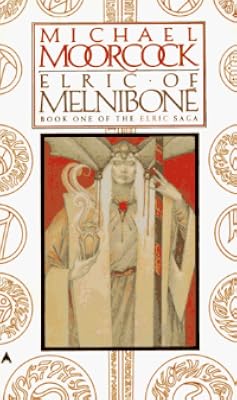

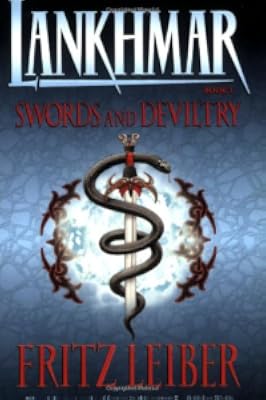


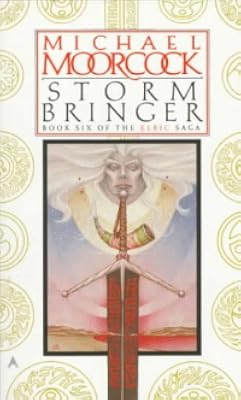












Member Recommendations
Jarandel Remarkable similarities in the careers of the protagonists, and the feel of the main antagonists.
Being your typical door-stopper, the Jackal gets more sprawling and detailed though, and also starts comparatively earlier in Richius Vantran's life, what would be the rough equivalent of the opening scenes of Hawkmoon taking place maybe halfway through.
Member Reviews
This one, even more so than last year’s re-reading of Fritz Leiber’s Fafhrd and Grey Mouser series, was a real trip down Memory Lane for me. I think I must have been about 13-14 years old when I read my first work by Michael Moorcock (an Elric novella in an anthology edited by Lin Carter). I suppose I must have been very susceptible for tragic anti-heroes as a teenager because I was very enthusiastic about the story and immediately began to get and read (it’s hard to imagine for me today, but back in those days I didn’t have a TBR shelf) everything by Michael Moorcock I could get my hands on. As I didn’t read English at the time, and the selection of available SFF books was rather slim at the time, rather than starting with show more the Elric books, my first Moorcock novels were his History of the Runestaff tetralogy, of which this is the first volume.
Returning to a book one has loved as a kid or a teenager always bears the risk of ending up shattering some fond memories when it turns that the characters once dear to one’s hear are insufferably clichéd, the plot one used to follow with bated breath ludicrously unlikely and the writing once admired unbearingly wooden. So I started this re-read with some trepidation, but soon could lay my fears to rest and let myself be carried along by a novel which turned out to be pretty good even beyond the rose-coloured haze of nostalgic recollection.
Although I have to say that I enjoyed different things this time round – when I read this and the suceeding novels as a teenager, it was mainly the mystery of the Runestaff and the tragic fate of the melancholy hero that held my interest. These days, I am finding the plot rather predictable and not quite as keen on emo characters (not that we had that term back then) as I used to be. But what I enjoy and even admire is the sheer fertility of Moorcock’s imagination, the bizarre world he imagines and the even bizarrer creatures he populates it with.
The History of the Runestaff for the most part takes place in what is either a far future or a very weird alternate version of Europe (it’s never really clear which) where in a nice inversion Great Britain (called Granbretan here) is a Nazi-like aggressor that is set to conquer the world while the resistance against them is led by the German Duke Hawkmoon of Köln. The Jewel in the Skull, like all novels in the series, is quite slim by today’s standards (it was first published in 1967), probably as long as the prologue in Brandon Sanderson’s most recent Stormlight Archive novel. This means that the novel is moving at a very brisk pace, there is no dallying for lengthy descriptions of scenery, architecture or clothing here – and it is not at all necessary either, as Moorcock does an excellent job of evoking atmosphere with just a few strokes of his literary brush. There is no lack in action either, the plot moves fast but never breathlessly so, sending our hero from London to France to Persia on a quest to get rid of the title-giving jewel implanted in his skull by the evil forces of Granbretan. The only thing that seems to get somewhat short shrift is character – it has to be said that everyone here is pretty flat and there’s not really any development either. But that might very well have been Moorcock’s intention – The History of the Runestaff is part of the larger Eternal Champion series, and that concerns itself by definition with archetypes rather than characters. But the novel really does very well without them – there is not much depth to it (unlike some of Moorcock’s other works), but The Jewel in the Skull is a highly entertaining adventure novel that I do not regret re-reading and whose sequels I’m undoubtedly going to tackle very soon. show less
Returning to a book one has loved as a kid or a teenager always bears the risk of ending up shattering some fond memories when it turns that the characters once dear to one’s hear are insufferably clichéd, the plot one used to follow with bated breath ludicrously unlikely and the writing once admired unbearingly wooden. So I started this re-read with some trepidation, but soon could lay my fears to rest and let myself be carried along by a novel which turned out to be pretty good even beyond the rose-coloured haze of nostalgic recollection.
Although I have to say that I enjoyed different things this time round – when I read this and the suceeding novels as a teenager, it was mainly the mystery of the Runestaff and the tragic fate of the melancholy hero that held my interest. These days, I am finding the plot rather predictable and not quite as keen on emo characters (not that we had that term back then) as I used to be. But what I enjoy and even admire is the sheer fertility of Moorcock’s imagination, the bizarre world he imagines and the even bizarrer creatures he populates it with.
The History of the Runestaff for the most part takes place in what is either a far future or a very weird alternate version of Europe (it’s never really clear which) where in a nice inversion Great Britain (called Granbretan here) is a Nazi-like aggressor that is set to conquer the world while the resistance against them is led by the German Duke Hawkmoon of Köln. The Jewel in the Skull, like all novels in the series, is quite slim by today’s standards (it was first published in 1967), probably as long as the prologue in Brandon Sanderson’s most recent Stormlight Archive novel. This means that the novel is moving at a very brisk pace, there is no dallying for lengthy descriptions of scenery, architecture or clothing here – and it is not at all necessary either, as Moorcock does an excellent job of evoking atmosphere with just a few strokes of his literary brush. There is no lack in action either, the plot moves fast but never breathlessly so, sending our hero from London to France to Persia on a quest to get rid of the title-giving jewel implanted in his skull by the evil forces of Granbretan. The only thing that seems to get somewhat short shrift is character – it has to be said that everyone here is pretty flat and there’s not really any development either. But that might very well have been Moorcock’s intention – The History of the Runestaff is part of the larger Eternal Champion series, and that concerns itself by definition with archetypes rather than characters. But the novel really does very well without them – there is not much depth to it (unlike some of Moorcock’s other works), but The Jewel in the Skull is a highly entertaining adventure novel that I do not regret re-reading and whose sequels I’m undoubtedly going to tackle very soon. show less
A young knight, having lost everyone and everything he holds dear, travels to a strange land, falls in with an older man and a beautiful woman in a battle against an evil empire, one that is ruled by a mystical ancient emperor and his most trusted evil, general, a vile battle-hardened brute who always wears a mask. There's a mystical force controlling our hero's destiny although he knows little about it at first, oh, and there's also a trusted companion covered totally in long ginger hair.
Stop me if you've heard this before :-)
Moorcock's tale came a few years before Star Wars, but a fairy tale is a fairy tale, however it's told, and this one follows the same great themes. It takes place in the far future on earth rather than in a show more galaxy long ago and far away, and being Moorcock, reality is never all that stable, but it's another great romp.
Dorian Hawkmoon is the latest incarnation of the Eternal Champion in this one, book one of the four-book history of the Runestaff. And again there's epic battles -- even more of them than in previous volumes -- some truly vicious bad guys, and heroic defenders standing against them.
The evil empire of the future Great Britain, with its beast-masks, vast military, flying machines, time palaces and crystal bridges is more of Moorcock's early proto-steampunk, and comes alive wonderfully in the mind's eye, as does the castle in the Camarg that stands against them.
As book 1 of 4 it's a wonderful introduction to all the main players, and the big battle is a joyous romp of old-school sword and sorcery. These four books as a whole are among my favorites of all of Moorcock's work, and I'm looking forward to spending most of the weekend lost in his world with them. show less
Stop me if you've heard this before :-)
Moorcock's tale came a few years before Star Wars, but a fairy tale is a fairy tale, however it's told, and this one follows the same great themes. It takes place in the far future on earth rather than in a show more galaxy long ago and far away, and being Moorcock, reality is never all that stable, but it's another great romp.
Dorian Hawkmoon is the latest incarnation of the Eternal Champion in this one, book one of the four-book history of the Runestaff. And again there's epic battles -- even more of them than in previous volumes -- some truly vicious bad guys, and heroic defenders standing against them.
The evil empire of the future Great Britain, with its beast-masks, vast military, flying machines, time palaces and crystal bridges is more of Moorcock's early proto-steampunk, and comes alive wonderfully in the mind's eye, as does the castle in the Camarg that stands against them.
As book 1 of 4 it's a wonderful introduction to all the main players, and the big battle is a joyous romp of old-school sword and sorcery. These four books as a whole are among my favorites of all of Moorcock's work, and I'm looking forward to spending most of the weekend lost in his world with them. show less
Of all of the Eternal Champion books, this may be my favorite. Dorian Hawkmoon and his friends, fighting the empire in their strange alternate earth. The human and no so human allies of the Empire are creepy, and there's just something extra heroic about Dorian, as opposed to the weird evilness of Elric.
There are just some authors that you know what you're going to get. Tom Clancy. John Grisham (in his mystery days). The author of "If You Give a Moose a Muffin." Michael Moorcock is one of those authors. You know what to expect. A good, pulp fantasy novel, often times layered with abstractions in the form of the "multiverse" - multiple universes layered on top of each other.
Jewel in the Skull is the story of Hawkmoon (no, not like the U2 song), one of Moorcock's Eternal Champion characters. Act 1 of a 4 part series, Jewel in the Skull is a fast-moving piece that introduces us to the characters in this section of the multiverse and sets the stage for the major battles to come.
As with any good pulp fiction book, the heroes are good and show more the villains are exceptionally bad. Hawkmoon must take on an empire that is, in many respects, a perverted clone of the Nazis and defend a little corner of Europe (this time in southern France) that is holding on for dear life.
In lining up this story, Moorcock knows where to put the emphasis - and it ain't in character development. He is 100% focused on plot. He has crafted a tight plot that keep the action moving forward - much faster than other of his more famous works such as the Elric series. Stripped down to the bare essentials, this is like the Tarzan or John Carter novels of Edgar Rice Burroughs.
A fun, quick read. show less
Jewel in the Skull is the story of Hawkmoon (no, not like the U2 song), one of Moorcock's Eternal Champion characters. Act 1 of a 4 part series, Jewel in the Skull is a fast-moving piece that introduces us to the characters in this section of the multiverse and sets the stage for the major battles to come.
As with any good pulp fiction book, the heroes are good and show more the villains are exceptionally bad. Hawkmoon must take on an empire that is, in many respects, a perverted clone of the Nazis and defend a little corner of Europe (this time in southern France) that is holding on for dear life.
In lining up this story, Moorcock knows where to put the emphasis - and it ain't in character development. He is 100% focused on plot. He has crafted a tight plot that keep the action moving forward - much faster than other of his more famous works such as the Elric series. Stripped down to the bare essentials, this is like the Tarzan or John Carter novels of Edgar Rice Burroughs.
A fun, quick read. show less
First of a series, this fantasy story is about Count Brass, a man who runs the small kingdom of Kamarg, in what we know as southern France. He wants to spend his remaining years in peace and serenity, so he has no interest in allying with anyone, against anyone. Kamarg is also the last holdout against the forces of Granbretan, the Dark Empire, who have been uniting the many warring factions in Europe.
Baron Meliadus, the right-hand man to the Granbretan king, pays a visit to talk alliance between Kamarg and Granbretan. Count Brass is not interested. Meliadus is infatuated with Brass's daughter, Yisselda, and attempts to kidnap her. It doesn't work, and Meliadus is thrown out of the castle.
Back in Granbretan, Meliadus decides to send show more someone else to kidnap Yisselda. Dorian Hawkmoon, Duke of Koln, is a recent loser against Granbretan, and has been held prisoner for a while. Promised his lands and title if he succeeds, his loyalty is assured by a black jewel implanted in his forehead. It will let Granbretan see everything Hawkmoon sees, and it can be used to destroy Hawkmoon's mind, if necessary.
The people of Castle Brass are able to temporarily neutralize the black jewel, rendering it useless to Granbretan. A large force is sent from Granbretan, to take care of Hawkmoon and Castle Brass, once and for all. Even with a 20 to 1 advantage, a combination of Hawkmoon's military knowledge and several high-tech weapons stationed around the castle leads to a huge defeat for Granbretan.
The neutralizing of the black jewel will not last forever, so Hawkmoon undertakes a journey far to the southwest (approximately present-day Iran) to find Malagigi, the only person with enough sorcery to permanently neutralize the jewel. When he arrives, Hawkmoon finds himself in the middle of a civil war brought about by an attack from Granbretan and Meliadus.
This one is really good. It has plenty of action. Moorcock is a veteran in the fantasy field, so he very much knows what he is doing. For Conan fans looking for something else to read, look here. It is well worth reading. show less
Baron Meliadus, the right-hand man to the Granbretan king, pays a visit to talk alliance between Kamarg and Granbretan. Count Brass is not interested. Meliadus is infatuated with Brass's daughter, Yisselda, and attempts to kidnap her. It doesn't work, and Meliadus is thrown out of the castle.
Back in Granbretan, Meliadus decides to send show more someone else to kidnap Yisselda. Dorian Hawkmoon, Duke of Koln, is a recent loser against Granbretan, and has been held prisoner for a while. Promised his lands and title if he succeeds, his loyalty is assured by a black jewel implanted in his forehead. It will let Granbretan see everything Hawkmoon sees, and it can be used to destroy Hawkmoon's mind, if necessary.
The people of Castle Brass are able to temporarily neutralize the black jewel, rendering it useless to Granbretan. A large force is sent from Granbretan, to take care of Hawkmoon and Castle Brass, once and for all. Even with a 20 to 1 advantage, a combination of Hawkmoon's military knowledge and several high-tech weapons stationed around the castle leads to a huge defeat for Granbretan.
The neutralizing of the black jewel will not last forever, so Hawkmoon undertakes a journey far to the southwest (approximately present-day Iran) to find Malagigi, the only person with enough sorcery to permanently neutralize the jewel. When he arrives, Hawkmoon finds himself in the middle of a civil war brought about by an attack from Granbretan and Meliadus.
This one is really good. It has plenty of action. Moorcock is a veteran in the fantasy field, so he very much knows what he is doing. For Conan fans looking for something else to read, look here. It is well worth reading. show less
Dorian Hawkmoon tried and failed. He tried to rally his people against the tyranny of the Dark Empire of Granbretan and failed. He was captured and sent into the heart of the empire, changed into a tool to be used to further the Dark Empire's goals - goals that included the humbling of the defiant Count Brass and the salting of the earth of his home in Kamarg. The wise Count, however, sees through Hawkmoon's ruse and through the Dark Empire's plans, giving Hawkmoon a new chance at a free life. Unfortunately, there's something of a time limit on that life, so if he's going to make it a life worth living, he'd better hurry.
A solid tale of the Eternal Champion. Not quite so fantastic as some others. While I enjoyed the book, I'm not yet show more sold (as some are) that Hawkmoon is the best of the Champion's incarnations. But time will tell, I imagine... show less
A solid tale of the Eternal Champion. Not quite so fantastic as some others. While I enjoyed the book, I'm not yet show more sold (as some are) that Hawkmoon is the best of the Champion's incarnations. But time will tell, I imagine... show less
it feels more like a script for comics; somewhat enjoyable, but unoriginal and plain.
Members
- Recently Added By
Lists

Survey of Fantasy Classics
111 works; 23 members

Books Read in 2022
5,166 works; 114 members

Les 100 principaux titres de la science-fiction (1981)
126 works; 3 members
Author Information

659+ Works 65,078 Members
Michael Moorcock, 1939 - Writer Michael Moorcock was born December 18, 1939 in Mitcham, Surrey, England. Moorcock was the editor of the juvenile magazine Tarzan Adventures from 1956-58, an editor and writer for the Sexton Blake Library and for comic strips and children's annuals from 1959-61, an editor and pamphleteer for Liberal Party in 1962, show more and became editor and publisher for the science fiction magazine New Worlds in 1964. He has worked as a singer-guitarist, has worked with the rock bands Hawkwind and Blue Oyster Cult and is a member of the rock band Michael Moorcock and the Deep Fix. Moorcock's writing covers a wide range of science fiction and fantasy genres. "The Chronicles of Castle Brass" was a sword and sorcery novel, and "Breakfast in the Ruins: A Novel of Inhumanity" uses the character Karl Glogauer as a different person in different times. Karl participates in the political violence of the French Revolution, the Paris Commune, and a Nazi concentration camp. Moorcock also wrote books and stories that featured the character Jerry Cornelius, who had no consistent character or appearance. "The Condition of Muzak" completed the initial Jerry Cornelius tetralogy and won Guardian Literary Prize in 1977. "Byzantium Endures" and "The Laughter of Carthage" are two autobiographical novels of the Russian emigre Colonel Pyat and were the closest Moorcock came to conventional literary fiction. "Byzantium Endures" focuses on the first twenty years of Pyat's life and tells of his role in the Russian revolution. Pyat survives the revolution and the subsequent civil war by working first for one side and then another. "The Laughter of Carthage" covers Pyat's life from 1920-1924 telling of his escape from Communist Russia and his travels in Europe and America. It's a sweeping picture of the world during the 1920's because it takes the character from living in Constantinople to Hollywood. Moorcock returned to the New Wave style in "Blood: A Southern Fantasy" (1994) and combined mainstream fiction with fantasy in "The Brothel of Rosenstrasse," which is set in the imaginary city of Mirenburg. MoorCock won the 1967 Nebula Award for Behold the Man and the 1979 World Fantasy Award for his novel, Gloriana. (Bowker Author Biography) show less
Some Editions
Awards and Honors
Series

Hawkmoon
7 works (1)

The History of the Runestaff
4 works (1)

The Eternal Champion
63 works (Hawkmoon novel 1)
Belongs to Publisher Series
Work Relationships
Is contained in
Has the adaptation
Common Knowledge
- Canonical title
- The Jewel in the Skull
- Original title
- The Jewel in the Skull
- Original publication date
- 1967
- People/Characters
- Dorian Hawkmoon (Duke von Köln); Count Brass (Lord Guardian of the Kamarg); Yisselda; Bowgentle; Baron Meliadus (of Kroiden); Taragorm (Master of the Palace of Time) (show all 17); King-Emperor Huon; Kalan of Vitall; Leopold von Villach; Asrovak Mikosevaar; Mygel Holst (Archduke of Londra); Adaz Promp; Jarak Nankenseen; Oladahn; The Warrior in Jet and Gold; Malagigi the Enchanter; Queen Frawbra
- Important places
- Dark Empire of Granbretan; Kamarg; Aigues-Mortes, Kamarg; Londra, Granbretan; River Tayme, Granbretan; Deau-Vere, Granbretan (show all 11); Karlye; Parye (The Crystal City); Hamadan, Iran; Bulgar Mountains; Castle Brass, Kamarg
- Dedication
- For Robert Silverberg,
for all kinds of friendship - First words
- Then the Earth grew old, its landscapes bellowing and showing signs of age, its ways becoming whimsical and strange in the manner of a man in his last years.
- The High History of the Runestaff - Blurbers
- Wilson, Angus
- Original language
- English
Classifications
Statistics
- Members
- 1,026
- Popularity
- 25,154
- Reviews
- 9
- Rating
- (3.73)
- Languages
- 10 — Czech, Dutch, English, French, German, Italian, Lithuanian, Polish, Swedish, Turkish
- Media
- Paper, Ebook
- ISBNs
- 28
- ASINs
- 28