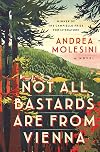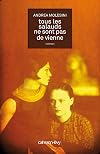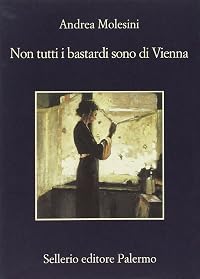
Not all Bastards are from Vienna
by Andrea Molesini
On This Page
Description
Andrea Molesini's exquisite debut novel, winner of the prestigious Campiello Prize, portrays the depths of heroism and horror within a Northern Italian village toward the end of the Great War. While a family's villa is requisitioned by enemy troops, they are forced to intimately confront war's injustice as their involvement with its sinister underpinnings grows more and more complex. In the autumn of 1917, Refrontolo, a small community north of Venice, is invaded by Austrian soldiers as the show more Italian army is pushed to the Piave river. The Spada family owns the largest estate in the area, where orphaned seventeen-year-old Paolo lives with his eccentric grandparents, headstrong aunt, and a loyal staff. With the battlefront nearby, the Spada home become a bastion of resistance, both clashing and cooperating with the military members imposing on their household. When Paolo is recruited to help with a covert operation, his life is put in irrevocable jeopardy. As he bears witness to violence and hostility between enemies, he grows to understand the value of courage, dignity, family bonds, and patriotism during wartime. show lessTags
Recommendations







Member Reviews
This Italian award winning novel begins in 1917 as the Austrian army takes over the Villa Spada in Refrontolo, Italy, home to an aristocratic family—two grandparents; aunt Maria; 17-year-old orphaned grandson Paolo—and their servants. The story is told through the eyes of Paolo, whose journey to manhood, including his involvement in the resistance movement and his initiation into love , carry the narrative. The atrocities of war are juxtaposed with the humor of the characters, especially that of the grandpa Gugliemo, who shares his insights and sleeping quarters with our narrator. As the enemy troops search for valuables, it is grandpa who explains, ‘War and loot are the only faithful married couple. "
Andrea Molsini creates a show more handful of memorable characters here that influence Paolo and help to provide insights about this time period just before the end of World War I, including Renaldo, who, though a servant for the family, works for the Italian secret forces, and Aunt Maria, the strong caretaker of the family estate. "Aunt Maria –Donna Maria to outsiders –was fine-looking, the victim of a haughty manner which both fascinated men and kept them at a distance. She was courted with circumspection by even the boldest and most passionate spirits: not a light cross to bear."
As mentioned in back notes, Molesini used the actual diaries of Maria Spada as a resource for novel. The Villa Spada acted as a microcosm of the the war, giving insights to the lives of those occupied countries.
Some memorable passages are quoted below to provide a sense of the writing:
"Giulia was chaos personified, an irresistible force. Grandpa had described her as the crupper of a horse, the shudder it gives, the lash of its tail on a horsefly. But she was far, far more than that: she was beautiful, she was ablaze. She regarded me with the hauteur of one who, knowing herself desired, strives not to reproach the unrequited lover."
"The soldiers took no notice of us, and still less did the officers, who whiled away their time smoking, playing cards and drinking an insipid brandy that according to Grandpa tasted of dry dung, iron and rotting leather, ‘the same taste as war’."
"Inside the house, the odour of poverty was notable for its absence. And that was an odour that I knew all too well. In Venice, I’d smelt it in homes I’d entered, on occasion, with a servant visiting her family. It had something to do with the odour of ashes, chickpea soup, and inadequately dried clothing." show less
Andrea Molsini creates a show more handful of memorable characters here that influence Paolo and help to provide insights about this time period just before the end of World War I, including Renaldo, who, though a servant for the family, works for the Italian secret forces, and Aunt Maria, the strong caretaker of the family estate. "Aunt Maria –Donna Maria to outsiders –was fine-looking, the victim of a haughty manner which both fascinated men and kept them at a distance. She was courted with circumspection by even the boldest and most passionate spirits: not a light cross to bear."
As mentioned in back notes, Molesini used the actual diaries of Maria Spada as a resource for novel. The Villa Spada acted as a microcosm of the the war, giving insights to the lives of those occupied countries.
Some memorable passages are quoted below to provide a sense of the writing:
"Giulia was chaos personified, an irresistible force. Grandpa had described her as the crupper of a horse, the shudder it gives, the lash of its tail on a horsefly. But she was far, far more than that: she was beautiful, she was ablaze. She regarded me with the hauteur of one who, knowing herself desired, strives not to reproach the unrequited lover."
"The soldiers took no notice of us, and still less did the officers, who whiled away their time smoking, playing cards and drinking an insipid brandy that according to Grandpa tasted of dry dung, iron and rotting leather, ‘the same taste as war’."
"Inside the house, the odour of poverty was notable for its absence. And that was an odour that I knew all too well. In Venice, I’d smelt it in homes I’d entered, on occasion, with a servant visiting her family. It had something to do with the odour of ashes, chickpea soup, and inadequately dried clothing." show less
The unusual setting of this novel is its most appealing feature. The focus is the small Northern Italian village of Refrontolo at the end of WWI (1917). This front never carried the notoriety of places like Gallipoli or Ypres and most non-Italians are probably unaware that Italy joined the Allies late in the Great War fighting the Germans and Austrians in this region just north of Venice. The story is loosely based on the diaries of Maria Spada, fictionalizing the impact that the war had on the people living in her village.
First the Germans and then the Austrians commandeer the Spada villa while bogged down against the Italians at the Piave River. The Spadas were an aristocratic family who, along with their staff and the village show more priest, provide the novel with some of its most interesting and eccentric characters. The narrator, Paolo, is an orphaned seventeen-year-old living at the villa with his grandparents. He tells of the covert resistance to the invaders that his family and the villa’s staff engaged in and his own sexual awakening. His beloved grandfather, Gugliemo, is an iconoclast who spends most of his time pretending to write great literature. His equally eccentric grandmother, Signora Nancy, is in the habit of taking sequential lovers, whom she numbers; receives periodic purges performed by her devoted servant, Theresa; and really is the power figure in the family’s resistance activities. Her clever resistance efforts include signaling to British pilots with the villa’s windows and the patterns of how its laundry is hung. Aunt Maria plays a Mata Hari-like role by entertaining the enemy commanders with meals and romance. Other important figures in the story are Renato, a heroic spy, and Guilia, an attractive young woman. Paolo admires and loves both of these bold characters. The village priest, Don Lorenzo, runs its school with an iron fist, but generally is treated with disdain by the other characters.
The Austrian commander, the Baron, seems to know that the family is part of the resistance, but never acts on it because he is enthralled with Aunt Maria. His internal conflict between duty and romance is an important theme in the book.
Another theme is the coming-of-age of Paolo where he learns of the brutality and inhumanity of war, the value of courage, the importance of loyalty to family and country and his own sexual yearnings.
This novel shows the awakening of a young man to the futility and brutality of World War I, but others have done this more effectively. However, its focus on a single family and village at a relatively unheralded front seems unique. Molesini successfully manages to evoke this with humor in an adventure populated with interesting characters. show less
First the Germans and then the Austrians commandeer the Spada villa while bogged down against the Italians at the Piave River. The Spadas were an aristocratic family who, along with their staff and the village show more priest, provide the novel with some of its most interesting and eccentric characters. The narrator, Paolo, is an orphaned seventeen-year-old living at the villa with his grandparents. He tells of the covert resistance to the invaders that his family and the villa’s staff engaged in and his own sexual awakening. His beloved grandfather, Gugliemo, is an iconoclast who spends most of his time pretending to write great literature. His equally eccentric grandmother, Signora Nancy, is in the habit of taking sequential lovers, whom she numbers; receives periodic purges performed by her devoted servant, Theresa; and really is the power figure in the family’s resistance activities. Her clever resistance efforts include signaling to British pilots with the villa’s windows and the patterns of how its laundry is hung. Aunt Maria plays a Mata Hari-like role by entertaining the enemy commanders with meals and romance. Other important figures in the story are Renato, a heroic spy, and Guilia, an attractive young woman. Paolo admires and loves both of these bold characters. The village priest, Don Lorenzo, runs its school with an iron fist, but generally is treated with disdain by the other characters.
The Austrian commander, the Baron, seems to know that the family is part of the resistance, but never acts on it because he is enthralled with Aunt Maria. His internal conflict between duty and romance is an important theme in the book.
Another theme is the coming-of-age of Paolo where he learns of the brutality and inhumanity of war, the value of courage, the importance of loyalty to family and country and his own sexual yearnings.
This novel shows the awakening of a young man to the futility and brutality of World War I, but others have done this more effectively. However, its focus on a single family and village at a relatively unheralded front seems unique. Molesini successfully manages to evoke this with humor in an adventure populated with interesting characters. show less
How the upper class Italian family, the Spadas, cope with Germans then Austrians quartered in their home during World War 1. Behind the backs of the enemy, they send messages on troop movements, etc. in a type of code involving shutters and laundry lines to a British airplane that flies overhead at certain times. The Spadas and their servants are whimsical, especially the teenaged son, Paolo, the narrator and Grandfather Guglielmo. Story is taken from the diaries of a Maria Spada; characters and their personalities are fiction but locations are real. Part One was really slow-moving; at least it introduced us to everyone but the plot really didn't start to gel until Parts Two and Three. Part of the story involved Paolo's coming of age.
Another book that I could not put down, and thanks to daylight savings time I did have that extra hour so yes I read for hours again.
The book begins in Italy 1917. The aristocratic Spada family's villa will soon be overrun. War is hell, soldiers are animals, and still are. What is wrong with some men?
But the book never got dark. I would not exactly call it light, but it had this feeling of hope. I would credit that to the main person Paolo, he was 17, but he still had hope of a future without war. He still has time to fall in love, or lust with someone. And his light makes the book lighter.
He lives with his quirky grandparents. His gran takes lovers, his granpa quotes Buddha. Then there Aunt Maria who rules. There are 3 servants, and show more beautiful Giulia. And of course different occupants of the villa.
They are all trying to go on as normal, live their lives, but as the invaders show their ruthlessness they all want to do something about it.
Such a good, and well written book. The words just flow by, light, easy to read and a book that you just can not put down.
And as it is a translation, I say that it's a well done translation too.
I'd recommend it. show less
The book begins in Italy 1917. The aristocratic Spada family's villa will soon be overrun. War is hell, soldiers are animals, and still are. What is wrong with some men?
But the book never got dark. I would not exactly call it light, but it had this feeling of hope. I would credit that to the main person Paolo, he was 17, but he still had hope of a future without war. He still has time to fall in love, or lust with someone. And his light makes the book lighter.
He lives with his quirky grandparents. His gran takes lovers, his granpa quotes Buddha. Then there Aunt Maria who rules. There are 3 servants, and show more beautiful Giulia. And of course different occupants of the villa.
They are all trying to go on as normal, live their lives, but as the invaders show their ruthlessness they all want to do something about it.
Such a good, and well written book. The words just flow by, light, easy to read and a book that you just can not put down.
And as it is a translation, I say that it's a well done translation too.
I'd recommend it. show less
Se invece di essere un lettore qualunque fossi un po’ più scaltrito nell’uso degli strumenti della critica letteraria, saprei forse esprimere con qualche precisione il motivo per cui questo libro mi ha lasciato alla fine dei conti insoddisfatto. Eppure è un romanzo di piacevole lettura, fondato su un racconto che, seppure con qualche arrotolamento su se stesso, è originale e avvincente. Mentre lo leggevo, però, pensavo ai quaderni che Irene Némirovsky riempiva per mettere a fuoco i personaggi che poi avrebbero agito nei suoi romanzi. Pagine e pagine di scritti non finalizzati alla pubblicazione ma alla costruzione di personalità definite e credibili, che non nascono e muoiono nella singola pagina del racconto ma ci arrivano show more con un passato, un carattere pienamente formato, una precisa individualità. Nella villa Spada di Refrontolo (Treviso) occupata dall’esercito austriaco dopo la disfatta di Caporetto sembrano invece passare figurine ritagliate nella carta e tutte più o meno già viste altrove: il nonno originale e la nonna tutta d’un pezzo, la zia zitella e il generale triste, l’aviatore inglese, lo sconosciuto misterioso, la cuoca brontolona e la figlia scema, il parroco con l’alitosi e la cugina di città disinvolta e un po’ puttana. E tutto scorre su un registro medio e non troppo ardito, senza cadute e senza voli, anche quando la vicenda prende una piega tragica che all’inizio non ci si aspetterebbe.
L’imperatore Giuseppe II disse una celebre sciocchezza a proposito del Ratto dal serraglio di Mozart, e cioè che c’erano troppe note. Se l’ha detta un imperatore posso certamente ricucinarmela io: da leccarsi i baffi a saper fare un’opera prima così ma nell’opera seconda io ci metterei un po’ meno note e un po’ più piani e forti, perché alla fine dei conti sono le sfumature che danno il sale all’arrosto. show less
L’imperatore Giuseppe II disse una celebre sciocchezza a proposito del Ratto dal serraglio di Mozart, e cioè che c’erano troppe note. Se l’ha detta un imperatore posso certamente ricucinarmela io: da leccarsi i baffi a saper fare un’opera prima così ma nell’opera seconda io ci metterei un po’ meno note e un po’ più piani e forti, perché alla fine dei conti sono le sfumature che danno il sale all’arrosto. show less
Sep 24, 2017Italian
Best een leuk verhaal om te lezen tijdens het WO-I jubeljaar 2014 maar verwacht er tegelijk ook niet te veel van. De oorlog brengt enkele maatschappelijke veranderingen op gang die vorm krijgen in enkele van de personages. Echt beklijven deed het verhaal voor mij echter niet.
Apr 16, 2014Dutch
Dat de oorlog de rollen omkeert, wordt pijnlijk duidelijk wanneer Paolo en de bewaker worden verraden. Na een lang uitgesponnen aanloop leidt dat tot een met actie volgepropte finale, waarin het evenwicht een beetje zoek is. Niettemin mooi werk van docent literatuurwetenschap en vertaler Andrea Molesini.
Volledige bespreking via http://wraakvandedodo.blogspot.be/2014/03/andrea-molesini-niet-alle-smeerlappen....
Volledige bespreking via http://wraakvandedodo.blogspot.be/2014/03/andrea-molesini-niet-alle-smeerlappen....
Mar 16, 2014Dutch
1
Members
- Recently Added By
Lists

Italian Literature
558 works; 42 members
Author Information

25 Works 342 Members
Awards and Honors
Awards
Series
Belongs to Publisher Series
La memoria [Sellerio] (829)
Common Knowledge
- Canonical title
- Not all Bastards are from Vienna
- Original title
- Non tutti i bastardi sono di Vienna
- Alternate titles
- Between enemies
- Original publication date
- 2010
- People/Characters*
- Paolo Spada
- Important places*
- Lungo il fiume Piave
- Important events*
- Prima guerra mondiale (1915 | 1918); battaglia di Caporetto (1917-10-24)
- First words*
- Hij maakte zich los uit de nacht.
- Last words*
- (Click to show. Warning: May contain spoilers.)'Potfernondedrufel.'
- Original language*
- Italiano
*Some information comes from Common Knowledge in other languages. Click "Edit" for more information.
Classifications
- Genres
- Fiction and Literature, General Fiction, Historical Fiction
- DDC/MDS
- 853.92 — Literature & rhetoric Italian, Romanian & related literatures Italian fiction 1900- 21st Century
- LCC
- PQ4873 .O3934 .N6613 — Language and Literature French, Italian, Spanish and Portuguese literatures Italian literature Individual authors, 1961-2000
- BISAC
Statistics
- Members
- 208
- Popularity
- 154,460
- Reviews
- 9
- Rating
- (3.26)
- Languages
- 7 — Danish, Dutch, English, French, German, Italian, Norwegian
- Media
- Paper, Ebook
- ISBNs
- 19
- ASINs
- 6