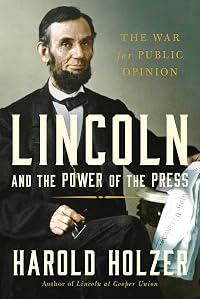
Lincoln and the Power of the Press: The War for Public Opinion
by Harold Holzer
On This Page
Description
From his earliest days, Lincoln spoke to the public directly through the press. When war broke out and the nation was tearing itself apart, Lincoln authorized the most widespread censorship in the nation's history, closing down papers that were "disloyal" and even jailing or exiling editors who opposed enlistment or sympathized with secession. The telegraph, the new invention that made instant reporting possible, was moved to the office of Secretary of War Stanton to deny it to unfriendly show more newsmen. Holzer shows us politicized newspaper editors battling for power, and a masterly president using the press to speak directly to the people and shape the nation. show lessTags
Recommendations




Member Reviews
Holzer gives a detailed history of the engagement of Lincoln and the press from his years in Illinois to the end of his presidency. We are reminded by this history of the level of intense partisanship that existed in mid-nineteenth century America, both prior to and during the Civil War. The ties between the press and the political parties was quite different than we (mostly) see today in that newspapers were overtly organs of the political parties and made no pretense of neutrality or journalistic independence. Lincoln knew quite well that positive news coverage was vitally critical to personal political advancement and to political success in office. Lincoln famously said during his debates with Douglas that "with public sentiment show more nothing can fail; without it nothing can succeed." Lincoln took an active role throughout his career in managing news coverage; in newly discovered sources Holzer found that Lincoln had purchased a German-language newspaper to assist in courting the German-American populace. Lincoln frequently wrote letters to editors and opinion columns -- sometimes anonymously.
Today, the number of newspapers in the nation has shrunk to a considerably smaller level than in Lincoln's time' this may be largely due to the new forms of media now available. Holzer chronicles the 19th century rise of newspapers with national reach by focusing on three influential New York papers and their publishers/editors: James Gordon Bennett's New York Herald, Horace Greeley's New York Tribune, and Henry Raymond's New-York Times. These press magnates wielded enormous clout on political matters and the interaction between Lincoln and the press is well understood by examining the Machiavellian relationships between these journalists and Lincoln.
The book delves deeply into the affect of the Civil War on freedom of the press. The administration took a strong position against newspapers that showed sympathies toward the South or which were anti-war. Often, stern retribution exacted against newspapers was initiated independently by field generals with no direct sanction by the administration, but with little interference either. Presses were ransacked and editors put in prison for publishing articles deemed inimical to the Northern war effort. While there were expected howls of protest against violations of the first amendment's guarantee of press freedom, the position of the administration was that the existential threat to the preservation of the union justified actions in (temporary) contravention of the Constitution. To sustain the overarching purpose of the Constitution, i.e. a national union, it was necessary to suppress utterances that would imperil it. Alongside such drastic measures of press suppression the government also exercised stringent censorship over the reports of journalists from the field.
The three major newspapers, while aligning generally with either the Republican or Democratic parties, were not mouthpieces for the parties. They attempted to use their reach to influence public sentiment for or against particular policies; two examples detailed by Holzer are the movement toward emancipation and the institution of a draft in 1863. The prospects and means to find a negotiated settlement to the conflict was another reason for interplay between Lincoln and the press. On these and other issues, the editors and Lincoln continually engaged in chess game like strategies to manipulate public opinion. Lincoln was adroit in his handling of these powerful shapers of the public's reaction to his administration's aims; the tension between the two loci of power was never absent. Holzer shows as well how the bitter rivalries among the newspapers for predominance played significantly into the power dynamics of the era. While government suppression of the press during the war was extreme by today's standards, it is important that in 1864 Lincoln did not attempt to subvert press coverage in opposition to his re-election.
One cannot, of course, help but compare the press-political relationship of that era with today. While it may be the case that the press is independent from the political structures it is clearly not neutral, nor should it be. "We report, you decide" is more accurately phrased as "We decide what and how to report so that you will agree". While this results in messiness and strife this tension offers the best hope to our maintaining our freedom. show less
Today, the number of newspapers in the nation has shrunk to a considerably smaller level than in Lincoln's time' this may be largely due to the new forms of media now available. Holzer chronicles the 19th century rise of newspapers with national reach by focusing on three influential New York papers and their publishers/editors: James Gordon Bennett's New York Herald, Horace Greeley's New York Tribune, and Henry Raymond's New-York Times. These press magnates wielded enormous clout on political matters and the interaction between Lincoln and the press is well understood by examining the Machiavellian relationships between these journalists and Lincoln.
The book delves deeply into the affect of the Civil War on freedom of the press. The administration took a strong position against newspapers that showed sympathies toward the South or which were anti-war. Often, stern retribution exacted against newspapers was initiated independently by field generals with no direct sanction by the administration, but with little interference either. Presses were ransacked and editors put in prison for publishing articles deemed inimical to the Northern war effort. While there were expected howls of protest against violations of the first amendment's guarantee of press freedom, the position of the administration was that the existential threat to the preservation of the union justified actions in (temporary) contravention of the Constitution. To sustain the overarching purpose of the Constitution, i.e. a national union, it was necessary to suppress utterances that would imperil it. Alongside such drastic measures of press suppression the government also exercised stringent censorship over the reports of journalists from the field.
The three major newspapers, while aligning generally with either the Republican or Democratic parties, were not mouthpieces for the parties. They attempted to use their reach to influence public sentiment for or against particular policies; two examples detailed by Holzer are the movement toward emancipation and the institution of a draft in 1863. The prospects and means to find a negotiated settlement to the conflict was another reason for interplay between Lincoln and the press. On these and other issues, the editors and Lincoln continually engaged in chess game like strategies to manipulate public opinion. Lincoln was adroit in his handling of these powerful shapers of the public's reaction to his administration's aims; the tension between the two loci of power was never absent. Holzer shows as well how the bitter rivalries among the newspapers for predominance played significantly into the power dynamics of the era. While government suppression of the press during the war was extreme by today's standards, it is important that in 1864 Lincoln did not attempt to subvert press coverage in opposition to his re-election.
One cannot, of course, help but compare the press-political relationship of that era with today. While it may be the case that the press is independent from the political structures it is clearly not neutral, nor should it be. "We report, you decide" is more accurately phrased as "We decide what and how to report so that you will agree". While this results in messiness and strife this tension offers the best hope to our maintaining our freedom. show less
This history highlights the partisan press that dominated the mid-19th century during the lifetime and presidency of Abraham Lincoln. While not a biography by any stretch, this book juxtaposes Lincoln's political journey alongside that of the leading newspapermen of the day - men such as Horace Greeley, Henry Jarvis Raymond, and James Gordon Bennett. The author also notes the many local presses, often openly partisan, that added to the political dynamics of the era. It's a fascinating look at the relationship between the media and the president, one with relevance for today, even if the mediums are vastly different.
A good book on the influence of the influence peddlers during the Age of Lincoln.
I listened to the audiobook of Holzer's Lincoln book "Lincoln and the Power of the Press: The War for Public Opinion" and it was pretty good.
Mr. Holzer really gives the reader/listener that no matter how times change, they still stay pretty much the same as how much the current state of "social media" can influence the world around them and how the game of [politics is played through them and the editors, writers and owners of the social media, in this case, newspapers.
Some stories were precent, some were in I felt for filler or for showing the reader that the author did his due diligence, but in the end Mr. Holzer did his job and showed how important show more social media manipulation and public opinion and politics are not new and in fact were quite alive and well and taken advantage of by none other than Pres. Abraham Lincoln.
This was a good book. Not a great one, but one I am glad I got through. I give this a 3.5 stars and would really only recommend this to those who are interested in Lincoln or the history of social media and politics. show less
I listened to the audiobook of Holzer's Lincoln book "Lincoln and the Power of the Press: The War for Public Opinion" and it was pretty good.
Mr. Holzer really gives the reader/listener that no matter how times change, they still stay pretty much the same as how much the current state of "social media" can influence the world around them and how the game of [politics is played through them and the editors, writers and owners of the social media, in this case, newspapers.
Some stories were precent, some were in I felt for filler or for showing the reader that the author did his due diligence, but in the end Mr. Holzer did his job and showed how important show more social media manipulation and public opinion and politics are not new and in fact were quite alive and well and taken advantage of by none other than Pres. Abraham Lincoln.
This was a good book. Not a great one, but one I am glad I got through. I give this a 3.5 stars and would really only recommend this to those who are interested in Lincoln or the history of social media and politics. show less
"Our government rests on public opinion. Whoever can change public opinion can change the government." Abraham Lincoln
An interesting book though a bit dry. It tells the story of not only Lincoln's political life in light of making and writing the news but also the story of the three most influential newsmen of his day. A few things it reveals about Lincoln that may be off the beaten path of common knowledge:
Lincoln owned a German language newspaper;
Lincoln wrote a great many newspaper articles. Usually under a pseudonym so no one would know it was him. We don't even know how many for sure he wrote since even as president he frequently hid his authorship.
Lincoln became close to his wife thru their mutual interest in writing political show more articles under fake names.
One of the duels he was challenged to and showed up to fight was based on him taking the blame for a scandalous article Mary wrote.
"The newspaper press, controls the state and the church; it directs the family, the legislator, the magistrate, and the minister. None rise above it's influence, none sink below its authority." An unnamed newspaper editor. show less
An interesting book though a bit dry. It tells the story of not only Lincoln's political life in light of making and writing the news but also the story of the three most influential newsmen of his day. A few things it reveals about Lincoln that may be off the beaten path of common knowledge:
Lincoln owned a German language newspaper;
Lincoln wrote a great many newspaper articles. Usually under a pseudonym so no one would know it was him. We don't even know how many for sure he wrote since even as president he frequently hid his authorship.
Lincoln became close to his wife thru their mutual interest in writing political show more articles under fake names.
One of the duels he was challenged to and showed up to fight was based on him taking the blame for a scandalous article Mary wrote.
"The newspaper press, controls the state and the church; it directs the family, the legislator, the magistrate, and the minister. None rise above it's influence, none sink below its authority." An unnamed newspaper editor. show less
Ratings
Members
- Recently Added By
Author Information

59+ Works 3,262 Members
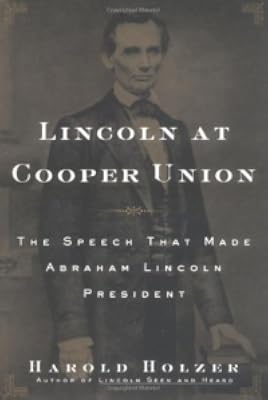
Harold Holzer is one of the leading authorities on Abraham Lincoln and the political culture of the Civil War era. He is a prolific writer and lecturer. He has written, co-written and edited over 30 books including Abraham Lincoln, The Writer (2000), which was named to the Children's Literature Choice List and the Bank Street Best Children's Books show more of the Year, and Lincoln at Cooper Union: The Speech That Made Abraham Lincoln President (2004), which won a 2005 Lincoln Prize. He has also written over 425 popular magazine and scholarly journal articles and numerous pamphlets and monographs. He has won numerous awards including the Barondess Award of the Civil War Round Table of New York five times; the Award of Achievement from the Lincoln Group of New York three times; a 1988 George Washington Medal; the 2000 Newman Book Award; and the 2008 National Humanities Medal. He is the Senior Vice President for External Affairs at The Metropolitan Museum of Art in New York. (Bowker Author Biography) show less
Awards and Honors
Common Knowledge
- Canonical title
- Lincoln and the Power of the Press: The War for Public Opinion
- People/Characters
- Abraham Lincoln
- Important events
- American Civil War
Classifications
- Genres
- History, Nonfiction, General Nonfiction, Biography & Memoir
- DDC/MDS
- 973.7 — History & geography History of North America United States Civil War Era (1857-1865)
- LCC
- E457.2 .H755 — History of the United States United States Civil War period, 1861-1865 Lincoln's administrations, 1861-April 15, 1865
- BISAC
Statistics
- Members
- 169
- Popularity
- 193,222
- Reviews
- 4
- Rating
- (3.64)
- Languages
- English
- Media
- Paper, Audiobook, Ebook
- ISBNs
- 10
- ASINs
- 3