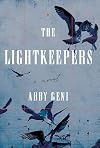
The Lightkeepers
by Abby Geni
On This Page
Description
"In The Lightkeepers, we follow Miranda, a nature photographer who travels to the Farallon Islands, an exotic and dangerous archipelago off the coast of California, for a one-year residency capturing the landscape. Her only companions are the scientists studying there, odd and quirky refugees from the mainland living in rustic conditions; they document the fish populations around the island, the bold trio of sharks called the Sisters that hunt the surrounding waters, and the overwhelming show more bird population who, at times, create the need to wear hard hats as protection from their attacks. Shortly after her arrival, Miranda is assaulted by one of the inhabitants of the islands. A few days later, her assailant is found dead, perhaps the result of an accident. As the novel unfolds, Miranda gives witness to the natural wonders of this special place as she grapples with what has happened to her and deepens her connection (and her suspicions) to her companions, while falling under the thrall of the legends of the place nicknamed "the Islands of the Dead.""-- show lessTags
Recommendations










Member Recommendations

Member Reviews
"There are envelopes for you in every state I have ever visited. For nearly two decades, I have written to you. Perhaps it is strange that I still have so much to say. I often find myself turning to you, reflexively, a question on my lips: I still engage in imaginary quarrels with you. I store up the memories I have left - the ones that have not fallen by the wayside - and run them through my hands, examining them. The raucous cackle of your laugh. The honey-and-lavender odor of your hair. Your habit of humming on long car trips. Your penchant for linen skirts. I still experience that surge of bottomless sorrow. Even now, this can only be alleviated by by a few minutes spent at my desk, scribbling away, head bent over the page."
This was show more one of my bookstore picks from my birthday trip, and I gobbled it up in just two days. The writing is beautiful and Geni does an excellent job of slowly building the tension in this book that is worthy of a Hitchcock film. It's stunning. Miranda lost her mother at the age of fourteen, and that has colored everything that came after it - she writes her mother throughout her life and the book is formatted as a narrative to her mom. It's perfectly done - no dates or separate entries, really, it's just divided up by the seasons. Miranda is a nature photographer and has gotten permission to stay on the Farallon Islands (a nature preserve that only allows biologists to stay there, and under very specific conditions) for an entire year photographing the islands and the wildlife. And right from the very beginning it is a trial by fire, as she is not exactly welcomed by the six researchers that are already ensconced there.
"In other places I have visited, I have been able to photograph everything I needed in a month or so. But this archipelago is something else. The islets are the central stars in a galaxy of marine life. The birds and seals are the inner constellations -permanent residents who eat, mate, and raise their young on the rough-hewn granite. There are great white sharks, periodic visitors, pulled out of their mysterious orbits to linger offshore. Whales, like far-flung comets, pass by in search of krill. There are tufted puffins. Sea otters. Comb jellies. I am slated to be on the islands for a full year. I will need all that time to capture this end-of-the-world spot."
As the weeks and months pass, the drama that unfolds is interspersed with lush descriptions of the scenery and wildlife that bring the islands to life. There is beauty here but also darkness. We can feel the menace that intrudes and then recedes but never quite leaves the stage. It is brilliantly done. Highly recommended and sure to be one of my favorite reads of this year.
"There is a wonderful violence to the act of photography. The camera is a potent thing, slicing an image away from the landscape and pinning it to a sheet of film. When I choose a segment of horizon to capture, I might as well be an elephant seal hunting an octopus. The shutter clicks. Every boulder, wave, and curl of cloud included in the snapshot is severed irrevocably from what is not included. The frame is as sharp as a knife. The image is ripped from the surface of the world." show less
This was show more one of my bookstore picks from my birthday trip, and I gobbled it up in just two days. The writing is beautiful and Geni does an excellent job of slowly building the tension in this book that is worthy of a Hitchcock film. It's stunning. Miranda lost her mother at the age of fourteen, and that has colored everything that came after it - she writes her mother throughout her life and the book is formatted as a narrative to her mom. It's perfectly done - no dates or separate entries, really, it's just divided up by the seasons. Miranda is a nature photographer and has gotten permission to stay on the Farallon Islands (a nature preserve that only allows biologists to stay there, and under very specific conditions) for an entire year photographing the islands and the wildlife. And right from the very beginning it is a trial by fire, as she is not exactly welcomed by the six researchers that are already ensconced there.
"In other places I have visited, I have been able to photograph everything I needed in a month or so. But this archipelago is something else. The islets are the central stars in a galaxy of marine life. The birds and seals are the inner constellations -permanent residents who eat, mate, and raise their young on the rough-hewn granite. There are great white sharks, periodic visitors, pulled out of their mysterious orbits to linger offshore. Whales, like far-flung comets, pass by in search of krill. There are tufted puffins. Sea otters. Comb jellies. I am slated to be on the islands for a full year. I will need all that time to capture this end-of-the-world spot."
As the weeks and months pass, the drama that unfolds is interspersed with lush descriptions of the scenery and wildlife that bring the islands to life. There is beauty here but also darkness. We can feel the menace that intrudes and then recedes but never quite leaves the stage. It is brilliantly done. Highly recommended and sure to be one of my favorite reads of this year.
"There is a wonderful violence to the act of photography. The camera is a potent thing, slicing an image away from the landscape and pinning it to a sheet of film. When I choose a segment of horizon to capture, I might as well be an elephant seal hunting an octopus. The shutter clicks. Every boulder, wave, and curl of cloud included in the snapshot is severed irrevocably from what is not included. The frame is as sharp as a knife. The image is ripped from the surface of the world." show less
If you’re not a photographer you will probably enjoy this book a lot more than I did, but because of my 30 years as a serious (if non-professional) photographer the raft of inaccuracies and improbabilities surrounding our heroine just kept pulling me out of the story. It should have been the perfect book for me; nature photographer on a desolate island off the coast of San Francisco, there for as long as she can stand it to document the harsh realities of life on that island for both humans and wildlife. Alas we get a photographer who is woefully unprepared, temperamentally unsuited to the environment, and who appears to hate nature and fears the most innocuous of animals. I knew I was in trouble when early on the author describes show more someone’s reaction to looking into the engine compartment of a modern car as looking upon a “labyrinth of cogs”. Cogs? And a labyrinth of them to boot? What? You’re lucky if you can see past the plastic shroud over the engine, much less to any working part of it. Sigh. Poetic license is one thing, but sheer idiocy is another.
Just to get it over, here are the photography gaffes as I caught them -
1. Hand cramps. From holding a camera. Hand cramps. This from a person who supposedly has made her living from photography for decades. I for one have held a camera for hundreds of hours, up and down mountains, for miles at a time, nary a cramp to be felt.
2. She seems to be sorting through digital images in camera. What? In 2016 on an island with electricity? No photographer worth a damn would be without a laptop and an external hard drive. They’re cheap and make it so that you don’t have to have a hundred memory cards with you. Also, it’s quite normal and very very smart to offload images to something more reliable should there be a memory card failure (something I’ve never experienced in 10 years of having a digital camera, but what the heck, it could happen). Sloppy. And she calls herself a professional.
3. She’s afraid to bring her camera into the damp. Again, what?? Every single major camera manufacturer offers ruggedized and/or weatherproof models. Sometimes they offer many of them in different styles and formats. Ditto with lenses. I own one of each. They’ve been in downpours without a single complaint. Any serious photographer owns at least one and no photographer would venture into the bush for weeks or months on end without having one, at least for back up.
4. She falls and destroys her camera from sheer stupidity. Again, this woman is clueless. I’ve been in the field a lot, thousands of hours and I know instinctively when to put the camera away when crossing iffy terrain. Sure, I’ve fallen once or twice with my camera exposed, but it learned me. If it’s risky, put it away!! Oh what a dope.
5. And last, but definitely not least, the biggest WTF of all. She describes an Olympus OM-1 as being “barnacled with buttons and dials”. Really? Has she seen an OM-1? I own one and shot with it for over a decade. Here’s a picture of one - www.worldhttp://whitemetal.com/olympus/om_mc_50_35/c5d2_122809_070_om_mc_50_35_04.jpg’
Does it look barnacled to you? It’s the world's most simplistic camera. It’s all manual, mechanical and the only dial in sight is to set the film speed. Barnacled indeed.
OK, now that’s over with, let’s see if I can find anything that I liked about the book. Geni has a way with language and can write well. She has a great knowledge of the Farallon islands that is fascinating (assuming she’s right about that part of her story, who knows with what she’s shown us about her knowledge of photography). She depicts the life of the people who choose to work there very well, They’re all outcasts of one stripe or another and all have a bit of the martyr about them, Miranda included. None of them struck me as mere actors to pursue a plot point. They all felt nuanced enough to be actual people and while sometimes irrational and weird, they all said and did things that I could picture people saying and doing.
Miranda, or Melissa as she’s mistakenly called (willfully by everyone, Miranda lacks the spine to even try to correct them) is a somewhat lackadaisical narrator. She tells us what she wants to and how she wants to, mostly in the form of letters to her dead mother. Suspicion is instilled in the reader early; by knowing she’s assaulted from the book description, you spend the whole time leading up to it trying to spot the bad guy. He’s not easy to miss and when he ends up dead you’re not sorry. But the perpetrator of that deed is still unknown.
More violent incidents occur and I admit that one of them caught me off guard and made me gasp and stop reading for a while. It was horrible and tragic, but it fit with the character’s overall heroic symbolism. The end is definitive, but I wonder if the epilogue was necessary. Ditto with the prologue. I think I’m an educated enough reader to have inferred a lot of what was spoon-fed to me in the epilogue if the author had added some of the information into her main narrative (although with this one she’d have to work it in with the letter-writing gag).. Maybe if she keeps writing she’ll develop the skill to do this with future books and can lose the drippy ‘logues. show less
Just to get it over, here are the photography gaffes as I caught them -
1. Hand cramps. From holding a camera. Hand cramps. This from a person who supposedly has made her living from photography for decades. I for one have held a camera for hundreds of hours, up and down mountains, for miles at a time, nary a cramp to be felt.
2. She seems to be sorting through digital images in camera. What? In 2016 on an island with electricity? No photographer worth a damn would be without a laptop and an external hard drive. They’re cheap and make it so that you don’t have to have a hundred memory cards with you. Also, it’s quite normal and very very smart to offload images to something more reliable should there be a memory card failure (something I’ve never experienced in 10 years of having a digital camera, but what the heck, it could happen). Sloppy. And she calls herself a professional.
3. She’s afraid to bring her camera into the damp. Again, what?? Every single major camera manufacturer offers ruggedized and/or weatherproof models. Sometimes they offer many of them in different styles and formats. Ditto with lenses. I own one of each. They’ve been in downpours without a single complaint. Any serious photographer owns at least one and no photographer would venture into the bush for weeks or months on end without having one, at least for back up.
4. She falls and destroys her camera from sheer stupidity. Again, this woman is clueless. I’ve been in the field a lot, thousands of hours and I know instinctively when to put the camera away when crossing iffy terrain. Sure, I’ve fallen once or twice with my camera exposed, but it learned me. If it’s risky, put it away!! Oh what a dope.
5. And last, but definitely not least, the biggest WTF of all. She describes an Olympus OM-1 as being “barnacled with buttons and dials”. Really? Has she seen an OM-1? I own one and shot with it for over a decade. Here’s a picture of one - www.worldhttp://whitemetal.com/olympus/om_mc_50_35/c5d2_122809_070_om_mc_50_35_04.jpg’
Does it look barnacled to you? It’s the world's most simplistic camera. It’s all manual, mechanical and the only dial in sight is to set the film speed. Barnacled indeed.
OK, now that’s over with, let’s see if I can find anything that I liked about the book. Geni has a way with language and can write well. She has a great knowledge of the Farallon islands that is fascinating (assuming she’s right about that part of her story, who knows with what she’s shown us about her knowledge of photography). She depicts the life of the people who choose to work there very well, They’re all outcasts of one stripe or another and all have a bit of the martyr about them, Miranda included. None of them struck me as mere actors to pursue a plot point. They all felt nuanced enough to be actual people and while sometimes irrational and weird, they all said and did things that I could picture people saying and doing.
Miranda, or Melissa as she’s mistakenly called (willfully by everyone, Miranda lacks the spine to even try to correct them) is a somewhat lackadaisical narrator. She tells us what she wants to and how she wants to, mostly in the form of letters to her dead mother. Suspicion is instilled in the reader early; by knowing she’s assaulted from the book description, you spend the whole time leading up to it trying to spot the bad guy. He’s not easy to miss and when he ends up dead you’re not sorry. But the perpetrator of that deed is still unknown.
More violent incidents occur and I admit that one of them caught me off guard and made me gasp and stop reading for a while. It was horrible and tragic, but it fit with the character’s overall heroic symbolism. The end is definitive, but I wonder if the epilogue was necessary. Ditto with the prologue. I think I’m an educated enough reader to have inferred a lot of what was spoon-fed to me in the epilogue if the author had added some of the information into her main narrative (although with this one she’d have to work it in with the letter-writing gag).. Maybe if she keeps writing she’ll develop the skill to do this with future books and can lose the drippy ‘logues. show less
What a fine recommendation from Lauren Margolin of thegoodbookfairy.com! A team of biologists work on the godforsaken Farallon Islands off the coast of CA. “The Miwok tribe imagined it to be an earthly hell where the souls of the damned were sent to live in discomfort and loneliness.” They are joined by Miranda, a nature photographer, who is still reeling from the loss of her mother when she was a teen. The islands and their inhabitants are the main characters of the novel - sharks, whales, birds - breeding, feeding, fledging, and there is a unique season for each species. The humans are rugged as well, and each has their reasons for taking on such a difficult assignment. The terrain is treacherous, as are the interactions and show more deprivations. This is a brilliantly written, riveting tale in which the humans interlopers and the non-human residents are in constant inter-and-intra species conflict. It is hard for the reader to pack up and go home. show less
"The Lightkeepers" is set in the Farallon Islands, about thirty miles off the coast of San Francisco.
Mostly made of jagged rock jutting out of the sea, the islands and the waters that crash about them, are occupied mostly by migratory wildlife, there to breed, feed and move on.
The Farallon Islands are a Wildlife Refuge, off-limits to people except for a small team of scientists who observe and record the lives, deaths and births of creatures on the islands.
Abbi Geni uses this setting to tell the story that is as stark, unforgiving and alien as the Farallon Islands themselves.
At the heart of the story is Miranda, a nature photographer, who has convinced the powers that be to let her spend a year on the island, living amongst the wildlife show more obsessed biologists, capturing the spirit of the island and its animal population on film.
Yes, I did say her name was Miranda, although almost no-one on the island calls her that, and yes, of course you're supposed to be reminded of "The Tempest" and that "brave new world that has such people in it" and spend time slowly working out who is Prospero and who is Caliban. It's that kind of book for that kind of reader.
I'm not going to give details of the story here, as this is a book where the process of revelation and reconsideration is central the to the enjoyment that it brings, so I will focus on the writing and the structure and the impact that the book had on me.
The first thing to say was that, even when I was least pleased with the book, I found it mesmerising, partly because narrative contains many compelling images that filled my imagination instantly and totally in the way that a good photograph will and partly because I couldn't resist twisting these images in my mind, as if they were a Rubric's Cube that, with persistent manipulation, would yield a coherent pattern.
The struggle for pattern and meaning is central to the structure of "The Lightkeepers". Miranda is perhaps the most unreliable narrator I have ever encountered. She reveals her story in fragments, in the form of letters that she writes compulsively to her dead mother but never posts.
Over time I started to realise that Miranda sees clearly only when she is looking through the lens of her camera and even then it took me a while to realise that the sometimes brutal scenes of strut, rut, violent struggle and pointless death that she documents in the wildlife around her are, in part, attempt to tell herself her own story. Miranda cannot easily confront what has happened to her and what her actions say about her true nature, so she frames her world with with photographs and paragraphs, simultaneously displaying and obscuring the truths that only her sub-conscious mind grasps.
Miranda is as lost and in as much distress as any of the creatures whose struggles to survive and thrive the biologists record but never interfere with. The curious, detached passion of the biologists, the habit of mind that allows them to observe without ever interfering, creates an atmosphere that leaves Miranda more isolated than if she where completely alone on the island.
The unconventional narrative form of "The Lightkeepers" and its emotionally turbulent content, challenges the reader to focus and find meaning; to allow ourselves to see what is there to be seen and not to look away or to deny what has happened and what it means just because it is unpleasant. We are asked to become observers like, the biologists, noting the details and building a picture of the true natures of those we observe.We are also invited to question that passive stance and to take sides and pass judgment.The offer to observe is subtle and skilful. The offer to judge, which happens towards the end of the book, seemed clumsy and contrived by comparison. I found the attempt to divide the world into Lightkeepers, who uphold civilisation, and eggers, who a driven by greed, disappointingly simple.
The end of the book disappointed me, not by its content but by the way it was told The ending felt grafted on. The point of view shifted to another character, the Prospero of the novel, who acted as a kind of Chorus, knitting the loose threads together in a tight, neat pattern and spitting out the moral of the tale. Except, of course, Prospero is also an unreliable narrator so one is left with room to doubt.
Xe Sands does an outstanding job of narration. Click on the link below to hear a sample.
https://soundcloud.com/audiofilemagazine/the-lightkeepers-by-abby-geni-read-by-x... show less
Mostly made of jagged rock jutting out of the sea, the islands and the waters that crash about them, are occupied mostly by migratory wildlife, there to breed, feed and move on.
The Farallon Islands are a Wildlife Refuge, off-limits to people except for a small team of scientists who observe and record the lives, deaths and births of creatures on the islands.
Abbi Geni uses this setting to tell the story that is as stark, unforgiving and alien as the Farallon Islands themselves.
At the heart of the story is Miranda, a nature photographer, who has convinced the powers that be to let her spend a year on the island, living amongst the wildlife show more obsessed biologists, capturing the spirit of the island and its animal population on film.
Yes, I did say her name was Miranda, although almost no-one on the island calls her that, and yes, of course you're supposed to be reminded of "The Tempest" and that "brave new world that has such people in it" and spend time slowly working out who is Prospero and who is Caliban. It's that kind of book for that kind of reader.
I'm not going to give details of the story here, as this is a book where the process of revelation and reconsideration is central the to the enjoyment that it brings, so I will focus on the writing and the structure and the impact that the book had on me.
The first thing to say was that, even when I was least pleased with the book, I found it mesmerising, partly because narrative contains many compelling images that filled my imagination instantly and totally in the way that a good photograph will and partly because I couldn't resist twisting these images in my mind, as if they were a Rubric's Cube that, with persistent manipulation, would yield a coherent pattern.
The struggle for pattern and meaning is central to the structure of "The Lightkeepers". Miranda is perhaps the most unreliable narrator I have ever encountered. She reveals her story in fragments, in the form of letters that she writes compulsively to her dead mother but never posts.
Over time I started to realise that Miranda sees clearly only when she is looking through the lens of her camera and even then it took me a while to realise that the sometimes brutal scenes of strut, rut, violent struggle and pointless death that she documents in the wildlife around her are, in part, attempt to tell herself her own story. Miranda cannot easily confront what has happened to her and what her actions say about her true nature, so she frames her world with with photographs and paragraphs, simultaneously displaying and obscuring the truths that only her sub-conscious mind grasps.
Miranda is as lost and in as much distress as any of the creatures whose struggles to survive and thrive the biologists record but never interfere with. The curious, detached passion of the biologists, the habit of mind that allows them to observe without ever interfering, creates an atmosphere that leaves Miranda more isolated than if she where completely alone on the island.
The unconventional narrative form of "The Lightkeepers" and its emotionally turbulent content, challenges the reader to focus and find meaning; to allow ourselves to see what is there to be seen and not to look away or to deny what has happened and what it means just because it is unpleasant. We are asked to become observers like, the biologists, noting the details and building a picture of the true natures of those we observe.We are also invited to question that passive stance and to take sides and pass judgment.The offer to observe is subtle and skilful. The offer to judge, which happens towards the end of the book, seemed clumsy and contrived by comparison. I found the attempt to divide the world into Lightkeepers, who uphold civilisation, and eggers, who a driven by greed, disappointingly simple.
The end of the book disappointed me, not by its content but by the way it was told The ending felt grafted on. The point of view shifted to another character, the Prospero of the novel, who acted as a kind of Chorus, knitting the loose threads together in a tight, neat pattern and spitting out the moral of the tale. Except, of course, Prospero is also an unreliable narrator so one is left with room to doubt.
Xe Sands does an outstanding job of narration. Click on the link below to hear a sample.
https://soundcloud.com/audiofilemagazine/the-lightkeepers-by-abby-geni-read-by-x... show less
The Lightkeepers is the debut novel of Abby Geni. It was published in 2016.
It’s an extraordinary piece of work. The narrator, Miranda, is a freelance nature photographer who has secured a residency to stay with a group of biologists on the Farallon Islands – an archipelago thirty miles off the coast, near San Francisco.
The author paints a vivid picture of this godforsaken place. I checked photos on Wikipedia and the place looked just like I imagined it from Geni’s description. A beautiful, brutal, treacherous, rockscape. A remote island where no totally sane person would ever choose to stay. A clue as to the narrator’s stability is that she describes the awfulness of this place and concludes that of all the locales she has show more traveled to, this is her favorite.
The story is told by Miranda through a series of letters she writes to her mother who died when she was 14. It is a unique perspective. Essentially, a first person narrative, but told in “real time.” The narrator doesn’t know what’s going to happen next. And sometimes it would appear she doesn’t remember what happened before. Sort of like the character in the film, Memento.
It’s organized into four seasons: Shark, Whale, Seal and Bird. If you had Disney-like notions about how animals conduct their affairs this book will dispel them. I will never look at gulls quite the same again. Or seals.
This is a multi-layered mystery story and even after everything is revealed, I still don’t have all the answers, except this one from the narrator:
“There are two kinds of people in the world: Eggers and Lightkeepers. Eggers (former residents of the island who looted the island of its seabird eggs) who take what they can, consequences be damned. And Lightkeepers who take what they need. Eggers want to have, Lightkeepers want to be.”
Great story. Highly recommended. show less
It’s an extraordinary piece of work. The narrator, Miranda, is a freelance nature photographer who has secured a residency to stay with a group of biologists on the Farallon Islands – an archipelago thirty miles off the coast, near San Francisco.
The author paints a vivid picture of this godforsaken place. I checked photos on Wikipedia and the place looked just like I imagined it from Geni’s description. A beautiful, brutal, treacherous, rockscape. A remote island where no totally sane person would ever choose to stay. A clue as to the narrator’s stability is that she describes the awfulness of this place and concludes that of all the locales she has show more traveled to, this is her favorite.
The story is told by Miranda through a series of letters she writes to her mother who died when she was 14. It is a unique perspective. Essentially, a first person narrative, but told in “real time.” The narrator doesn’t know what’s going to happen next. And sometimes it would appear she doesn’t remember what happened before. Sort of like the character in the film, Memento.
It’s organized into four seasons: Shark, Whale, Seal and Bird. If you had Disney-like notions about how animals conduct their affairs this book will dispel them. I will never look at gulls quite the same again. Or seals.
This is a multi-layered mystery story and even after everything is revealed, I still don’t have all the answers, except this one from the narrator:
“There are two kinds of people in the world: Eggers and Lightkeepers. Eggers (former residents of the island who looted the island of its seabird eggs) who take what they can, consequences be damned. And Lightkeepers who take what they need. Eggers want to have, Lightkeepers want to be.”
Great story. Highly recommended. show less
This may be my favorite book of 2016.
The story is told through the eyes of Miranda, a photographer recently accepted into a program that finances biologists on the Farrallon Islands, an uninhabited archipelago off the coast of California. Miranda joins 6 biologists on the islands, some who have been there for many months, or even years, studying local shark, bird, and seal populations. The seven of them share a small cabin, often assisting with each others’ work, spending their evenings together dining on their limited provisions, and studying their findings. What they don’t share, however, is anything about their pasts. That’s the unspoken rule on the islands, and Miranda doesn’t really know who she has been stuck with in this show more remote location.
The book is interspersed with educational explanations of the animal populations, which I found interesting, and, later, useful in helping to understand the human relationships among the seven scientists. Geni pulls no punches in demonstrating how at the core we really are all just animals, and our basest nature is really our true self.
A large portion of Miranda’s story is told in letters to her deceased mother. At times the book reads like a memoir. This book is a commingling of biological observation of sharks and seals with emotional introspection and speculation of the motives of the biologists. After a crime is committed and accidents befall some of the inhabitants, the passions of the biologists begin to overcome their objectivity. Different perspectives of these events come through, and the reader, like Miranda, is left wondering who is trustworthy and who has something to hide.
Geni has created a book with a claustrophobic atmosphere that blankets the entire story. The overall feeling of the Farrallon Islands is grey and bleak, but also exotic with the thrill of the newly discovered. The world of the islands is tempestuous and isolated. The animals are beautiful to observe, but as the story unfolds, the cruelty and callousness of nature is revealed that underlies it all.
The Lightkeepers is beautiful and raw. I couldn’t look away from the pages. It has the soulfulness of literary fiction, the wonder of natural observations, and the haunting qualities of a gothic mystery. I highly recommend this one. It’s one of my absolute favorites. Put on a warm cardigan and pull the sleeves over your hands. Grab a mug of hot tea and curl up with an afghan. You'll need some warmth to overcome the hardened chill of this riveting story.
(this review is also on my blog, flyleafunfurled.com) show less
The story is told through the eyes of Miranda, a photographer recently accepted into a program that finances biologists on the Farrallon Islands, an uninhabited archipelago off the coast of California. Miranda joins 6 biologists on the islands, some who have been there for many months, or even years, studying local shark, bird, and seal populations. The seven of them share a small cabin, often assisting with each others’ work, spending their evenings together dining on their limited provisions, and studying their findings. What they don’t share, however, is anything about their pasts. That’s the unspoken rule on the islands, and Miranda doesn’t really know who she has been stuck with in this show more remote location.
The book is interspersed with educational explanations of the animal populations, which I found interesting, and, later, useful in helping to understand the human relationships among the seven scientists. Geni pulls no punches in demonstrating how at the core we really are all just animals, and our basest nature is really our true self.
A large portion of Miranda’s story is told in letters to her deceased mother. At times the book reads like a memoir. This book is a commingling of biological observation of sharks and seals with emotional introspection and speculation of the motives of the biologists. After a crime is committed and accidents befall some of the inhabitants, the passions of the biologists begin to overcome their objectivity. Different perspectives of these events come through, and the reader, like Miranda, is left wondering who is trustworthy and who has something to hide.
Geni has created a book with a claustrophobic atmosphere that blankets the entire story. The overall feeling of the Farrallon Islands is grey and bleak, but also exotic with the thrill of the newly discovered. The world of the islands is tempestuous and isolated. The animals are beautiful to observe, but as the story unfolds, the cruelty and callousness of nature is revealed that underlies it all.
The Lightkeepers is beautiful and raw. I couldn’t look away from the pages. It has the soulfulness of literary fiction, the wonder of natural observations, and the haunting qualities of a gothic mystery. I highly recommend this one. It’s one of my absolute favorites. Put on a warm cardigan and pull the sleeves over your hands. Grab a mug of hot tea and curl up with an afghan. You'll need some warmth to overcome the hardened chill of this riveting story.
(this review is also on my blog, flyleafunfurled.com) show less
This bleak, dark, wild prose does my heart good, and the narrative of the islands as a primary plotline is stellar. The 'mystery,' however, is consistently obvious and presented with more drama than it has earned. It is unpleasant to know precisely what traumas and twists will occur, yet have to wait in dread for a few chapters to see them through. Still an interesting voice that I look forward to revisiting.
Members
- Recently Added By
Lists

Books Read in 2016
4,666 works; 197 members

Books About Isolation
5 works; 1 member
Author Information

6+ Works 587 Members
Some Editions
Awards and Honors
Common Knowledge
- Canonical title
- The Lightkeepers
- Original title
- The Lightkeepers
- Original publication date
- 2016
- Important places
- Farallon Islands, San Francisco, California, USA
Classifications
Statistics
- Members
- 356
- Popularity
- 88,169
- Reviews
- 21
- Rating
- (3.90)
- Languages
- 5 — English, French, German, Greek, Italian
- Media
- Paper, Audiobook, Ebook
- ISBNs
- 18
- ASINs
- 4