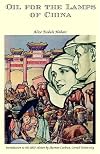
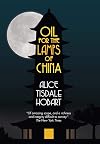
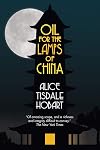
Oil for the Lamps of China
by Alice Tisdale Hobart
On This Page
Description
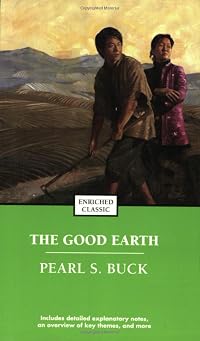
Oil for the Lamps of China (1934) was a best-selling novel when it was first published, just a few years after Pearl Buck's The Good Earth (1931). The hero of the story is a keen, young American businessman who wants to bring "light" and progress to China in the form of oil and oil lamps, but who is caught between Chinese revolutionary nationalism in the 1920s and the heartless American corporation that has built his career. The title became a catch phrase for expansive American dreams of show more the vast China market even though the novel itself, written at the beginning of the Great Depression, was skeptical of large business and any supposed American ability to improve China. The author presents a clear portrait of Western idealism versus Eastern pragmatism in the doubly exotic setting of Mainland China before the advent of large-scale industrialization. The portrayal is unflattering to both sides. While some might now regard the more sympathetic treatment of the young American as out of date, others would counter that the picture is both historically and contextually accurate. "Now, nearly seventy years since it was originally published, . . . Oil for the Lamps of China again seems timely. Once again ambitious young Americans like Stephen Chase are working for big corporations in China. . . . Once again sensitive young spouses like Hester are coping with the rigors of living simultaneously in American corporate culture and Chinese culture. . . . As these parallels suggest, if Oil for the Lamps of China was timely in the 1930s, then it also seems timely today." -- from the introduction by Sherman Cochran show lessTags
Recommendations



















Member Reviews
I got this ancient paperback as a freebie from a sidewalk cart in front of a used bookstore ages ago. No one would buy it because it's neither famous nor infamous. As a freebie, it was interesting to read as an example of how VERY MUCH the world has changed. Her Chinese people speak in an oddly archaic English, as thought Cotton Mather had time-traveled to teach them. Condescending much?
What worked, though, was the way her main character was bullish on how to exploit China's economic potential to make him rich and ends up broke and betrayed by even more unscrupulous American men. The Chinese people are characterized without the heavy moralizing pall I expected to need to brush off. But here's the thing: This outsider's view of an show more immense, ancient culture was written iin the early 1930s, yet feels as old as a Victorian novel because the take is reflective of an unquestioning acceptance of "Western superiority," though not explicitly. It's implicit in the framing of the conflicts her oil executive has with Authority, Chinese or American, being valorizing of him and his role. No wonder its 1935 film was so boring to watch, as this was very easy to get onto the screen.
Two interesting notes: The author was married to a Standard Oil company man whose job was in China; the edition I had (it disintegrated as I read it so it's been chucked out) was printed in 1945, when China was an important theater in the ongoing war, so was meant to cash in on public attention. show less
What worked, though, was the way her main character was bullish on how to exploit China's economic potential to make him rich and ends up broke and betrayed by even more unscrupulous American men. The Chinese people are characterized without the heavy moralizing pall I expected to need to brush off. But here's the thing: This outsider's view of an show more immense, ancient culture was written iin the early 1930s, yet feels as old as a Victorian novel because the take is reflective of an unquestioning acceptance of "Western superiority," though not explicitly. It's implicit in the framing of the conflicts her oil executive has with Authority, Chinese or American, being valorizing of him and his role. No wonder its 1935 film was so boring to watch, as this was very easy to get onto the screen.
Two interesting notes: The author was married to a Standard Oil company man whose job was in China; the edition I had (it disintegrated as I read it so it's been chucked out) was printed in 1945, when China was an important theater in the ongoing war, so was meant to cash in on public attention. show less
Ratings
Members
- Recently Added By
Lists

Trinity College Booklist (1951): Class Ten, English Literature
358 works; 5 members

Best Books of 1926-1935
403 works; 10 members

Publisher's Weekly Bestsellers Part I - 1895-1939
399 works; 8 members
Author Information
17+ Works 326 Members
Awards and Honors
Distinctions
Work Relationships
Is contained in
Has the (non-series) sequel
Has the adaptation
Common Knowledge
- Canonical title
- Oil for the Lamps of China
- Original title
- Oil for the Lamps of China
- Alternate titles*
- Kinas lamper slukkes
- Original publication date
- 1933
- People/Characters
- Stephen Chase
- Important places
- China
- Important events
- China's Nationalist Revolution of the 1920s
- Related movies
- Oil for the Lamps of China (1935 | IMDb); Law of the Tropics (1941 | IMDb)
- First words
- To the north where the red plains of Manchuria draw near to Siberia the light of the September dawn lay along the horizon.
*Some information comes from Common Knowledge in other languages. Click "Edit" for more information.
Classifications
Statistics
- Members
- 92
- Popularity
- 349,865
- Reviews
- 1
- Rating
- (3.00)
- Languages
- 10 — Danish, Dutch, English, French, German, Hungarian, Norwegian, Polish, Spanish, Swedish
- Media
- Paper, Ebook
- ISBNs
- 7
- ASINs
- 12