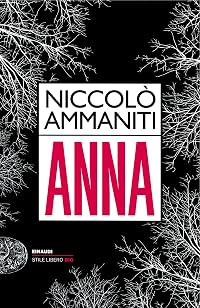
Anna
by Niccolò Ammaniti
On This Page
Description
Summer has ended, but the heat will not let up. Ash has covered everything. Weeds and wheat grow around the cars abandoned in the road. Anna and Astor live in the house behind the fence, surviving in a world stripped of adults. The rooms are piled high with rubbish. Their mother's skeleton lies perfect on the bed. And every few days, Anna must head out beyond the fence for provisions and medicine. Each time she goes, she may never come back.Tags
Recommendations

















Member Reviews
The post-apocalyptic novel—always a compelling and popular subgenre—has gained traction in recent years as the movie industry cashes in with depictions of dystopian realms where everything has gone wrong. Niccolò Ammaniti’s 2015 novel Anna (published in English translation in 2017) presents a disturbingly prescient story of a sister and brother navigating the perils of a world ravaged by a virus that has killed everyone over age fourteen, and which will claim their lives too once they pass through puberty and experience hormonal changes that render them vulnerable to the scourge. As the novel begins, it’s been four years since the Red Virus emerged. Widespread looting and destructive wildfires have scorched urban and rural show more landscapes. Electricity and running water are distant memories. All remnants of civil society have crumbled. On the island of Sicily, Anna Salemi, 13, and her younger brother Astor are living on their own in the family home on Mulberry Farm. Having exhausted the food left behind by their parents, they are surviving on the spoils of Anna’s forays into nearby dwellings and deserted shops, where she scavenges whatever is available, mostly tinned milk and vegetables, and packaged sweets. But their relatively placid way of life is rudely and violently interrupted when, while Anna is out foraging, a band of marauding children invades the homestead, vandalizes the place and abducts Astor. Anna’s search for her brother forces her to abandon her comfort zone and venture into the untamed countryside, where chaos reigns and anything can happen. Along the way she picks up a couple of allies: a boy named Pietro—slightly older than Anna, Pietro believes a specific style of Adidas sneakers will make him immune to the virus—and a huge shaggy sheepdog she names Fluffy. After a grotesquely apocalyptic scene in which she rescues Astor from a bizarre cult that has enslaved him, the four venture north and find refuge in the port of Cefalú before making their way east to Messina, where Anna has decided they must cross the Strait to the mainland, chasing rumours of a cure. Along with the highly visual and detailed prose, what distinguishes Ammaniti’s novel is the persuasively rendered psychology of his cast of juvenile characters. Astor acts like a boy on vacation—he’s young enough to have little memory of life before the virus, so for him all of this is “normal.” Anna and Pietro, in full knowledge of the dangers they face and the certainty they will die in agony in their mid-teens, find time for frivolity. In Anna’s wrecked world cruelty abounds, life is cheap, and death’s leavings are part of the scenery. The novel may be bleak and violent, but it offers hope every time we see how tenaciously Anna clings to her meagre existence and truncated future. In Anna, Niccolò Ammaniti offers an engaging analysis of human behaviour in a time of anarchy. Not for the faint of heart. show less
Lord Of The Flies writ large. An apocalypse brought on by an incurable virus has swept the world, leaving only pre-prepubescent children unharmed. Anna and her younger brother have survived four years since the virus came and their mother died. Anna was 9, her brother Astor 5. Isolated in an old farmhouse they have managed to survive by dint of Anna's scrounging for food and by following their Mother's advice, written down in an old exercise book as she lay dying.
Circumstances force them to flee their sanctuary and venture out into the wild. Gangs of children roam the countryside searching for food and an answer to the virus. There is no subtlety in the quest for survival, the week tag after the strong, the strong take what they show more want.
With occasional flashbacks to fill in their backstory we begin to have an idea of who Anna and Astor are. Anna is driven to uphold the promise made to her mother to look after Astor. Every minute, let alone every day, is filled with the challenge to keep them both alive and to teach Astor how to look after himself. Anna has to grow up fast.
Ammaniti cleverly captures the mixture of Anna's childish innocence mixed with worldly ennui as she battles the daily issues of finding food, water and medicines. Narrated through Anna's POV rather than an all seeing wise narrator her problems are those of a child as are her solutions.
It makes you wonder, what would you do? A frightening scenario. show less
Circumstances force them to flee their sanctuary and venture out into the wild. Gangs of children roam the countryside searching for food and an answer to the virus. There is no subtlety in the quest for survival, the week tag after the strong, the strong take what they show more want.
With occasional flashbacks to fill in their backstory we begin to have an idea of who Anna and Astor are. Anna is driven to uphold the promise made to her mother to look after Astor. Every minute, let alone every day, is filled with the challenge to keep them both alive and to teach Astor how to look after himself. Anna has to grow up fast.
Ammaniti cleverly captures the mixture of Anna's childish innocence mixed with worldly ennui as she battles the daily issues of finding food, water and medicines. Narrated through Anna's POV rather than an all seeing wise narrator her problems are those of a child as are her solutions.
It makes you wonder, what would you do? A frightening scenario. show less
Ammaniti's books all have one thing in common; they have adolescent lead characters forced to deal with situations and problems beyond their years, usually by the fecklessness and incompetence of the adults who are supposed to protect them. In this case, Ammaniti takes it to extremes, pitching the 13 (or maybe 14) year old Anna, and her 5 year old brother Astor into a post apocalyptic world, a world in which all adults have succumbed to a virus that leaves children unaffected until shortly post puberty. Anna and Astor inherit a Sicily that makes the island of Lord of The Flies look like a creche. As Anna herself puts it "it was if someone watching her from above, writing her story, inventing ever crueller ways of making her suffer, show more pushing her further and further to see when she'd finally collapse". Quite
In this case, Anna has a parent that isn't feckless. Her mother, Maria, has prepared a detailed book of instructions for when she dies. The first order of business being of course, how to deal with her own corpse. Once Anna has dealt with that, she has to deal with foraging for food, protecting and educating her brother, turning a dog who wants to kill her into a protector, and dealing with large gangs of children who have quickly lost their veneer of civilisation. Whilst knowing of course, that soon enough The Red Fever will get her too
Some of this is fantastic of course; you probably can't pedalo across the Straits of Messina for example. It doesn't matter. This is a story of filial tenderness, the will to live, resourcefulness and adaptivity. And its often very funny. So whilst it may not be as good as "I'll Steal You Away" - one of the 10 best pieces of literary fiction of the last 20 years in my humble opinion - and not as devastating as "I'm Not Scared" or "As God Commands" - its still better than 90 percent of fiction today. Ammaniti's contempt for his generation and hopes for future generations has never been so clear show less
In this case, Anna has a parent that isn't feckless. Her mother, Maria, has prepared a detailed book of instructions for when she dies. The first order of business being of course, how to deal with her own corpse. Once Anna has dealt with that, she has to deal with foraging for food, protecting and educating her brother, turning a dog who wants to kill her into a protector, and dealing with large gangs of children who have quickly lost their veneer of civilisation. Whilst knowing of course, that soon enough The Red Fever will get her too
Some of this is fantastic of course; you probably can't pedalo across the Straits of Messina for example. It doesn't matter. This is a story of filial tenderness, the will to live, resourcefulness and adaptivity. And its often very funny. So whilst it may not be as good as "I'll Steal You Away" - one of the 10 best pieces of literary fiction of the last 20 years in my humble opinion - and not as devastating as "I'm Not Scared" or "As God Commands" - its still better than 90 percent of fiction today. Ammaniti's contempt for his generation and hopes for future generations has never been so clear show less
One thing’s for sure: Niccolò Ammaniti really doesn’t do upbeat. I remember seeing the film Non ho paura, based on his novel, when I was in Sixth Form and I found it unsettling, powerful and profoundly bleak. The same could be said of this atmospheric novel, set in 2020, which explores a world in which adults have been eradicated by a virus and children are left to fend for themselves. There is more than a hint of Lord of the Flies here, but Ammaniti is interested not so much in the innate savagery of children, as in the power of hope to push us onward, through unimaginable horrors...
For the full review, please see my blog:
https://theidlewoman.net/2017/07/20/anna-niccolo-ammaniti/
For the full review, please see my blog:
https://theidlewoman.net/2017/07/20/anna-niccolo-ammaniti/
3.5 *
Niccolò Ammaniti is one of those writers who enjoy success with the reading public and general (if not unanimous) critical acclaim. One of the reasons for this must surely be that he brings a literary sensibility to popular genres, be it novels with a Mafia/"low-life" theme ( such as [b:Io non ho paura|151633|Io non ho paura|Niccolò Ammaniti|https://i.gr-assets.com/images/S/compressed.photo.goodreads.com/books/1345927249l/151633._SY75_.jpg|1185887] and the Strega-winner [b:Come Dio comanda|1304612|Come Dio comanda|Niccolò Ammaniti|https://i.gr-assets.com/images/S/compressed.photo.goodreads.com/books/1295369878l/1304612._SY75_.jpg|6527293]) or bittersweet coming-of-age stories such as [b:Io e te|9666790|Io e te|Niccolò show more Ammaniti|https://i.gr-assets.com/images/S/compressed.photo.goodreads.com/books/1295688303l/9666790._SY75_.jpg|14549397]. Ammaniti's engagement with pop culture and his ability to read and reflect the "signs of the times" is confirmed by the fact that his books and stories have been made into movies by directors such as Salvatores and Bertolucci, and the title of [b:Ti prendo e ti porto via|1304611|Ti prendo e ti porto via|Niccolò Ammaniti|https://i.gr-assets.com/images/S/compressed.photo.goodreads.com/books/1312482672l/1304611._SX50_.jpg|421377] was appropriated by cult Italian rocker Vasco Rossi for his hit single of the same name (belted out in Blasco's trademark half-spoken/shouted style).
In Anna, Ammaniti turns his sights onto the YA market and the dystopian/post-apocalyptic genre which seems to take up quite a chunk of new adult readership. He imagines a Sicily ravaged by a mysterious virus which wipes out adults, leaving only children as survivors. Until they reach puberty, because then the symptoms of the illness appear and they die as well. Further disasters (including uncontrolled fires and explosions) wreak havoc and break down all electronic means of communication. Unsure of the situation in the rest of the world (where, allegedly, a cure might have been found), and with adulthood fast approaching, the protagonist Anna sets out on a journey seeking survival for her and her younger brother Astor.
If I have a reservation about Ammaniti's latest novel, it is that it does not bring anything particularly new to the genre. We've come across "apocalypse by virus" before, not least in Shelley's proto-science-fiction novel [b:The Last Man|966835|The Last Man|Mary Wollstonecraft Shelley|https://i.gr-assets.com/images/S/compressed.photo.goodreads.com/books/1392984325l/966835._SY75_.jpg|835097]. There are also obvious parallels with [b:The Road|6288|The Road|Cormac McCarthy|https://i.gr-assets.com/images/S/compressed.photo.goodreads.com/books/1600241424l/6288._SY75_.jpg|3355573] whilst the nature of the virus, dubbed "La Rossa", could be a tribute to Poe's Masque of the Red Death. As for children returning to a primitive, violent, cruel state, one could hardly better [b:Lord of the Flies|7624|Lord of the Flies|William Golding|https://i.gr-assets.com/images/S/compressed.photo.goodreads.com/books/1327869409l/7624._SY75_.jpg|2766512].
That said, nothing by Ammaniti should be written off. And Anna is, as most of his novels, engaging and, quite often, page-turning. The protagonist is an endearing character - strong and yet sensitive - bravely coming to terms with an oncoming adolescence which, for her, will mean almost certain death. This might not be a groundbreaking novel then, but certainly a well-crafted and gripping one, and several notches above the average YA fare.
I generally prefer to read Italian novels in the original, but I really enjoyed the idiomatic, fluent translation by Jonathan Hunt for Canongate Books. show less
Niccolò Ammaniti is one of those writers who enjoy success with the reading public and general (if not unanimous) critical acclaim. One of the reasons for this must surely be that he brings a literary sensibility to popular genres, be it novels with a Mafia/"low-life" theme ( such as [b:Io non ho paura|151633|Io non ho paura|Niccolò Ammaniti|https://i.gr-assets.com/images/S/compressed.photo.goodreads.com/books/1345927249l/151633._SY75_.jpg|1185887] and the Strega-winner [b:Come Dio comanda|1304612|Come Dio comanda|Niccolò Ammaniti|https://i.gr-assets.com/images/S/compressed.photo.goodreads.com/books/1295369878l/1304612._SY75_.jpg|6527293]) or bittersweet coming-of-age stories such as [b:Io e te|9666790|Io e te|Niccolò show more Ammaniti|https://i.gr-assets.com/images/S/compressed.photo.goodreads.com/books/1295688303l/9666790._SY75_.jpg|14549397]. Ammaniti's engagement with pop culture and his ability to read and reflect the "signs of the times" is confirmed by the fact that his books and stories have been made into movies by directors such as Salvatores and Bertolucci, and the title of [b:Ti prendo e ti porto via|1304611|Ti prendo e ti porto via|Niccolò Ammaniti|https://i.gr-assets.com/images/S/compressed.photo.goodreads.com/books/1312482672l/1304611._SX50_.jpg|421377] was appropriated by cult Italian rocker Vasco Rossi for his hit single of the same name (belted out in Blasco's trademark half-spoken/shouted style).
In Anna, Ammaniti turns his sights onto the YA market and the dystopian/post-apocalyptic genre which seems to take up quite a chunk of new adult readership. He imagines a Sicily ravaged by a mysterious virus which wipes out adults, leaving only children as survivors. Until they reach puberty, because then the symptoms of the illness appear and they die as well. Further disasters (including uncontrolled fires and explosions) wreak havoc and break down all electronic means of communication. Unsure of the situation in the rest of the world (where, allegedly, a cure might have been found), and with adulthood fast approaching, the protagonist Anna sets out on a journey seeking survival for her and her younger brother Astor.
If I have a reservation about Ammaniti's latest novel, it is that it does not bring anything particularly new to the genre. We've come across "apocalypse by virus" before, not least in Shelley's proto-science-fiction novel [b:The Last Man|966835|The Last Man|Mary Wollstonecraft Shelley|https://i.gr-assets.com/images/S/compressed.photo.goodreads.com/books/1392984325l/966835._SY75_.jpg|835097]. There are also obvious parallels with [b:The Road|6288|The Road|Cormac McCarthy|https://i.gr-assets.com/images/S/compressed.photo.goodreads.com/books/1600241424l/6288._SY75_.jpg|3355573] whilst the nature of the virus, dubbed "La Rossa", could be a tribute to Poe's Masque of the Red Death. As for children returning to a primitive, violent, cruel state, one could hardly better [b:Lord of the Flies|7624|Lord of the Flies|William Golding|https://i.gr-assets.com/images/S/compressed.photo.goodreads.com/books/1327869409l/7624._SY75_.jpg|2766512].
That said, nothing by Ammaniti should be written off. And Anna is, as most of his novels, engaging and, quite often, page-turning. The protagonist is an endearing character - strong and yet sensitive - bravely coming to terms with an oncoming adolescence which, for her, will mean almost certain death. This might not be a groundbreaking novel then, but certainly a well-crafted and gripping one, and several notches above the average YA fare.
I generally prefer to read Italian novels in the original, but I really enjoyed the idiomatic, fluent translation by Jonathan Hunt for Canongate Books. show less
Anna is a 2015 post-apocalyptic novel by Niccolo Ammaniti in which we follow thirteen year old Anna around Sicily where a virus has wiped out all the adults. Everyone carries the virus, but it doesn’t affect you until puberty. Anna cares and looks after her younger brother but in order to keep him from wandering she has told him a number of lies about what is outside their fence.
One day she arrives home to find their house trashed and her brother gone. She sets out to get him back and after a number of adventures which includes her getting a dog who follows and obeys her, she and her brother are reunited. Now their plan is to leave Sicily and see what is waiting out in the rest of the world, Anna has reached the age where the dormant show more disease could awaken in her and she wishes to follow her mother’s last instructions which are to find a way to get to the mainland and search out any surviving adults.
Anna was written and published before we felt the effects of Covid, but when describing the conditions, it certainly seemed familiar. I have previously read I’m Not Scared by this author and he obviously is a writer who seems to like writing from a child’s point of view and he is well able to show both the vulnerability as well as the thoughtless bravery that a child can exhibit. I found the setting of Anna, a world run by feral children, to be terrifying and although the storytelling ventured into the strange and weird occasionally, it was a worthwhile read. show less
One day she arrives home to find their house trashed and her brother gone. She sets out to get him back and after a number of adventures which includes her getting a dog who follows and obeys her, she and her brother are reunited. Now their plan is to leave Sicily and see what is waiting out in the rest of the world, Anna has reached the age where the dormant show more disease could awaken in her and she wishes to follow her mother’s last instructions which are to find a way to get to the mainland and search out any surviving adults.
Anna was written and published before we felt the effects of Covid, but when describing the conditions, it certainly seemed familiar. I have previously read I’m Not Scared by this author and he obviously is a writer who seems to like writing from a child’s point of view and he is well able to show both the vulnerability as well as the thoughtless bravery that a child can exhibit. I found the setting of Anna, a world run by feral children, to be terrifying and although the storytelling ventured into the strange and weird occasionally, it was a worthwhile read. show less
I still have a childish fondness for books and characters who share my name, which is what drew my eye to ‘Anna’ on the shelf. Then I saw it was a post-apocalyptic novel, so obviously had to read it. I would describe it as serviceable without doing anything hugely striking. It’s set in the near future, when a virus has wiped out all adults. A young teenager named Anna lives in a wrecked and deserted Sicily with her little brother Astor. The story is of them attempting to survive in a ruined world without adult supervision. There are shades of [b:Lord of the Flies|7624|Lord of the Flies|William Golding|https://images.gr-assets.com/books/1327869409s/7624.jpg|2766512], [b:How I Live Now|161426|How I Live Now|Meg show more Rosoff|https://images.gr-assets.com/books/1327870252s/161426.jpg|1132968], [b:Nod|16044493|Nod|Adrian Barnes|https://images.gr-assets.com/books/1351786251s/16044493.jpg|21822383], [b:Station Eleven|20170404|Station Eleven|Emily St. John Mandel|https://images.gr-assets.com/books/1451446835s/20170404.jpg|28098716], and any number of other novels. The strongest element is the relationship between Anna and Astor. Before she died, their mother made Anna promise to look after her brother, a duty she takes very seriously. I thought their dynamic was convincing and well-depicted. Unusually, I was less keen on the inclusion of a pet as a character: the dog didn’t really add anything. While I was interested enough in the characters to keep reading, the plot was very slight and the disaster not really used as an allegory. That meant that 'Anna' could not satisfy my criteria for a dystopian novel: no meaningful light is shed on the flaws in society today. The writing is rather graceful and I liked my namesake, though. show less
Members
- Recently Added By
Lists

Italian Literature
558 works; 42 members

Fiction with Women's Names in the Title
378 works; 15 members
Author Information

42+ Works 6,899 Members
Some Editions
Common Knowledge
- Canonical title*
- Anna
- Original title
- Anna
- Original publication date
- 2015; 2017 (English translation) (English translation)
- People/Characters*
- Anna; Astor, broertje; hond, een maremma; wilde honden
- Important places
- Sicily, Italy
- Epigraph*
- There was a boy
A very strange enchanted boy
They say he wandered very far, very far
Over land and sea
A little shy and sad of eye
But very wise was he.
Eden Ahbez, 'Nature Boy' - First words*
- Hij was drie, misschien vier jaar.
- Quotations*
- Een vlinder vloog op uit een johannesbroodboom, zwevend tegen de wind in. Een windvlaag trok hem naar de jongen en het meisje. Hij raakte de haren van Anna en werd naar Astor geduwd, die zijn hand uitstak, heel even rustte hi... (show all)j op de handpalm van het jongetje en hervatte toen zijn wankele vlucht. Vervolgens kwam er nog een vlinder, en nog een, totdat ze werden omhuld door honderden vleugels die als een geel-zwarte sneeuwbui boven de weg dansten.
- Last words*
- (Click to show. Warning: May contain spoilers.)Anna pakte zijn hand en zei: 'Dat doet er niet toe.'
- Original language
- Italian
*Some information comes from Common Knowledge in other languages. Click "Edit" for more information.
Classifications
- Genres
- Fiction and Literature, General Fiction, Science Fiction
- DDC/MDS
- 853.92 — Literature & rhetoric Italian, Romanian & related literatures Italian fiction 1900- 21st Century
- LCC
- PQ4861 .M54 .A5613 — Language and Literature French, Italian, Spanish and Portuguese literatures Italian literature Individual authors, 1961-2000
- BISAC
Statistics
- Members
- 216
- Popularity
- 152,261
- Reviews
- 16
- Rating
- (3.39)
- Languages
- 8 — Catalan, Dutch, English, French, German, Italian, Spanish, Turkish
- Media
- Paper, Audiobook, Ebook
- ISBNs
- 28
- ASINs
- 5