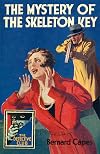
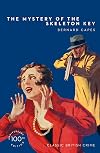
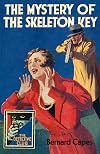
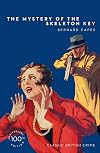
The Mystery of the Skeleton Key
by Bernard Capes
On This Page
Description
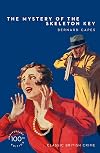
The fourth in a new series of classic detective stories from the vaults of HarperCollins involves a tragic accident during a shooting party. As the story switches between Paris and Hampshire, the possibility of it not being an accident seems to grow more likely. "The Detective Story Club", launched by Collins in 1929, was a clearing house for the best and most ingenious crime stories of the age, chosen by a select committee of experts. Now, almost 90 years later, these books are the classics show more of the Golden Age, republished at last with the same popular cover designs that appealed to their original readers. The Mystery of the Skeleton Key, first published in 1919, has the distinction of being the first detective novel commissioned and published by Collins, though it was Bernard Capes' only book in the genre, as he died shortly before it was published. This is how the Detective Club announced their edition ten years later: "Mr Arnold Bennett, in a recent article, criticised the ad hoc characterisation and human interest in the detective novels of to-day. "The Mystery of the Skeleton Key" contains, in addition to a clever crime problem and plenty of thrills, a sensible love story, humour, excellent characterisation and strong human interest. The scenes are laid in Paris and Hampshire. The story deals with a crime committed in the grounds of a country house and the subsequent efforts of a clever young detective the track down the perpetrator. The Selection Committee of "The Detective Story Club" have no hesitation in recommending this splendid thriller as one which will satisfy the most exacting reader of detective fiction." This new edition comes with a brand new introduction by Capes expert and anthologist, Hugh Lamb. show lessTags
Recommendations

























Member Reviews
Mr. Vivian Bickerdike and the enigmatic Baron le Sage are houseguests at the Kennett family estate, Wildshott, in Hampshire. The Baron is there to play chess with the family patriarch Sir Calvin Kennett. Vivian is there at the urgent behest of his friend, young Hugo Kennett. Vivian suspects something is horribly wrong in the household, but Hugo steadfastly refuses to tell Vivian what is going on.
When Annie—the Kennett’s beautiful maid—is found shot to death, Vivian’s suspicion is confirmed. Several inhabitants of Wildshott are subsequently arrested for the crime, but neither Vivian nor the Baron is satisfied the real culprit has been apprehended. Vivian watches with a critical eye as the Baron’s mysterious activities lead to show more the true solution of the crime.
Don’t expect to ‘play along’ as this mystery unfolds; the reader is not given the information needed to solve the case. Baron le Sage investigates the case on his own and never reveals anything until the denouement. This doesn’t ruin the story by any means, but the Baron’s unexplained omniscience and tight-lipped pomposity do grow tedious after a while.
The author alternates between Vivian’s narration and an omniscient narrator; this fluctuation severely disrupts the flow of the storyline. The book definitely would have benefited from one narrator rather than the garbled combination.
Overall, however, this is an interesting and well-written story. I would recommend it to educated fans of Golden Age mysteries and classical literature. show less
When Annie—the Kennett’s beautiful maid—is found shot to death, Vivian’s suspicion is confirmed. Several inhabitants of Wildshott are subsequently arrested for the crime, but neither Vivian nor the Baron is satisfied the real culprit has been apprehended. Vivian watches with a critical eye as the Baron’s mysterious activities lead to show more the true solution of the crime.
Don’t expect to ‘play along’ as this mystery unfolds; the reader is not given the information needed to solve the case. Baron le Sage investigates the case on his own and never reveals anything until the denouement. This doesn’t ruin the story by any means, but the Baron’s unexplained omniscience and tight-lipped pomposity do grow tedious after a while.
The author alternates between Vivian’s narration and an omniscient narrator; this fluctuation severely disrupts the flow of the storyline. The book definitely would have benefited from one narrator rather than the garbled combination.
Overall, however, this is an interesting and well-written story. I would recommend it to educated fans of Golden Age mysteries and classical literature. show less
Ratings
Members
- Recently Added By
Lists

Books mentioned in Julian Symons’ Bloody Murder
438 works; 6 members

Mysteries to Read, PD
42 works; 1 member
Author Information

28+ Works 192 Members
Series
Belongs to Publisher Series
Common Knowledge
- Canonical title
- The Mystery of the Skeleton Key
- Original title
- The Skeleton Key
- Original publication date
- 1919
- People/Characters
- Raymond, Baron le Sage; Vivian Bickerdike; Sir Calvin John Kennett; Hugo Staveley Kennett; Audrey Kennett; Samuel Cleghorn (show all 22); Annie Evans; Ivy Mellor; Sergeant John Ridgway; John Ridgway; George Ridgway; Daniel Groome; Sir Francis Orsden; Caliste Ribault; Anna Bingley; Reuben Henstridge; Kate Vokes; Mabel Wheelband; Jessie Ellis; Joe Harris; Jacob; Louis Victor Cabanis
- Important places
- Hampshire, England, UK; London, England, UK; Paris, France; Wildshott, Hampshire, England, UK
- First words
- Some few years ago, in the month of September, I happened to be kicking my heels in Paris, awaiting the arrival there of my friend Hugo Kennett.
- Last words
- (Click to show. Warning: May contain spoilers.)"Now let us talk of something else."
- Original language
- English UK
Classifications
Statistics
- Members
- 55
- Popularity
- 557,041
- Reviews
- 1
- Rating
- (3.00)
- Languages
- English
- Media
- Paper, Audiobook, Ebook
- ISBNs
- 7
- ASINs
- 5