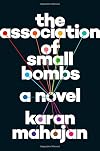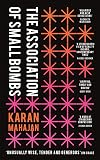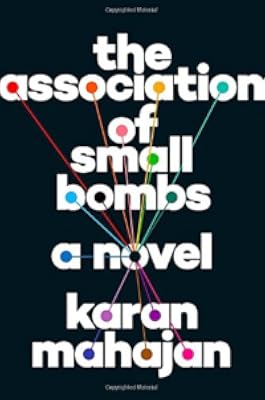
The Association of Small Bombs: A Novel
by Karan Mahajan
On This Page
Description
Fiction. Literature. The Association of Small Bombs is an expansive and deeply humane novel that is at once groundbreaking in empathy, dazzling in acuity, and ambitious in scope.When brothers Tushar and Nakul Khurana, two Delhi schoolboys, pick up their family's television at a repair shop with their friend Mansoor Ahmed one day in 1996, disaster strikes without warning. A bomb-one of the many "small" bombs that go off seemingly unheralded across the world-detonates in the Delhi marketplace, show more instantly claiming the lives of the Khurana boys, to the devastation of their parents. Mansoor survives, bearing the physical and psychological effects of the bomb. After a brief stint at a university in America, Mansoor returns to Delhi where his life becomes entangled with the mysterious and charismatic Ayub, a fearless young activist whose own allegiances and beliefs are more malleable than Mansoor could imagine. Woven into the story of the Khuranas and the Ahmeds is the gripping tale of Shockie, a Kashmiri bomb-maker who has forsaken his own life for the independence of his homeland.Karan Mahajan writes brilliantly about the effects of terrorism on victims and perpetrators, proving himself to be one of the most provocative and dynamic novelists of his generation. show lessTags
Recommendations




























Member Reviews
This is going to be one of my favorite reads of the year.
This book tells the story of a bombing in Delhi, which kills two young brothers. A friend of theirs escapes the bombing, but had physical and mental after effects. The book follows the story of their families, and also the sotries of the bombers. Mahajan's story-telling is exquisite, winding around and back to show the differences between the internal and external lives of his characters.
In this book we are tasked with looking at the effects of terrorism on non-western people, and also with looking at how small-scale terrorism can have large scale effects.
This book tells the story of a bombing in Delhi, which kills two young brothers. A friend of theirs escapes the bombing, but had physical and mental after effects. The book follows the story of their families, and also the sotries of the bombers. Mahajan's story-telling is exquisite, winding around and back to show the differences between the internal and external lives of his characters.
In this book we are tasked with looking at the effects of terrorism on non-western people, and also with looking at how small-scale terrorism can have large scale effects.
I appreciated what this author attempted to do (and largely did successfully) with this novel, but unfortunately it didn't make for a fun reading experience. The book interweaves the stories of a victims of terrorism with perpetrators of terrorism without passing any moral judgements. We aren't even introduced the the character I would consider to be the main character, Ayub, until well into the story. He goes from being an activist to something more (a terrorist? a pawn of terrorists? ), but the author never permits the reader to lose empathy. Normally, I really like when author's do this and do it well, blurring the lines between good and evil, moral and immoral. The problem for me, with this book, was that it felt the the author show more narrated the story much more than revealed it. No matter how masterfully a writer does this, it just creates distance between the reader and the characters, and I never really felt their pain. Objectively, I should have cared a lot more, but honestly my end reaction was "well, those events were quite interesting" as if a friend just told me about a story he read in the news. I need more from a novel. show less
Definitely one of the best books I have read this year and highly recommended. Mahajan takes the detonation of a small bomb - and the smallness, and in the general scheme of things, trivialness of the bomb is important - in a Delhi market to tell the stories of some of those affected by it. Two brothers are killed, and the lives of their parents begin to unravel but in unexpected ways. Their friend Mansoor, a Muslim, escapes with minor injuries, and yet for him and his family the long term effects are undoubtedly worse. Shockie, the Kashmiri bomber, has grievances but is himself trapped in a cycle of despair; he knows the organisation he is part of is at best corrupt and at worst pointless. He knows that bombers have a short life show more expectancy. His friend Malik, to police a dangerous theorist, is little more than a child seeking attention
The book explorers communal tensions, the allure of violence, sexual tension, police and judicial incompetence and corruption with a detailed and sceptical eye. And yet it is full of compassion towards all its subjects. It really is a very accomplished piece of work, minus half a star for some slightly heavy handed treatment of his characters at the end of the book, as though the author has sickened of them and wants to be rid of them. But this is a minor quibble; this really is well worth reading show less
The book explorers communal tensions, the allure of violence, sexual tension, police and judicial incompetence and corruption with a detailed and sceptical eye. And yet it is full of compassion towards all its subjects. It really is a very accomplished piece of work, minus half a star for some slightly heavy handed treatment of his characters at the end of the book, as though the author has sickened of them and wants to be rid of them. But this is a minor quibble; this really is well worth reading show less
Thirty-five more innocents slaughtered in an Istanbul nightclub and we haven't even climbed out of 2016 to usher in a cleaner, happier 2017. While the weapon of choice of the deranged in the US is a semi-automatic rifle, the eastern half of the world continues to live with small bombs, small in relation to a nuclear arsenal, but big enough to kill and scramble the lives of thousands.
By some weird coincidence, my wife and I complete two Netflix series: "Nobel" about Norwegian special ops forces in Afghanistan and "Fauda", an Israeli TV series set in the West Bank. I won't spoil the endings, or the beginnings, let's just say things don't turn out too well here either.
With this in the background I finish reading "The Association of Small show more Bombs," by Indian writer Karan Mahajan.
I am not spoiling anything to say that there are no heroes in Mahajan's novel. Not the bombers, nor the victims or their families or their government escape some satire in this novel. Nobody "recovers" from a bombing. Nobody "wins."
I have not been to New Delhi, to the scrum of the marketplaces where the bombings in this novel take place. Seen the garbage heaps, the open sewers, the polluted waterways. But this is most certainly the background for this novel. The steaming heat. The dirt. The outlying villages with garbage heaps, where men step outside their huts to piss.
Then there are the homes of the middle class where order and cleanliness push out the dirty reality, but the dirt and the rot are as much in the relationships of family members as physically in the streets.
In this environment, rich and poor, Muslim and Hindu fight for space. One would expect some envy of the rich by the poor, suspicion of the minority by the majority, and disgust in the top-dog for the underdog. So far we're on pretty recognizable ground.
Mahajan undoubtably knows that many of his readers are looking for answers to radicalism. Whose fault are these attacks? Are they to do with the unequal distribution of wealth; the destruction of the habitat; opposing views of religion; or maybe the accretion of centuries of mistrust and violence?
It seems that Mahajan's bomber is not radicalized by any one of these things, or maybe all of them. What is more clear is that his bomber is radicalized long before that radicalization turns him to violence. A radical for peace is just as radical for violence. And painfully, painfully, the bomber turns to violence after being spurned by his girlfriend for having bad breath.
Pornography, guilt over masturbation, delayed sexual gratification all of these have their role to play in the development of young men in the developing world in this novel. The themes of youth, the development of the self, more guilt over getting a living and gaining status in this complex world, the tension between competing world views of East vs. West.
To sort out these imperatives....is really hard. And organizing on a societal level to combat violence of this nature. Not easy. Government is weak. The family structure is weak. Our educational structures are nowhere to be found. show less
By some weird coincidence, my wife and I complete two Netflix series: "Nobel" about Norwegian special ops forces in Afghanistan and "Fauda", an Israeli TV series set in the West Bank. I won't spoil the endings, or the beginnings, let's just say things don't turn out too well here either.
With this in the background I finish reading "The Association of Small show more Bombs," by Indian writer Karan Mahajan.
I am not spoiling anything to say that there are no heroes in Mahajan's novel. Not the bombers, nor the victims or their families or their government escape some satire in this novel. Nobody "recovers" from a bombing. Nobody "wins."
I have not been to New Delhi, to the scrum of the marketplaces where the bombings in this novel take place. Seen the garbage heaps, the open sewers, the polluted waterways. But this is most certainly the background for this novel. The steaming heat. The dirt. The outlying villages with garbage heaps, where men step outside their huts to piss.
Then there are the homes of the middle class where order and cleanliness push out the dirty reality, but the dirt and the rot are as much in the relationships of family members as physically in the streets.
In this environment, rich and poor, Muslim and Hindu fight for space. One would expect some envy of the rich by the poor, suspicion of the minority by the majority, and disgust in the top-dog for the underdog. So far we're on pretty recognizable ground.
Mahajan undoubtably knows that many of his readers are looking for answers to radicalism. Whose fault are these attacks? Are they to do with the unequal distribution of wealth; the destruction of the habitat; opposing views of religion; or maybe the accretion of centuries of mistrust and violence?
It seems that Mahajan's bomber is not radicalized by any one of these things, or maybe all of them. What is more clear is that his bomber is radicalized long before that radicalization turns him to violence. A radical for peace is just as radical for violence. And painfully, painfully, the bomber turns to violence after being spurned by his girlfriend for having bad breath.
Pornography, guilt over masturbation, delayed sexual gratification all of these have their role to play in the development of young men in the developing world in this novel. The themes of youth, the development of the self, more guilt over getting a living and gaining status in this complex world, the tension between competing world views of East vs. West.
To sort out these imperatives....is really hard. And organizing on a societal level to combat violence of this nature. Not easy. Government is weak. The family structure is weak. Our educational structures are nowhere to be found. show less
For about the first half of the book it was a kind of comedy of manners for terrorists and their victims, with a lot about the foibles of the all-too-human characters. The book becomes progressively dark as the ramifications of destructiveness are played out: parents who, having lost their children, cannot find their way back to life. Young men who experience oppression as Muslims in India, as well as other losses, who lose their way and then their lives. Others who are ruined by the brutal and capricious state. Mahajan explores all this with great sensitivity to his characters. The author is also a fine writer, with many interesting metaphors (which I wish I had written down), but who also maintains a good pace in his story.
Things do show more decidedly not come right in the end, but the book is not a complete downer either. In addition to the humor of human frailty, there is the author's compassion that keeps the lights on throughout. show less
Things do show more decidedly not come right in the end, but the book is not a complete downer either. In addition to the humor of human frailty, there is the author's compassion that keeps the lights on throughout. show less
The Association of Small Bombs begins with an explosion at an open market square in Delhi. Kahan Mahajan first chapter is masterful in the way it can focus like a laser on small details like the way people held their hands against their wounds “as if they had smashed eggs against their bodies in hypnotic agreement and were unsure about what to do with the runny, bloody yolk” and yet also take a panoramic step back, claiming that, “a good bombing begins everywhere at once.”
However, bombs actually ripple outwards from their source, we just cannot perceive its movement. Mahajan shows that ripple effect in the organization of the book, tracing the aftermath and its effects on people like the Khuranas whose two sons died in the show more blast, Mansoor Ahmed who was with their sons and was injured in the blast, Shookie who planted the bomb, and on Ayub Azmi who was not even there.
The Khuranas, as parents who lose their children, struggle with their grief. While I think many people will identify with Deepa, the mother, the father Vikas is troublesome. I think he’s a failed character, to be honest. He was depressive even before his sons were killed and seems utterly destroyed by their deaths, but then again and again we are told he did not love his sons. The contradictions in Vikas’ character with his actions, focusing his life on a documentary of the bombing and on foudning the Association of Small Bombs to urge never forgetting those who die in the many smaller attacks that don’t shake the world do not seem what someone who did not love his children would do. The gravitas and respect accorded an official victim is not the motivation, grief is and where there is grief, there is love.
The Ahmeds were the Khuranis token Muslim friend to prove how liberal they were. Mansoor survived the bombing, but his injuries affected him for years. As an Muslim, though, his status as a victim was less official, less respected. When he goes to college in America and is there on September 11th, the suspicion and rejection of his classmates makes life painful. Repetitive Stress Injury complicated by his past injuries sends him back to India where he gets involved in a social justice group working for reconciliation, supporting those arrested after the bombing that injured him because they are believed to be, and are, innocent. Perhaps one of the central themes of the book are summed up in the description of that group of students.
“The members of Peace For All were not radicals. They were eminently reasonable people, students engrossed in careers, people who wanted to be Indians but had discovered themselves instead to be Muslims and had started to embrace their identities. In their alienation, their desire to be included in the mainstream, Mansoor recognized himself.”
It is there he meets Ayub who brings the story full circle by becoming radicalized, shifting from his belief in Gandhian nonviolence to the nihilistic belief that terrorism is the answer. There is another critical insight here. The precipitating incident that pushed Ayub toward violence was personal, not political. He thinks a lot about Mohammed Atta and decides that for Atta, too, his decision to attack the World Trade Center must have been personal. “Earlier he’d felt the attack was just revenge against American imperialism, but now he’d come to see that the reasons for such aggression would have to be idiosyncratic, personal.” This seems a critical insight, too. After all, while millions may be disaffected and angry with the mess of a world we have allowed and created, they don’t all express it violently. Only a few do, and the ultimate decision, the ultimate reason, is found in their lives, their character, their choices.
The Association of Small Bombs is well-written and interesting. It discusses many important contemporary issues that we need to spend more time thinking about and addressing. However, I think there are some serious flaws in the book. Vikas Khurani felt inauthentic, like an authorial construct rather than a real father. Mahajan had to struggle to pull this story into a circle. The characters and the story itself didn’t want to go there and the effort to force the story to cycle back was evident. The strings were showing.
Then, of course, there’s the problem of all the terrorists in the story being Muslim. There is mention of the Gujarat Riots, but they are not indicted as terrorism, though that is what they were. While Mahajan explains why Muslims have a right to be angry, as the current Prime Minister of India is a man most people believe to have been as innocent of the Gujarat Riots as Ariel Sharon was of the Sabra and Shatila massacre. There’s empathy and understanding of how they are alienated from Indian society by the actions and attitudes of India’s government and people. Still, it’s a tired story, a hopeless story that seems determined to believe everything and everyone is futile.
A more interesting, and more daring, story would have found Vikas Khurani or perhaps one of his cousins, motivated by hatred and revenge for the original bombing joining with the Abhinav Bharat or some other Hindu nationalist terrorist group. Perhaps Vikas would expiate his guilt for not loving his sons enough with violence. Instead, we get the tired story of radicalized Muslims choosing terror while the terrorism of others is erased. I could see Vikas after the blast of the bomb he created feeling that same anti-climactic disappointment and futility as Shookie did after the first bombing. That would have interesting.
★★★
http://tonstantweaderreviews.wordpress.com/2016/11/30/the-association-of-small-b... show less
However, bombs actually ripple outwards from their source, we just cannot perceive its movement. Mahajan shows that ripple effect in the organization of the book, tracing the aftermath and its effects on people like the Khuranas whose two sons died in the show more blast, Mansoor Ahmed who was with their sons and was injured in the blast, Shookie who planted the bomb, and on Ayub Azmi who was not even there.
The Khuranas, as parents who lose their children, struggle with their grief. While I think many people will identify with Deepa, the mother, the father Vikas is troublesome. I think he’s a failed character, to be honest. He was depressive even before his sons were killed and seems utterly destroyed by their deaths, but then again and again we are told he did not love his sons. The contradictions in Vikas’ character with his actions, focusing his life on a documentary of the bombing and on foudning the Association of Small Bombs to urge never forgetting those who die in the many smaller attacks that don’t shake the world do not seem what someone who did not love his children would do. The gravitas and respect accorded an official victim is not the motivation, grief is and where there is grief, there is love.
The Ahmeds were the Khuranis token Muslim friend to prove how liberal they were. Mansoor survived the bombing, but his injuries affected him for years. As an Muslim, though, his status as a victim was less official, less respected. When he goes to college in America and is there on September 11th, the suspicion and rejection of his classmates makes life painful. Repetitive Stress Injury complicated by his past injuries sends him back to India where he gets involved in a social justice group working for reconciliation, supporting those arrested after the bombing that injured him because they are believed to be, and are, innocent. Perhaps one of the central themes of the book are summed up in the description of that group of students.
“The members of Peace For All were not radicals. They were eminently reasonable people, students engrossed in careers, people who wanted to be Indians but had discovered themselves instead to be Muslims and had started to embrace their identities. In their alienation, their desire to be included in the mainstream, Mansoor recognized himself.”
It is there he meets Ayub who brings the story full circle by becoming radicalized, shifting from his belief in Gandhian nonviolence to the nihilistic belief that terrorism is the answer. There is another critical insight here. The precipitating incident that pushed Ayub toward violence was personal, not political. He thinks a lot about Mohammed Atta and decides that for Atta, too, his decision to attack the World Trade Center must have been personal. “Earlier he’d felt the attack was just revenge against American imperialism, but now he’d come to see that the reasons for such aggression would have to be idiosyncratic, personal.” This seems a critical insight, too. After all, while millions may be disaffected and angry with the mess of a world we have allowed and created, they don’t all express it violently. Only a few do, and the ultimate decision, the ultimate reason, is found in their lives, their character, their choices.
The Association of Small Bombs is well-written and interesting. It discusses many important contemporary issues that we need to spend more time thinking about and addressing. However, I think there are some serious flaws in the book. Vikas Khurani felt inauthentic, like an authorial construct rather than a real father. Mahajan had to struggle to pull this story into a circle. The characters and the story itself didn’t want to go there and the effort to force the story to cycle back was evident. The strings were showing.
Then, of course, there’s the problem of all the terrorists in the story being Muslim. There is mention of the Gujarat Riots, but they are not indicted as terrorism, though that is what they were. While Mahajan explains why Muslims have a right to be angry, as the current Prime Minister of India is a man most people believe to have been as innocent of the Gujarat Riots as Ariel Sharon was of the Sabra and Shatila massacre. There’s empathy and understanding of how they are alienated from Indian society by the actions and attitudes of India’s government and people. Still, it’s a tired story, a hopeless story that seems determined to believe everything and everyone is futile.
A more interesting, and more daring, story would have found Vikas Khurani or perhaps one of his cousins, motivated by hatred and revenge for the original bombing joining with the Abhinav Bharat or some other Hindu nationalist terrorist group. Perhaps Vikas would expiate his guilt for not loving his sons enough with violence. Instead, we get the tired story of radicalized Muslims choosing terror while the terrorism of others is erased. I could see Vikas after the blast of the bomb he created feeling that same anti-climactic disappointment and futility as Shookie did after the first bombing. That would have interesting.
★★★
http://tonstantweaderreviews.wordpress.com/2016/11/30/the-association-of-small-b... show less
“The bomb was a child, a tantrum directed against all things.”
When I started this novel, I was captivated, absorbed, thoroughly in awe of the author’s writing and the subject matter he was tackling. How often do we try to put ourselves in the shoes of the terrorists? We are often so appalled by the acts of terrorism happening around the globe we don’t delve deeply into the minds of the terrorists? What purpose are they working toward? What outcome do they expect? What events led up to their becoming terrorists? In this novel, the terrorists are not radicalized islamists, but political activists. They have tried peaceful demonstrations without success.
The story sets out in Dehli with the Kurana boys (both Hindu) and their Muslim show more friend Mansoor at the market when a small bomb goes off. The Kurana boys are dead, however Mansoor survives with an injury only to his arm. He walks off, not with much direction or purpose, but ends up at home. His life is forever impacted by the blast. It is as if by being associated with that bomb, he is never able to be free of it. The bomb has determined his fate.
The book also follows the terrorists. Shockie had become a terrorist out of frustration for the way Muslims were treated in Kashmir, his home province. He feels he is fighting for independence for a land he is in exile from. The novel poignantly describes his conflicting feelings about setting off bombs. When he calls his mother beforehand, he hopes to be summoned home to attend to her health. There is a sense of desperation, a knowledge that not much will be accomplished by the blast, an anger that there is not more money to make a bigger impact. “They fucking want freedom but this fucking cheapness with never go away.” Interestingly, he finds closeness with Malik, who is working for the same cause, however believes more in the Ghandian philosophy, and is very much laughed at by the others in their group for his ideas. Malik tells Shockie, ” What do you think these attacks are going to achieve? Today when you were talking about the blast not being big enough, I was thinking: It doesn’t matter. It’s all wrong. Blasts are a way of hiding.”
The Kuranas lost two sons to the blast. They deal with the loss in different ways and in various stages. There is pregnancy and birth of a daughter, there is an arranged meeting with one of the accused terrorists (Malik), there is an affair, there is the creation of a group for victims and families of victims of small bombs. Finally, there is the realization that even though they have been so active in the world of supporting terrorist victims, they are helpless in trying to get a dear innocent friend out of jail, as this book comes full circle.
As a young adult, Mansoor becomes active in an NGO working for communal harmony. As part of their mission, this group advocates for speedier trials for accused terrorists and feels that many of those jailed were falsely accused. Seemingly, the pressure to arrest people in the aftermath of a bomb, leads to many false arrests with torture and inconceivable years in prison prior to trial. He becomes good friends with Ayub, a Muslim who is very much influenced by Ghandi. However, after a disappointing break-up and disappointing peaceful demonstrations, he begins to think more like a terrorist. Is this all it takes? A theme of excess sexual frustration energizing anger in an ineffective manner is a steady current throughout this book. After setting off a bomb at another busy market place, Ayub literally becomes the bomb. The bomb here and throughout this book, is a metaphor for a useless and reckless way of dealing with problems.
This book is fatalistic. It takes on an enormous task looking at terrorists, victims, families of victims, even the falsely imprisoned in the bomb’s aftermath. It is dense and extremely well written. The topic is tough, especially since the moral in this book is that these bombs are an exercise in futility – no one will win, everyone has much to lose. I needed to take breaks from this book; I just didn’t want to think about the book for a while. I do think it’s an important book, though. It raises questions. It is unique.
For discussion questions, please see: http://www.book-chatter.com/?p=956. show less
When I started this novel, I was captivated, absorbed, thoroughly in awe of the author’s writing and the subject matter he was tackling. How often do we try to put ourselves in the shoes of the terrorists? We are often so appalled by the acts of terrorism happening around the globe we don’t delve deeply into the minds of the terrorists? What purpose are they working toward? What outcome do they expect? What events led up to their becoming terrorists? In this novel, the terrorists are not radicalized islamists, but political activists. They have tried peaceful demonstrations without success.
The story sets out in Dehli with the Kurana boys (both Hindu) and their Muslim show more friend Mansoor at the market when a small bomb goes off. The Kurana boys are dead, however Mansoor survives with an injury only to his arm. He walks off, not with much direction or purpose, but ends up at home. His life is forever impacted by the blast. It is as if by being associated with that bomb, he is never able to be free of it. The bomb has determined his fate.
The book also follows the terrorists. Shockie had become a terrorist out of frustration for the way Muslims were treated in Kashmir, his home province. He feels he is fighting for independence for a land he is in exile from. The novel poignantly describes his conflicting feelings about setting off bombs. When he calls his mother beforehand, he hopes to be summoned home to attend to her health. There is a sense of desperation, a knowledge that not much will be accomplished by the blast, an anger that there is not more money to make a bigger impact. “They fucking want freedom but this fucking cheapness with never go away.” Interestingly, he finds closeness with Malik, who is working for the same cause, however believes more in the Ghandian philosophy, and is very much laughed at by the others in their group for his ideas. Malik tells Shockie, ” What do you think these attacks are going to achieve? Today when you were talking about the blast not being big enough, I was thinking: It doesn’t matter. It’s all wrong. Blasts are a way of hiding.”
The Kuranas lost two sons to the blast. They deal with the loss in different ways and in various stages. There is pregnancy and birth of a daughter, there is an arranged meeting with one of the accused terrorists (Malik), there is an affair, there is the creation of a group for victims and families of victims of small bombs. Finally, there is the realization that even though they have been so active in the world of supporting terrorist victims, they are helpless in trying to get a dear innocent friend out of jail, as this book comes full circle.
As a young adult, Mansoor becomes active in an NGO working for communal harmony. As part of their mission, this group advocates for speedier trials for accused terrorists and feels that many of those jailed were falsely accused. Seemingly, the pressure to arrest people in the aftermath of a bomb, leads to many false arrests with torture and inconceivable years in prison prior to trial. He becomes good friends with Ayub, a Muslim who is very much influenced by Ghandi. However, after a disappointing break-up and disappointing peaceful demonstrations, he begins to think more like a terrorist. Is this all it takes? A theme of excess sexual frustration energizing anger in an ineffective manner is a steady current throughout this book. After setting off a bomb at another busy market place, Ayub literally becomes the bomb. The bomb here and throughout this book, is a metaphor for a useless and reckless way of dealing with problems.
This book is fatalistic. It takes on an enormous task looking at terrorists, victims, families of victims, even the falsely imprisoned in the bomb’s aftermath. It is dense and extremely well written. The topic is tough, especially since the moral in this book is that these bombs are an exercise in futility – no one will win, everyone has much to lose. I needed to take breaks from this book; I just didn’t want to think about the book for a while. I do think it’s an important book, though. It raises questions. It is unique.
For discussion questions, please see: http://www.book-chatter.com/?p=956. show less
Members
- Recently Added By
Published Reviews
ThingScore 75
Der US-indische Autor beschreibt in seinem prämierten Roman "In Gesellschaft kleiner Bomben" die Nachwirkungen eines Bombenattentats. Nicht nur im Persönlichen, sondern auch im Sozialen.
added by DeusXMachina
Lists

1001 Books You Must Read Before You Die
1,448 works; 1,134 members

National Book Award Finalists - Fiction
377 works; 12 members

wish list
61 works; 3 members

To Read
617 works; 7 members
Author Information
8+ Works 1,095 Members
Karan Mahajan grew up in New Delhi, India writing his first novel, Family Planning, which was a finalist for the Dylan Thomas Prize. He wrote a second novel, The Association of Small Bombs, is a 2016 National Book Award Finalist for Fiction. (Bowker Author Biography)
Some Editions
Awards and Honors
Awards
Distinctions
Common Knowledge
- Original publication date
- 2016
- Important places
- india
Classifications
Statistics
- Members
- 939
- Popularity
- 28,345
- Reviews
- 42
- Rating
- (3.60)
- Languages
- English, German
- Media
- Paper, Audiobook, Ebook
- ISBNs
- 18
- ASINs
- 5