On This Page
Description
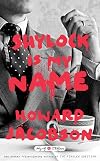
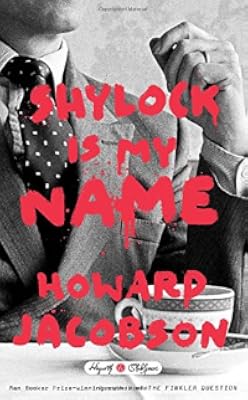
Man Booker Prize-winner Howard Jacobson brings his singular brilliance to this modern re-imagining of one of Shakespeare's most unforgettable characters: Shylock Winter, a cemetery, Shylock. In this provocative and profound interpretation of The Merchant of Venice, Shylock is juxtaposed against his present-day counterpart in the character of art dealer and conflicted father Simon Strulovitch. With characteristic irony, Jacobson presents Shylock as a man of incisive wit and passion, show more concerned still with questions of identity, parenthood, anti-Semitism and revenge. While Strulovich struggles to reconcile himself to his daughter Beatrice's "betrayal" of her family and heritage--as she is carried away by the excitement of Manchester high society, and into the arms of a footballer notorious for giving a Nazi salute on the field--Shylock alternates grief for his beloved wife with rage against his own daughter's rejection of her Jewish upbringing. Culminating in a shocking twist on Shylock's demand for the infamous pound of flesh, Jacobson's insightful retelling examines contemporary, acutely relevant questions of Jewish identity while maintaining a poignant sympathy for its characters and a genuine spiritual kinship with its antecedent--a drama which Jacobson himself considers to be "the most troubling of Shakespeare's plays for anyone, but, for an English novelist who happens to be Jewish, also the most challenging." show lessTags
Recommendations








Member Reviews
Part of the Hogarth Shakespeare series, this retelling of The Merchant of Venice is just as challenging as the original play. Simon Strulovitch is our stand-in for Shylock, a British Jew who is utterly conflicted on what it means for him to be Jewish. Meanwhile, his daughter, Beatrice, has suddenly taken up with a footballer who was recently suspended for giving a Nazi salute after scoring a goal. As Strulovitch works to get his daughter back he comes up against D'Anton, one of his art world rivals, and D'Anton's dearest friend, Plurabelle. Anyone familiar with the original play knows roughly what happens next although Jacobson's twist on the pound of flesh is an interesting choice. While this plot is challenging enough, with it's show more constant engagements with what it means to be Jewish, casual anti-Semitism amongst D'Anton and his friends, and the bizarre tone of the relationship between Strulovitch and his daughter, there is a whole extra level of challenge as the character of Shylock is present throughout the novel. In the initial chapter Strulovitch brings Shylock home with him, not metaphorically, and utterly aware that this is the character from the Shakespeare play. It adds a strange layer of surrealism to the novel and I'm not sure that the dialogue between Shylock and his contemporary stand-in of Strulovitch really clears up the issues that Shakespeare's original play raises. Recommended only to those who want to engage further with themes raise in The Merchant of Venice. show less
Intelligently written, for sure, and clever in its modern equivalents of the characters. But it was exhausting and demoralizing to return to, the same way that seeing The Merchant of Venice over and over again for as long as it takes you to read a book would be. Also, I really don't understand the idea of writing a modern version of a Shakespearean story and setting it in a world where that play exists. The other two books in the Hogarth series I've encountered do the same thing, and it's clumsy and weird, to have characters extensively quoting the source play and yet not acknowledging the parallels between its plot and the story they are living (or even the fact of identical names). I respected this book, but didn't enjoy it at all.
 This review was written for LibraryThing Early Reviewers.
This is one of the Hogarth Shakespeare re-writes; Jacobson's take on the Merchant of Venice. I liked it. For the most part it is madcap and silly, but there is something underneath. I think, with all of Shakespeare, you do have to suspend a little disbelief, and moving it to modern times makes that even more evident. For example, it really makes no sense that Simon Strulovitch, the Shylock feature, a modern, secular, Jew, would feel so strongly about his daughter marrying a gentile. And yet, if you allow that stretch, it gives Jacobson a chance to play with the ideas of family, culture and loyalty, and to think about the debts we owe to our ancestors, as well as the gifts we have received from them.
In this book, Shylock himself is a show more character, who confers with Strulovitch, and gives advice. This is a fun device, thinking of Shylock in the modern day, and it helps to focus the book on a sense of history and family. show less
In this book, Shylock himself is a show more character, who confers with Strulovitch, and gives advice. This is a fun device, thinking of Shylock in the modern day, and it helps to focus the book on a sense of history and family. show less
This review was written for LibraryThing Early Reviewers.I lament the low rating that this book has received. It just goes to show that there's no accounting for taste. Skimming other reviews, a few common themes emerge as obstacles to readers' enjoyment.
First, a complete lack of "good" characters. "Good" in the ethical, relatable sense--everyone likes a character they can see themselves in, and everyone thinks of themselves as the good guy in their own story. In this novel, there really isn't one. There's isn't a character to root for, and frankly I can imagine many readers hoping for a satisfying end for everyone to get some just desserts in the form of personalized grave misfortunes. But, minor spoiler alert, that by and large does not take place. But I've never been adverse to a full show more cast of misers, misanthropes, and malefactors--if anything, casting everyone as a sort of minor villain removes villainy from the equation entirely... As one of the characters remarks, "It isn't good for you... to live in so over-illuminated a world ... Light is to be cherished... as an illumination of meaning, as a way of distinguishing between the mundane darkness of things and the glow that can come with understanding and discrimination. You lose a sense of beauty and volume if everything is light."
Secondly, the author's love and mastery of the English language. It seems to be off-putting to some to have a book that is not spoonfed them in a common, low vernacular. If you want an easy read, a novella that you can skim and finish in a day--this is not for you. But if you want a book to savor and linger over, I definitely recommend it. The words and phrases he uses in this book have a palpable weight to them, and demand to be attended to with full consideration.
I will admit to a mild frustration with the ending of the story--although I'm no stranger to unsatisfying endings, and embrace them if for no other reason than on personal principle that life rarely has convenient clear cut endings for us. But as another character says within, "A long premeditation invites anticlimax... One can think too long." Perhaps I thought on this one too long in anticipation of the ending. Even so, I am already looking forward to reading this again at some point.
**I received a free copy of this book in exchange for my unbiased review.** show less
First, a complete lack of "good" characters. "Good" in the ethical, relatable sense--everyone likes a character they can see themselves in, and everyone thinks of themselves as the good guy in their own story. In this novel, there really isn't one. There's isn't a character to root for, and frankly I can imagine many readers hoping for a satisfying end for everyone to get some just desserts in the form of personalized grave misfortunes. But, minor spoiler alert, that by and large does not take place. But I've never been adverse to a full show more cast of misers, misanthropes, and malefactors--if anything, casting everyone as a sort of minor villain removes villainy from the equation entirely... As one of the characters remarks, "It isn't good for you... to live in so over-illuminated a world ... Light is to be cherished... as an illumination of meaning, as a way of distinguishing between the mundane darkness of things and the glow that can come with understanding and discrimination. You lose a sense of beauty and volume if everything is light."
Secondly, the author's love and mastery of the English language. It seems to be off-putting to some to have a book that is not spoonfed them in a common, low vernacular. If you want an easy read, a novella that you can skim and finish in a day--this is not for you. But if you want a book to savor and linger over, I definitely recommend it. The words and phrases he uses in this book have a palpable weight to them, and demand to be attended to with full consideration.
I will admit to a mild frustration with the ending of the story--although I'm no stranger to unsatisfying endings, and embrace them if for no other reason than on personal principle that life rarely has convenient clear cut endings for us. But as another character says within, "A long premeditation invites anticlimax... One can think too long." Perhaps I thought on this one too long in anticipation of the ending. Even so, I am already looking forward to reading this again at some point.
**I received a free copy of this book in exchange for my unbiased review.** show less
This review was written for LibraryThing Early Reviewers.Shakespeare's Shylock has always been a conundrum. On one hand we have the avaricious, vengeful, prejudiced, clownish Jew of The Merchant of Venice, a character it is almost impossible to like. Yet, on the other, the author has placed one of the play's two most memorable monologues...a monologue on pain and humanity...into his mouth when confronting the heroes' version of justice. Is this a play of serious anti-Semitism or exposé of the same? Scholars have been arguing about it for centuries and will probably do so as long as the play is read.
And now we have Jacobson's retelling of the story. I generally hate spoilers of any sort in reviews. Yet, in a sense, Shakespeare wrote a five-act spoiler 400-odd years ago, so I guess I will show more relax my rules a trifle because this is a book I find difficult to talk about beyond, "I really liked it," without delving into who and what the characters are. If you abhor spoilers, albeit not large, stop now.
Shylock Is My Name is The Merchant of Venice but it's the play in a funhouse mirror, simultaneously recognizable and distorted. We meet Shylock immediately—in fact, we meet him twice, but more on that in a bit—in the person of Simon Strulovitch who is wealthy, emotionally distant and slightly vindictive; secularized but unable to renounce his Jewish roots. He talks with his wife Kay (Leah), who is not dead in this version but has suffered a stroke leaving her in an uncertain vegetative state. Mostly, he talks about problems with his daughter, Beatrice (Jessica), who takes up with unsuitable (i.e., non-Jewish) boys in utter defiance of her father.
We then meet Plurabelle (Portia) but it's at this point that a vague sense begins to creep in that Shakespeare's archetypes may not be Jacobson's. Yes, Plurabelle is Portia-like in her beauty and, yes, she had a doting father who thought that suitors had to prove themselves worthy. But, isn't she just a trifle bit shallow, much given to partying, cosmetic surgery and dancing men about on strings? And, true, she does seem to have a yen for playing judge advocate. But, isn't it just that: playing, achieving her Kardashian-like moments through a reality TV show where she allows the audience to vote on who should win any given dispute?
D'Anton (Antonio) enters. He is urbane and polished but also narcissistic, prejudiced, and more than a trifle disingenuous. He craves attention and actually wants Plurabelle's suitor for himself but would never be so crass as to voice these out loud, limiting himself to sulkiness when thwarted. I remember thinking those very things of Antonio when I first read the original 30 years ago, despite a teacher talking about, "kind and generous, a wonderful friend."
The entrance of Barney (Bassanio) and Gratan (Gratanio) affords a pause. Shakespeare's leading young men, in the comedies at least, are usually puerile dolts and Jacobson has done nothing to tinker with this. This pause allows me to check my perspective. Antonio is usually considered a Good Guy yet I had once thought "not so much." Portia is the epitome of fairness and Christian mercy but, really, hadn't she used exactly the fraud and scrupulosity Shylock was accused of to deny him any recompense whatsoever?
Was Jacobson saying, "LOOK at the characters"?
It's time to mention that I left out the most important character of this book. We meet Shylock twice, once in the person of Strulovitch and once in the person of Shylock, himself. Not quite in a flashback to the 16th century and not quite as a resetting of that character into the 21st. In an act of unreality allowed by fiction, we have the 16th century character still alive today. His history is known to the other characters who find it vulgarly interesting but not particularly remarkable. This Shylock becomes the confidant of Strulovitch-Shylock but, more importantly, he becomes the deepest character. He is lifted from a pure caricature to person who thinks deeply about the nature of prejudice, the role of fairness, and the consequences of what we do. He is not untrue to the original, just dimensional.
All this is early in the book and I don't want to reveal more about the tale other than to suggest you shouldn't assume that Shakespeare has actually spoiled the eventual fates of the characters, or even the somewhat (in my opinion) predictable twist.
What Jacobson has done is not...or not principally...re-tell the story of the merchant and the Jew in Venice, but to ask the reader to look at the roles that have been assigned to the characters and ask whether that's as deep as we want to go. Is this version the distortion or was the original? Most of all, he has reclaimed a human-ness for Shylock...whether it is a good one or a bad one you'll have to read and decide for yourself. show less
And now we have Jacobson's retelling of the story. I generally hate spoilers of any sort in reviews. Yet, in a sense, Shakespeare wrote a five-act spoiler 400-odd years ago, so I guess I will show more relax my rules a trifle because this is a book I find difficult to talk about beyond, "I really liked it," without delving into who and what the characters are. If you abhor spoilers, albeit not large, stop now.
Shylock Is My Name is The Merchant of Venice but it's the play in a funhouse mirror, simultaneously recognizable and distorted. We meet Shylock immediately—in fact, we meet him twice, but more on that in a bit—in the person of Simon Strulovitch who is wealthy, emotionally distant and slightly vindictive; secularized but unable to renounce his Jewish roots. He talks with his wife Kay (Leah), who is not dead in this version but has suffered a stroke leaving her in an uncertain vegetative state. Mostly, he talks about problems with his daughter, Beatrice (Jessica), who takes up with unsuitable (i.e., non-Jewish) boys in utter defiance of her father.
We then meet Plurabelle (Portia) but it's at this point that a vague sense begins to creep in that Shakespeare's archetypes may not be Jacobson's. Yes, Plurabelle is Portia-like in her beauty and, yes, she had a doting father who thought that suitors had to prove themselves worthy. But, isn't she just a trifle bit shallow, much given to partying, cosmetic surgery and dancing men about on strings? And, true, she does seem to have a yen for playing judge advocate. But, isn't it just that: playing, achieving her Kardashian-like moments through a reality TV show where she allows the audience to vote on who should win any given dispute?
D'Anton (Antonio) enters. He is urbane and polished but also narcissistic, prejudiced, and more than a trifle disingenuous. He craves attention and actually wants Plurabelle's suitor for himself but would never be so crass as to voice these out loud, limiting himself to sulkiness when thwarted. I remember thinking those very things of Antonio when I first read the original 30 years ago, despite a teacher talking about, "kind and generous, a wonderful friend."
The entrance of Barney (Bassanio) and Gratan (Gratanio) affords a pause. Shakespeare's leading young men, in the comedies at least, are usually puerile dolts and Jacobson has done nothing to tinker with this. This pause allows me to check my perspective. Antonio is usually considered a Good Guy yet I had once thought "not so much." Portia is the epitome of fairness and Christian mercy but, really, hadn't she used exactly the fraud and scrupulosity Shylock was accused of to deny him any recompense whatsoever?
Was Jacobson saying, "LOOK at the characters"?
It's time to mention that I left out the most important character of this book. We meet Shylock twice, once in the person of Strulovitch and once in the person of Shylock, himself. Not quite in a flashback to the 16th century and not quite as a resetting of that character into the 21st. In an act of unreality allowed by fiction, we have the 16th century character still alive today. His history is known to the other characters who find it vulgarly interesting but not particularly remarkable. This Shylock becomes the confidant of Strulovitch-Shylock but, more importantly, he becomes the deepest character. He is lifted from a pure caricature to person who thinks deeply about the nature of prejudice, the role of fairness, and the consequences of what we do. He is not untrue to the original, just dimensional.
All this is early in the book and I don't want to reveal more about the tale other than to suggest you shouldn't assume that Shakespeare has actually spoiled the eventual fates of the characters, or even the somewhat (in my opinion) predictable twist.
What Jacobson has done is not...or not principally...re-tell the story of the merchant and the Jew in Venice, but to ask the reader to look at the roles that have been assigned to the characters and ask whether that's as deep as we want to go. Is this version the distortion or was the original? Most of all, he has reclaimed a human-ness for Shylock...whether it is a good one or a bad one you'll have to read and decide for yourself. show less
This review was written for LibraryThing Early Reviewers.Not having read The Merchant of Venice and not having read anything by Howard Jacobson might have been a disadvantage when embarking on Jacobson's retelling of Shakespeare's play about antisemitism. It turned out not to matter. Once the book got going and got past its initial clunkiness, it was a thoughtful and entertaining read. Jacobson clearly knows the play inside out and convincingly inhabits the mind of Shylock. His writing style is cheeky but with depth, and I found that the topics under discussion made me think, for all that they were framed in a farcical/satirical situation. I enjoyed the allusions made to modern life and modern celebrity, and thought Jacobson was interesting on what it means to be a British Jew. The non-Jewish show more characters were vile in their antisemitism, but I assume their exaggeration is a comment on the Christians in The Merchant of Venice. I don't know the play at all, but as Tudor England was an antisemitic place, I'd hazard a guess that the play was conceived in antisemitic terms. The world moves on, and is still antisemitic, it's true, but antisemitism is no longer the declared cultural norm in England, and I hope that the play is used today to explore antisemitism and refute it. My feeling about Jacobson's retelling is that he is exploring the nature of antisemitism and trying to shine a light on how ridiculous it is to hold such mediaeval views. If Jacobson wasn't Jewish, though, I might think differently about his motivations as an author. show less
I loved Jacobson's Booker winner, The Finkler Question, so was predisposed to enjoy his "re-imagining" of Shakespeare's The Merchant of Venice, with Shylock case as an art dealer in contemporary England. Jacobsen uses the classic, difficult story of antisemitism to examine contemporary issues of identity, Jewish/Christian coexistence, parenthood, and revenge. The storytelling is subtle, blunt, funny, and serious, and left me with as much to mull over as the original.
This review was written for LibraryThing Early Reviewers.Members
- Recently Added By
Published Reviews
ThingScore 75
It’s hard to imagine that the commissioning editors for the new Hogarth Shakespeare series had to deliberate for long before deciding which contemporary novelist should take on The Merchant of Venice, the tragicomedy that gave us the most (in)famous Jewish character in literature
added by bergs47
Lists

Jewish Books
367 works; 24 members

Top Five Books of 2020
982 works; 350 members

2022 Christmas Gifts
60 works; 13 members

Books Read in 2016
4,666 works; 197 members

Retellings of Shakespeare Plays
42 works; 12 members

Books With Complete Sentence Titles
501 works; 17 members

Books recommended by Calgary Public Library staff
1,588 works; 4 members

Books Read in 2026
2,044 works; 68 members
Author Information

30+ Works 6,537 Members
Howard Jacobson was born on August 25, 1942 in Manchester, England. He is a Man Booker Prize-winning British author and journalist. He studied English at Downing College, Cambridge under F. R. Leavis. He lectured for three years at the University of Sydney before returning to England to teach at Selwyn College, Cambridge. His later teaching posts show more included a period at Wolverhampton Polytechnic from 1974 to 1980. His time at Wolverhampton was to form the basis of his first novel, Coming from Behind, a campus comedy about a failing polytechnic that plans to merge facilities with a local football club. He also wrote a travel book in 1987, titled In the Land of Oz, which was researched during his time as a visiting academic in Sydney. His fiction, particularly in the six novels he has published since 1998, is characterised chiefly by a discursive and humorous style. His 1999 novel The Mighty Walzer, about a teenage table tennis champion, won the Bollinger Everyman Wodehouse Prize for comic writing. In October 2010 Jacobson won the Man Booker Prize for his novel The Finkler Question, which was the first comic novel to win the prize since Kingsley Amis's The Old Devils in 1986. In 2013 he made The New York Times Best Seller List with his title Whole Rethinking the Science of Nutrition which he co-authored with T. Colin Campbell. He will be at the Oz, New Zealand festival of literature and arts program in 2015 in London. (Bowker Author Biography) show less
Awards and Honors
Distinctions
The Guardian Book of the Day (2016-02-10)
Series

Work Relationships
Is a retelling of
Common Knowledge
- Canonical title
- Shylock Is My Name
- Alternate titles
- Shylock Is My Name: The Merchant of Venice Retold; A Wilderness of Monkeys (see disambiguation notice) (see disambiguation notice)
- Original publication date
- 2016-02-09
- People/Characters
- Shylock; Simon Strulovitch; Beatrice Strulovitch; Anna Livia Plurabelle Cleopatra A Thing Of Beauty Is A Joy Forever Christine Shalcross; D'Anton; Barnaby (show all 10); Gratan Howsome; Leah; Kay Strulovitch; Brendan
- Important places
- Manchester, England, UK; Golden Triangle, Cheshire, England, UK; Venice, Veneto, Italy
- Epigraph
- Portia: Which is the merchant here, and which the Jew?
Duke: Antonio and old Shylock, both stand forth.
Portia: Is your name Shylock?
Shylock: Shylock is my name. - Dedication
- To the memory of Wilbur Sanders. How it is, that over many years of friendship and teaching Shakespeare together we never discussed The Merchant of Venice, I cannot explain. It is a matter of deep regret to me that we canno... (show all)t discuss it now.
- First words
- It is one of those better-to-be-dead-than-alive days you get in the north of England in February, the space between the land and sky a mere letter box of squeezed light, the sky itself unfathomably banal.
- Last words
- (Click to show. Warning: May contain spoilers.)I will be revenged on the whole pack of you.
- Original language
- English
- Disambiguation notice
- At a talk at the National Theatre in London on February 15th 2016, the author disclosed that his original choice of title had been A Wilderness of Monkeys (from MoV Act III Sc.I line 131): he had been persuaded to cha... (show all)nge it.
Classifications
Statistics
- Members
- 554
- Popularity
- 53,644
- Reviews
- 84
- Rating
- (3.12)
- Languages
- 11 — Chinese, Czech, Danish, Dutch, English, Estonian, German, Italian, Polish, Portuguese, Swedish
- Media
- Paper, Audiobook, Ebook
- ISBNs
- 34
- ASINs
- 7